bonjour,
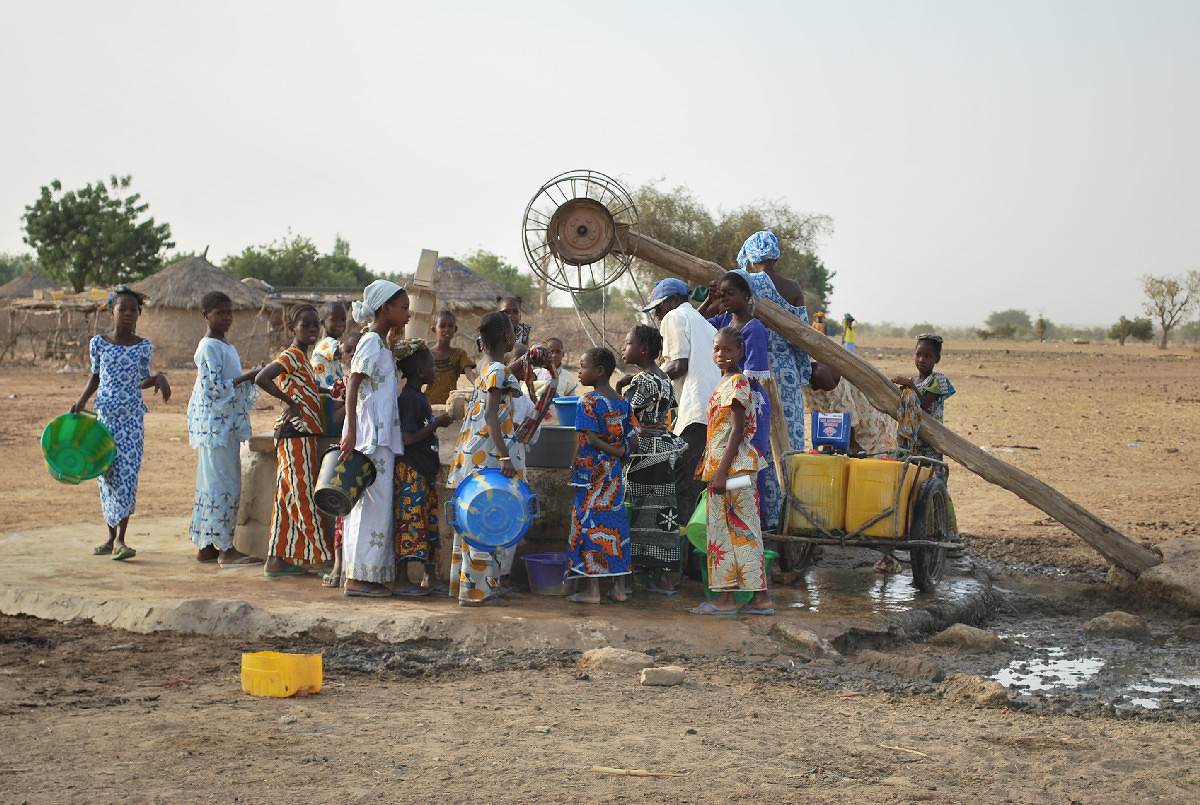
je pars prochainement pour 2 mois au Senegal. je vis dans une famille en brousse et l'eau de boisson vient du puit. quels sont les risques pour une europeenne de boire l'eau du puit et sinon qui peux m'indiquer des traitements de l'eau recommandés et leur coût.
brigitte
Si tu ne changes pas de place, tu ne peux pas savoir quel endroit est agréable. (proverbe wolof)
Celà dépend de l'endroit où tu te rends, de l'eau qui est bu sur place, et surtout de toi, de ton corps qui peut réagir différemment que celui d'un autre.
Le village où je me rends possède deux puits, un pour les villageois et un autre pour les bêtes, donc tout d'abord ne pas se tromper ! L'eau du puit est très bonne, son gout est meilleur que celui de l'eau en bouteille et il n'y a quasiment aucune maladie liée à cette eau. Tous les villages des alentours sur un rayon de 10 km viennent s'approvisionner dans ce puit, et une ou deux fois par an les villageois la purifie avec des produits provenant des services de santé du département. Et quand ils la verse dans les canaris ils placent un drap pour filtrer les plus grosses impuretés.
Donc, il y a juste une réalité à observer. Si là-bas les habitants boivent une eau couleur terre ce n'est pas pour se faire plaisir, s'ils en boivent c'est vraiment qu'ils n'ont pas le choix. Sinon, ils feront tout pour boire la meilleure eau qu'ils trouveront.
Il y a aussi l'eau des Bùndù, ces trous creusés qui servent à abreuver les vaches. Parfois c'est cette eau que tu trouveras dans les canaris, mais tu la reconnaitras, elle a la couleur du sol sur lequel tu marches. Je t'avous que je la bois aussi car elle est très douce, mais je ne le conseille à personne. Faites ce que je dis, pas ce que je fais !
Pour ta question sur les purificateurs d'eau, je laisse la réponse aux experts !
Où vas-tu au Sénégal si ce n'est pas indiscret ?
Bon séjour,
David
" kodo subaka jom wuro naange e hoore " Proverbe Haal Pulaar
" Etranger le matin, Chef du Village à Midi "
merci de ta réponse.
je vais à Passy.
jusqu'alors je consommais de l'eau en bouteille ( en laissant le plastique derriere moi) et même si la bouteille a une 2ème voir une 3eme vie , un dechet plastique est toujours un cadeau empoisonné !
il me reste la solution de la gourde et du micro pure.
mais l'ideal pour moi serait un filtre qui permettrait de filtrer toute l'eau à boire de la maison, mais je ne sais pas si ça existe au niveau bacteriologique.
Si tu ne changes pas de place, tu ne peux pas savoir quel endroit est agréable. (proverbe wolof)
bonjour
il existe des filtres dans des quincailleries de Mbour; j'ai bu de l'eau du puits (ainsi que deux autres personnes qui n'osaient pas en boire sans leur petite pastille, qu'elles ont bien vite laissées)
dans l'association où j'étais une personne confectionnait des "fontaines à eau", composées de deux seaux avec couvercle, posés l'un sur l'autre; le filtre est fixé dans le fond du premier seau, l'eau versée dans le premier seau passe filtrée dans le second seau, un robinet en bas du second seau pour se servir. les impuretés restent dans le filtre qui est à nettoyer de temps en temps avec une brosse à dents et changer le filtre en moyenne tous les 6 mois (si utilisation continue)
Nous en avons fourni dans les écoles afin que les enfants puissent boire de l'eau "propre"
cette solution est très économique; l'ensemble coûtait (en 2009) environ 10 000 cfa, ce qui est vite rentabilisé et pas difficile à faire.
peut être une solution à adopter pour éviter ces fameuses bouteilles plastique qui traînent partout (il y en aura toujours assez pour ceux qui veulent les réutiliser !)
Durant nos premiers séjours en brousse au Sénégal, de 1991 à 1996, soit nous faisions bouillir l'eau du puits, soit nous ajoutions des pastilles de chlore.
Au fil des années, les villageois sensibilisés par des services de santé, ont appris à javelliser et entretenir leurs puits. A ce jour, nos premières méthodes sont largement périmées, d'autant que les systèmes de filtre sont à la portée de tout le monde. N'hésitez pas à les utiliser.
De plus, les femmes savent bien gérer les différents puits : ceux pour la boisson et la cuisson des aliments, et ceux pour l'hygiène corporelle, la vaisselle et la lessive.
Voilà en effet un sujet intéressant qui suscite des réponses tout aussi intéressantes !
Durant mes séjours en villages casamançais, je me suis souvent posée la question de savoir si je pouvais boire la même eau du puits que celle bue par les locaux, mais par crainte je continuais à acheter de la Kirène... bien qu'ennuyée par toutes ses bouteilles en plastique vides dont je ne savais que faire (même si elles étaient en partie récupérées par les femmes pour une autre utilisation). J'ai quelque fois fait bouillir de l'eau mais la contrainte que cela imposait me faisait vite abandonner et je n'ai jamais pu m'habituer aux pastilles de micropur.
Il m'est toutefois arrivé de boire de l'eau du puits lorsque je ne pouvais pas faire autrement et j'ai aussi eu l'occasion de boire du bissap préparé par les femmes avec la même eau (difficile de refuser le verre qu'on vous tend avec gentillesse !) Je n'ai jamais été malade et la solution qui m'est apparue est que je devais alterner les eaux (puits et Kirène) en diminuant peu à peu cette dernière au profit de la première... Pour l'instant ça marche !
Cela étant, Geneviève je suis intéressée par le moringa que tu préconises. Où puis-je le trouver ? j'aimerais bien tester...
Nous n'héritons pas de la terre de nos parents, nous l'empruntons à nos enfants.
Saint Exupéry
ça fait plaisir de te retrouver !
pour le moringua ou nebedaye, on en trouve parfois auprès des dispensaires, et s'ils n'en n'ont pas, ils devraient savoir où s"en procurer puisque nous le prescrivons lors des consultations au titre de polyvitaminé.
Ceci dit, il n'est pas indiqué d'utiliser les pastilles chlorées puisque tous les puits sont javellisés ... en principe, il suffit de demander aux femmes pour s'en assurer, leur demander aussi à quel rythme et quelles doses elles le font.
Rentre aussi en ligne de compte, l'entretien du canari qui sert au stockage dans la maison !
Il exsite des filtres à eau portatifs dans certaines quincailleries de Dakar. Si vous n'en trouvez pas, il y a les cartouches filtrantes. Celles-ci retiennent les impuretés de l'eau. La cartouche filtrante coute entre 1500 frs à 3.000 frs. On la met dans les filtres à eau portatifs ou fixes. L'idéal si vous voulez faire des économies et de fabriquer un filtre
Il suffit d'acheter une bouteille d'eau minérale de 5 litres, après consomation, faire un trou, sur le bas de celle-ci, du diametre de la cartouche filtrante et introduire celle-ci en essayant de la fixer sur le goulot. Il suffira ensuite de remplir d'eau du puit et de consommer.
Je ne suis pas un expert, c'est juste une idée.
Cordialement
dexxa
On ne voit bien qu'avec le coeur. L'essentiel est invisible pour les yeux. Saint Exupéry
Bonjour,
Dans quelle zone te rends tu?
En Casamance, je bois l'eau des puits car l'eau est abondante en sous sol et très bien filtrés de manière naturelle compte tenu des sous sols. Les indigènes savent affecter les puits à des usages différents selon leurs qualités et il n'y a pas de risques, même pour nos organismes sensibles. Mais je ne prends pas ce risque dans d'autres zones.
Ceci dit je ne connais pas d'endroits au Sénéfal où l'on ne peut acheter d'eau minérale (Kiréne pour la plus répandue sinon Safi).
bon voyage
merci à tous pour vos réponses, je vais faire un mixage de vos conseils en attendant de trouver peut être la meilleure solution ! que je ne manquerais pas de vous communiquer à mon retourd.
merci les ami(e)s
Si tu ne changes pas de place, tu ne peux pas savoir quel endroit est agréable. (proverbe wolof)
salut moi c est bara et je vie moi aussi dans un village ou on boit l eau de puits et pour un europeen pour qu il ait pas de risque tu peux javéliser l eau avant de le boire oubien la decanter ou la bouillir
slt moi j suis hygienique com tu sais que beaucoup de puit au senegal risque des danger enorme ;il n sont pas ete desinfecter et sa peu vs donner ds maladies diarehique ; l eau de javel quon mit n tu pas ls microbe
bonsoir
boire l'eau de puits au Sénégal demande une certaine adaptation parce que si vous en buvez alors que vous n'êtes pas adapté cela peut vous causer quelques problèmes comme des mots de ventre des diarrhées. mais pour éviter tout ceci vous pouvez vous procurez de l'eau kirène au niveau des boutiques et ça ne coûte que 1000f cfa celle de 10litres
bonjour
l'eau de puits semble être bon pour beaucoup de personne dans notre pays et cela peut être le cas pour vous aussi mais pour plus de précaution vous pouvez utiliser un filtre pour éviter les maladies merci
Hi,
I’m planning a trip to Namibia for 3 weeks in November: should I take malaria prophylaxis, which medication, when to take it, and are there any side effects?
At the end of my trip, I’ll spend 5 days up north near the Angolan border and in Etosha National Park.
Thanks for sharing your travel tips and advice!
Martine
I’m planning a trip to Japan next year and I have asthma...
I wanted to know about the regulations regarding Ventolin (Salbutamol) in Japan—is it considered a drug? Can I bring my inhaler with me, or do I need to buy a similar product in Japan?
I have two American cousins. The older one was born in Paris, and his sister was born in California. The latter is planning a trip to Paris this summer, but she recently fell ill, and American doctors don’t know what’s wrong. I had the idea of letting her take advantage of her trip to get treated here, avoiding the high healthcare costs of the American system in the process. The problem is, I can’t find anything online about this—just testimonials from French people who used to be American, but nothing for a simple tourist.
I’m traveling to Portugal with my family and I have a treatment that requires injections. How can I take a flight with these? They look like injectable pens.
Thanks
We’re planning a trip to the Philippines from April 22 to May 8, 2026. Flight from Geneva with a layover in Turkey and Manila. Our itinerary: Angeles – Busuanga – Palawan…
The Philippines are a dream destination, but is it possible to travel there safely? I’ve heard that checked luggage often gets lost, tap water isn’t safe to drink, and mosquitoes are everywhere.
For water, what’s the best solution to carry in a backpack? Is a filtering water bottle 100% reliable?
For mosquitoes, should we treat our clothes with repellent? Are you vaccinated against hepatitis A, malaria, or dengue? Or is there an oral treatment to take?
Hi there,
Does anyone know if there’s travel insurance for someone who’s had a heart attack?
I can’t find an insurer that covers a pre-existing condition, even if it’s stable.
Thanks so much!
Hi everyone, next month my wife, our 6-year-old daughter, and I are flying to Thailand. It’ll be a great chance to soak up some sun—something we’ve been missing lately here in France! But speaking of sun, I burn easily, and our daughter even more so. I was wondering what SPF to get for sunscreen and whether it’s better to buy it there or before we leave? Thanks for your tips!
Hello,
We’re planning to spend 3 months in Madagascar starting in mid-February.
Areas: Mahajanga, Tulear, Diego Suarez, and Sainte Marie—the order isn’t set yet. We’ll either drive for part of the trip or take flights.
We’ve heard all sorts of things about required vaccines and medications (is anti-malarial mandatory?). What’s the exact situation for travelers?
I’ll come back to you for other topics (like finding a reliable driver, among others).
Thank you.
Best wishes to you all,
Nicole
We're about to go on an organized trip to South Africa, including Kruger Park. We were told that Malarone should preferably be taken in the evening at the same time during a meal. But it's hard to know what time we'll have dinner, especially since I've read that in South Africa, dinner is usually around 6 PM.
I'd love to hear from people who've been on organized trips to this destination and could share their experience. We were thinking of taking Malarone around 7:30 PM, assuming dinner would be closer to 7 PM than 6 PM. Also, if the meal ends up being earlier or later than when we take the pill, would a cookie or a piece of bread be enough to take with Malarone?
I’m planning to set off on a "round-the-world" trip/long journey at the start of next year, lasting between 4.5 and 6 months. For now, the itinerary looks like this: South Korea (2 weeks) -> Japan (1 month) -> New Zealand (1 month) -> Argentina (1 month) -> United States (1 month).
I’m on medication (paroxetine 20 mg/day) and was hoping to bring enough for the entire trip so I wouldn’t have to find a doctor on the spot, deal with a molecule that might be slightly different from what’s available in France, or wonder if that’s even a possibility. Basically, it seemed simpler on paper...
But after looking into the regulations for each country, it’s suddenly way less simple . Many seem to only allow the amount corresponding to the length of your "stay" in the country... Which is a problem if I arrive in Korea with 4.5 months’ worth of medication, for example.
After all that, and even though I’ll obviously contact the relevant authorities in each country (fingers crossed for a response 😛), here’s my question:
Has anyone here had any experience with this? (Even if it’s a different medication or different countries, any input would be helpful!)
I’m trying to plan a trip to Dubai with my mom. I’ve seen that some of our medications require prior authorization (sleeping pills, codeine, anti-anxiety meds, etc.).
I’d love to hear from anyone who’s been in our situation. A friend of mine applied to bring her tramadol, but it was denied—though she needed high doses!
Has anyone here gone through this process? Do we *really* need a prescription in English?
We just found out my wife is pregnant, and we’ve planned a trip to the Barlavento Islands in Cape Verde this November.
We’d like to know if there’s a real risk of Zika contamination on those islands, because from what we’ve found online, the recorded cases are old and come from the Sotavento Islands.
We’re thinking about canceling our trip.
If you’ve recently traveled to Cape Verde or live there, do you have any thoughts on this?
hi, I’m looking for information about the possibility of returning to Thailand with a portable liquid oxygen system and whether it’s possible to recharge it in Thailand, especially in Chiang Mai. thanks
I’m starting a new discussion on this topic since there doesn’t seem to be a recent one.
I have several chronic conditions (including asthma and related ones), and I’m planning to travel for a year across different countries.
Generally, I understand it’s possible to travel with approved medications (which should be my case), but often with a limit of 3 months’ worth of treatment.
Since I’m going for 12 months, that means for three-quarters of my trip, I’d have more than 3 months’ worth of medication.
I plan to bring my prescriptions with the INN (International Nonproprietary Name), as well as the original packaging (even though it’s a nightmare, but from what I understand, it’s necessary). But I’m not sure if that’s enough...
Have any of you been in this situation before? How does it work at customs—do I need to declare everything that exceeds the 3-month limit? Do I need a letter from my doctors?
I'm currently in Bangkok: How can I find a good doctor for a consultation? It's for a friend who'd like a second medical opinion compared to what they got in their country of residence.
Any professionals you'd recommend? How much does it cost?
I’ve already visited quite a few countries across several continents, but I’m pretty new to Asia.
I’m planning a trip to Thailand in October or November, and I wanted to check about health precautions: malaria treatment, vaccinations (hepatitis A or others...).
I’ll mostly be in the northern region, around Chiang Mai, where I’ll spend a lot of time in nature and the mountains. Then I’ll head south to Phuket or Krabi and visit Khao Sok National Park. I’ll finish up in Bangkok, with a likely detour to Kanchanaburi.
From what I understand, for a stay of less than 60 days, I don’t need a visa (I’m a French national)? I just need to fill out the TDAC form 3 to 5 days before arrival?
Hi there,
I was wondering if anyone is heading to Cuba soon and could bring me some over-the-counter Sildenafil (viagra) tablets—available at Varadero Airport, among other places.
Hi there! So, I'm hesitating about taking a long trip. I'd like to go away for 2 to 3 months and travel across several continents. I’d love some advice. I often have unexplained allergies and need to follow a daily treatment for my diabetes (insulin). I think I can get authorization from my doctor to travel for 6 months with the treatment—is that correct? After those 6 months, is it possible (instead of bothering a relative to send the medication) to see a foreign doctor to get another 6-month travel authorization? How does it work at the airport? Do I need just one medication transport authorization, or do I have to request a new one in each country (once the treatment runs out) for both the flight and a DCI? Also, travel insurance doesn’t cover chronic illnesses, so will I have to pay for foreign consultations out of pocket? I’m not sure if I explained myself clearly. Oh, and just to repeat—travel insurance doesn’t cover chronic illnesses, so foreign consultations will be at my own expense? Thanks in advance for your help!
Hi everyone.
After years of traveling to the USA without any medical insurance subscriptions—and luckily never having any major health issues (though I did get a scorpion sting buried in the sand at CBSouth, 😇)—life has caught up with us, and we’re now being forced into "wisdom" and leaving our carefree days behind.
So, I’m looking for the best compromise for a 2-month health insurance plan.
I’ve read the discussions on this topic, but the most recent one is from last year, and I’d love your take on the current situation.
I’m familiar with the usual options like Europ Assistance and AXA, but I’ve just discovered Chapka and Heymondo (the latter seems interesting in terms of both price and coverage).
What do you think of these last two? How do they compare in terms of value for money against the bigger companies?
Hi,
We’ve planned a 3-week trip to Bali this summer with our 7-year-old daughter. The itinerary includes Sanur, Nusa Lembongan, Sidemen, Amed, and Ubud. The more time passes, the more we read about people getting sick—some with mild to severe traveler’s diarrhea, and many ending up in the hospital. We, as parents, have been through it in Egypt with pretty bad cases, but we’d really like to avoid that for our daughter. Even though there’s no zero risk, and we’ll be careful, can any of you reassure me? Not everyone got sick, right? I’d love to hear positive feedback from parents, but not just them 😊. Thanks in advance!
Hi there...
I’m traveling with a friend for a month in November.
We booked our round-trip tickets from Paris to Phnom Penh, and yes, I know—it was a mistake. We should’ve flown out of Laos, but here we are.
But is it doable to backpack through both countries in a relaxed way?
I’ve seen that the transport takes a while...
Thanks so much for your replies.
Hi there,
I’ve started looking into getting dental implants, possibly in Costa Rica or Mexico.
Do you have any clinics to recommend or ones I should avoid?
For the next steps, I need to choose between Cuba Medika or Medigo—these are agencies that help with medical procedures. Do you have any info on either of them?
Hi everyone, a question for those who’ve been lucky enough to visit Raja Ampat—should you consider preventive malaria treatment given its proximity to Papua? And how was the food hygiene situation?
Thanks for your feedback! !
For several years now, increased aggression has been observed in Cape fur seals.
At least 70 unprovoked attacks on humans.
It was recently confirmed that this is due to rabies.
The suspected origin is contamination in Namibia by jackals.
The contagion seems to be spreading.
Preventive vaccination (of the animals) is being considered.
Just a reminder:
Rabies affects all mammals.
Once symptoms appear—sometimes weeks or even months later—death is inevitable.
It’s the bite that transmits the disease.
There are so-called "furious" forms with aggression, but also forms without aggression.
In case of a bite, in addition to standard wound care, tetanus prevention… rabies prevention is essential.
Stay careful out there…
Seeing seals from a boat along the coast isn’t rare in these parts…
I need 2 dental implants and I'd like to get them done abroad (it's a question of price).
Thanks for helping me with my search (Turkey, Spain, Romania???)
Can you tell me if you're satisfied with the services provided by Dentist Miguel at Club Amigo in Holguin? I'd like to go there in mid-December. Is it worth the trip to get dental prosthetics done?
Thanks for getting back to me... Michelle from Quebec
Hello,
I’m looking for a dentist who can do a full lower-arch implant with a complete prosthesis. I’m in Quebec and available to travel to Cuba. Need full contact details. Thanks everyone!