Some impressions and info after two weeks in Grande Comore and Anjouan. Trip mid-2024.
First and foremost, the Comorians are absolutely lovely. I don’t usually like generalizing, but I honestly don’t know what else to say beyond what struck me most: kindness everywhere, great friendliness, curiosity—basically, every interaction was super pleasant, whether at the hotel, in the street, or in shops.
On the less positive side (because it needs to be mentioned), I was also struck by the overwhelming amount of waste along the coastline (and elsewhere, especially roadsides and riverbanks) in pretty shocking quantities. Of course, it improves once you get away from populated areas, but it was still a bit of a shock.
That said, underwater—even at sites where the shore was littered with plastic—the corals are stunning, snorkeling is fantastic, the seabeds are truly beautiful, and there’s a great diversity of fish.
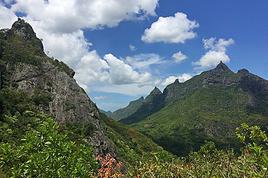
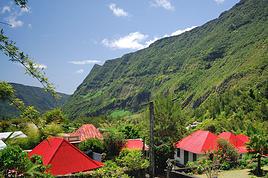
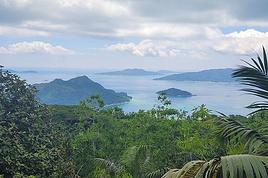
The islands and landscapes are gorgeous, especially Anjouan’s interior and highlands. I can’t say much about Mohéli since I didn’t go, but I only heard glowing reviews.
In Moroni and Mutsamudu, the medinas are really charming, far from the tourist crowds of Stone Town, for example. Winding alleys, old buildings, stairs, and twists and turns—I spent hours just wandering and getting lost. Really nice.
In Moroni, I stayed at the Retaj. It was good, with great service, an evening buffet, and a pretty extensive menu. There’s a beautiful ocean view and a small volcanic beach at the end of the grounds. I snorkeled there, and it’s lovely (though, being close to the city, there were bags and wrappers on the rocks). Around 100 € per night if I remember correctly—not the cheapest, but not the most expensive either (prices in the Comoros are generally quite high).
I also stayed at the Jardin de la Paix, closer to the city center. Also very good. The rooms were spotless. Fewer meal options, mostly chalkboard specials, and sometimes very long waits. On the plus side, there’s a large tree-filled inner courtyard, but no ocean view or small beach. From memory, it was cheaper, but I’m not 100% sure.
Among the few travelers and tourists, many were heading to Itsandra Beach Hotel at the entrance to the city when coming from the airport. It’s in a much higher price range. I only went there for the hotel’s beach, Petite Itsandra, because the snorkeling is amazing.
In Anjouan, I only stayed at the Hôtel des Îles in Mutsamudu. The owner is very welcoming and super nice. There’s a lovely terrace with an ocean view, where you can watch the boats coming and going in the morning and evening. Peaceful and really pretty. You can also see the huge fruit bats up close since some like to hang out in the tree across from the terrace. It’s easy to walk to the medina, the coast, or even the market and port—everything’s close by.
For meals, I mostly ate at hotels, but also tried some evening street food stands. In hotels or restaurants, expect to pay around 10 to 15 €. Oh, and one thing: in the evenings when the fishermen return to Moroni, there’s *tons* of tuna. So it’s on the menu pretty much everywhere. But either because of the type of tuna or the preparation, the tuna steaks are dry and honestly not great. Nowhere I tried was an exception. The only non-hotel restaurant I remember is New Select, in the courtyard out back where you could order skewers of different kinds while religious chants played in a relaxed but respectful atmosphere. You could also order a shisha. Really nice and not too expensive.
As for activities, like I said, I mostly walked around the cities—markets, medinas, ports, and the seafront. Chatted with people I met along the way. Did some snorkeling, especially at Itsandra Beach Hotel, but didn’t get the chance to go to Itsandra Beach (which is public). Did a bit of hiking in the countryside, especially in Anjouan—just wandering random paths, so I can’t really give much detail on that.
I can’t say anything about climbing Mount Karthala, the Prophet’s Hole, etc. I would’ve liked to spend some time in Domoni (Anjouan), but didn’t get the chance.
A few roads have been recently redone and are in great condition, but a lot are still in really bad shape, which makes travel times longer. The inland roads often offer stunning views of dramatic landscapes with the ocean and sometimes lagoons in the background.
To get from one island to another, you can take a plane or a boat. Local airlines aren’t very reassuring—technical issues are common. It’s also possible to arrange flights with Precision Air (from Tanzania). From experience, it’s better. I didn’t take the boat, but I’m considering it for next time.
In short, these are islands to discover where tourism is still in its early stages. Great encounters and a beautiful experience
Original post