I’ve already visited quite a few countries across several continents, but I’m pretty new to Asia.
I’m planning a trip to Thailand in October or November, and I wanted to check about health precautions: malaria treatment, vaccinations (hepatitis A or others...).
I’ll mostly be in the northern region, around Chiang Mai, where I’ll spend a lot of time in nature and the mountains. Then I’ll head south to Phuket or Krabi and visit Khao Sok National Park. I’ll finish up in Bangkok, with a likely detour to Kanchanaburi.
From what I understand, for a stay of less than 60 days, I don’t need a visa (I’m a French national)? I just need to fill out the TDAC form 3 to 5 days before arrival?
I’m not a doctor.
In 40+ trips there, I’ve never taken any health precautions like the ones you mentioned (I travel in cities, mountainous areas, and a lot in the countryside, including remote spots).
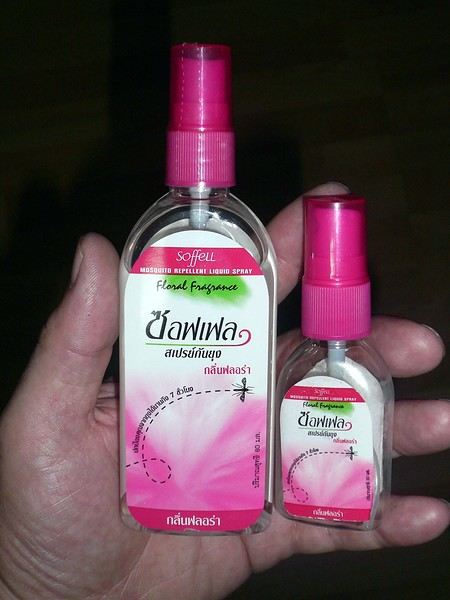
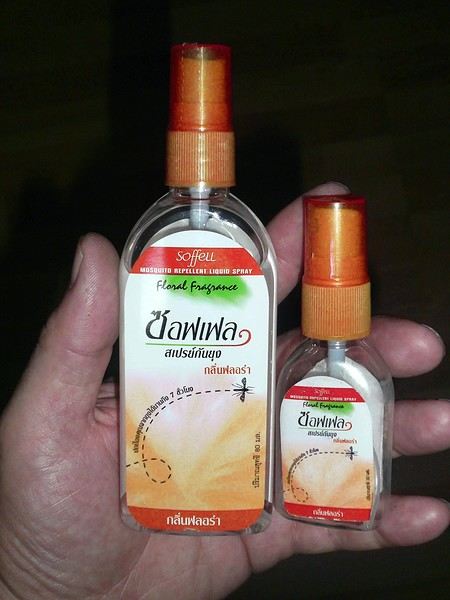
For mosquitoes, you can buy the product in the photo below at any of the countless 7-Elevens—it’s very effective and cheap (around 2.50 € for the large size).
If I understood correctly, for a stay of less than 60 days, no visa is needed (I’m a French national)? You just need to fill out the TDAC form 3 or 5 days before arrival?
No visa is required for a tourist stay of up to 60 days/59 nights. The TDAC must be completed within 72 hours before arrival.
In October or November, I’m planning to go to Thailand (...) I’ll likely be (...) in the south, around Phuket or Krabi
I recommend reading the last part of Djalma’s reply today at 9:56 AM in this thread: https://voyageforum.com/v.f?post=10757780;page=last;#last
Officially, hepatitis and yellow fever vaccines are recommended.
It’s also a matter of luck; some people have had nothing after 15 trips, while I know someone who got dengue—and badly—on their first trip.
« Tout le monde s'interroge sur comment laisser une meilleure planète à nos enfants, mais on devrait plutôt penser à laisser de meilleurs enfants pour notre planète. » Clint Eastwood
My wife prefers the one that’s orange—it really does smell good...
« Tout le monde s'interroge sur comment laisser une meilleure planète à nos enfants, mais on devrait plutôt penser à laisser de meilleurs enfants pour notre planète. » Clint Eastwood
I’ll still go for a quick visit to the tropical medicine clinic near me to ask for advice.
Even though (in my opinion) health risks are limited in the tourist areas you’re visiting, I always recommend that those who ask medical questions on the forum first consult competent medical authorities (tropical disease specialists).
Officially, hepatitis and yellow fever vaccinations are recommended.
I’d really like to know who’s recommending that? Your doctor?!
Institut Pasteur: One of the major puzzles in the history of infectious diseases is the absence of yellow fever in Asia, even though the virus has historically been endemic in sub-Saharan Africa and South America.
I’m not a doctor, but yellow fever isn’t widespread in Asia. It’s only found in sub-Saharan Africa and South America.
It’s recommended to get at least the hepatitis A vaccine. This vaccine (in 2 doses) is usually valid for life, so even if Thailand isn’t the highest-risk country, at least you’ll be set and won’t have to worry about it for future trips to tropical destinations.
At least you’re at peace and don’t have to wonder about future trips to tropical zones anymore.
That’s exactly the flip side—the falsely reassuring aspect of these hepatitis vaccines. They often lead to "no longer questioning things," to eating stuff that wisdom or common sense would’ve otherwise made you think twice about. I think we shouldn’t see these vaccines as immunity totems; we should assess what kind of traveler and consumer we are, etc. You can also get a serology test done—hepatitis A is common, often goes unnoticed, especially in childhood. A good portion of people born before the 1970s are actually immune for life.
Yes, the protection is considered lifelong, whether through natural immunity or vaccination. That said, you’ll always find someone who wants to protect you even more.
There’s a big misunderstanding—I didn’t mean it that way at all. What I meant was that once you’ve gotten the vaccine, you don’t have to worry about it again for future destinations.
I’m *super* anxious about health stuff, and believe me, I never skip basic health precautions when I travel, even in Europe (where I never drink tap water, for example). 😉
Tap water is safe to drink throughout Europe and is often of better quality than bottled water (plastic or glass), plus it’s 100 times cheaper. 😏
Personally, I’ve drunk tap water everywhere—in all the countries in Asia, Africa, and Latin America. I even drank water from the Niger River… I was a bit unsettled, but that was about it.
Hello,
we went to Thailand last year with our 3 young daughters. We’re both doctors. We stayed in the south and central regions. I pretty much agree with what was said below. I recommend the hepatitis A vaccine since it’ll be useful for many destinations, same for typhoid. For malaria, there’s no point—you’d be taking more risk with potential side effects. Note that we were hardly bothered by mosquitoes (less than in France...), but the small bottles in the photos are very effective (the pink one comes as a lotion, very pleasant and easy to find in 7/11s). I suggest taking the photo with you to show at the checkout if you can’t find it on the shelves—it’ll be easier than miming a mosquito. Of course, food hygiene precautions will be your best guarantee. However, watch out for monkeys, especially if you’ve never been to Asia before. They’re cute but only in photos. Lopburi is particularly overrun because the monkeys there are protected. Never eat in front of a monkey or even in a place where they might be around. A monkey jumped on my backpack when I didn’t have anything in my hands. The risk of rabies is real—if you’re bitten, you must go to the nearest hospital for post-exposure prophylaxis, which is effective if done early. Don’t forget there’s no treatment for rabies.
Hi,
Thanks for your advice.
I was mainly wondering about Hepatitis A. And I thought the vaccine was only effective for 10 years, but it’s actually for life. I got vaccinated in 2009 during a trip to Tanzania.
Fred
Of course, now’s a good time to remind everyone that I made a tutorial about these mosquito repellent products:
https://voyageforum.com/v.f?post=9714220;search_string=moustique%20jOJOONE
« Tout le monde s'interroge sur comment laisser une meilleure planète à nos enfants, mais on devrait plutôt penser à laisser de meilleurs enfants pour notre planète. » Clint Eastwood
I can't comment on the products mentioned above since I’ve never tried them, but the ones in the Insect Ecran Tropics range work really well and last longer than half an hour. You need to reapply at least twice a day for maximum effectiveness. Tested on the whole family—result: only a few bites, usually on "forgotten" spots or when we’ve been a bit lazy about reapplying.
The downside: the smell is pretty strong and can be uncomfortable. And the feeling of "eating it" when sweat makes the "delicious" 🏴☠️ product run toward your mouth. But hey... you’ve got to make choices, especially in countries where dengue is still very common.
Mosquito repellents don’t really exist—or at least, they only have a relative effectiveness that lasts at most half an hour.
You should check out the tutorial...
« Tout le monde s'interroge sur comment laisser une meilleure planète à nos enfants, mais on devrait plutôt penser à laisser de meilleurs enfants pour notre planète. » Clint Eastwood
I had this product in Florida in the Everglades. Down there, mosquitoes were a real plague... One day, while chatting with an American entomologist, he demonstrated at his place how ineffective my product was. He asked me to spray the DEET-based product on my hand, then I put my hand in a large transparent plastic bag filled with local mosquitoes. They approached my hand without landing, but after a few minutes, I had about ten mosquitoes on my hand, biting me...
It's simple—you can't kiss before showering anymore. 😎
Small detail: for us, Insect Ecran turned out to be way less effective than the local products mentioned in the thread.
And despite everything, try visiting a national park in July, right in the middle of the jungle, and you’ll consider yourself lucky if it lasts a quarter of an hour—you’ll be sweating that much.
Unfortunately, luck plays a part: you can’t be slathered in repellent 100% of the time over three weeks.
« Tout le monde s'interroge sur comment laisser une meilleure planète à nos enfants, mais on devrait plutôt penser à laisser de meilleurs enfants pour notre planète. » Clint Eastwood
I had this product in Florida in the Everglades. Over there, mosquitoes were a real plague. One day, while chatting with an American entomologist, he demonstrated at his place how ineffective my product was. He asked me to spray the DEET-based product on my hand, then I put my hand in a large transparent plastic bag filled with local mosquitoes. They approached my hand but didn’t land, but after a few minutes, I had about ten mosquitoes on my hand biting me...
It’s because you’re particularly tasty 😛
« Tout le monde s'interroge sur comment laisser une meilleure planète à nos enfants, mais on devrait plutôt penser à laisser de meilleurs enfants pour notre planète. » Clint Eastwood
Tap water is safe to drink throughout Europe and is often of better quality than bottled water (plastic or glass), and what's more, it's 100 times cheaper.
Personally, I've drunk tap water everywhere—in all the countries in Asia, Africa, and Latin America. I even drank water from the Niger River... I was a bit unsettled, but that was about it.
You should talk to Montagnard74 about this. Apparently, he drinks a lot, but hardly any water, just so you know. [;]
« Tout le monde s'interroge sur comment laisser une meilleure planète à nos enfants, mais on devrait plutôt penser à laisser de meilleurs enfants pour notre planète. » Clint Eastwood
I’m a total germaphobe when it comes to health, and believe me, I never skip basic hygiene rules when I travel—even in Europe (where I never drink tap water, for example). 😉
Years ago, when I started being too fussy about it, my dad told me this story: "There was once a guy who went to the pub downtown all the time. The regulars noticed he always wiped the door handle before going in or out, he was so afraid of catching something. And well, one day, he still died from a disease like that."
I learned a lesson from that, and it helped me live with less fear—but I also think people who are really scared might unconsciously know their body is extra fragile in that way, so they’re right to be careful. Maybe they should even think twice about traveling to certain countries, who knows.
« Tout le monde s'interroge sur comment laisser une meilleure planète à nos enfants, mais on devrait plutôt penser à laisser de meilleurs enfants pour notre planète. » Clint Eastwood
You're right—even the biggest precautions don’t guarantee total protection. For example, we got sick in Indonesia despite being careful.
Honestly, what freaks me out the most is the thought of getting sick far from home, where medical care can be difficult or limited depending on where you are. We had a major issue in Crete 10 years ago when my son got hurt—a really deep cut on his foot. The nearest hospital was a 2-hour drive away. They stitched him up with almost no anesthetic, or at least something ineffective because I could hear my kid screaming like he was being slaughtered. The medical team later told us how helpless they felt and how little they had to work with. They did their best, and in the end, my son didn’t get an infection, which is what mattered most.
But that experience really stuck with me.
Still, I love traveling too much to stop exploring the world just because I’m afraid something might go wrong. 😛
Yes, I’m talking about special tropical insect repellent screens. That’s usually what pharmacists give you when you tell them you’re heading to the tropics. The product is DEET-based, not exactly harmless, by the way, for those who slather it on all day long.
PS: Check out what’s said about DEET toxicity...
I understood we were talking about the same product. And yes, I’m already aware of the risks of DEET. But sometimes you have to choose the least bad option—catching dengue isn’t risk-free either, and in the worst cases, it can even be fatal. Given that this product worked well for us, even in extreme conditions (hiking in the jungle, etc.), I’d still prefer it. Since it’s only an occasional and rare use for us—we’re not in the tropics every day—my last tropical trip was actually back in 2016.
But there’s no miracle solution, we totally agree on that—I’m very aware of it. Everyone does what they think is best with the information they have.
You should discuss this with Montagnard74. Apparently, he drinks a lot, but hardly any water.
During my first crossing of the Sahara via the Tanezrouft with a tarpaulin-covered 404, the vehicle’s engine overheated so much that I had to use my drinking water reserve (for beverages, etc.) to fill the Peugeot’s radiator, naively thinking the water I’d soon find in wells south of the Malian Sahara and later in Niger would be "drinkable"...
First stop at a well in Mali: We lower a large goatskin flask to the bottom of the well and pull it back up using a camel. No, they don’t pour the water directly into my canteen—instead, it goes into the camels’ trough where dried dung is floating...
When I reached Niger, I thought I was saved... but we were following the river, and the only water the entire population drinks is from the river itself. I was about to fill my canteen by the water’s edge when someone signaled that it wasn’t safe to drink there. A local guy stepped in, took two steps into the river, and filled my canteen—"Now it’s good," he told me!
At a rate of 3 or 4 liters a day, I ended up with a nasty case of diarrhea. An old traveler had advised me to take two doses of straight pastis—a product you can easily find all over West Africa—and I was quickly cured. Back in France, the symptoms came back... I didn’t continue the pastis treatment and went to see a tropical disease specialist. Turns out I just had a simple case of traveler’s diarrhea...
That said, I don’t think the pastis could’ve killed any amoebas!
I understood we were talking about the same product. And yes, I’m already aware of the risks of DEET. But sometimes you have to choose the least bad option—catching dengue isn’t risk-free either, and in the worst cases, it can even be fatal. Since this product worked well for us, even in extreme conditions (jungle hikes, etc.), I’d still go with it.
I’ve used this product in the past… Actually, I don’t even know if it’s effective or not. It must be in some countries under certain conditions. I’ve traveled a lot in tropical countries, and personally, I didn’t notice a huge difference whether I used repellent or not.
What’s certain is that it doesn’t work in Florida! Maybe the mosquitoes there have gotten used to repellents?
The only places I’ve really suffered from mosquitoes were in Florida (Everglades) and on Oléron Island!
I just got back from Réunion, where there’s still a chikungunya epidemic, and I didn’t see a single mosquito the whole trip!
Back in the Drôme, though, we’ve got a few mosquitoes getting into the bedroom even with window screens! :/
I’m not surprised about Île d’Oléron—there was a big issue there with tiger mosquitoes spreading in the area. I live nearby (La Rochelle), and the whole region was affected.
« Tout le monde s'interroge sur comment laisser une meilleure planète à nos enfants, mais on devrait plutôt penser à laisser de meilleurs enfants pour notre planète. » Clint Eastwood
Okay, I assume you're all well insured for every trip. After some research, we went with Mondassur, which seemed like the best value for money. Around 100 € per person for a month in Thailand.
I remember a colleague—her first trip to Asia—and boom, after a few days, her husband got a severe case of dengue. They’re too scared to go back now.
My wife got it in Guadeloupe; she said she almost felt like she was dying. And apparently, it’s even more dangerous the second time. Now, we’re about to face the same risks in mainland France—what bad luck!
After about ten trips to Asia without any issues, despite a few mosquito bites every year, we’ve been lucky, like many others. Luck or bad luck, there’s nothing you can do about it...
« Tout le monde s'interroge sur comment laisser une meilleure planète à nos enfants, mais on devrait plutôt penser à laisser de meilleurs enfants pour notre planète. » Clint Eastwood
Thanks for the info about insurance—I’m actually in the middle of comparing options for an upcoming trip to the US. So far, I haven’t signed up for anything, but I saw a deal from Chapka that looks interesting.
I see we’ve strayed a bit from the original poster’s concern. Sorry about that!
Voici un site internet de L'Agence de la santé publique du Canada qui nous permet d'avoir une information fiable (si on considère bien sur qu'on peut faire…
Je part pour 3semaine en Asie du sud est avec mon épouse et mon fils de 2ans pour la 1ère fois du 14/02/13 au 8/03/13 À Singapour 3j. À melakka 1j. Kuala…
Voyager en santé › Cambodge / Thaïlande · 51 replies
Je pars un mois en Asie, deux semaines au Cambodge et deux semaines en Thailande. Je fais Pnomh Penh, Siem Reap, kep, Kampot et Koh Rong puis en Thailande je…
J'ai lu que le vaccins de l'hépatite A est fortement recommandé pour la Thaïlande. Comme nous emmenons notre fille de 2 ans et demi pensez vous qu'il serait…
Mon mari a appelé l'hôpital le plus proche de chez nous qui a un service de consultation pour les voyageurs afin d'avoir des renseignements avant le voyage et…
I’m planning a trip to Japan next year and I have asthma...
I wanted to know about the regulations regarding Ventolin (Salbutamol) in Japan—is it considered a drug? Can I bring my inhaler with me, or do I need to buy a similar product in Japan?
I have two American cousins. The older one was born in Paris, and his sister was born in California. The latter is planning a trip to Paris this summer, but she recently fell ill, and American doctors don’t know what’s wrong. I had the idea of letting her take advantage of her trip to get treated here, avoiding the high healthcare costs of the American system in the process. The problem is, I can’t find anything online about this—just testimonials from French people who used to be American, but nothing for a simple tourist.
I’m traveling to Portugal with my family and I have a treatment that requires injections. How can I take a flight with these? They look like injectable pens.
Thanks
We’re planning a trip to the Philippines from April 22 to May 8, 2026. Flight from Geneva with a layover in Turkey and Manila. Our itinerary: Angeles – Busuanga – Palawan…
The Philippines are a dream destination, but is it possible to travel there safely? I’ve heard that checked luggage often gets lost, tap water isn’t safe to drink, and mosquitoes are everywhere.
For water, what’s the best solution to carry in a backpack? Is a filtering water bottle 100% reliable?
For mosquitoes, should we treat our clothes with repellent? Are you vaccinated against hepatitis A, malaria, or dengue? Or is there an oral treatment to take?
Hi there,
Does anyone know if there’s travel insurance for someone who’s had a heart attack?
I can’t find an insurer that covers a pre-existing condition, even if it’s stable.
Thanks so much!
Hi everyone, next month my wife, our 6-year-old daughter, and I are flying to Thailand. It’ll be a great chance to soak up some sun—something we’ve been missing lately here in France! But speaking of sun, I burn easily, and our daughter even more so. I was wondering what SPF to get for sunscreen and whether it’s better to buy it there or before we leave? Thanks for your tips!
Hello,
We’re planning to spend 3 months in Madagascar starting in mid-February.
Areas: Mahajanga, Tulear, Diego Suarez, and Sainte Marie—the order isn’t set yet. We’ll either drive for part of the trip or take flights.
We’ve heard all sorts of things about required vaccines and medications (is anti-malarial mandatory?). What’s the exact situation for travelers?
I’ll come back to you for other topics (like finding a reliable driver, among others).
Thank you.
Best wishes to you all,
Nicole
We're about to go on an organized trip to South Africa, including Kruger Park. We were told that Malarone should preferably be taken in the evening at the same time during a meal. But it's hard to know what time we'll have dinner, especially since I've read that in South Africa, dinner is usually around 6 PM.
I'd love to hear from people who've been on organized trips to this destination and could share their experience. We were thinking of taking Malarone around 7:30 PM, assuming dinner would be closer to 7 PM than 6 PM. Also, if the meal ends up being earlier or later than when we take the pill, would a cookie or a piece of bread be enough to take with Malarone?
I’m planning to set off on a "round-the-world" trip/long journey at the start of next year, lasting between 4.5 and 6 months. For now, the itinerary looks like this: South Korea (2 weeks) -> Japan (1 month) -> New Zealand (1 month) -> Argentina (1 month) -> United States (1 month).
I’m on medication (paroxetine 20 mg/day) and was hoping to bring enough for the entire trip so I wouldn’t have to find a doctor on the spot, deal with a molecule that might be slightly different from what’s available in France, or wonder if that’s even a possibility. Basically, it seemed simpler on paper...
But after looking into the regulations for each country, it’s suddenly way less simple . Many seem to only allow the amount corresponding to the length of your "stay" in the country... Which is a problem if I arrive in Korea with 4.5 months’ worth of medication, for example.
After all that, and even though I’ll obviously contact the relevant authorities in each country (fingers crossed for a response 😛), here’s my question:
Has anyone here had any experience with this? (Even if it’s a different medication or different countries, any input would be helpful!)
I’m trying to plan a trip to Dubai with my mom. I’ve seen that some of our medications require prior authorization (sleeping pills, codeine, anti-anxiety meds, etc.).
I’d love to hear from anyone who’s been in our situation. A friend of mine applied to bring her tramadol, but it was denied—though she needed high doses!
Has anyone here gone through this process? Do we *really* need a prescription in English?
We just found out my wife is pregnant, and we’ve planned a trip to the Barlavento Islands in Cape Verde this November.
We’d like to know if there’s a real risk of Zika contamination on those islands, because from what we’ve found online, the recorded cases are old and come from the Sotavento Islands.
We’re thinking about canceling our trip.
If you’ve recently traveled to Cape Verde or live there, do you have any thoughts on this?
hi, I’m looking for information about the possibility of returning to Thailand with a portable liquid oxygen system and whether it’s possible to recharge it in Thailand, especially in Chiang Mai. thanks
I’m starting a new discussion on this topic since there doesn’t seem to be a recent one.
I have several chronic conditions (including asthma and related ones), and I’m planning to travel for a year across different countries.
Generally, I understand it’s possible to travel with approved medications (which should be my case), but often with a limit of 3 months’ worth of treatment.
Since I’m going for 12 months, that means for three-quarters of my trip, I’d have more than 3 months’ worth of medication.
I plan to bring my prescriptions with the INN (International Nonproprietary Name), as well as the original packaging (even though it’s a nightmare, but from what I understand, it’s necessary). But I’m not sure if that’s enough...
Have any of you been in this situation before? How does it work at customs—do I need to declare everything that exceeds the 3-month limit? Do I need a letter from my doctors?
I'm currently in Bangkok: How can I find a good doctor for a consultation? It's for a friend who'd like a second medical opinion compared to what they got in their country of residence.
Any professionals you'd recommend? How much does it cost?
Hi there,
I was wondering if anyone is heading to Cuba soon and could bring me some over-the-counter Sildenafil (viagra) tablets—available at Varadero Airport, among other places.
Hi there! So, I'm hesitating about taking a long trip. I'd like to go away for 2 to 3 months and travel across several continents. I’d love some advice. I often have unexplained allergies and need to follow a daily treatment for my diabetes (insulin). I think I can get authorization from my doctor to travel for 6 months with the treatment—is that correct? After those 6 months, is it possible (instead of bothering a relative to send the medication) to see a foreign doctor to get another 6-month travel authorization? How does it work at the airport? Do I need just one medication transport authorization, or do I have to request a new one in each country (once the treatment runs out) for both the flight and a DCI? Also, travel insurance doesn’t cover chronic illnesses, so will I have to pay for foreign consultations out of pocket? I’m not sure if I explained myself clearly. Oh, and just to repeat—travel insurance doesn’t cover chronic illnesses, so foreign consultations will be at my own expense? Thanks in advance for your help!
Hi everyone.
After years of traveling to the USA without any medical insurance subscriptions—and luckily never having any major health issues (though I did get a scorpion sting buried in the sand at CBSouth, 😇)—life has caught up with us, and we’re now being forced into "wisdom" and leaving our carefree days behind.
So, I’m looking for the best compromise for a 2-month health insurance plan.
I’ve read the discussions on this topic, but the most recent one is from last year, and I’d love your take on the current situation.
I’m familiar with the usual options like Europ Assistance and AXA, but I’ve just discovered Chapka and Heymondo (the latter seems interesting in terms of both price and coverage).
What do you think of these last two? How do they compare in terms of value for money against the bigger companies?
Hi,
We’ve planned a 3-week trip to Bali this summer with our 7-year-old daughter. The itinerary includes Sanur, Nusa Lembongan, Sidemen, Amed, and Ubud. The more time passes, the more we read about people getting sick—some with mild to severe traveler’s diarrhea, and many ending up in the hospital. We, as parents, have been through it in Egypt with pretty bad cases, but we’d really like to avoid that for our daughter. Even though there’s no zero risk, and we’ll be careful, can any of you reassure me? Not everyone got sick, right? I’d love to hear positive feedback from parents, but not just them 😊. Thanks in advance!
Hi there...
I’m traveling with a friend for a month in November.
We booked our round-trip tickets from Paris to Phnom Penh, and yes, I know—it was a mistake. We should’ve flown out of Laos, but here we are.
But is it doable to backpack through both countries in a relaxed way?
I’ve seen that the transport takes a while...
Thanks so much for your replies.
Hi there,
I’ve started looking into getting dental implants, possibly in Costa Rica or Mexico.
Do you have any clinics to recommend or ones I should avoid?
For the next steps, I need to choose between Cuba Medika or Medigo—these are agencies that help with medical procedures. Do you have any info on either of them?
Hi everyone, a question for those who’ve been lucky enough to visit Raja Ampat—should you consider preventive malaria treatment given its proximity to Papua? And how was the food hygiene situation?
Thanks for your feedback! !
For several years now, increased aggression has been observed in Cape fur seals.
At least 70 unprovoked attacks on humans.
It was recently confirmed that this is due to rabies.
The suspected origin is contamination in Namibia by jackals.
The contagion seems to be spreading.
Preventive vaccination (of the animals) is being considered.
Just a reminder:
Rabies affects all mammals.
Once symptoms appear—sometimes weeks or even months later—death is inevitable.
It’s the bite that transmits the disease.
There are so-called "furious" forms with aggression, but also forms without aggression.
In case of a bite, in addition to standard wound care, tetanus prevention… rabies prevention is essential.
Stay careful out there…
Seeing seals from a boat along the coast isn’t rare in these parts…
I need 2 dental implants and I'd like to get them done abroad (it's a question of price).
Thanks for helping me with my search (Turkey, Spain, Romania???)
Can you tell me if you're satisfied with the services provided by Dentist Miguel at Club Amigo in Holguin? I'd like to go there in mid-December. Is it worth the trip to get dental prosthetics done?
Thanks for getting back to me... Michelle from Quebec
Hello,
I’m looking for a dentist who can do a full lower-arch implant with a complete prosthesis. I’m in Quebec and available to travel to Cuba. Need full contact details. Thanks everyone!
My current plan is to get my teeth treated in Cuba, especially for dental implants.
Has anyone here had experience and could refer me to a good, affordable dentist?
I’d really appreciate it if you could give me an idea of the price for one implant, since I need at least 6 done.
Thanks so much!