In the summer of 2026, we packed our backpacks again to wander around Jotunheimen National Park in Norway.
We’d never heard of this park just a few months earlier—we discovered it by following threads online.
It’s billed as the most mountainous park in the country, which really appealed to us after scrapping our original plan further north.
Unfortunately, it’s also the most crowded, which immediately made it less appealing! The presence of the highest peak in the Scandinavian Alps and the "famous" Bessengen ridge (famous because it’s apparently well-known across the country) probably has a lot to do with that.
Since we’d managed to avoid the crowds on the Kungsleden trails by camping away from the huts and timing our hike to miss the biggest groups of walkers, we figured we had the formula down and gave in to the call of the Norwegian mountains.
It’s the most mountainous park, sure, but also quite challenging in terms of progress, as we’d soon discover during the trek. And with uncooperative weather, we got the winning combo of a demanding hike. But I’m getting ahead of myself...
For the end of the trip, we planned a few days in Dovrefjell National Park—these two parks are easily connected by public transport—to see something different and, most importantly, to try and spot the musk oxen that live there.
My 04/08 - Arrival in Oslo
Wed 05/08 - Bygdin – Torfinsbu
Thu 06/08 - Torfinsbu - Gjendebu
Fri 07/08 - Gjendebu - Fondsbu
Sat 08/08 - Day hike to Slotafjellet
Sun 09/08 - Day hike to Lake Kvitevatnet
Mon 10/08 - Fondsbu - Gjendebu
Tue 11/08 - Gjendebu - Before the Bessengen ridge
Wed 12/08 - Bessengen ridge – Maurvangen campsite
Thu 13/08 - Knutshoe ridge
Fri 14/08 - Bus transfer to Spiterstulen hut via Lom
Sat 15/08 - Day hike to Galdhøpiggen
Sun 16/08 to Wed 19/08: Dovrefjell
End of the trip and wrap-up
We traveled to Norway in the summer of 2025, from July 17 to 29, to visit Senja Island and the Lofoten archipelago with a rental car. The common thread of these twelve days was clearly hiking, along with a few visits and experiences, and nights spent in a tent or in the car (which made it possible).
We chose Narvik Airport for both arrival and departure for several complementary reasons: the desire to visit nearby Senja Island, slightly more affordable airfare, and finally, the rental price of the vehicle—especially the car model we were looking for.
We only made one reservation, for the first campsite, as sleeping in a tent made things much easier. But we had the whole structure of the trip planned, a flexible outline that could adapt to the weather conditions we’d encounter.
Senja Island isn’t part of the Lofoten archipelago, and during the early stages of planning this trip, we hadn’t planned to visit it. But its relative proximity to Narvik Airport and, above all, its unique geography definitely made us change our minds.
We arrived in Evenes, where Narvik Airport is located, nearly 60 km from the city itself.
Our first stop was 40 km further in Bjerkvik on the way to Senja, where there’s a Rema 1000 (a very common supermarket chain in Norway). We needed to buy some food and a gas cartridge for our stove. I’d emailed the store manager beforehand, who told me they didn’t sell them but that the two gas stations in the village were likely to have some in stock.
It was only at the Esso station that I found what I needed, but unfortunately, only one cartridge. Luckily, we quickly realized that most campsites (like in Iceland) have a shared kitchen with hotplates. That single small cartridge was just enough for the few nights we spent outside of campsites...
We got our first taste of Norway’s characteristic landscapes:
When we arrived at the Senja campsite, it was already 9:30 PM. A sign announced it was full, but luckily, I’d booked it 10 days earlier. By 10:30 PM, as we settled in to eat, it was still broad daylight, and the thermometer read 25°C—despite being at a latitude of 69° North!
We went to bed around midnight, exhausted but under the light of a sun that was still very much present. Thanks to Earth’s tilted axis. We’d anticipated this by buying opaque sleep masks because, yes, at this time of year, it’s daylight all the time.
Friday, July 18:
Today, we planned two hikes on the island and a few stops along the way. The map clearly shows that the deepest fjords are in the north and west.
Due to time and accessibility, we focused on the northern part of the island.
Our first stop was at the viewing platform in Bergbotn:
Then we headed toward Skaland, the starting point for our first hike. Along the way, we found plenty of reasons to stop—especially since, on this first day of travel, our thirst for Nordic landscapes was far from quenched.
The town of Skaland is very practical: free parking, picnic tables for after the hike, and a Joker convenience store right next door.
Our goal was the summit of Husfjellet: 670 m of elevation gain, between 8 and 9 km in length, and an estimated 4 hours and 30 minutes.
This hike offers two major viewpoints. The first overlooks the Bergsoyan islands to the west:
At the summit, the view shifts to the Steinfjorden fjord:
You can even clearly see the "Devil’s Teeth," which we’d see from below later:
In total, the hike took us 4 hours and 30 minutes, including all the breaks. We treated ourselves to an ice cream in Skaland to recharge for the next hike.
We hit the road again and stopped at Tungeneset to get a closer look at the Devil’s Teeth:
We continued to Fjordgard, the starting point for our second hike.
Fjordgard isn’t very welcoming. There was a time when you could park right at the start of the hike up Mount Segla. Now, everything’s blocked off, and locals have even taken to blocking all possible parking spots nearby. You now have to park outside the town at a paid parking lot (90 NOK for 3 hours), adding an extra 2 km (round trip) of walking.
Still, that was just a minor inconvenience because the hike that followed quickly made us forget all about it.
The hike is fairly short (2 hours) but still has 520 m of elevation gain.
This hike was a stark contrast to the first. This morning, we had sweeping views of the vast landscape. Here, Mount Segla, perched on the edge of the cliff, dominates the foreground:
For those prone to vertigo, it might be best to stay at the foot of the mountain, as the trail climbs right along the cliff edge. And from that point on, you quickly understand what verticality really means...
In total, we took 2 hours and 50 minutes, including breaks and the extra walk to the parking lot.
The day was already well underway, and with 1,200 m of cumulative elevation gain, it was time to find a spot to eat and sleep. Since we hadn’t made any reservations, we’d planned to bivouac for the night.
We weren’t too picky—just practical—so we decided to sleep in the car at the parking lot for tomorrow morning’s hike, just 5 km from Fjordgard.
We’re three adults planning a trip to Norway in May 2027.
What do you recommend for the Lofoten Islands? We’d prefer to group the places to visit (flights, rental car...??).
Hi there,
who has already done the EURO VELO 1 in Norway from the south to the North Cape, and what are the main difficulties:
elevation gain, etc.......
Otherwise, who has already done the EURO VELO 7 from south to north, crossing Sweden up to the North Cape? If so, what are the difficulties, elevation gain, and does it pass through villages for supplies, etc.......
We’re heading to Norway for the first time as a couple for 8 days in December
I’m really torn about how much time to spend at each stop (and how many stops to make)
We’d like to explore the cities, visit the Christmas market, see some beautiful landscapes, and if we have time, a stave church.
We arrive in Oslo on December 5th around 5 PM and leave from Bergen on December 12th around 11 AM.
Initially, we were thinking:
Oslo from the 5th to the 8th
Train to Bergen on the 8th, then stay until the 12th
But now we’d like to fit Flåm into the itinerary
Do you think it’s better to do:
From the 5th to the 8th: Oslo
On the 8th: train from Oslo to Flåm (arriving at 3 PM)
On the 9th: a short fjord cruise, then the 2 PM train to Bergen (but then the Myrdal–Bergen stretch will be in the dark)
From the 9th to the 12th: Bergen
Or should we adjust the number of nights in each place? Maybe shorten Oslo? Add a night in Flåm? Skip Flåm altogether? I’m not sure 😅
Hello,
We’ve booked our flights to Tromsø from January 9th to 16th, 2027.
Now it’s time to plan our stay, and I’ll admit I’m feeling a bit unsure...
We definitely intend to rent a car, but what route should we take?
Should we book accommodation for the entire stay (7 nights) in Tromsø and do day trips (Sommarøy, Kvaløya, Lyngen, a day in Tromsø, a boat excursion, and then... what else?)? Or spend 3–4 days in Tromsø and hit the road for another 3–4 days somewhere else—but where?
I’d also considered splitting it: 3 days in Tromsø and 3 days in Målselv, so we could explore a different region by car and maybe try some downhill or cross-country skiing.
Is this area interesting beyond skiing?
During a recent trip to Lapland, we already tried dog sledding and snowmobiling, so we’re not planning to repeat those activities. Instead, we’d love to discover the landscapes and Sami culture.
I’d love to hear about your experiences or suggestions to help us plan our trip.
Thanks,
Hi,
can anyone give us some tips on how to get to North Cape from Lyon Gerland?
What’s the best route to join the EuroVelo 7?
How many kilometers is it from Lyon to North Cape via EuroVelo 7?
The best month to leave—we’re thinking early May.
Thanks for any advice!
Hi there,
we’re planning our trip to the North Cape this summer. We bought a new vehicle for it. Unfortunately, the registration document is still being processed, and the delay seems long—I don’t think I’ll have it in time for our departure...
I have the transfer documents, insurance in my name, and all the supporting paperwork, but not the registration document. So my question is: does the ferry company require the registration document *mandatorily* when boarding in Denmark or not?
Thanks for any insights...
Summer 2027 is going to be Norwegian for us!
We’re heading to the Lofoten Islands first, then Senja, near Tromsø, and finally the North Cape.
We’ll likely start from northern Finland (flight tickets and car rentals are more affordable there).
I’d like to book accommodations early to have more options.
Good value-for-money places go fast in these pricey Nordic destinations...
But where should we book?
We’re planning to stay around ten nights in the Lofoten Islands.
What’s the best approach?
One place in the central part and explore from there?
One place in the south and another in the center?
Or one in the south, one in the center, and one in the north (3-4-3 nights)?
Kattegat isn’t just the name of the village in the TV series *Vikings*—it’s also the stretch of water separating Denmark from Sweden... the sea, basically! And further north, you’ve got Norway and its fjords!
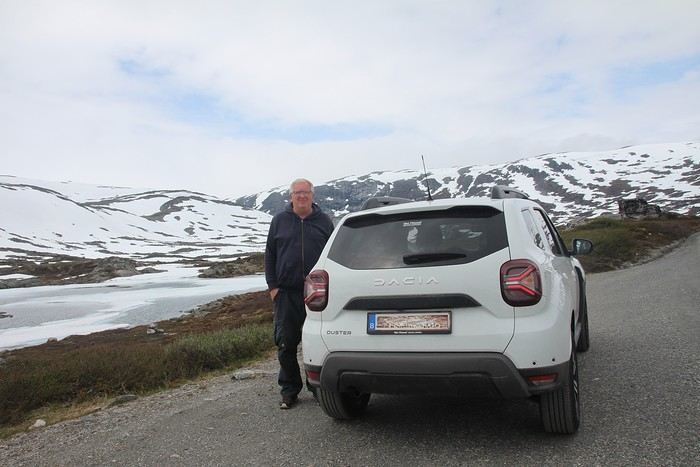
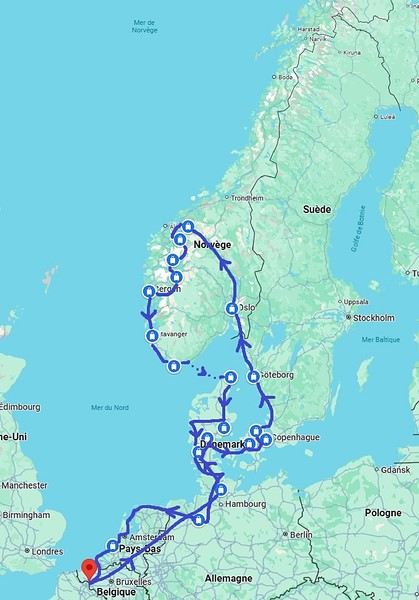
Originally, I’d planned to just do a loop around Kattegat, with the *Under* restaurant in Lindesnes as our anniversary treat... but along the way, we thought, why not "push" a little further north, keeping an eye on the budget since we’d chosen to travel by car in June 2025 through Scandinavia.
Why by car when most travelers opt for a camper van, while others prefer the comfort of cruises?
Well, because we don’t own a camper van, renting one is pricey, and then you’ve got to add fuel costs (those things guzzle gas!), ferry fees, and other "tolls." All things considered, we went for mostly rentals—especially since there were four of us at the start of the trip.
We spent the first week in Denmark with our daughter and son-in-law. Then they flew back to Belgium, and we continued our adventure as a couple.
For accommodation, we mainly booked Airbnb apartments, which helped keep costs down and, most importantly, let us prepare our own meals (diet, diet!).
In this travel journal, you’ll discover (or rediscover, for those who followed my older ones) our unbridled love for theme parks, museums, unique experiences, and—especially in Denmark—Legos!
Unfortunately, we didn’t do any hikes this year because the unpredictable weather had made the trails slippery, and since I’d already taken three tumbles during the trip, I didn’t want to risk another!
In the end, we traveled for 32 days, covered 6,200 km, and most importantly, discovered the charming country of Denmark, marveled at Norway’s breathtaking fjords—all without suffering the heatwave that hit France and Belgium that June!
If you’ve got any questions, don’t hesitate to ask!
Hi,
After a week of sports south of Bergen, I’m not sure what to visit during the following week between Bergen and Oslo.
I haven’t planned to rent a car.
I’d love your suggestions. Thanks
Our trip lasted a month, from March 10 to April 10, 2024, and was done aboard our Land Rover Defender 110. For those interested, our 4x4 is equipped with mountain-approved 3PMFSF all-terrain tires (non-studded), a removable electric winch that can be attached to either the front or rear of the vehicle, two sand recovery boards, and we bring two pairs of snow chains. We sleep in our Land Rover, which is equipped with a diesel-powered independent heater, a small fridge, and has a layout that allows the dinette to be converted into a bed.
Starting from the Paris region, we crossed Belgium and Germany, took the ferry from Travemünde in northern Germany to Helsinki, followed the Russian border up to northern Finland, then headed into Norway all the way to the North Cape before returning via Norway, taking the ferry from Larvik in Norway to Hirtshals in Denmark, then passing through Germany and Belgium on our way back to France.
Tonight, March 10, 2024, we’ll be sleeping at our daughter’s place in the North.
Tuesday, March 11, we’ll cross Belgium and then enter Germany, where we’ll camp in Bremen.
Wednesday, March 12, we’ll have a quick visit to Bremen in the morning. We had planned to visit Lübeck, but some electrical issues with the car delayed us, so we head straight to the German port of Travemünde, where we’re set to embark at 11:30 PM to cross the Baltic Sea and arrive in Helsinki after 31 hours of sailing (one-way cabin ticket cost: 850 €—quite expensive since we booked last minute).
On the ferry, there are mostly semi-trucks and only a few campervans and passenger cars. The boat is quiet, and the Baltic Sea is calm.
About two hours before arriving in Helsinki, we hear noise along the hull. Surprise—looking out the porthole, we realize we’re sailing on frozen sea ice!
Thursday, March 14, we arrive at the port of Helsinki at 9:30 AM. Disembarking takes a while. As soon as we’re out, we head straight to Rastila Camping (cost: 27 €), about ten kilometers east of Helsinki. Then we go to a Land Rover garage to fix our headlight switch, which stopped working (a real hassle in Finland since you have to drive with low beams on at all times).
After the repair, we visit the stunning Temppeliaukio Church, which is built underground.
On our way back to the campsite, we stop at the supermarket for supplies. Prices are similar to France, except for imported products.
Hi there,
I’m planning the route to cycle from Lille to Nordkapp with my partner.
Duration: 3 months, from May 1st to July 31st, 2026.
In the attached details below, I need to add some "non-riding" days (rest days, basically).
So I’m looking to "shorten" the trip by taking ferries or trains for some stretches. Which areas could I skip?
Thanks in advance for your great tips.
Have a good evening.
https://www.komoot.com/fr-fr/collection/4023980/-lille-cap-nord-1er-mai-au-31-juillet-2026?ref=collection
We’re planning a trip to Finland and Norway this summer, starting in Oulu to explore Lapland, heading up to the North Cape, and then making our way down to Bergen.
This route means renting a car in Finland and dropping it off in Norway. My initial searches are showing rental rates that are... astronomical—about three times the price compared to returning it at the starting point.
I’m guessing I’m not the only one wanting to visit both countries. Are there any great tips to drastically reduce the cost of renting a car?
Hi,
It seems that vans and campervans aren't allowed on Hurtigruten ferries?
We have a California van with a bike rack—length: 5.70 m / height: 2.20 m / width: 1.95 m.
We'd like to take the ferry from Trondheim to the Lofoten Islands this coming September.
Thanks for sharing any info!
Hi there,
I want to film my bike trip from Lille all the way to Norway.
Any tips on how to mount my GoPro, other than on my helmet or a selfie stick?
I was thinking about the handlebars, but my bag might block the view.
I’m open to all ideas—thanks a bunch and have a great evening!
I’ve got 15 days off in June and I’m pretty undecided about where to go for a motorcycle road trip. Two strong desires are pulling me in different directions: Corsica or Norway.
Corsica has been a dream of mine for a long time: legendary roads, stunning landscapes, a unique vibe, and the perfect mix of sea and mountains. At the same time, I’m wondering if 2 weeks might be *too much* for Corsica—risking feeling like I’ve seen it all too quickly, especially on a bike.
Since I also have an extra week free in May, I could use that specifically for Corsica. Maybe splitting it into two trips would make more sense? If so, which routes or regions would be the most interesting to plan for a 7-day trip?
On the other hand, Norway is *super* appealing. The landscapes look incredible, totally different from anything I’ve experienced, and it’d be a real “wow” trip. I know 15 days is still short for such a vast country. Getting all the way to the North Cape seems pretty much impossible in that time, but I’m curious about what realistic routes could be planned.
So I’m wondering:
Is it better to save Norway for next year, take 3 weeks off, and do it *properly*?
Or are 15 days enough for a first amazing taste of the country?
I’d love to hear about your experiences—whether it’s Corsica (ideal duration, routes) or Norway (what’s realistic in 2 weeks on a bike).
Thanks in advance for your thoughts!
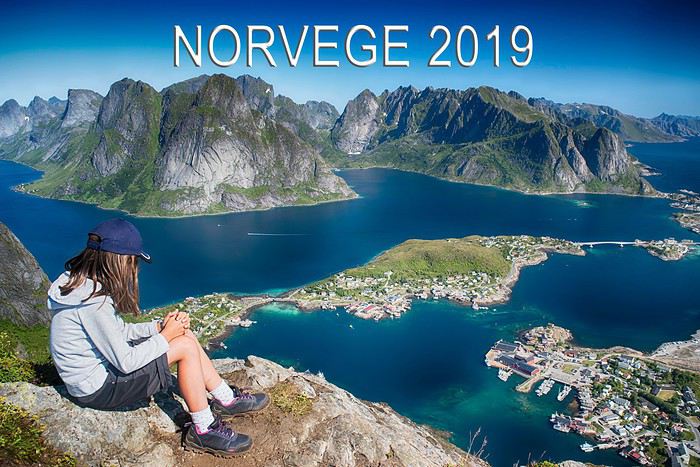
Well, the time to head back has come, so it’s time to share the 3 weeks we spent in Norway this year 🙂
Right, here are a few details before we dive in!
Who:
My husband, me, and our daughter, who turned 8 during the trip
When:
From July 5 to 28, 2019—three full weeks there
What:
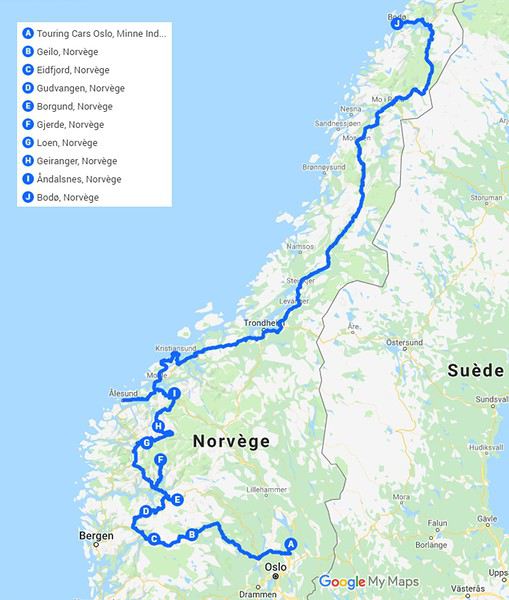
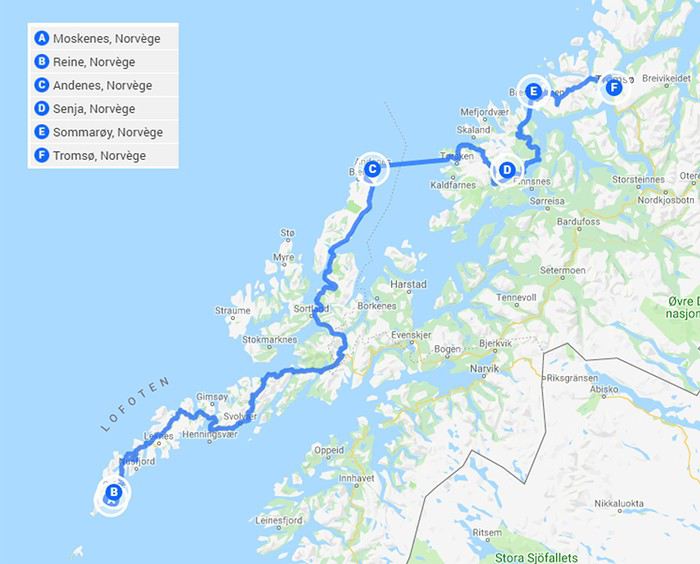
A one-way trip from Oslo to Tromsø, with fjords, the Lofoten Islands, and so much more on the itinerary!
Since you have to make choices—and because the country is huge—we decided to skip the south around Stavanger (we thought the hikes there might be too tough for us). We also chose not to go all the way to Bergen. Our goal was to spend time in the northern islands.
The route to Bodø:
The route from Lofoten to Tromsø
How:
By camper van. Even though it’s not exactly budget-friendly, it’s really the ideal way to explore this country—especially for wild camping and adapting your route based on the weather and your mood.
I’d recommend it 200%. It was our first time, and we loved it. Being able to wait out a downpour in warmth or shower after a long hike was super practical!!
That said, we did have a few hiccups. The auxiliary battery (which powers the back) died, so we had to find a garage to replace it. And the biggest issue: on a narrow road, I smashed the mirror while passing another camper van 🏴☠️
Budget:
Oh boy, that’s a big topic! To be honest, I didn’t tally it all up… because I didn’t want to! Everything is more expensive there, obviously. At the supermarket, for example. So I didn’t keep track—this was a vacation, we weren’t there to count every cent, even if we’re not exactly rolling in money! Ferries are pretty pricey, especially with a camper van, but there’s not much choice. Lots of toll roads too.
Basically, when you go there, be prepared to open your wallet!!!
The weather:
We weren’t sure what to expect before leaving—or rather, we were expecting bad weather.
We were pleasantly surprised: we had almost nothing but great weather, with just a bit of rain toward the end. So the hiking trails weren’t muddy (at all?). Otherwise, it would’ve been a real pain and super slippery!
Temperature-wise, we were lucky. It hovered between 15 and 21°C. Sounds chilly, but honestly, with the sun, it warms up nicely, and it was enough to wear shorts and a T-shirt almost the whole time—something I didn’t expect before we left.
That said, the water temperature is freezing. The Arctic Ocean lives up to its name!! We could barely keep our feet in the water, even though those turquoise beaches were so tempting!!!
A few tips for preparation:
For wild camping: Use Park4Night—the app is amazing for finding spots and sharing our discoveries. We never would’ve dared to venture down some of those roads or trails without it.
For hikes:
It’s not always easy to find hikes in the fjords that are manageable in terms of elevation, difficulty, and time. We still found some through blogs and tourist office websites.
But we mostly focused on hikes in the Lofoten Islands, thanks to sites like rando-lofoten, 68north, and outt.
Unsurprisingly, the level is pretty challenging. But by sticking to the “easy” ones, we managed just fine without being super trained, and we saw some incredible views!
Alright, no more waiting—let’s go! Follow me!
For those who want the "moving version," check out the video here, on page 3: https://voyageforum.com/v.f?post=9817074;live=1;#9817074
Most of the time when I travel, I tow a trailer with an ATV for my local trips...
I’d love to hear from anyone who’s traveled with a trailer and a second vehicle of any kind—especially the downsides of towing a trailer in Norway, aside from ferry costs.
Hi there, my partner and I are planning a 3-week trip to Scandinavia next June (2026). We’d love to validate our itinerary and get any relevant tips on what to see—or avoid, etc.
Day 1 and 2: Departure from Montreal and arrival in Copenhagen
Days 2, 3, 4: Stay in Copenhagen
Day 5: Train from Copenhagen to Stockholm
Days 5, 6, 7: Stay in Stockholm
Day 8: Flight from Stockholm to Oslo
Days 8, 9, 10: Stay in Oslo
Day 11: Train from Oslo to Bergen (Bergen Line)
Days 11, 12: Stay in Bergen
Days 13 to 18: 6-night cruise with Hurtigruten or Havila
Day 19: Stay in Kirkenes
Day 20: Flight from Kirkenes to Oslo
Days 20, 21: Stay in Oslo
Day 22: Return to Montreal from Oslo.
New to the forum, I’m planning a trip to Norway in a camper van and want to drive the entire FV 17. Does anyone have a link where I can find the 6 ferries I’ll need to take and their costs?
Thanks everyone
Off on new adventures!!!
For my wife’s 60th birthday, I’m really making her happy. While I usually pick warm, sunny destinations, she’s more tempted by places where you don’t suffer from the heat.
So, it’s off to Norway!! A real challenge for me—a southern guy who’s as cold-sensitive as they come.
I keep telling anyone who’ll listen (well, just myself, really) that these aren’t the countries for me, that rain will be our travel companion, that we’ll have to face polar bears, navigate between icebergs, that there are still Vikings around, and all sorts of other things.
Of course, not wanting to make it easy, we’re driving from the Lyon area where we live.
Friends who’ve visited the country told us it’s pretty expensive to eat out (among other things), so we’re bringing supplies—especially enough for apéritifs the whole trip!!!
It’s not a camper van, but a "hotel-car" we’ll be doing! We’ll see how it goes!
As usual, I’ll try to narrate the journey with my two-cent comments, plus some little tips to avoid our mistakes—assuming I don’t lose any fingers to the cold!
Every night, I’ll count them to make sure I still have all ten! We’re not in *Ch’tis* territory but even farther Noooorth (as Galabru would say).
Note that I’m traveling with a synovial effusion in my knee! The old man’s not in great shape!!
Here we go!!
PS: As always, I’m a filmmaker, so I’ve made an effort with a few photos from my phone.
Spitsbergen, 80° North latitude. A lost archipelago on the edge of the world, northeast of Greenland, the last lands before the pole. I’m aboard the *Grigoriy Mikheev*, a Russian ship from the Murmansk Polar Research Institute. Russian flag, Russian crew. Chartered by OceanWide Expeditions.
Last night, we were stuck in drifting pack ice in the long Hinlopen Strait. This incident led to an unforgettable barbecue and party on the ship’s foredeck, but we had to abandon our plan to head south and circle Spitsbergen. This summer, there’s too much ice in the strait, and it’s too thick.
At dawn, the tide turned, allowing us to break free and head north again. The ship is now moving slowly through sea ice density that satellite maps estimate at around five-tenths. Our progress is punctuated by dull thuds: the ship’s bow constantly shoves and fractures enormous ice floes.
At breakfast, Tarik, our expedition leader, informs us that our program will be significantly altered. Since we can’t cross the strait, we’ll turn back and head north. To kick off our Plan B, Tarik plans a landing tonight on the small island of Låg (Lågøya), at 80°10' North. Last summer, he saw a large walrus colony there and hopes we’ll find them again. The weather is perfect—glorious sunshine—and walruses are truly addicted to sunbathing on the beaches.
We’ve now exited the strait and are sailing far from the coast. In case the walrus colony is there, we don’t want the ship’s approach to scare them into the water before we even see them. So, we scan the shore methodically with binoculars. We pass several bays, round a cape, and examine several shorelines littered with driftwood, but no walruses in sight. Several times, clusters of large rounded rocks trigger false alarms… but no, they’re just rocks…
Suddenly, Tarik spots them through his binoculars! On an isolated peninsula, our expedition leader’s highly trained eye has picked out, among those brown masses, the shape and white color of the enormous tusks of what he calls "the heavyweights of the Arctic!"
Now, fifteen or twenty pairs of binoculars are pointed in the indicated direction…
Sure enough, I see them now! They’re there, huge, sprawled in the sun on the beach. Without Tarik’s sharp eye, we might have missed them. They’re so tightly packed together that they really look like a mass of brown rocks. Only the white, saber-shaped tusks and the occasional furtive movements hint that they’re animals.
It’s 11 PM, and on the deck of the *Grigoriy Mikheev*, as you can imagine, excitement has ramped up several notches. Several of us have already rushed to our cabins to gear up, pulling on boots and life jackets in anticipation of a landing that promises to be absolutely amazing.
Tarik reins in our enthusiasm a bit: Okay, so we were lucky to find them, but now we need to think about how to approach them. Not that they’re dangerous—at least not on land… Their enormous bulk and their pseudo-feet (flippers) only allow for very limited mobility. But when they feel threatened, their first instinct is to head for the water, where their perfect ease keeps them safe.
So, the challenge will be not to scare them off, to avoid them bolting into the water in the first few seconds! That’s exactly what would happen if we arrived by Zodiac right in front of them.
So, Tarik decides we’ll make a wide detour to land on the other side of the peninsula where they are. From there, we’ll leave the Zodiacs on the beach and cross the peninsula on foot, about a kilometer and a half. That way, we’ll approach the herd from behind. This approach will also keep us downwind of them.
There you go—with a few precautions, they shouldn’t hear us coming or catch our scent.
Everyone is geared up now and practically bursting with impatience… While the Zodiacs are being lowered into the water, Tarik and Delphine recap the approach rules: absolute silence, communication only by signs, no dragging feet on the rocks, watch your step, and strict coordination with slow movements.
Here we go… we’re off now! Spray flying from the Zodiac’s bow, icy air whipping our faces, gloves gripping the side ropes, freezing splashes, pure emotion… Ahh, I love this!
We describe a wide curve offshore to round the peninsula. Ahead of us, the magnificent landscape of this intensely blue sea unfolds, with the hills of Lågøya and, in the distance, the ice-covered mountains of Nordaustlandet under the sun. It’s midnight now. In July, at 80 degrees North, the sun is just like midday.
This navigation takes us far from the walruses, on the other side of the cape. Easy landing on a shoreline of large pebbles covered in giant seaweed brought in by the currents. They look like long strips of plastic—sometimes translucent, sometimes white, beige, or orange. In places, there are huge tangled layers of it. Our boots sink into this material, which gives off a strong iodine smell. Unfortunately, there’s also some plastic waste—fishing floats and net debris. Seeing this here is crazy…
A little farther on, in a cove, tides and storms have piled up numerous tree trunks from Siberia.
We begin crossing the peninsula on foot, staying close together. We’re walking on a nearly deserted polar tundra. We’re only ten degrees of latitude from the North Pole here. The violent winds and extreme temperatures that dominate this island for nine months of the year allow only a few rare plants to grow, close to the ground, between the rocks. In places, rocks are covered with large patches of black lichen.
Gérard, rifle slung over his shoulder, constantly scans the terrain. Tarik and Delphine are also very vigilant. We know no one ever lands here, and although this environment isn’t ideal for bears, you never know—better to be cautious. The terrain is mostly flat, but whenever a small rise blocks our view, Gérard moves ahead and only signals us to proceed when he’s sure there’s no "big man in fur" (tradition dictates we don’t name the polar bear).
After a few hundred meters, we find an enormous whale vertebra. Judging by the state of the bone, it’s likely a relic from the whaling era that ravaged this area in the 17th century and all over northern Spitsbergen.
A little farther on, the remains of a grave catch our attention. The only human trace on this remote island, this burial is surely very old, also likely dating from the whalers’ time. But this whaler’s final resting place didn’t shelter him for long—there’s not much left, just a piece of skull and a few broken bones.
Due to the permafrost, the body could only be buried a few dozen centimeters deep, between some planks held in place by large stones. This makeshift grave was probably ravaged by a bear shortly after the burial. Several stone blocks are overturned, the planks are broken open. We only linger for a minute to pay our respects to this whaler, whose poor remains now merge with the mineral landscape.
A slight rise bulges in the center of the peninsula, and here we are at the highest point. If our orientation is correct, we’re heading straight for the walrus colony.
A moment of emotion… my heart’s pounding.
Yes, they’re there, about three hundred meters ahead of us! They haven’t moved since we spotted them from the *Grigoriy Mikheev*’s deck. They’re sprawled in a heap, packed tightly together in the sun, on the shingle beach.
The light breeze blowing in our faces confirms we’re on the right track—not to be sniffed out from afar by the big beasts.
By signs, Tarik tells us we’ll approach slowly, in stages, moving about thirty meters at a time, making as little noise as possible with our boots, then freezing completely for a minute or two, crouching down to let them forget us.
This strategy proves excellent. We’re now less than a hundred meters away, and it doesn’t seem like our presence is perceived as a threat by the "heavyweights of the Arctic."
At this distance, let’s not kid ourselves: we’re certainly spotted, but our way of approaching must seem reassuring—or at least manageable—since they’re only a few meters from the water and know they could dash into it in seconds if they felt the need.
We now advance in shorter stages—twenty meters at a time, then just ten, crouching, then freezing like statues, our breathing nearly held from emotion and concentration.
We’re now thirty meters from the mastodons. Our presence must be starting to stress them because they’re moving more. While still sprawled against each other, some suddenly rear up on their flipper-feet, grunting and snorting like monstrous pigs.
Their head shakes make their two enormous ivory sabers sway. They jab them into the fat of their neighbors, who in turn stir and emit irritated snorts.
At Tarik’s signal, we move a few more meters, "on velvet paws"… We’re right there now. I hold my breath, throat tight…
Intense emotion, a fantastic spectacle—these enormous Arctic animals sprawled in the sun, with the magnificent backdrop of snow-covered mountains across the sound. I think to myself: *I’m here… this can’t be real!*
It’s nearly 2 AM now, the air is crystal clear, and the Arctic sun bathes this scene in what might be the most beautiful light I’ve ever seen.
We’re about fifteen meters away now. Tarik signals that we won’t go any closer. The walruses are still lying down, but occasionally, our close presence and the clicking of cameras trigger bouts of agitation that ripple through the herd, causing some jostling. They’re so tightly packed and tangled that it’s a bit hard to count them. In the end, we tally sixteen, plus one "little one," half-crushed in the general mass.
Seen from here, they’re truly impressive! The "sumo wrestlers of the Arctic!" According to Tarik, they must weigh about a ton—slightly more for the males than the females—and the "little one" must already be around 200 kg. When the weather’s nice like today, they love sprawling on the beaches to soak up the sun.
Walruses are marvels of Arctic adaptation. They can modify their blood circulation depending on thermal conditions. They withstand extreme cold by directing most of their circulation to vital organs (heart, lungs) and minimizing peripheral blood flow (skin and limbs) to prevent heat loss. Conversely, when they sunbathe, they direct most of their blood flow to the skin, turning themselves into true solar collectors.
At this latitude, there’s practically no difference in sunlight between day and night. Noon or midnight, the sun’s angle barely changes. Walruses make the most of these fair-weather phases by sprawling in the sun 23 hours out of 24… Enough to make siesta lovers dream, right? Twenty-three hours of lounging… and the twenty-fourth for eating!
And when we say "eating," what a feast! The proverb *"Who sleeps dines"* is fully justified here: when a walrus decides to feed, it gulps down between 50 and 60 kg of shellfish in an hour! Its food consists of large bivalve mollusks, which it tears from the seabed with its tusks and sucks up nonstop!
A 50 kg meal certainly justifies a 23-hour nap for digestion, right? And speaking of digestion—it’s what the "big guys" in front of us are doing right now!
You might wonder how we know this… Well, I’ll tell you: if you were here, downwind (or should I say *down the winds!*) of these marine giants, you’d have no doubt! Pfft… what flatulence! I can confirm that today’s scent is called *"Morsanus, from the North"* (*"Because I’m worth it!"*).
Mmm, yeah… Tarik, you had a great idea putting us upwind… at least *they* can’t smell us, but we sure can!
But… heepp! Delphine discreetly signals to get our attention—she’s just spotted something: in the smooth water of the bay, a small V-shaped ripple runs along the beach, then turns toward the shore…
So the colony wasn’t complete on the beach… Here’s an 800 kg bather stepping ashore now, right before our astonished eyes! She lifts her head and stays like that for a long moment, her enormous tusks half out of the water. She looks exhausted, resting a bit before coming out. Or more likely, she’s hesitating to climb onto the beach because she’s seen us…
The shapeless head stays still for a moment, then violently snorts like a clogged drain!
A misshapen head where you can’t make out anything that usually makes a head! No eyes, no ears, no mouth… A sort of monstrous cabbage!
But the temptation to join the warmth of the "sunbathers" is too strong! Here’s our pachyderm bather climbing the few meters of the shore and sprawling right in the middle of her companions, who greet her with jostling, grunts, and tusk jabs! Then everything settles back into order—800 kg of fat and flesh added to the fifteen or so tons of local biomass. Welcome to the club!
It seems the walruses have gotten a bit used to us now. They’re moving and grunting much less. I realize it wasn’t obvious to approach them like this without scaring them into the water… It’s thanks to Tarik and Delphine’s advice that we managed it. It’s also, let’s be honest, because we’re all passionate here, and there’s been total discipline and cohesion from the start of this approach.
It’s past 2 AM now—time to head back… We’ll leave them to their wild world, to their life at the beginning of the world. We’re happy to have disturbed them as little as possible and not to have disrupted their nap too much. We leave stealthily, first backing up a few meters, then turning around and crossing the peninsula again, walking slowly, avoiding making noise with our boots as long as we’re still close.
We find the Zodiacs on the shoreline with the giant kelp. The sea is like a lake—easy boarding. We make another wide loop to round the cape, passing offshore. The sharp cold stings my cheeks and ears again—I put my hat back on. The cold—I hadn’t thought about it at all during our encounter with the walruses.
In the Zodiac, with the engine noise, no one speaks. The faces and smiles are those of men and women who’ve just crossed an inner frontier—the one that separates dream from reality. But tonight, that frontier was porous, and the dream entered reality.
We return to the *Grigoriy Mikheev*, waiting at anchor. It’s past 3 AM, but I don’t feel any fatigue. A few minutes later, I’m in my bunk, rocked by a gentle swell and the hum of the engines.
In the soft warmth of the blanket, a strange sleep overtakes me… A sleep filled with luminous, icy landscapes, with large beasts bearing saber-like tusks. Large beasts that sleep, snore, snort, grunt, and jostle in their sleep… in *my* sleep.
An unforgettable memory.
It was July 2004, in Spitsbergen.
While planning a trip to the LOFOTEN for summer 2023 using the excellent guide *Hiking in the Lofoten*, we discovered this trek.
Sure, it’s rated as difficult, but it lets you cross the LOFOTEN on foot from north to south in 11 stages, covering 160 km and 9,193 m of elevation gain (or the reverse, of course).
So, it’s a multi-day hike, with wild camping, and no need to rent a car. Perfect...
What’s making us hesitate a bit are the island transfers (okay, I’ll admit, the difficulty is also a factor for me). These transfers require taking public transport and/or hitchhiking. But the stages are designed with this in mind, and the transfers are well explained. Plus, water isn’t an issue, and you can resupply several times, which helps keep the pack weight down.
For Jean Marie, my partner, this will be his first multi-day trek, but he’s an experienced and hardy hiker. As for me, even though I’m not as tough, I’ve already done some multi-day hikes. So, we should complement each other well.
So, are we going for it? Sold!!
Here’s the trek map: HERE
03/08 – Day 1 - Delp – Sandsletta
04/08 - Day 2 – Sandsletta – Svolvaer
05/08 - Day 3 – Svolvaer – Kleppstad + transfer to the start of Day 4
06/08 – Day 4 – Vikjorda hamlet – Store Lake
07/08 – Day 5 – Store Lake – Leknes - Transfer to Napp on Flakstadøya Island
08/08 – Day 6 – Napp – Nusfjord
09/08 – Day 7 – Nusfjord – Ramberg
10/08 – Day 8 – Ramberg – Selfjord Bay (Moskenesøya Island)
11/08 – Day 9 - Selfjord – Bunes Beach
12/08 – Day 10 - Bunes Beach - Krokvatnet Lake
13/08 – Day 11 - Krokvatnet Lake – Moskenes (campsite) and round trip to Å by bus
14/08 – Day 12 – Hike up Reinebringen – Reine – Tour of Agvatnet Lake
15/08 – Return to Bodø - flight back to France on 16/08
And here’s the inevitable recap
Hello,
We’re heading to the Lofoten Islands from February 17 to 24, 2026—my husband (a fishing enthusiast), our 7-year-old daughter, and me. The flight tickets are booked (arrival and departure from Evenes), the car is rented, and the itinerary is more or less set. I just have a few questions left and was hoping to get some advice/tips from your experiences.
We’ve planned two bases: Henningsvær and Nusfjord.
Originally, I had planned:
Arrival at Evenes at 2:30 PM, pick up the car, drive (3h) to the Lofoten Islands
4 nights in Henningsvær
3 nights in Nusfjord
Drive to the airport (5h) and departure at 3:20 PM
Looking back and considering the unpredictable weather, I’m thinking that a 5-hour drive on the last day before returning the car and catching our flight might not be the best idea.
So now, I’m considering spending 3 nights in Henningsvær, 3 nights in Nusfjord, and one last night on the way to the airport.
What do you think? Would you have any villages to recommend along the route between the Lofoten Islands and Narvik where we could spend the night and maybe explore for our last 24 hours in Norway?
A few practical questions: I’ve heard that most shops, restaurants, cafés, etc., will be closed since it’s the off-season, but on the other hand, I see that Henningsvær is a village that comes alive during the skrei fishing season. I was wondering if everything would be closed or if it would still be possible to visit shops, workshops, and galleries.
As for skrei fishing, my husband would love to fish with locals for 2 or 3 days. I found some options online, but nothing’s open yet for February. Will it be possible to join skrei fishing with locals or certain organizations?
One last question for now: should we bring our own snowshoes, or will it be possible to rent them there (including for kids)?
Thanks in advance, and have a great day!
There haven’t been many recent stories about Norway in winter, and since I had trouble finding info on winter hikes, I thought I’d share a little travel journal.
Back in September 2024, while planning our summer 2025 trip to Norway, I joined some Facebook groups dedicated to travel in Scandinavia and started reading travel blogs. Since winter trips were being planned at the time, I came across posts with stunning photos of northern Norway in winter. I’d always pictured monotonous landscapes of pine forests and frozen lakes, so I was pleasantly surprised to see fjords, mountain ranges, and charming colorful cabins—just like in the Lofoten Islands. Turns out, the vast pine forests are more typical of Finnish Lapland. Norway, north of the Arctic Circle, is actually much more diverse.
That was all it took to suggest this destination to my three guys for our winter vacation. After some research, early March seemed ideal—good weather, long enough daylight, and great chances for northern lights. A direct flight from Paris to Tromsø sealed the deal. The only downside? The cost of cars, accommodations, and activities nearly made us back out! Everything except flights is really expensive.
Since our oldest son had an important school deadline in June, he decided to skip the trip, so we ended up going as a trio.
We took a Transavia round-trip flight from Orly to Tromsø for an amazing trip from March 1st to 8th.
Hello,
I’m going on this cruise and have a few questions:
1° Should we exchange euros for kroner before leaving, or can we exchange on the spot—or even withdraw with a Visa Premier card?
2° Has anyone already done this cruise and could tell us about it?
3° Is there a must-do MSC excursion, or do you have any backup plans?
Our itinerary is Hamburg, Bergen, Molde, Trondheim, Ålesund, Vik i Sogn, Stavanger, Oslo, Hamburg.



















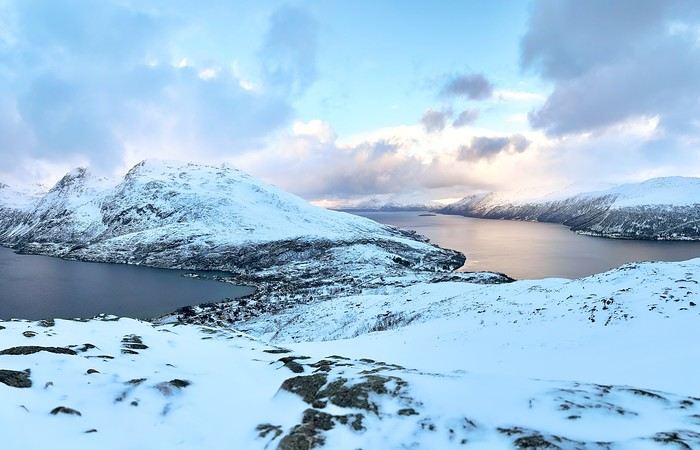
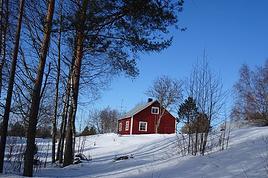 The North Cape by 4x4 in the Snow
 Kattegat Tour and Norway’s Majestic Fjords – 32 Days (Denmark, Sweden, Norway)
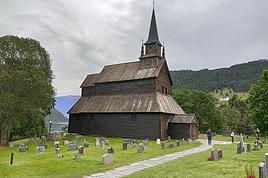 A Scandinavian Tour - Summer 2025
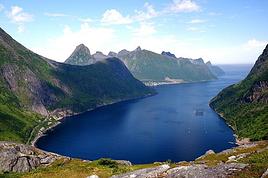 Exploring Senja Island and the Lofoten Archipelago
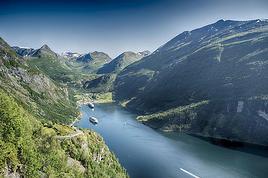 Norway: Nomadic holidays between fjords and northern islands
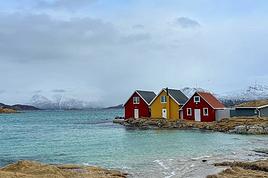 A wonderful week around Tromsø, Kvaløya, and the Lyngen Alps
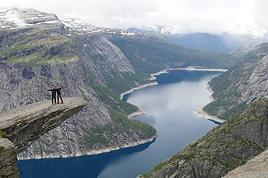 Three weeks in Norway (July 2022): fantastic memories despite the rain
 Trek in Norway: Jotunheimen and Dovrefjell, you’ll adapt to the rain...