Can you take an electric bike on trains in Austria, Germany, and Switzerland?
Western Europe · Autriche
Allemagne, Belgique, Danemark, Espagne, France, Grèce, Hollande, Irlande, Italie, Norvège, Portugal, Suisse, Turquie...
Showing 1–30 of 936 discussions.
Many threads here are in French, the community’s main language. English translations are added over time.
Hello,
We’re heading to Bavaria from May 13 to 23, with a side trip to Austria.
Here’s our itinerary:
Day 1: Brussels-Munich
Day 2: Munich
Day 3: Munich and departure for Salzburg
We’ll be staying three nights in Salzburg.
Then we’ll head to Garmisch-Partenkirchen, where we’ll stay for five nights.
Visiting Munich and Salzburg isn’t too tricky.
Once in Garmisch, we’re planning a day in Innsbruck, a day for Neuschwanstein Castle, and the rest is still up in the air.
What’s really got me stumped is that we’d love to see Königssee Lake—everyone says it’s a must-see.
We’d also like to visit the Eagle’s Nest (Kehlsteinhaus), where the landscapes are supposedly stunning.
This would either be a round trip while we’re in Salzburg or on the way between Salzburg and Garmisch, but I’m guessing it’s impossible to do the drive from Salzburg to Garmisch, the Eagle’s Nest, *and* Königssee Lake all in one day.
Plus, the Alpine route between Salzburg and Garmisch seems prettier than the highway.
But honestly, I’m feeling a bit overwhelmed with the planning.
We should’ve added a stop between Salzburg and Garmisch, but the hotels are already booked.
Thanks for any advice on the itinerary and visits!
Another question: How far in advance should we book Neuschwanstein, Königssee, and the Eagle’s Nest in May?
Thanks so much in advance for your tips and ideas!
Hi everyone, we’re driving to Austria via Switzerland and we’d love some clarity on the highway stickers and tolls. Do we need one sticker to enter Austria and another for the tolls? I’m a bit lost here.
Gigi
Hi there,
I’d love your input, please. Here’s my itinerary: We’re leaving from Quebec for Rome – 4 nights Vienna – 9 nights Hallstatt – 2 nights Salzburg – 4 nights Innsbruck – 4 nights That leaves 3 nights to place somewhere between Innsbruck and Paris, ideally with a direct connection (I’ve looked but can’t find anything—I’m hoping you can help me out ). We’ll be returning to Quebec from Paris.
It could be a seaside spot to relax after what I’m sure will be an amazing trip, but that’s not a must. We also love beautiful cities and small villages.
Looking forward to your suggestions for these last 3 nights—thanks in advance! Have a great evening, Phantoma
I’d love your input, please. Here’s my itinerary: We’re leaving from Quebec for Rome – 4 nights Vienna – 9 nights Hallstatt – 2 nights Salzburg – 4 nights Innsbruck – 4 nights That leaves 3 nights to place somewhere between Innsbruck and Paris, ideally with a direct connection (I’ve looked but can’t find anything—I’m hoping you can help me out ). We’ll be returning to Quebec from Paris.
It could be a seaside spot to relax after what I’m sure will be an amazing trip, but that’s not a must. We also love beautiful cities and small villages.
Looking forward to your suggestions for these last 3 nights—thanks in advance! Have a great evening, Phantoma
Logo to follow
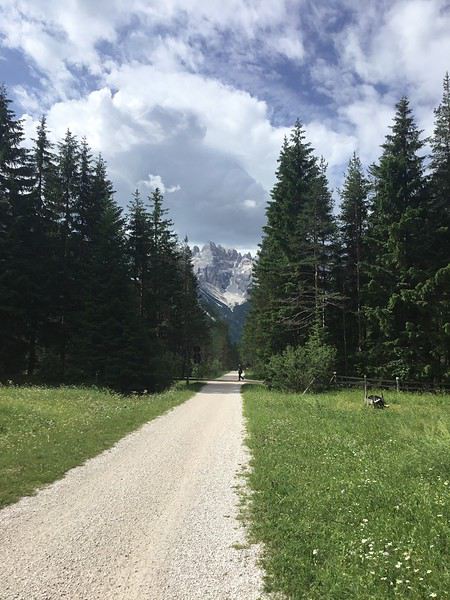
on the way to the Dolomites
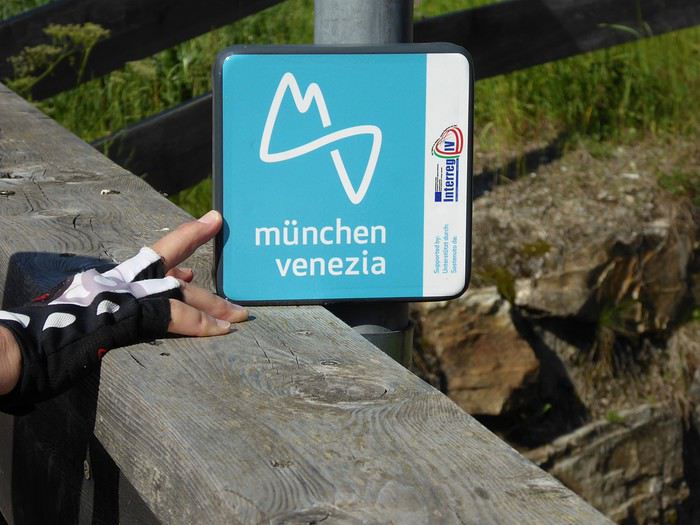
We’re back from our 6-day bike trip between Innsbruck and Venice from June 30 to July 6, 2019, on the well-marked Munich-Venice route.Our overall impressions: the route is really beautiful, especially for us during the first three stages: Gries am Brenner (AT) to Mühlbach or Rio di Pusteria (IT) – towns with dual names – Rio di Pusteria to Toblach or Dobbiaco – a town we really loved – and Dobbiaco to Pieve di Cadore.
The passage through the Dolomites on a path that’s half paved, half white gravel road is absolutely stunning, even if it’s quite a climb.😊
We chose accommodations in hostels, and luckily so, since there weren’t many campsites along the way. There were a few cyclists, but not too many. We had great weather, even very hot on the last stage from Treviso to Mestre. The arrival in Mestre isn’t very well signposted – several directions overlap and don’t lead you straight to Mestre. Once you find the right route, though, it’s pretty easy. We had a paper guide and GPS, which helped a lot. If you need info on the route, we can chat about it! Happy travels
Hi there,
In spring 2023, I headed to Romania by motorcycle. I’ve been going there for over 20 years—by car, bike, and plane—and I’ve really fallen for this country. I feel so at home there. The big difference this time? I had all the time in the world, no constraints at all.
I left the Paris region (IDF) and headed for the Sundgau, avoiding the motorways. I know a little hotel tucked away in the countryside there. The next day, I followed the Swiss border on a small road along the Lucelle River, which acts as the frontier. Around a bend, you cross to the other side and then back into France—kind of fun.

I crossed Switzerland via the motorway—I know the route well, so no sightseeing. I arrived in Austria, which I also know pretty well, and took the Arlberg Pass. It was deserted, everything was closed, and there was still snow.

The weather wasn’t great—it was raining—so I stopped for the night at a remote inn. Perfect for drying off! I set off in the rain the next morning and kept going. Gradually, the rain stopped. I took a detour through the Trentino-Alto Adige region and the Sella Pass. Up there, it was rain, snow, and a bit of black ice in a tunnel (wind + rain + sub-zero temps = skating rink).

I arrived in Burgenland to see the famous giant glass-and-metal grape cluster, the largest in Europe. The region is hilly, full of tiny roads, and covered in vineyards.

Burgenland

Then into Slovenia.

I stopped for the night at a winegrower’s B&B perched on a ridge straddling the Croatian border. The welcome was fantastic—I spent the evening with the owners and their friends who arrived later. The white wine was amazing! The next day, I hit the road again.

I headed for Vukovar, on the Danube, a symbol of resistance during the Balkan War. I found a really comfortable B&B by the river and stayed for two nights to explore. What a strange monument!

I visited the water tower, which you can go inside—it’s riddled with bullet holes. There’s an exhibition inside. I also checked out a museum of equipment used during the Balkan War. Since it’s in a barracks, it’s guarded. I asked if I could bring my motorcycle in, and a Croatian officer came to meet me and gave me permission, along with a sticker to put on the bike. I met some fellow bikers from Marseille riding beautiful vintage bikes.

I left Vukovar following the Danube toward Serbia. The rain caught up with me. The roads were busy, with construction causing mud everywhere and crazy truck drivers. At one point, I cut through the construction zone! I stopped for coffee in a village—it had a *Deliverance* vibe. Total silence when I walked in, and the owner gave me a suspicious look. Finally, the Romanian border... and the sun came out! The Romanian customs officer asked if I had anything to declare. "Yes—just happy to be back in Romania!" I stopped for the night at a *cabana* (mountain hut) lost in the forest. Chaos ensued—a tourist! So they rushed to get supplies, quench my thirst, give me a room, and then the owner took charge: țuică (plum brandy), omelette, beers... Everyone bent over backwards to make me happy.
I love these Romanian roads!


I passed through Băile Herculane, which isn’t as beautiful as it once was—everything’s run-down. What are they waiting for to restore this *Mittel Europa*-style spa town that’s still active?
I stopped at the birthplace of Constantin Brâncuși.

Keep your eyes peeled on the roads!

Via the Jiu Valley, I arrived in Craiova to visit my in-laws. A few days of laughs and outings. I picked up my wife at the airport.
My favorite brand

We took a trip to Horezu, a village famous for its beautiful ceramics.


After those few days together, I dropped my wife off at the airport, and the next day, I set off for Dobrogea, a region split in two after the war with Bulgaria. The road was dull—flat as far as the eye could see—but the sun was out. I followed a military convoy of about fifty vehicles, with orders not to overtake. I stopped by the roadside for some homemade *ciorbă* (sour soup). That evening, I stopped in Călărași. The next day, I crossed the Danube by ferry. There are two ferries—one goes to Bulgaria, the other stays in Romania.

A priest on board came over to bless the motorcycle, the rider, and the ferry. I arrived on the other side with some traffic. Dobrogea

It’s like that all the way to the Bulgarian border—no restaurants, hotels, or gas stations, just old collective farms. And it’s the same in Bulgaria! I stopped at Adamclisi, site of a major battle in Moesia (now Dobrogea) in 101–102 BC, one of Trajan’s most important Dacian Wars.

An oasis in the agricultural steppe.

I arrived at the Bulgarian border.

A customs officer—built like a weightlifter, shaved head, thick neck, and as square as a truck—saw me take this photo and came over to ask me to delete it. I did... but I didn’t empty the trash! The weather turned stormy. I arrived in Balchik, a resort town where the last queen of Romania, Maria, used to vacation.
The Black Sea and the Bulgarian coast

The weather wasn’t great, so I headed back to Romania to follow the coastline. Constanța and its casino

Then came the seaside resorts—just as ugly as each other: Neptun, Mangalia, Eforie Nord, Eforie Sud. I stopped at a B&B near the Danube Delta, in some random village. The welcome was nice. The next day, I headed for Dunavățu de Jos, the last stretch of tarmac in Romania. After that, it’s the Danube Delta. The area is flat and sandy, with typical houses featuring reed roofs.

Now, I’m following the Ukrainian border. I passed the last active quarantine station in Europe. I came across a funeral procession—it’s customary to honk as you pass. If you’re on foot, you cross yourself. When I arrived in Galați, it was raining. I boarded the ferry in a downpour. On board, we were packed in like sardines. As soon as the ramp hit land, the drivers rushed out, revving their engines and honking. I let them go and exited calmly. I continued toward the Székely Land. These are Hungarians who, back in the day, were border guards for the king. They’ve kept their own script (it looks like runes), their flag, and their independence streak. For them, Romania is Hungarian, despite the Treaty of Sèvres in 1920. There are still clashes between Romanians and Székely Hungarians now and then. Since I speak a bit of Romanian, I used it—logical, since it’s the language there—and it put everyone in a good mood! Székely flag

I passed through Bicaz Chei, arriving via one of my favorite kinds of roads. During a break, a bear came to check me out from a distance.

Bicaz Chei

I arrived at the "Heart of Jesus" monument, built by public subscription to thank God for sparing the village from severe flooding.

Now, I’m heading west—next stop, Transylvania, with the in-laws. On the road

Roma house

Bozorka—a Hungarian specialty... 450 grams of meat!
I made it back to France without any issues, already thinking about my next trip. Actually, I just got back from one!
I left the Paris region (IDF) and headed for the Sundgau, avoiding the motorways. I know a little hotel tucked away in the countryside there. The next day, I followed the Swiss border on a small road along the Lucelle River, which acts as the frontier. Around a bend, you cross to the other side and then back into France—kind of fun.

I crossed Switzerland via the motorway—I know the route well, so no sightseeing. I arrived in Austria, which I also know pretty well, and took the Arlberg Pass. It was deserted, everything was closed, and there was still snow.

The weather wasn’t great—it was raining—so I stopped for the night at a remote inn. Perfect for drying off! I set off in the rain the next morning and kept going. Gradually, the rain stopped. I took a detour through the Trentino-Alto Adige region and the Sella Pass. Up there, it was rain, snow, and a bit of black ice in a tunnel (wind + rain + sub-zero temps = skating rink).

I arrived in Burgenland to see the famous giant glass-and-metal grape cluster, the largest in Europe. The region is hilly, full of tiny roads, and covered in vineyards.

Burgenland

Then into Slovenia.

I stopped for the night at a winegrower’s B&B perched on a ridge straddling the Croatian border. The welcome was fantastic—I spent the evening with the owners and their friends who arrived later. The white wine was amazing! The next day, I hit the road again.

I headed for Vukovar, on the Danube, a symbol of resistance during the Balkan War. I found a really comfortable B&B by the river and stayed for two nights to explore. What a strange monument!

I visited the water tower, which you can go inside—it’s riddled with bullet holes. There’s an exhibition inside. I also checked out a museum of equipment used during the Balkan War. Since it’s in a barracks, it’s guarded. I asked if I could bring my motorcycle in, and a Croatian officer came to meet me and gave me permission, along with a sticker to put on the bike. I met some fellow bikers from Marseille riding beautiful vintage bikes.

I left Vukovar following the Danube toward Serbia. The rain caught up with me. The roads were busy, with construction causing mud everywhere and crazy truck drivers. At one point, I cut through the construction zone! I stopped for coffee in a village—it had a *Deliverance* vibe. Total silence when I walked in, and the owner gave me a suspicious look. Finally, the Romanian border... and the sun came out! The Romanian customs officer asked if I had anything to declare. "Yes—just happy to be back in Romania!" I stopped for the night at a *cabana* (mountain hut) lost in the forest. Chaos ensued—a tourist! So they rushed to get supplies, quench my thirst, give me a room, and then the owner took charge: țuică (plum brandy), omelette, beers... Everyone bent over backwards to make me happy.
I love these Romanian roads!


I passed through Băile Herculane, which isn’t as beautiful as it once was—everything’s run-down. What are they waiting for to restore this *Mittel Europa*-style spa town that’s still active?
I stopped at the birthplace of Constantin Brâncuși.

Keep your eyes peeled on the roads!

Via the Jiu Valley, I arrived in Craiova to visit my in-laws. A few days of laughs and outings. I picked up my wife at the airport.
My favorite brand

We took a trip to Horezu, a village famous for its beautiful ceramics.


After those few days together, I dropped my wife off at the airport, and the next day, I set off for Dobrogea, a region split in two after the war with Bulgaria. The road was dull—flat as far as the eye could see—but the sun was out. I followed a military convoy of about fifty vehicles, with orders not to overtake. I stopped by the roadside for some homemade *ciorbă* (sour soup). That evening, I stopped in Călărași. The next day, I crossed the Danube by ferry. There are two ferries—one goes to Bulgaria, the other stays in Romania.

A priest on board came over to bless the motorcycle, the rider, and the ferry. I arrived on the other side with some traffic. Dobrogea

It’s like that all the way to the Bulgarian border—no restaurants, hotels, or gas stations, just old collective farms. And it’s the same in Bulgaria! I stopped at Adamclisi, site of a major battle in Moesia (now Dobrogea) in 101–102 BC, one of Trajan’s most important Dacian Wars.

An oasis in the agricultural steppe.

I arrived at the Bulgarian border.

A customs officer—built like a weightlifter, shaved head, thick neck, and as square as a truck—saw me take this photo and came over to ask me to delete it. I did... but I didn’t empty the trash! The weather turned stormy. I arrived in Balchik, a resort town where the last queen of Romania, Maria, used to vacation.
The Black Sea and the Bulgarian coast

The weather wasn’t great, so I headed back to Romania to follow the coastline. Constanța and its casino

Then came the seaside resorts—just as ugly as each other: Neptun, Mangalia, Eforie Nord, Eforie Sud. I stopped at a B&B near the Danube Delta, in some random village. The welcome was nice. The next day, I headed for Dunavățu de Jos, the last stretch of tarmac in Romania. After that, it’s the Danube Delta. The area is flat and sandy, with typical houses featuring reed roofs.

Now, I’m following the Ukrainian border. I passed the last active quarantine station in Europe. I came across a funeral procession—it’s customary to honk as you pass. If you’re on foot, you cross yourself. When I arrived in Galați, it was raining. I boarded the ferry in a downpour. On board, we were packed in like sardines. As soon as the ramp hit land, the drivers rushed out, revving their engines and honking. I let them go and exited calmly. I continued toward the Székely Land. These are Hungarians who, back in the day, were border guards for the king. They’ve kept their own script (it looks like runes), their flag, and their independence streak. For them, Romania is Hungarian, despite the Treaty of Sèvres in 1920. There are still clashes between Romanians and Székely Hungarians now and then. Since I speak a bit of Romanian, I used it—logical, since it’s the language there—and it put everyone in a good mood! Székely flag

I passed through Bicaz Chei, arriving via one of my favorite kinds of roads. During a break, a bear came to check me out from a distance.

Bicaz Chei

I arrived at the "Heart of Jesus" monument, built by public subscription to thank God for sparing the village from severe flooding.

Now, I’m heading west—next stop, Transylvania, with the in-laws. On the road

Roma house

Bozorka—a Hungarian specialty... 450 grams of meat!

I made it back to France without any issues, already thinking about my next trip. Actually, I just got back from one!
Hi there,
We're planning to ride the EuroVelo 6 by tandem this summer for two weeks (16 days).
We're torn between two routes: Passau-Budapest or Vienna-Belgrade. A third option could also be to go from Prague to Vienna and then continue to Budapest.
Which route would you recommend? Is the EuroVelo really crowded in the summer?
Thanks so much,
Camille
We're planning to ride the EuroVelo 6 by tandem this summer for two weeks (16 days).
We're torn between two routes: Passau-Budapest or Vienna-Belgrade. A third option could also be to go from Prague to Vienna and then continue to Budapest.
Which route would you recommend? Is the EuroVelo really crowded in the summer?
Thanks so much,
Camille
Hi there,
I’m interested in guides and maps for the Vienna/Budapest and Budapest/Belgrade stretches.
We’re planning to leave from Passau to Belgrade in early August.
Hi everyone,
We’re heading to Vienna in 3 weeks for a 5-day trip! After reading a few travel journals and discussions about this destination, I still can’t quite figure out what the must-sees are. Your itineraries are so varied that it’s hard to narrow it down!
Ideally, we’d like to explore Vienna without feeling like we’re stuck in museums. If you have recommendations for little green oases, short urban walking routes, or addresses for charming cafés, we’d love to hear them!
Thanks in advance for your help! !
We’re heading to Vienna in 3 weeks for a 5-day trip! After reading a few travel journals and discussions about this destination, I still can’t quite figure out what the must-sees are. Your itineraries are so varied that it’s hard to narrow it down!
Ideally, we’d like to explore Vienna without feeling like we’re stuck in museums. If you have recommendations for little green oases, short urban walking routes, or addresses for charming cafés, we’d love to hear them!
Thanks in advance for your help! !
I’m planning a family trip to Vienna next month, and I’m shocked by the entry prices.
Our itinerary includes the classic sights: Hofburg, National Library, Albertina, Schönbrunn, Belvedere, Fine Arts Museum, Natural History Museum, Secession… the total comes to around 200 € per person, and there are six of us!
I’m currently looking into combo tickets to see if we can save some money. There’s the Vienna Pass, but it’s still pretty expensive for the length of our stay.
Does anyone have any suggestions on this?
Our itinerary includes the classic sights: Hofburg, National Library, Albertina, Schönbrunn, Belvedere, Fine Arts Museum, Natural History Museum, Secession… the total comes to around 200 € per person, and there are six of us!
I’m currently looking into combo tickets to see if we can save some money. There’s the Vienna Pass, but it’s still pretty expensive for the length of our stay.
Does anyone have any suggestions on this?
I’m leaving from Munich in May to reach Bran (Dracula’s Castle in Romania).
The plan: crossing Austria, Hungary (via Lake Balaton), and Romania (through the Carpathians). The idea is to avoid following the EuroVelo 6 route.
Do you have any route ideas in Austria to get to Hungary? I get the feeling there aren’t many options for taking secondary networks, and most routes follow valleys carved out by major road axes.
Thanks for your ideas and experiences biking in Austria!
Cheers,
Do you have any route ideas in Austria to get to Hungary? I get the feeling there aren’t many options for taking secondary networks, and most routes follow valleys carved out by major road axes.
Thanks for your ideas and experiences biking in Austria!
Cheers,
Hi there,
We’re planning our itinerary for a month in September 2025 and would love your input, please.
We’re starting from Montreal, arriving in: Paris – 2 nights (already visited, just going back to see Notre-Dame again, 🫠) Ljubljana – 4 nights (we’ll explore the surrounding area, Bled +++) Vienna – 10 nights (we’ll visit nearby spots) Hallstatt – 2 nights Salzburg – 4 nights Innsbruck – 4 nights Barcelona – 4 nights on the way back to Montreal (the flight ticket was cheaper than returning from Vienna, plus it lets us visit another city 🙃😎)
We’ll be traveling by public transport 😎
Any relevant tips—activities, accommodations, or other info—would be greatly appreciated!
Thanks in advance
We’re starting from Montreal, arriving in: Paris – 2 nights (already visited, just going back to see Notre-Dame again, 🫠) Ljubljana – 4 nights (we’ll explore the surrounding area, Bled +++) Vienna – 10 nights (we’ll visit nearby spots) Hallstatt – 2 nights Salzburg – 4 nights Innsbruck – 4 nights Barcelona – 4 nights on the way back to Montreal (the flight ticket was cheaper than returning from Vienna, plus it lets us visit another city 🙃😎)
We’ll be traveling by public transport 😎
Any relevant tips—activities, accommodations, or other info—would be greatly appreciated!
Thanks in advance
After more than 11 years, I’ll be returning to Vienna soon. I remember from my last visit a beautiful restaurant with columns and stunning vaulted ceilings near the "Am Hof" square, but unfortunately, I’ve forgotten its name. Does anyone have any idea which restaurant I’m talking about?
Hi, what are the options for visiting Vienna between two flights in April? Ideally, departure and return to the airport. We’ll have our carry-on luggage.
Thanks in advance
Thanks in advance
Hi,
I’ll be visiting Vienna in February and I’d love recommendations for temporary exhibitions (it’s not my first trip, so I already know the museums well). Thanks!
Good evening,
New to this forum, I’d love to explore these two routes mentioned in the title—train travel is a real pleasure for me. 🙂
Has anyone taken the EuroCity Zurich–Munich or the Railjet Express Zurich–Vienna? How are they in terms of crowding, delays, onboard services, and scenery along the way?
Thanks in advance!
Has anyone taken the EuroCity Zurich–Munich or the Railjet Express Zurich–Vienna? How are they in terms of crowding, delays, onboard services, and scenery along the way?
Thanks in advance!
Hi,
Any suggestions for a traditional Austrian restaurant in Vienna (Austria)?
Thanks in advance,
Jc
I’ll be in Vienna from June 6th to 9th, 2024, and I’m looking for a classical music concert at a reasonable price (under 50 €). My searches haven’t turned up anything… If you’ve got any ideas…
Trop frustré de projets avortés et en manque de raids au long cours à cause de cette saloperie de virus, j'ai décidé de partir quand même. Ce sera donc la suite de ma transeuropéenne démarrée il y a un an à Oslo. Voir carnet Oslo - Hambourg.Je voudrais savoir où se trouve ce château, situé à l'Ouest de Vienne :
Bonsoir, je souhaiterai partir le mois d’août un week-end visiter vienne, le change et où je souhaiterai voir les principaux trucs à voir moderne architecture et centre commerciaux les rues principales et bien sûr l’ancien et l’histoire de vienne merci.
Bonjour tout le monde ! 🙂
Vu la situation sanitaire actuelle, je n'avais pas prévu de partir ce été mais finalement, j'en ressens quand même le besoin et prévois donc d'organiser "à la dernière minute" un voyage en Autriche (+ un peu de la Bavière).
Pourquoi l'Autriche ? Car je suis à la recherche de paysages grandioses, sauvages et que c'est un pays qui m'a toujours attiré. La Suisse étant plus chère, l'Autriche m'ira très bien ! 😎
Je compte donc partir 1 semaine-10 jours en Autriche, en axant mon voyage sur les paysages et la nature plutôt que les villes.
J'habite la Belgique et je m'y rendrai avec mon véhicule.
Ne connaissant encore rien à ce pays, je viens vers vous pour des conseils d'itinéraires. J'ai déjà une vague idée après mes quelques recherches mais vos conseils seront les bienvenus.
Grosso modo, je diviserais le voyage en trois parties : 1) Innsbruk et ses alentours, 2) Grossglockner/Route 107 et alentours, 3) Salzbourg et alentours.
Pour rendre le trajet aller moins pénible, j'envisage de m'arrêter à Munich et d'y dormir.
J1 : trajet Belgique-Munich (nuit à Munich) - visite de la ville J2 : de Munich au château de Neuschwanstein - visite du château - nuit dans la région J3 : de Munich à Alpspitze : visite de Alpspitze et Zugspitze - nuit dans la région J4 : de Alpspitze à Innsbruk : passage à Blindsee et autres points d'intérêt, viste d'Innsbruk - nuit à Innsbruk J5 : de Innsbruk à Solden : passage à Piburgersee, visite Solden - nuit à ? J6 : journée supplémentaire dans la région d'Innsbruk et alentours (est-ce nécessaire ?) J7 : de Innsbruk à Zemm am See - nuit à Zemm am See (ou autre) J8 : Grossglockner / Route 107 - nuit à Zemm am See (ou autre) J9 : de Zemm am See à Hallstatt - nuit à Hallstat (ou autre) J10 : de Hallstatt à Salzbourg - nuit à Salzbourg J11 : de Salzbourg à Berchtesgaden - visite du nid d'aigle - nuit à Berchtesgaden J12 : retour en Belgique
Est-ce que cet itinéraire vous paraît cohérent et faisable ? Le but étant encore une fois de profiter un maximum des paysages, de voir pas mal de choses sans pour autant courir non stop. On adore la photo donc on aimerait pouvoir profiter de chaque endroit, dans la mesure du possible.
Je ne connais rien au pays donc n'hésitez pas à me dire si je dois prévoir plus ou moins de temps à tel ou tel endroit.
Merci d'avance pour vos avis éclairés ! 🙂
Bonne fin de journée,
Jonafly
Vu la situation sanitaire actuelle, je n'avais pas prévu de partir ce été mais finalement, j'en ressens quand même le besoin et prévois donc d'organiser "à la dernière minute" un voyage en Autriche (+ un peu de la Bavière).
Pourquoi l'Autriche ? Car je suis à la recherche de paysages grandioses, sauvages et que c'est un pays qui m'a toujours attiré. La Suisse étant plus chère, l'Autriche m'ira très bien ! 😎
Je compte donc partir 1 semaine-10 jours en Autriche, en axant mon voyage sur les paysages et la nature plutôt que les villes.
J'habite la Belgique et je m'y rendrai avec mon véhicule.
Ne connaissant encore rien à ce pays, je viens vers vous pour des conseils d'itinéraires. J'ai déjà une vague idée après mes quelques recherches mais vos conseils seront les bienvenus.
Grosso modo, je diviserais le voyage en trois parties : 1) Innsbruk et ses alentours, 2) Grossglockner/Route 107 et alentours, 3) Salzbourg et alentours.
Pour rendre le trajet aller moins pénible, j'envisage de m'arrêter à Munich et d'y dormir.
J1 : trajet Belgique-Munich (nuit à Munich) - visite de la ville J2 : de Munich au château de Neuschwanstein - visite du château - nuit dans la région J3 : de Munich à Alpspitze : visite de Alpspitze et Zugspitze - nuit dans la région J4 : de Alpspitze à Innsbruk : passage à Blindsee et autres points d'intérêt, viste d'Innsbruk - nuit à Innsbruk J5 : de Innsbruk à Solden : passage à Piburgersee, visite Solden - nuit à ? J6 : journée supplémentaire dans la région d'Innsbruk et alentours (est-ce nécessaire ?) J7 : de Innsbruk à Zemm am See - nuit à Zemm am See (ou autre) J8 : Grossglockner / Route 107 - nuit à Zemm am See (ou autre) J9 : de Zemm am See à Hallstatt - nuit à Hallstat (ou autre) J10 : de Hallstatt à Salzbourg - nuit à Salzbourg J11 : de Salzbourg à Berchtesgaden - visite du nid d'aigle - nuit à Berchtesgaden J12 : retour en Belgique
Est-ce que cet itinéraire vous paraît cohérent et faisable ? Le but étant encore une fois de profiter un maximum des paysages, de voir pas mal de choses sans pour autant courir non stop. On adore la photo donc on aimerait pouvoir profiter de chaque endroit, dans la mesure du possible.
Je ne connais rien au pays donc n'hésitez pas à me dire si je dois prévoir plus ou moins de temps à tel ou tel endroit.
Merci d'avance pour vos avis éclairés ! 🙂
Bonne fin de journée,
Jonafly
bonjour
est ce une bonne idée de passer qq jours a Munich mi aout?
j’envisage d'aller un peu a salzbourg et peut être a la montagne si ce n'est pas loin de Munich
fait il beau? est ce anime
merci !
Fleurs de montagne...
Nommez-les vous-mêmes.
La région : Dolomites de Lienz et Gailtaler Alpen.
Juillet 2020.
Bonjour,
Je relance une discussion un peu ancienne. Quelqu'un connait-il les possbilités de parking pour laisser la voiture une semaine afin de faire le tour du lac en vélo ? Merci par avance. Sophie
Bonjour
Je vais en Autriche avec ma voiture du 1 au 16 août. Etant donné les risques de fermetures de frontières je préfère l'acheter sur place. J'arriverai par Udine en Italie. Où puis je acheter cette vignette ? est ce possible sur l'autoroute , vaut il mieux prendre la route et trouver un tabac ou une poste ?
Bonjour,
je suis en train d'envilliser un voyage ferroviaire vers l'est (Milan-Téhéran).
J'ai une question sur le Vienne-Belgrade, dont la circulation est pour l'heure interrompue because travaux sur la voie entre Belgrade et Budapest, et donc pas moyen de voir ses arrêts. Quelqu'un qui aurait fait ce parcours saurait-il me dire si ce train s’arrête à Subotica ? Bizarrement, le site des trains serbes est d'ailleurs muet sur la liaison Subotica-Belgrade.
Merci.
Catherine
PS : Etait-ce un train de nuit ?
je suis en train d'envilliser un voyage ferroviaire vers l'est (Milan-Téhéran).
J'ai une question sur le Vienne-Belgrade, dont la circulation est pour l'heure interrompue because travaux sur la voie entre Belgrade et Budapest, et donc pas moyen de voir ses arrêts. Quelqu'un qui aurait fait ce parcours saurait-il me dire si ce train s’arrête à Subotica ? Bizarrement, le site des trains serbes est d'ailleurs muet sur la liaison Subotica-Belgrade.
Merci.
Catherine
PS : Etait-ce un train de nuit ?
Il a été dit que l'autriche ouvrait ses frontières hormis celle avec l'Italie mais je m'assurais de cette information. Les frontières suisse-autriche sont elles ouvertes par voie terrestre? j'ai aussi lu qu'il faut un test. Est ce vrai?
Nous avons déposé ce soir une demande officielle d'aide d'Etat", a déclaré à l'agence de presse APA le porte-parole d'AUA, Peter Thier, mentionnant ce montant de 767 millions d'euros.
Une partie de la somme demandée est constituée de prêts remboursables, l'autre partie étant des subventions directes qui doivent encore être négociées, selon le porte-parole.
Ces aides entreraient dans le cadre du fonds de 15 milliards d'euros récemment créé par l'Etat autrichien pour venir en aide aux entreprises via une nouvelle agence de financement baptisée COFAG. Au total, le gouvernement autrichien a prévu 38 milliards d'euros de mesures de soutien à l'économie pour affronter la crise économique liée à la pandémie.
Austrian Airlines, dont la quasi totalité des avions sont cloués au sol depuis le 18 mars et au moins jusqu'au 3 mai, avait annoncé la semaine dernière la réduction de 25% de sa flotte à l'horizon 2022, conséquence du choc encaissé par le transport aérien.
La compagnie autrichienne avait ajouté ne pas espérer avant 2023 un retour de la demande à un niveau comparable à celui précédant la crise.
Sont autorisés à entrer les travailleurs frontaliers et les marchandises.
Encore beaucoup de vols annulés pour demain à partir de 8h00.
Recommended for you
Hambourg-Vienne-Munich en vélo soloFR
Une semaine à VienneFR
Balade viennoiseFR
Retour de 15 jours dans les Alpes bavaroises et autrichiennesFR
Il fallait que je revienne à Vienne (voyage en train et visites à vélo)FR
Un peu d'Allemagne, d'Autriche, de Republique Tchèque, de Pologne, de Hongrie et d'ItalieFR
De l'Alsace à Vienne en passant par le TyrolFR