Hi everyone,
I’d love to explore Colombia next winter and, of course, I’m really keen to discover the country’s natural wonders. However, I know that despite impressive progress, there are still security issues in Colombia, and that remote mountainous forest areas were once favored by guerrillas and drug traffickers as hideouts. I assume things are different now. I’m well aware that big cities like Bogota, Medellin, and Cartagena require extra vigilance, but that seems pretty normal in itself.
But I’d like to know if it’s possible—and safe enough—to rent a car and explore the national parks and nature reserves on my own, without a guide (such as Parque Nacional Natural Chingaza, Parque Nacional Natural Páramo de Iguaque, Parque Nacional Natural Serranía de los Yariguíes, Pico Cristóbal Colón, etc.).
Of course, I’m also aware of the dangerous wildlife (pumas, jaguars, snakes, spiders, crocs, etc.), but that’s another story.
Thanks for your replies! :-)
South America · Colombia
Argentina, Bolivia, Brazil, Chile, Colombia, Ecuador, Guyana, French Guiana, Paraguay, Peru, Suriname, Uruguay, Venezuela...
Showing 31–43 of 43 discussions in English.
Hi everyone,
I’m coming back to ask for your valuable advice once again (which has already helped me out multiple times for other trips, thanks! 🙂) for a 3.5-week itinerary in Colombia this January. We’re traveling as a couple, backpacking, and our trip will be by bus only (unless we crack and take a plane once, but we’d prefer to avoid it).
To avoid rushing around and because we want to steer clear of the tourist crowds on the Caribbean coast, we’ve planned a route that might seem a bit off the beaten path. Could you let me know what you think, please?
We land in Bogotá -> Armenia (Cocora Valley) -> Coffee Region -> Medellín -> Guatapé and Jardín -> Capurganá and Sapzurro -> back to Bogotá (or Páramo de Ocetá if we have time).
We’re more drawn to relaxed spots without too many tourists, and we’d really love to swim in a beautiful place (we live in Quebec, and it’s pretty tough to swim in the sea, especially in January!).
Thanks to all of you!
Hi there! I’m a 43-year-old woman planning to travel solo in early March. I’m not into commercial resorts, so I’m looking for places like youth hostels or *casas particulares* where I can meet other travelers. I’d love to do a mix of activities—ideally snorkeling, hiking, Latin dance, group tours, biking, etc. Mostly, I want to meet people (not necessarily a man, just folks in general!). My dream spot would be somewhere I can do Latin dance almost every night, but I’m open to other suggestions. Thanks!
After about 12 hours of flying from Toulouse (via Paris), we landed in Bogotá six years after our first trip to Colombia. This time, our journey will be very different, with only this stop in the Colombian capital in common.
Our travel itinerary
Bogotá / La Macarena (Caño Cristales) / Villa de Leyva / Barichara / San Gil / Girón / Mompox / Ciénaga and the Santa Marta lagoon / Minca / Los Naranjos (Tayrona Park) / Bogotá.
Step 1: Bogotá (and Nemecon)
Bogotá (1/3)
This morning, we had a meet-up with Flora from Aventure Colombia, who helped me organize one of our stops, a few transfers, and tomorrow’s day trip, the program of which I changed at the last minute after deciding to skip the visit to the Salt Cathedral of Zipaquirá. Flora is a kind and lovely person, always available, and she did everything to answer my questions and give me advice.
She’s a local contact I highly recommend. Flora can help you plan your trip, whether you want a fully organized tour or, like us, just need assistance with a specific stop or one or more transfers between cities.
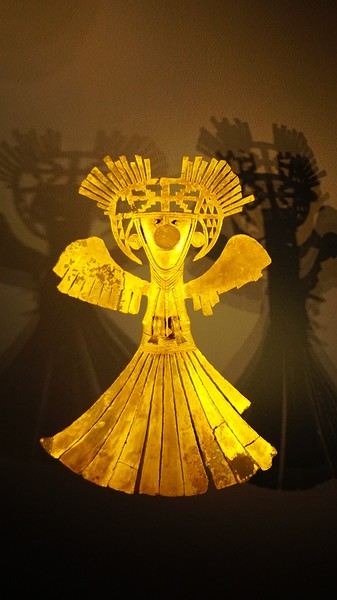
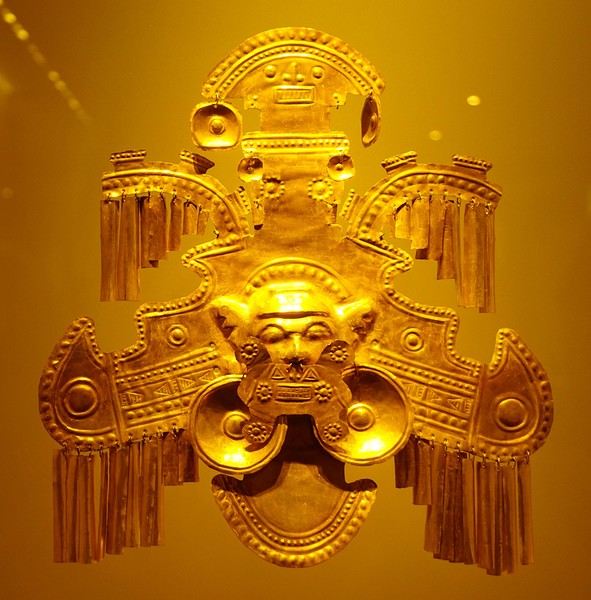
We left Flora after setting a meet-up for our return to Bogotá in a month. As we walked out of her agency, we headed to the wonderful Gold Museum, located just a hundred meters away. I was excited to revisit this amazing museum.
Note: Free entry for those over 60, regardless of nationality. Just show your passport.
Like six years ago, I was amazed by its museography, the beauty of the pieces on display, and that breathtaking shamanic room.
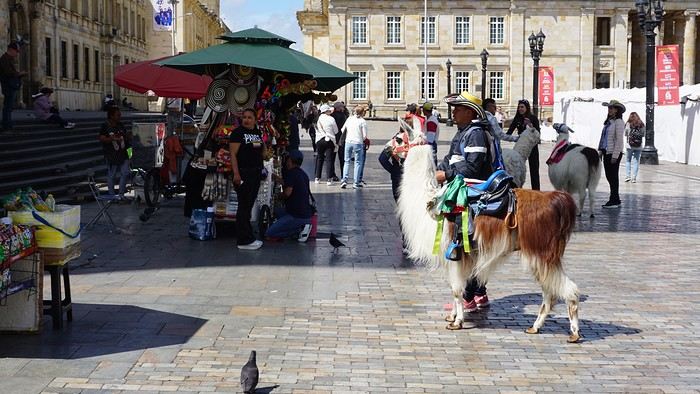
About two hours later, we decided to walk (careful, it’s a climb!) to the Monserrate cable car (3152m). Long wait to buy tickets and board the cable car! Once we arrived, a few raindrops, an impressive panoramic view of Bogotá’s vastness, a quick visit to the basilica (a pilgrimage site for Colombians), a walk through the tourist market, and at the top, plenty of small restaurants where we had our first Colombian meal. After our hearty lunch, we were lucky to see the sun return! No line for the descent. We then headed back to the hotel because Justine wanted to rest and recover from the trip. As for me, I continued my walk. I discovered a really nice craft market recommended by Flora, Pasaje Rivas, returned to Bolívar Square, and wandered through different streets, including the main pedestrian avenue (Calle 7), where there’s always something to see.
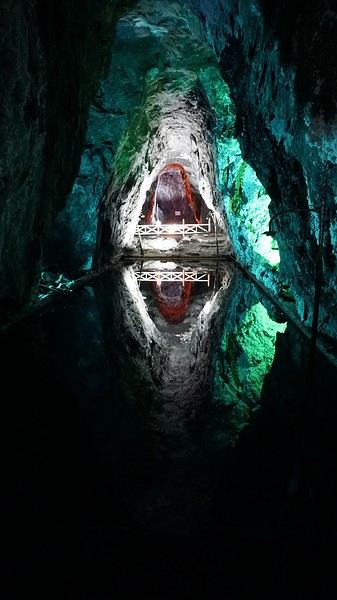
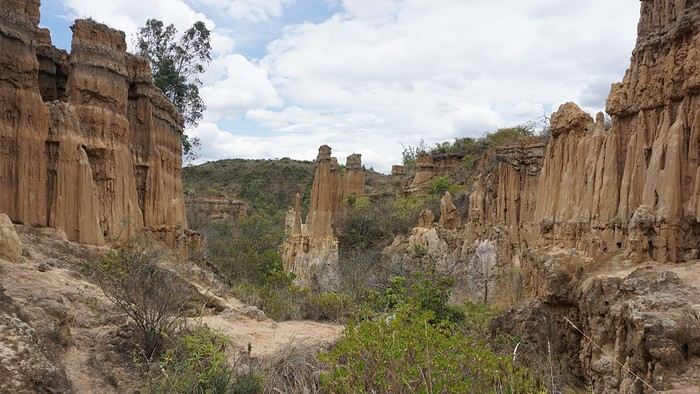
Tomorrow, a change of scenery as we head out for a hike in a small desert (Desierto de Chueca), located about 2 hours from Bogotá in the village of Nemecon. For this outing from Bogotá, with Flora’s help, we booked a car with a driver for the day. Flora also took care of booking the guide (since the site can only be visited with one). Nemecon (2/3) Today, we went to Nemecon to hike about 7.5 km in the ‘Desert of Checua.’ It’s nothing like sandy deserts! Instead, it’s geological formations sculpted by time, wind, and water. After two hours on the road—almost one of them spent navigating traffic jams with cars, trucks, buses, and a continuous flow of motorcycles on either side of our taxi—we reached Nemecon! The village center is really (too?) quiet. We met up with Deisy and headed toward the ‘desert,’ about twenty minutes away on a bumpy dirt road. Once there, a quick briefing, and off we went! Deisy didn’t stop talking (in Spanish) for over 3 hours!!! She told us so much about her region (flower farming, water management, traditions, songs, etc.), the origin of the site, and even mentioned Antonio Banderas, who filmed *The 33* in the village’s salt mine (the story of the survival of 33 Chilean miners after a collapse in their copper and gold mine). One hour of walking to reach the site, one hour to explore it, and one hour to return.
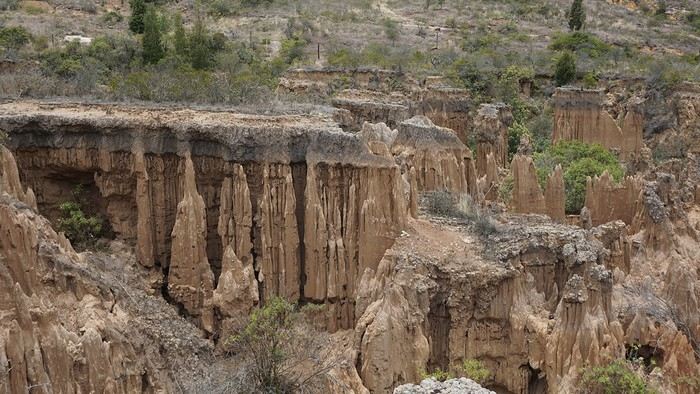

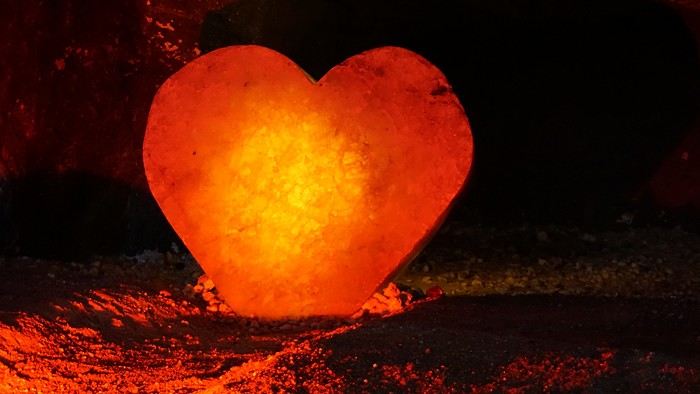
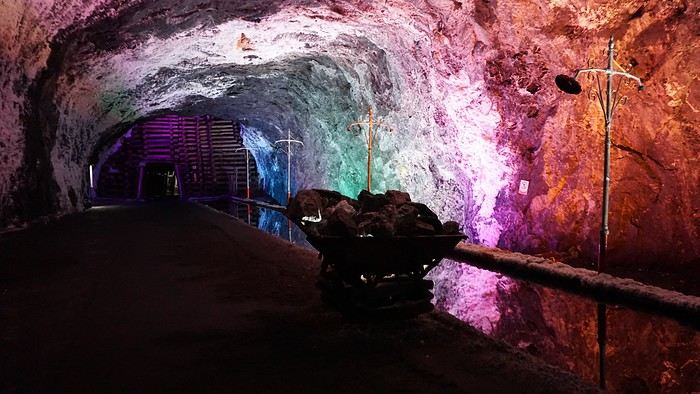
The advantage of this non-stop chatter was that it forced us to brush up on our Spanish at lightning speed. I even wondered if the effort to concentrate wasn’t more exhausting than the physical effort! Especially since on the way back, I got an oral quiz. Deisy wanted to make sure I remembered some of the information she’d given me during the visit: why is this rock white, that one red, and that one black? Back in the village, we had lunch at a restaurant recommended by Deisy before visiting the Nemecon salt mine. Before entering, a guide spent a good half-hour explaining the origin of the salt and the presence of many fossils in the area. Again, concentrating was tough because all the comments were exclusively in Spanish! An hour and a half wandering through the tunnels with a ‘lovely miner’s helmet’ on our heads!


We met our driver at the mine entrance. The return to Bogotá was a bit faster, but traffic in the city center was still heavy! We arrived in front of our hotel between 8:00 and 8:30 PM. It’s been a pretty intense start to the trip! Tonight, our legs are tired. Hopefully, tomorrow will be a bit more relaxed! Bogotá (3/3) We started the day by visiting the Santa Clara Church Museum, located next to the presidential palace. Alejandra (from the local agency ‘Gaia Tours Colombia,’ which organized our stay in Caño Cristales (La Macarena)) had recommended this visit for its rich mural paintings.

A few hundred meters further, after crossing the Plaza Mayor again, we visited the cultural complex housing the Botero Museum, the Mint Museum, and the Bank of the Republic Art Museum. Note that entry is free for all three museums. Botero Museum: There are fewer works by Botero here than in the Medellín museum, but more paintings and sculptures by other artists, all from Botero’s private collection (donated to Colombia). Mint Museum: We limited ourselves to visiting one room (on Flora’s advice) where three gold and gemstone monstrances and a Christ with a crown of emerald thorns are displayed. Photos are not allowed. Art Museum: We visited two temporary exhibitions. Lunchtime came quickly. We had a good meal at a reasonably priced small restaurant in the La Candelaria micro-district, near the Chorro de Quevedo square. We decided to spend the afternoon wandering the streets and alleys of the historic center to discover local street art.

We also passed through very lively pedestrian streets. I also decided to revisit Pasaje Rivas to show Justine all the shops selling more or less artisanal products. Tomorrow morning, we fly to La Macarena at 10:30 AM. Not to dance (you’d be surprised if I told you we were going to take a South American dance class, right?!), but to visit the fabulous Caño Cristales, a river naturally colored by aquatic plants. The planned program includes hiking, horseback riding, canoeing, and swimming among these plants. This site was long inaccessible because the area was controlled by the FARC. Access and tourism development became possible after agreements and amnesty measures between the Colombian government and paramilitary groups. As in other regions, former FARC members have been able to transition into various tourism-related activities.


About two hours later, we decided to walk (careful, it’s a climb!) to the Monserrate cable car (3152m). Long wait to buy tickets and board the cable car! Once we arrived, a few raindrops, an impressive panoramic view of Bogotá’s vastness, a quick visit to the basilica (a pilgrimage site for Colombians), a walk through the tourist market, and at the top, plenty of small restaurants where we had our first Colombian meal. After our hearty lunch, we were lucky to see the sun return! No line for the descent. We then headed back to the hotel because Justine wanted to rest and recover from the trip. As for me, I continued my walk. I discovered a really nice craft market recommended by Flora, Pasaje Rivas, returned to Bolívar Square, and wandered through different streets, including the main pedestrian avenue (Calle 7), where there’s always something to see.

Tomorrow, a change of scenery as we head out for a hike in a small desert (Desierto de Chueca), located about 2 hours from Bogotá in the village of Nemecon. For this outing from Bogotá, with Flora’s help, we booked a car with a driver for the day. Flora also took care of booking the guide (since the site can only be visited with one). Nemecon (2/3) Today, we went to Nemecon to hike about 7.5 km in the ‘Desert of Checua.’ It’s nothing like sandy deserts! Instead, it’s geological formations sculpted by time, wind, and water. After two hours on the road—almost one of them spent navigating traffic jams with cars, trucks, buses, and a continuous flow of motorcycles on either side of our taxi—we reached Nemecon! The village center is really (too?) quiet. We met up with Deisy and headed toward the ‘desert,’ about twenty minutes away on a bumpy dirt road. Once there, a quick briefing, and off we went! Deisy didn’t stop talking (in Spanish) for over 3 hours!!! She told us so much about her region (flower farming, water management, traditions, songs, etc.), the origin of the site, and even mentioned Antonio Banderas, who filmed *The 33* in the village’s salt mine (the story of the survival of 33 Chilean miners after a collapse in their copper and gold mine). One hour of walking to reach the site, one hour to explore it, and one hour to return.

The advantage of this non-stop chatter was that it forced us to brush up on our Spanish at lightning speed. I even wondered if the effort to concentrate wasn’t more exhausting than the physical effort! Especially since on the way back, I got an oral quiz. Deisy wanted to make sure I remembered some of the information she’d given me during the visit: why is this rock white, that one red, and that one black? Back in the village, we had lunch at a restaurant recommended by Deisy before visiting the Nemecon salt mine. Before entering, a guide spent a good half-hour explaining the origin of the salt and the presence of many fossils in the area. Again, concentrating was tough because all the comments were exclusively in Spanish! An hour and a half wandering through the tunnels with a ‘lovely miner’s helmet’ on our heads!


We met our driver at the mine entrance. The return to Bogotá was a bit faster, but traffic in the city center was still heavy! We arrived in front of our hotel between 8:00 and 8:30 PM. It’s been a pretty intense start to the trip! Tonight, our legs are tired. Hopefully, tomorrow will be a bit more relaxed! Bogotá (3/3) We started the day by visiting the Santa Clara Church Museum, located next to the presidential palace. Alejandra (from the local agency ‘Gaia Tours Colombia,’ which organized our stay in Caño Cristales (La Macarena)) had recommended this visit for its rich mural paintings.
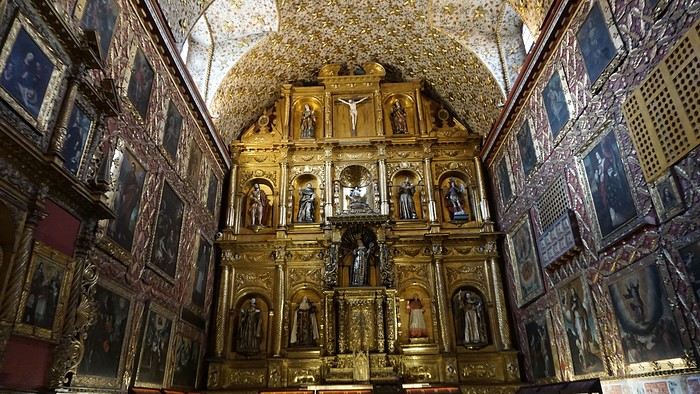
A few hundred meters further, after crossing the Plaza Mayor again, we visited the cultural complex housing the Botero Museum, the Mint Museum, and the Bank of the Republic Art Museum. Note that entry is free for all three museums. Botero Museum: There are fewer works by Botero here than in the Medellín museum, but more paintings and sculptures by other artists, all from Botero’s private collection (donated to Colombia). Mint Museum: We limited ourselves to visiting one room (on Flora’s advice) where three gold and gemstone monstrances and a Christ with a crown of emerald thorns are displayed. Photos are not allowed. Art Museum: We visited two temporary exhibitions. Lunchtime came quickly. We had a good meal at a reasonably priced small restaurant in the La Candelaria micro-district, near the Chorro de Quevedo square. We decided to spend the afternoon wandering the streets and alleys of the historic center to discover local street art.
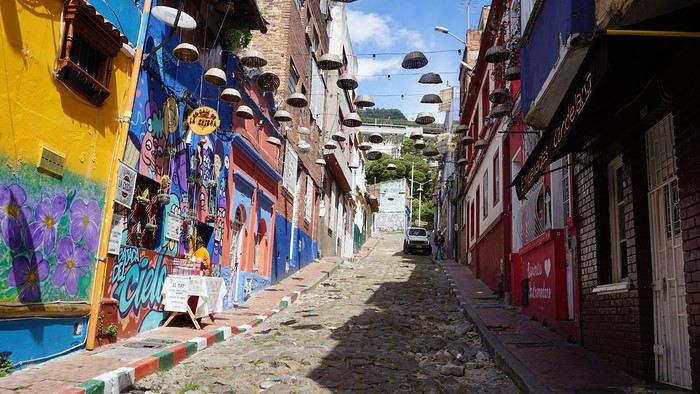
We also passed through very lively pedestrian streets. I also decided to revisit Pasaje Rivas to show Justine all the shops selling more or less artisanal products. Tomorrow morning, we fly to La Macarena at 10:30 AM. Not to dance (you’d be surprised if I told you we were going to take a South American dance class, right?!), but to visit the fabulous Caño Cristales, a river naturally colored by aquatic plants. The planned program includes hiking, horseback riding, canoeing, and swimming among these plants. This site was long inaccessible because the area was controlled by the FARC. Access and tourism development became possible after agreements and amnesty measures between the Colombian government and paramilitary groups. As in other regions, former FARC members have been able to transition into various tourism-related activities.
Hi there,
On the apps.migracioncolombia form, they’re asking for my local stay address, including a phone number. Since we’ll be moving around a lot, we don’t have a fixed address. What should I do?
Thanks in advance!
Hi,
I read on a blog that for long overnight trips, there’s a "cama" category and even "cama VIP". I’m planning a Santa Marta/Bucaramanga route, but I can’t find this option on the bus company websites. Has anyone already done this route, and under what conditions? Thanks for your feedback!
Hi there, I just wanted to warn those who want to reach the beaches of Tayrona Park by lancha.
If you're not a fan of thrills or prone to seasickness, opt for the car instead.
We did this 40-minute lancha trip to Playa Cristal, with rough seas and huge waves that nearly capsized the boat several times.
And we arrived at Playa Cristal completely soaked—though that wasn’t too bad, really...
Anyway, the beaches and the park are amazing.
Hi,
I’m trying to book 2 flight tickets on SATENA’s website. After entering my personal details, it asks for: "Business name, fiscal identification and fiscal ID"... and I can’t skip this step. Can anyone help me out? Thanks in advance
Hi,
I’d love to spend a night in the park to enjoy it without rushing, but I’m shocked by the prices and the poor quality of the accommodations I’ve found on Booking. Are there any other more reasonable options on-site (aside from tents and hammocks, which aren’t for us...)? Also, is it risky not to book ahead for a trip in March? Thanks for your feedback!
What are the different steps to withdraw money from an ATM?
Brunomichele
Hi there,
we’re heading to Colombia from mid-January to mid-February 2025 and we’d love to visit the Tierradentro and San Agustín sites in February. We’ve heard these sites are closed on Tuesdays during the low season—but when exactly *is* the low season? We need to plan our bus routes.
Thanks in advance!
Anne
Hi there,
I’d love some tips for visiting the Chocó region near the Pacific in Colombia. I’m assuming I’ll fly in... Where should I stay? Where can I walk in the forest (without a guide)? Where can I see wildlife, go diving, hiking, and what are the best places to stay? Also, how do I get around, etc.?
Thanks in advance!
Bernard
Hello everyone. Colombia is a country that has been plagued by clichés for decades—often unflattering ones—that, of course, don’t reflect (or only in a very caricatured way) the realities. Having lived in Cali for eight years, where I worked, I discovered a land full of life, colors, and diversity. If you're planning to explore this country that gave birth to the myth of El Dorado (which, by the way, is the name of Bogotá’s airport), you can certainly pick up the various guides published about it. For my part, I’d like to recommend one of the rare "beautiful books" (photos and text) dedicated to this country. It’s just been released by Géorama and is titled *Colombia, Magia de la Vida*. Click here to learn more by browsing the official site. I’m the author, and I’m happy to answer any questions or comments about Colombia or this book. Thanks, and happy travels!
Recommended for you
From Caño Cristales to Tayrona Park
3 weeks in Colombia in August 2024
Brazil 2020: Amazon, Northeast, Chapada, and Boipeba – a winning combo!
Polynesia: How to choose between the Society Islands, Tuamotu, and the Marquesas?
A Few Days in Turkmenistan from Uzbekistan
Slovak travel journal
14 Days in Japan – September-October 2026
Trek in Norway: Jotunheimen and Dovrefjell, you’ll adapt to the rain...
1,749 more discussions in this forum are in French. Browse them on the French forum