Exceptional session musician and virtuoso slide guitarist
On the late afternoon of October 29, 1971, one of the world’s greatest guitarists, Duane Allman, was riding his motorcycle when he swerved to avoid hitting a flatbed truck that had suddenly stopped at an intersection. He ended up crashing into the back of the truck with such force that he was thrown under his bike, which skidded and dragged him for 50 feet (15 meters). The impact caused fatal injuries. Suffering from a collapsed chest, a ruptured coronary artery, and liver damage, Allman was pronounced dead three hours later. He was 24 years old. (adapted from The Guardian, 2026)
Duane Allman is widely regarded as one of the greatest guitarists of all time. He regularly appears in the top 10 rankings of the best guitarists on the planet, sometimes taking second place, just behind Jimi Hendrix.
Allman was an innovator who pushed electric guitar solos to new heights, especially when using a slide made from a Coricidin cough syrup bottle. He played a key role in creating the "Southern Rock" genre with The Allman Brothers Band and was at the heart of what many consider the best live album ever recorded (see below).
Additionally, Allman contributed to countless legendary recordings alongside artists like Wilson Pickett, Aretha Franklin, King Curtis, Boz Scaggs, and many others. He notably appeared on Derek and the Dominos’ cult double album, Layla and Other Assorted Love Songs, widely regarded as Eric Clapton’s masterpiece and one of the greatest rock and blues albums of all time.
These immense achievements would normally be the impressive legacy of a long and eventful career, but astonishingly, Allman accomplished all this in just a few short years—until his untimely death.
The Early Years
Howard Duane Allman was born on November 20, 1946, in Nashville, Tennessee. His brother, Gregory Lenoir (Gregg), was born a little over a year later, on December 8, 1947. In 1959, Gregg took a few guitar lessons, then bought his own guitar in 1960.
That same year, the two brothers attended a B.B. King concert, and Gregg began teaching his older brother the basics of guitar. Duane’s obvious talent allowed him to quickly surpass his younger sibling. Interestingly, both brothers were left-handed but played right-handed.
In July 1961, Duane bought a 1959 red Gibson Les Paul Junior. The two boys continued to practice diligently. During the first half of the 1960s, Duane and Gregg played in several bands, including The Kings, The Uniques, the Y Teens, The Misfits, The Shufflers, the Lindsay Morris Band, The House Rockers, Sweet William & The Stereos, and The Escorts.
In the summer of 1965, The Escorts changed their name to The Allman Joys, and Gregg began singing and playing the organ. Some of their recordings weren’t released until much later, in 1973, on an album titled Early Allman.
At the beginning of 1967, the Allman Joys changed their name to the Almanac, or Allman-Act, and moved to St. Louis, Missouri, where they met the Nitty Gritty Dirt Band and their manager. At his suggestion, the Allman-Act changed their name to the Hour Glass and relocated to Los Angeles. The group disbanded at the end of August 1968. Duane Allman went to Muscle Shoals in September and asked the owner of FAME Studios to hire him as a session musician. Allman eventually played on sessions for Clarence Carter and Wilson Pickett. Later that September, Gregg and Duane Allman reunited in Daytona Beach, Florida.
The Melody Master
It was during the second half of 1968 that Duane Allman discovered slide guitar—using a Coricidin cough syrup bottle as a slide. He studied recordings by blues and jazz greats like Robert Johnson, Elmore James, Muddy Waters, Kenny Burrell, Chuck Berry, and B.B. King, and later those of Jeff Beck and Eric Clapton.
While developing his slide style, Allman listened extensively to blues harmonica, particularly Sonny Boy Williamson’s, and replicated blues harmonica phrases on his slide guitar. He also studied jazz brass sections closely. He looped Miles Davis’ Kind of Blue endlessly.
All these varied influences gave birth to a unique guitar style, both fluid and raw, distinguished by impeccable timing and articulation. This is how Allman became a master of melody. He constructed his melodies and solos like a story, with a beginning, a middle, and an end.
Allman could play fast, but he also often used long phrases, modulating and varying the pitch of notes with exceptional fluidity and subtlety. Using feedback between his pickups and speakers to extend sustain was a key part of his sound. Allman was also an excellent rhythm and acoustic guitarist.
The Birth of the Allman Brothers Band
Allman played on numerous studio sessions, often uncredited since he was just lending a hand, but some of the most notable sessions were with Clarence Carter, Arthur Conley, Ronnie Hawkins, Boz Scaggs, and King Curtis. On November 27, 1968, he convinced Wilson Pickett to record a cover of The Beatles’ Hey Jude. Allman’s solo at the end of the track became legendary.
At the end of March 1968, Allman, seeking greater musical freedom, went to Jacksonville, where he began organizing jam sessions with friends. With Gregg Allman’s later arrival in Jacksonville, the first lineup of the Allman Brothers Band was complete. In addition to the two brothers, it included Dickey Betts on lead guitar, Berry Oakley on bass, and Butch Trucks and Jai Johanny "Jaimoe" Johanson on drums.
This grand lineup, featuring two drummers and two lead guitarists, would define the band’s sound. It resulted from Duane Allman hearing James Brown, the first bandleader to use two drummers, as well as his own studio overdubbing experiences, which created two melodic lines, sometimes doubled.
Southern Rock
The Allman Brothers Band began touring nonstop and built an excellent reputation as a live act. Gregg, too, flourished in his role as lead singer and songwriter. In August, the band went to Atlantic Studios in New York to record their self-titled debut album, released on November 4, 1969.
Despite mixed reviews, the album marked a significant artistic breakthrough and embodied the band’s "Southern Rock" style, blending rock, blues, jazz, and country. The band continued touring and recorded their second album, Idlewild South, over several months in 1970. It was released in September 1970.
Despite the band’s struggles to gain a wide audience, Duane Allman’s reputation as an exceptional guitarist spread worldwide. The Allman Brothers performed in Miami on August 26, while Eric Clapton and Derek and the Dominos were recording an album there. When Clapton learned that the guitarist from Hey Jude was playing in town, he attended the concert. The two guitar legends met after the show, hit it off immediately, and Duane Allman ended up playing on eleven of the fourteen tracks on Layla and Assorted Love Songs, including the title track.
The Most Influential
For the rest of 1970 and much of 1971, the Allman Brothers Band continued their relentless touring schedule. Given the band’s impressive reputation as a live act, releasing a live album was the logical next step: two concerts were recorded on March 12 and 13, 1971, at the Fillmore East in New York, and the barely edited result was released as the double album At Fillmore East. Upon its release on July 6, the album stormed the charts and became the Allman Brothers Band’s most successful record.
Over time, the significance of At Fillmore East grew so much that it is now considered one of the most influential live albums of all time. In 2004, the Library of Congress added it to the National Recording Registry, and it regularly appears in rankings of the greatest albums of all time. In 2020, the British newspaper *The Independent* called it "the greatest live album of them all."
In the fall of 1971, the Allman Brothers Band and Duane Allman were at the peak of their art in every way—until the tragedy of October 29.
A Grace
Everyone expected the Allman Brothers Band to call it quits, but they managed to record a double album in tribute to their fallen member. Eat a Peach was released in February 1972. The album went platinum. This success encouraged the band to continue, and they remained active—with a few brief breaks—until 2014. Gregg Allman wasn’t just a key member of the band; he also had a brilliant solo career until his death in 2017 at the age of 69.
What his younger brother Duane accomplished in his short life remains astonishing, and his guitar playing continues to inspire new generations of guitarists. More than fifty years after his death, his music still transcends time, generations, and cultures. This perfectly illustrates the power of music, and in these troubled times, it might be best to conclude with Allman’s own vision of it:
"There are a lot of different forms of communication, but music is absolutely the purest. You can’t hurt anybody with music. You can maybe offend somebody with songs and words, but you cannot offend anyone with music—it’s just all good. There’s nothing at all that could ever be bad about music. It’s a wonderful thing, a grace."
(
https://producelikeapro.com/blog/duane-allman/)
Discography:
1969: The Allman Brothers Band
1970: Idlewild South
1971: Live at Fillmore East (2 LPs)
1972: Eat a Peach (2 LPs)
1973: Brothers and Sisters
........
https://www.youtube.com/watch?v=0y8Q2PATVyI&list=RD0y8Q2PATVyI&start_radio=1
Wilson Pickett & Duane Allman: Hey Jude
https://www.youtube.com/watch?v=Dy0S2-MCfpA&list=OLAK5uy_koM0c6t-qGf4d7KVzIPnEffnoWKaLUaUQ&index=2
Duane Allman: Goin' Down Slow
https://www.youtube.com/watch?v=gSDf2Usd8n4&list=RDEMKoJ1OUR8x83z7RAVG4kw3w&index=7
Duane Allman: Blue Sky
https://www.youtube.com/watch?v=P8oZAeL084Q&list=RDEMKoJ1OUR8x83z7RAVG4kw3w&index=8
The Allman Brothers Band: Mountain Jam (Duane Allman part)
https://www.youtube.com/watch?v=FUvxRjYqjEQ&list=RDFUvxRjYqjEQ&start_radio=1
The Allman Brothers Band: Whipping Post









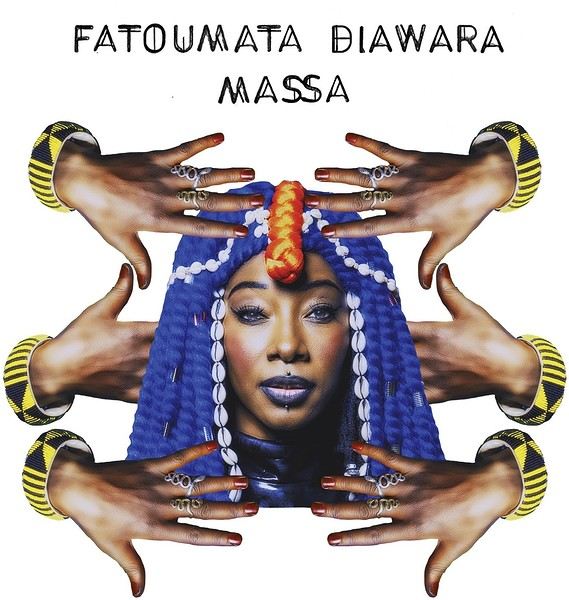

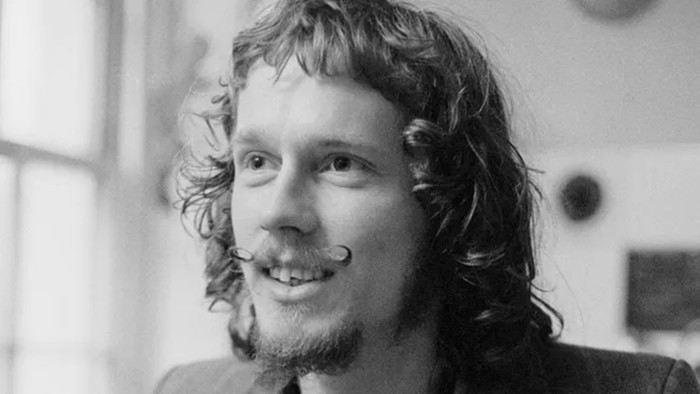 The musician
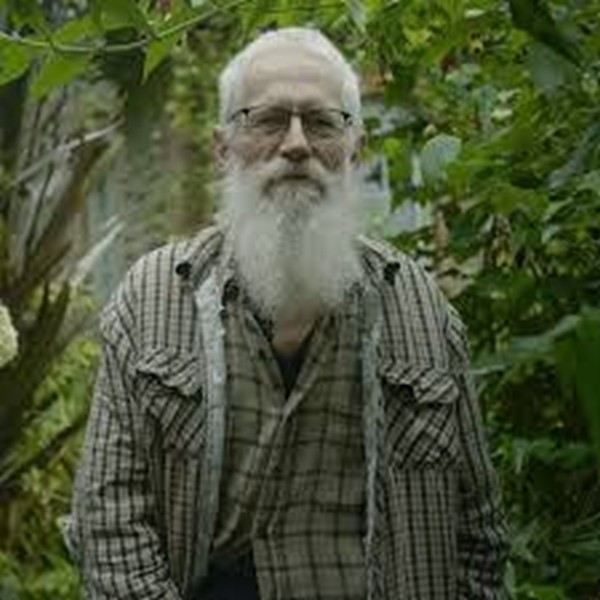 The painter
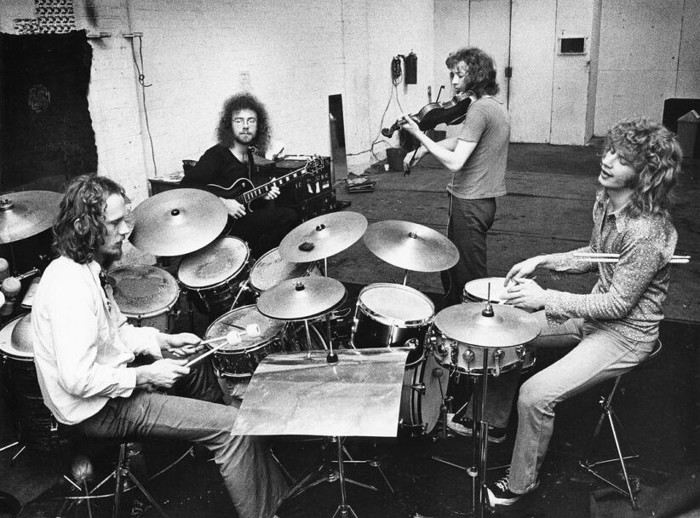 The band (l. to r.: Muir, Fripp, Cross, Bruford)
 Hi everyone,
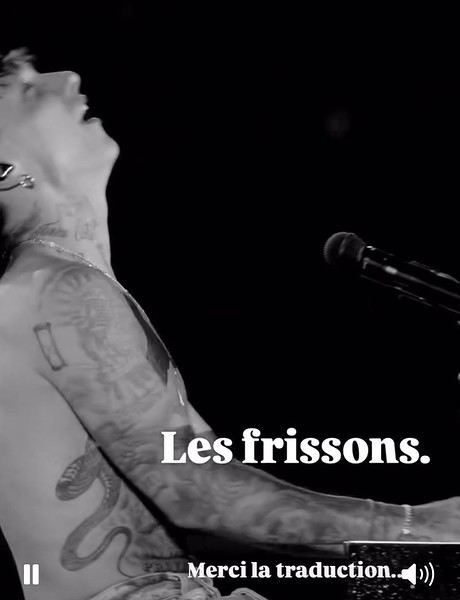
From this photo, can you tell me which song the artist Ultimo is performing—or at least give me as much info as possible so I can track down the title of this song?