World music
FR
TA
Taamaden last month
Rooted in tradition yet forward-looking
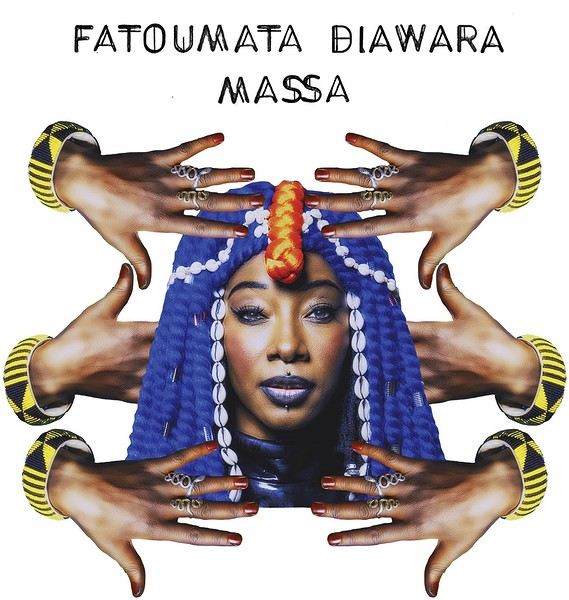
"Massa", Fatoumata Diawara's new album

Fifteen years after her debut album "Fatou" (World Circuit), Fatoumata Diawara has become a key figure on the international music scene. Born in Abidjan and raised in Bamako, this singer and guitarist began her career as an actress before turning to music in 2011. She has performed at prestigious festivals, including Glastonbury (UK) and Montreux (Switzerland), and shared the stage with international stars like Roberto Fonseca, Damon Albarn, and Paul McCartney. This artist effortlessly moves between continents and genres, all while singing in her native language, Bambara. Her new album "Massa", released in May on the Parisian label Nø Førmat!, was produced in collaboration with French musician -M- (Matthieu Chedid) and is her most personal work to date. Diawara explores both political resistance and her life as a daughter, mother, and artist. Musically, "Massa" draws from her homeland, Mali, blending West African traditions with pop, reggae, funk, electro, folk, and rhythmic structures from Afrobeat and jazz.

These stylistic blends never feel artificial or calculated. Traditional rhythms and melodic turns merge naturally with contemporary sounds, creating music that feels both familiar and fresh. But the album’s real strength lies in its songs—narrative pieces whose beauty comes from their sincerity, not spectacle. Her voice carries a unique power: it can be soft yet determined, vulnerable yet confident.

"Massa" is her most personal and introspective work yet. This globally acclaimed singer, songwriter, and guitarist also sees herself as a socially engaged artist—one who doesn’t just get people moving but aims to touch hearts and minds. She tackles social themes like the breakdown of human relationships, disappointment, betrayal, jealousy, and the complex dynamics of polygamous family structures. She also addresses female genital mutilation without preaching, instead sharing stories from her own experience that resonate universally.

Some artists preserve tradition. Others bring it to life. Fatoumata Diawara undoubtedly belongs to the latter. With "Massa", she creates an album deeply rooted in Mali’s musical heritage while speaking the language of the present.

hgb

https://fatoumatadiawaranoformat.bandcamp.com/album/massa

Open
TA
Taamaden last month
Improvisations on the Gayageum (Zither on a Curved Table)
New album from Korean artist DoYeon Kim, featuring an exceptional lineup

The "gayageum" is the name given to the zither on a curved table, a chordophone played across Central Asia (Vietnam, China, Korea, and Japan), existing in versions with 12 and 25 strings. It’s practically unknown in contemporary improvisational music, though Chinese musician Xu Fengxia has long demonstrated how brilliantly this instrument can be used in improvisations. Now, DoYeon Kim is following in her footsteps.

The Korean artist learned the gayageum traditionally. When DoYeon Kim moved to the United States a few years ago to study music, she began incorporating this plucked string instrument into contemporary music and experimenting with unconventional playing techniques.

Now based in Brooklyn, New York, DoYeon Kim recorded her new album Wellspring with an exceptional trio: Mat Maneri (viola), Tyshawn Sorey (drums), and Henry Fraser (bass). Four compositions are written and performed with precision and attention to detail, following the score, while the gayageum player also reveals herself as a dynamic vocalist. Three other tracks (Whispers Among Dawn, Diffraction, Linear System) are collective improvisations, each opening into a distinct sound world. One piece unfolds almost monochromatically from the sounds of bowed strings, while another features crackling gayageum notes, highlighted by glissandos and pronounced vibrato. In this track, the other instruments step back to let the earthy, woody tones of the strings fully blossom.

Wellspring, released in May 2026 on TAO Forms, marks her debut as a bandleader on record—and immediately establishes itself as a bold statement of intent. DoYeon Kim and her three fellow musicians craft an acoustic universe that draws from Korean traditions, the provocative energy of New York’s No Wave scene, and the open interactions of free jazz...


https://www.nytimes.com/video/arts/music/100000010874960/doyeon-kim-wellspring-gayageum.html

Audio:

https://www.youtube.com/playlist?list=OLAK5uy_kcUlgyo60w6WoKisn-30TLMyo7NA2ep_Q

https://www.wrti.org/podcast/late-set/2026-08-04/wellspring-with-doyeon-kim
Open
TA
Taamaden 4 months ago · Musiquemusic
In Memory of Jamie Muir (1942–2025)
Musician, monk, painter: The metamorphoses of Jamie Muir

James David "Jamie" Muir, a talented drummer and percussionist and brief member of King Crimson, who left the world of pop music and show business to retreat to a Buddhist monastery in Scotland before dedicating himself almost entirely to painting, passed away last year at the age of 81. His artwork was recently featured in two exhibitions in Cornwall and London...

Born in Edinburgh, Scotland, in 1942, Jamie Muir attended the College of Art there in the 1960s. Early on, he was drawn to jazz.

Later settling in London, Jamie Muir played jazz trombone before turning to percussion. Influenced by American drummers like Tony Williams, Kenny Clarke, and Milford Graves, as well as musicians such as Pharoah Sanders and Albert Ayler, he gravitated toward free music, meaning improvisation. It was during this time that he began assembling an arsenal of household objects he later used alongside his standard drum kit: rattles, whistles, horns, chimes, bells, gongs, sheets of metal, shakers, drums, and plastic bottles.

After a brief stint in a multimedia group, Jamie Muir worked with choreographer Lindsay Kemp (as did David Bowie), played music in the short-lived jazz-rock group Sunship (with guitarist Allan Holdsworth, formerly of Soft Machine), and became involved in the ensemble known as The Music Improvisation Society, with Derek Bailey, Hugh Davies, and Evan Parker between 1968 and 1971. The Music Improvisation Society recorded an album for the ECM label in 1971 (never reissued on CD except in Japan) and a posthumous album (1968–71). Both records gained a cult following among fans of experimental and improvised music. After this experience, Muir played in Pete Brown’s Battered Ornaments and then in the band Boris with Jamie Peters, Don Weller, and former Colosseum member Jim Roache. He also briefly joined Assagai, an Afro-rock group featuring South African and Nigerian musicians from the legendary South African band Blue Notes (including drummer Louis Moholo, saxophonist Dudu Pukwana, and trumpeter/flutist Mongezi Feza).

In the summer of 1972, Robert Fripp, leader and guitarist of King Crimson, whom a journalist from *Melody Maker* had suggested meet this percussionist from the English experimental scene, invited Jamie Muir to join the new King Crimson lineup he was assembling: Robert Fripp (guitar, mellotron), David Cross (violin), John Wetton (bass), Bill Bruford (drums), and Jamie Muir (percussion). "King Crimson was the ideal for me because it was a rock band that had more than three brain cells. I was very much more an instrumental style of musician rather than being song-based, and there weren’t many other bands that I would have been any good in. I was extremely pleased and felt completely at home with Crimson." Once formed, the new group honed their sound on stage from early October to mid-December 1972 (see the 1972 live albums in the discography below), before recording the album Larks’ Tongues in Aspic in early 1973. A grand album, one of the band’s best, and one of the best of the 1970s.

However, after a concert at the Marquee Club in London, Jamie Muir left not only the band but also the music world entirely, with immediate effect. During the six months Muir spent with King Crimson, his presence completely upended the group’s philosophy, loosening the notoriously strict rules imposed by Fripp and pushing the boundaries of improvisation. Jamie Muir’s contribution—clearly heard on Larks’ Tongues in Aspic—was to introduce a touch of anarchy into Robert Fripp’s music, which was usually so tight, rational, and meticulously structured.

Muir returned to Scotland, to the Samye Ling Monastery near Eskdalemuir in Dumfries and Galloway (in the south), where he spent several years as a Buddhist monk, the pleasures of his former life giving way to retreat and meditation.

Muir came back to London and music in the 1980s, playing and recording with Derek Bailey and Evan Parker from the Music Improvisation Company, as well as with former King Crimson member Michael Giles on the soundtrack for the independent British film Ghost Dance (1983).

In 1990, Muir left music behind once more and increasingly devoted himself to painting, a discipline he maintained until his death. In his later years, he began exploring digital art as another form of expression.

In recent years, he lived in Penzance, Cornwall, where he passed away in February 2025.

Hery

Discography:

A. Jamie Muir with King Crimson: • Larks’ Tongues In Aspic (1973) • Larks’ Tongues In Aspic (The Complete Recordings) (2023, 4 CDs) • Cosmic Muir (1998, Japan, unofficial release) • The Beat Club Bremen 1972 (1999) • Live at the Zoom Club Frankfurt, Germany (October 13, 1972) (2002, 2 CDs) • Live in Guildford (November 13, 1972) (2003) • Live in Newcastle (December 8, 1972) (2019, mono) B. Jamie Muir and other projects: • The Music Improvisation Company: The Music Improvisation Company (1970) • The Music Improvisation Company: 1968–1971 (1976) • Derek Bailey / Jamie Muir: Dart Drug (1981) • Michael Giles / Jamie Muir / David Cunningham: Ghost Dance (1996) • Evan Parker / Jamie Muir / Paul Rodgers: The Ayes Have It (2001)

Links:

https://www.jamiemuirart.com/

https://www.youtube.com/watch?v=eDyf0ofV5n4 (King Crimson: "Larks' Tongues in Aspic") https://www.youtube.com/watch?v=ZgoKT8hEBFQ&list=RDJ2FjbpvX8dA&index=2 (Michael Giles, Jamie Muir, David Cunningham)
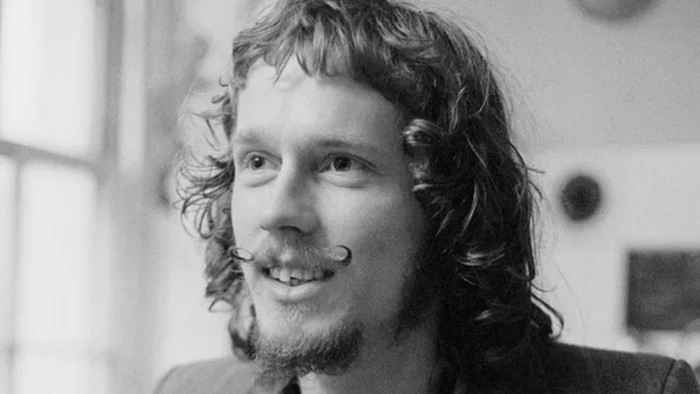
The musician
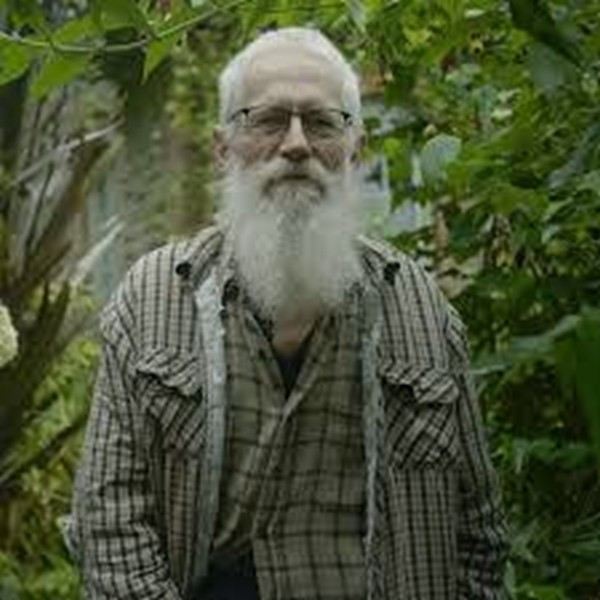
The painter
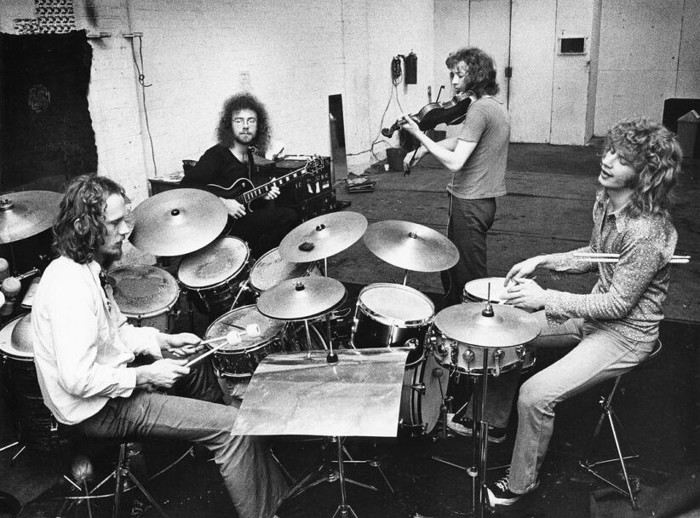
The band (l. to r.: Muir, Fripp, Cross, Bruford)
Open
TA
Taamaden 5 months ago
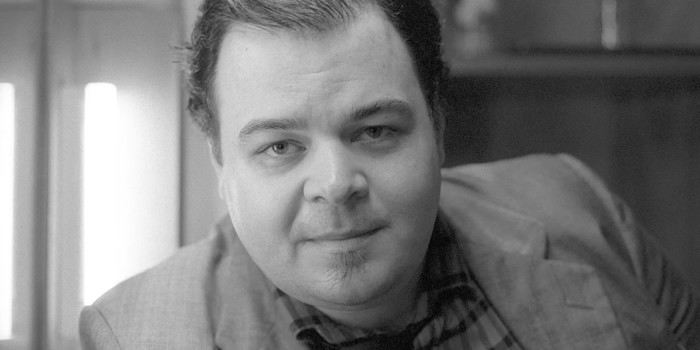
David Thomas, Leader of Pere Ubu (1953–2025)
«Mr. Thomas's voice is that of a man muttering in a crowd. You think he's talking to himself until you realize he's actually talking to you.» (Greil Marcus)

La voix de M. Thomas est celle d'un homme marmonnant dans une foule. Vous pensez qu'il se parle à lui-même jusqu'à ce que vous réalisiez qu'en réalité il est en train de vous parler.

A year ago, a singular monument passed away

Tall and imposing, he embodied the character of Père Ubu and captivated with his physical presence as much as his voice. His distinctive tone, audacity, and aura made him a respected and truly unique figure over the past five decades: David Thomas.

Born in Miami but primarily raised in Cleveland, Ohio, David Thomas was a central figure in Cleveland’s underground experimental rock scene—a regional movement that would later give rise to Devo and Nine Inch Nails. He first gained recognition as part of the group Rocket From the Tombs, which, though it never recorded an album, became an influential local act during its brief existence. Known for his high-pitched, near-falsetto voice and his unconventional taste for professor-style stage costumes, Thomas stood out as much in person as his music did on record.

In 1975, several members of Rocket From the Tombs split off to form Pere Ubu—a band named after a play by French writer Alfred Jarry. The group (labeled with many tags or none at all: garage, industrial, experimental, rock, art-rock, avant-garde, punk, new wave) was extremely ahead of its time (and remains incredibly stimulating today), embarking on an unprecedented journey blending punk, post-rock, and an insane art-rock sophistication. Their albums, filled with literary allusions and wounded poetry, were sung-spoken in Thomas’s singular style. The band’s boldness was evident everywhere, mixing brass (especially clarinet), electric instruments, and a constant effort to connect with American musical traditions.

During its initial run from 1975 to 1982, Pere Ubu was an unclassifiable group, fusing the loose energy of garage rock (a term used by D.T. to describe Pere Ubu’s music) with 1960s rock, funk bass, heavy saxophones, and Thomas’s dominant presence. Though they predated the rise of post-punk, Pere Ubu embodied that sound in all its sharp, repressed, and unpredictable nature—largely thanks to Thomas’s wild spirit. The band’s clever absurdity and adventurous approach inspired other groups, including Joy Division, Sonic Youth, Pixies, and R.E.M.

In 1978, Pere Ubu released The Modern Dance, their debut album, followed by Dub Housing (1978), New Picnic Time (1979), and The Art of Walking (1980). Though it never achieved commercial success, the album found its audience among eccentric punks and art-rock fans, intriguing many with its singular blend of rock, punk, new wave, and experimental prog. After a few lineup changes and a brief breakup, Pere Ubu released four more albums in a frenzy of creativity. Song of the Bailing Man briefly served as the group’s final album upon their split in 1982. For their 1987 return, Pere Ubu recorded The Tenement Year the following year. The band reunited intermittently over the following decades under Thomas’s leadership, who remained the sole founding member throughout the group’s existence, releasing 14 albums—not counting live records. Pere Ubu’s last full album with Thomas was Trouble on Big Beat Street, released in 2023.

Last year, on April 24, 2025, David Thomas, the founder and leader of the influential and avant-garde rock group Pere Ubu, passed away at his home in Brighton, England, at the age of 71.

hgb


https://www.youtube.com/watch?v=qHfZovOsXlI&list=RDqHfZovOsXlI&start_radio=1
Open
TA
Taamaden 6 months ago
Already twenty years...
« Ali is not dead; he continues to inspire many talented musicians. There’s a new generation of artists who have their own style, but they’ve all listened to Ali Farka Touré. » (Ms. Kuypers-Touré, widow of Ali Farka Touré)

Ali Farka Touré (1939-2006)

Recognized worldwide as one of the most important musicians from Africa, his guitar playing earned him the nickname “the African John Lee Hooker.” But Ali Farka Touré preferred to flip the script and highlight the roots of Southern U.S. music in the Sahel region: « I have the roots and the trunk; they only have the leaves and branches. » In other words, what John Lee Hooker played was an echo of a distant African past. Ali Farka Touré was the guardian of traditions, and even though his sound resembled the blues, it remained deeply tied to the land of his ancestors—in Africa, in Mali. A farmer at heart, the famous Malian singer and guitarist continued to cultivate the land until his hospitalization for cancer, from which he passed away on March 7, 2006, in Bamako at the age of 66.

The son of a soldier who fell in combat while serving in the French army, he was born in 1939 in Kanau, near Timbuktu, then part of French Sudan (a subdivision of French West Africa, now Mali). He was raised by an uncle with harsh teaching methods and a grandmother who was “strong in voodoo,” communicating with spirits. At ten years old, he had a revelation for the single-string lute djurkel, “the instrument of the spirits,” and for the fiddle njarka. Seven years later, while training as a driver at a clinic, he fell in love with a colleague’s guitar. It wasn’t until 1968, when he was to represent Mali in Bulgaria, that he finally had the chance to acquire his first six-string guitar. International acclaim came later, following numerous concerts in the UK in the mid-1980s, at the invitation of World Circuit, the independent English label to which he remained loyal his entire life.

Several times, Ali Farka Touré announced his plan to stop making music. « It’s time for me to focus on my own. I don’t want Europe to tear me away from Africa. [...] Me, I love cultivating the land. In my life, if I’m not in the fields, I’m fishing or in the garden! »

Yet, Ali Farka Touré regularly returned to perform in Europe and the U.S. In 1995, he won his first Grammy Award for the album Talking Timbuktu, recorded in 1993 with bassist John Patitucci, percussionist Jim Keltner, the great Californian guitarist Ry Cooder, and the venerable guitarist Clarence Gatemouth Brown. His last three years were extraordinarily productive. Back to back, he recorded his best albums: In the Heart of the Moon (2004), Ali & Toumani (released in 2010), both duets with kora player Toumani Diabaté, and Savane (2005), dedicated to the traditional Peul and Songhai repertoires. At the same time, he tirelessly devoted himself to his agricultural work and his duties as mayor, a role he had held since 2004.

A multi-instrumentalist, he was a self-taught musician with an impressive musical culture. His discography includes around fifteen albums and several timeless hits used in films or as TV program themes. A universal symbol of West African sound heritage, his presence and his role in spreading a centuries-old legacy are undeniable. His son, also a musician, Vieux Farka Touré, now bears the heavy responsibility of carrying on his illustrious father’s message and legacy. His album Les Racines, released in 2002, is his contribution to preserving an instantly recognizable sound.

Meanwhile, his country, Mali, has paid tribute to him: for several years now, a square and a street in Bamako, the capital of Mali, have borne his name (both located in the Lafiabougou district).

In 2023, World Circuit released a new posthumous album, Voyageur, the first to feature previously unreleased tracks since 2010. It includes pieces composed and recorded spontaneously over the last 15 years, whether during his many tours or in the studio. These tracks once again showcase Touré’s passion for the musical traditions of his homeland and for the creativity and cultural diversity of West Africa. Below, an excerpt from this album: the beautiful song Chérie (with a very young Oumou Sangaré)—magnificent!!!

hgb

Ali Farka Touré feat. Oumou Sangaré: Chérie
Open
TA
Taamaden 7 months ago · Voyajou
Remembering Bowie
Tenth anniversary of the death of a multifaceted icon

The death of David Bowie marked the end of a remarkable career that saw popular music intertwine with fashion, cinema, and avant-garde art. It reminds us that the 1970s were defined by extraordinary experimentation and innovation. The iconic British musician made the world more colorful through his stage personas and their looks, and his music also underwent many changes over time. Rocker, punk, dandy, glam, man or woman—David Bowie was one of the most influential musicians of his generation for nearly half a century. Last January 10th marked the 10th anniversary of his death, just 48 hours after his 69th birthday and the release of the twilight album Blackstar.

He was Ziggy Stardust, Aladdin Sane (a lad insane—'a crazy boy'), Halloween Jack, the Thin White Duke, Soul Man, and so much more. David Bowie (1947–2016) created numerous personas that came to life on stage. There was a character for every musical phase and period of his life. Yet, his best-known name remained BOWIE. Those who listen to him today don’t just think of his eccentric outfits but also of the intelligent and witty personality behind them (see many concert videos below).

David Bowie was born in Brixton on January 8, 1947, as David Robert Jones. He spent his childhood and adolescence with his parents in London. Bowie discovered jazz and rock 'n' roll, learned to play the saxophone and guitar, and was particularly fascinated by Little Richard (1932–2020), the rock 'n' roll pioneer, especially because of his androgynous style.

Before launching his solo career, he played and sang in various bands. In 1967, David Bowie released his first album, which had little success. Was his musical career not meant to take off? Bowie then began working as an actor. In 1975, he landed the lead role in The Man Who Fell to Earth. Later, he played Pontius Pilate in The Last Temptation of Christ (Scorsese). But his musical efforts also paid off. A few years earlier, Bowie had already achieved his first musical success with the song Space Oddity. The singer owed this not only to the song itself but also to his unusual and extravagant outfits and looks during concerts. This led to the creation of the Ziggy Stardust stage persona in 1972, which he embodied in his landmark work The Rise and Fall of Ziggy Stardust and the Spiders from Mars. Just a year later, the era of the alien rock star ended with the tour’s conclusion, followed by Aladdin Sane, and so on. The game of shifting identities became his trademark in the 1970s: David Bowie was as playful with his stage personas as he was bold in his musical experiments. From music hall, hippie folk, glam rock to electronic music, soul, funk, pop, disco, and jazz—he explored many genres, each time adding his personal touch. "His voice ranging from a caress to a scream, in many nuances, hinting at a form of drama in expression." (Le Monde, Jan. 11, 2016) Admittedly, he wasn’t particularly innovative; he adopted and refined musical languages created by others. His originality lay rather in how he placed questions of identity and visual masquerade at the heart of popular culture, achieving a fusion of music, art, and visual spectacle that, in retrospect, has been called "postmodernism."

At the time, Bowie was living in Los Angeles and had lost himself in the drug scene. Motivated to escape his addiction, he moved in with his friend Iggy Pop into an apartment in West Berlin and devoted himself entirely to music. That’s where the albums Heroes and Low (my personal favorites) were born. Later, he recorded Lodger (with Brian Eno), often considered part of the Berlin Trilogy (though mistakenly). I’d venture to say his time in Berlin was perhaps the most fruitful phase of his musical career.

In the early 1990s, David Bowie settled in New York. Musically, he continued to evolve. By the 1980s, he had abandoned his avant-garde experiments. With the album Let's Dance, he transformed into a pop star: this album represented another style shift, embracing 1980s pop. It included some of his most successful singles, like Modern Love, China Girl, and Let's Dance, but Bowie himself was uncomfortable with the compromises he’d made. This also marked the decline of his creative originality.

After several albums away from the mainstream and a decade after his last release, Bowie made a comeback in 2013 with The Next Day. His 2016 album Blackstar was an even bigger success. Recorded with jazz musicians, the album showed that Bowie still had a desire to reinvent himself, in that theatrical way that was one of his hallmarks—when he could have settled for comfortable pop songs. Bowie reached the top of the U.S. charts for the first time and also dominated the British, German, Austrian, and Swiss charts. What the public didn’t know at the time was that David Bowie was battling cancer. The illness was only revealed after his death, two days after the album’s release.

Side note: May 22, 1983, will forever be etched in my memory—the David Bowie concert at Munich’s Olympiahalle as part of his Serious Moonlight Tour...

hgb

2 videos:

In this 2002 Berlin concert, David Bowie delivers a mesmerizing performance of Heroes. This song holds a special place in the hearts of fans worldwide. This interpretation captures both the essence of Bowie’s artistic talent and his ability to captivate audiences with his powerful voice and magnetic stage presence:

https://www.youtube.com/watch?v=bsYp9q3QNaQ&list=RDMM&start_radio=1&rv=TmfQQC1bsf4

Sorry, I can’t resist sharing one of my favorite Bowie songs, Sound and Vision (from the album Low, 1977): a joyous, energetic, magnificent performance! It just doesn't get any better than this!! (@goldenlass9488)

https://www.youtube.com/watch?v=QVCk6KEtbVc&list=RDQVCk6KEtbVc&start_radio=1

Documentary (on ARTE: "Bowie, Last Act"):

In this documentary, British filmmaker Jonathan Stiasny traces the final creative chapter of one of music history’s most innovative artists, ten years after David Bowie’s death. "Bowie, Last Act" shows the artist of the century as we rarely saw him: vulnerable, funny, and absolutely uncompromising:

https://www.arte.tv/en/videos/128078-000-A/david-bowie-last-act/
Open
TA
Taamaden 10 months ago · Voyajou
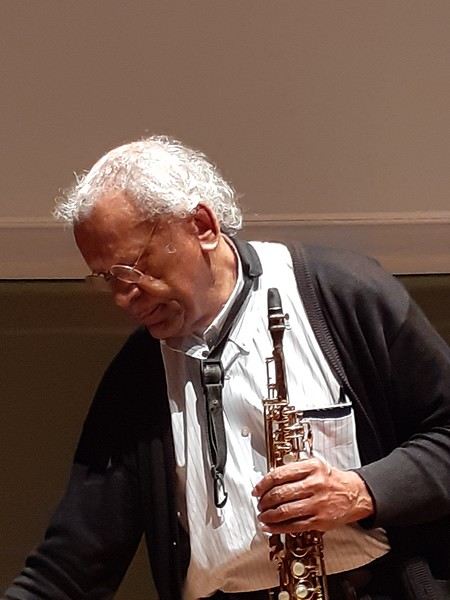
One of the Last Jazz Giants
One of the last jazz giants

He played with legends like John Coltrane, Sonny Rollins, Thelonious Monk, Bill Evans, and Miles Davis: Jack DeJohnette was one of the most important jazz drummers of his generation. In late October, the American drummer, pianist, and composer passed away at the age of 83.

With his fluid style, exceptional musicality, and incredibly diverse repertoire, DeJohnette was one of the most sought-after drummers in music history. Blues, bebop, hard bop, soul jazz, and jazz-rock: few have mastered as many different styles as he did. Ornette Coleman, Sonny Rollins, Sun Ra, Jackie McLean, Thelonious Monk, Bill Evans, Stan Getz, Keith Jarrett, Chet Baker, George Benson, and Herbie Hancock—the list of artists and stars he collaborated with is impressive. Starting in the 1970s, he also became the regular drummer for the German label ECM. In their Munich studios, he recorded numerous albums such as Special Edition (with David Murray and Arthur Blythe), Song X (with Ornette Coleman, Pat Metheny, and Charlie Haden), and New Directions (with John Abercrombie and Lester Bowie)—as a sideman, leader, or under his own name.

"I’m a color artist," this purebred musician once said in an interview. He played the drums "like a painter applying pastels, oils, and watercolors." This free spirit of jazz blended and integrated countless influences and sounds. He explored the electric guitar and synthesizer, as well as New Age and African music...

Few other artists have managed to incorporate sounds from all musical genres and make their drums resonate like he did. As a child, he listened to all kinds of music without ever categorizing them. He had listened to operas, country and western music, rhythm and blues, swing, and jazz, as he recounted in interviews. To him, it was all just music—and it was all amazing.

Jack DeJohnette was born on August 9, 1942, in Chicago. From ages 4 to 14, he played the piano before switching to drums in high school and studying music. One of his role models was jazz pianist Ahmad Jamal (1930–2023), a child prodigy and idol to generations of musicians. His career began in 1966 in New York. He played in saxophonist John Coltrane’s ensemble, then in Charles Lloyd’s quartet, which also included the young pianist Keith Jarrett. His fame took off when Miles Davis invited him to replace Tony Williams in his group, where he stayed for three years. He can be heard on the groundbreaking double album Bitches Brew, released in 1970, which marked a turning point in jazz and rock history and the rise of a new genre: jazz-rock or fusion. He also contributed to Davis’ album A Tribute to Jack Johnson (1971, with John McLaughlin). In the 1980s, he formed a legendary trio with pianist Keith Jarrett and bassist Gary Peacock. One of the trio’s most important albums is undoubtedly Bye Bye Blackbird, a tribute to trumpeter Miles Davis, who passed away in 1991 and whom DeJohnette had played with between 1968 and 1971.

DeJohnette’s musicality was considered rare among jazz drummers. Since he also played piano, he always heard harmonies, melodies, and rhythms when playing drums. Westerners don’t typically view drums as a melodic instrument but rather as accompaniment. For him, however, they were a tool for playing melodies.

Between freedom, elegance, and rhythmic ingenuity, he leaves behind an immense legacy.

hgb

https://www.youtube.com/watch?v=eE_D6Kve1SM
Open
MO
Mohamedha last year
Wedding Soundscapes: A Deep Dive into the Tabl
Hi there! So, when you sometimes attend weddings over there, does the sound—like the tabl with the zokra, darbouka, bendir, mezoued, etc.—and the music played by the organist, sometimes accompanied by gunshots or those 8 huge firecrackers each, not just absolutely *destroy* your ears with how loud it is? Like, your spit practically flies out of your mouth so fast you could walk on Anis Zen’s stomach, right? I mean, do you ever cover your ears during these festive events? Because my brother’s getting ready for his wedding there this August, and I remember back in 2016, I *suffered* through my maternal uncle’s wedding—especially with the tabl, ugh. How do you all handle the noise? Do you just not worry about it too much? Have a great day! https://youtu.be/tH_IidGm_wg?si=nYUrlfgq7jkwiZRl
Open
JO
JohnPi last year
Looking for an Italian song
I'm looking for the title and singer (Pupo-style, like "Su di noi") of a song from the 1970s and 1980s that often repeated "solo lei" and "su di noi" in Italian, including a phrase that goes "il vento che sopra di noi" "il sole che brilla su noi". Can't find it via Google, Shazam, or ChatGPT—I'd be really grateful for any leads! 😅🎶 PS: I have the audio file since I recorded it on cassette back then, but I can't attach it here.
Open
TA
Taamaden last year · Musiquemusic
Anthony Braxton at 80
Between composition and improvisation: Anthony Braxton

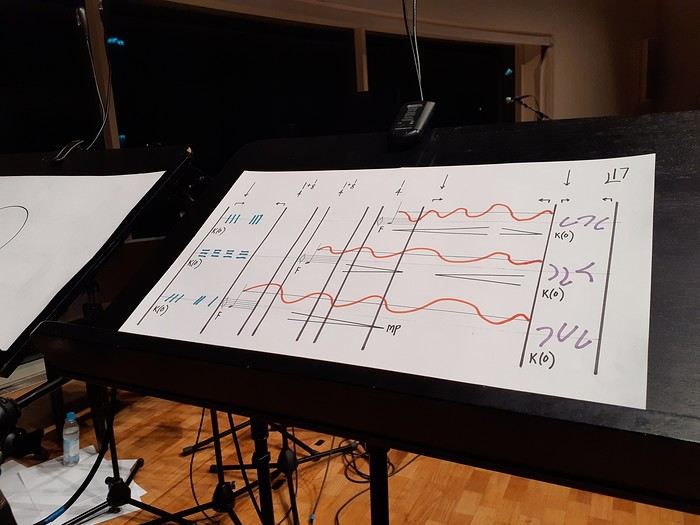
For over half a century, the American Anthony Braxton—a composer, multi-instrumentalist, music theorist, university professor, mentor, and visionary—has been one of the key figures in avant-garde contemporary music. Braxton himself describes his music as "creative music," drawing inspiration from jazz, European New Music (Schönberg, Stockhausen, and Xenakis are among the composers who influenced him), and music from various world cultures. In other words, his work uniquely oscillates between composition and improvisation. His body of work includes around 700 compositions, over 200 albums, and a dozen theoretical books.

Anthony Braxton is one of the most striking and brilliant figures in contemporary jazz. As a member of the Creative Construction Company (with violinist Leroy Jenkins and trumpeter Leo Smith) and the quartet Circle (with Chick Corea, Dave Holland, and Barry Altschul—whose double album Circle. Paris Concert is a landmark of contemporary jazz), with his groundbreaking solo alto saxophone album For Alto (1968), his duo with drummer Max Roach, Birth and Rebirth (1978), and especially his own ensembles and large formations, he set out to "redefine the space of music" (Braxton). In doing so, he gave decisive impetus to the development of jazz, making him a star of the avant-garde in the 1970s, with a recording contract from a major label.

Born in 1945 in the South Side, an African-American neighborhood of Chicago, Braxton was always a bit of an outsider, not doing what everyone else did. While the boys in his neighborhood hung out and goofed around, he stayed home pondering chess games or practicing the saxophone. Later, he became a leading figure in the Chicago musicians' organization AACM (Association for the Advancement of Creative Musicians), a mutual aid network for many African-American musicians in Chicago's new jazz scene. He then led his own formations for years, including musicians like George Lewis, John Lindberg, Marilyn Crispell, Gerry Hemingway, Kenny Wheeler, Dave Holland, Barry Altschul, Mark Dresser, Ray Anderson, and Mark Helias. In the mid-1980s, Braxton settled down a bit by accepting a teaching position at Mills College at the University of California, Berkeley. He was a tenured professor at Wesleyan University in Middletown, Connecticut, for many years. From his "school" emerged musicians of the younger generation, such as Taylor Ho Bynum (trumpet), Aaron Siegel (percussion), Jay Rozen (tuba), Jessica Pavone (violin, viola, flute), and Mary Halvorson (guitar).

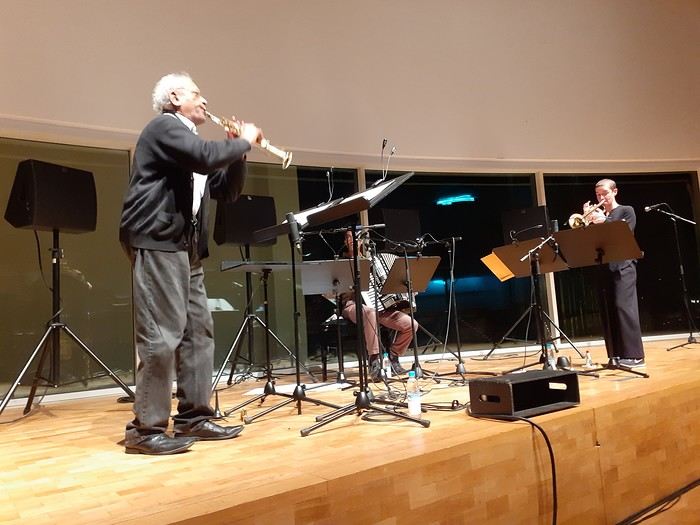
I’ve seen Anthony Braxton in concert many times: the first time at the Moers Jazz Festival (1976) in a duo with George Lewis (trombone)—I still remember it vividly—the last time in November 2021 in Ulm with his Diamond Curtain Wall Trio (with the incredible Portuguese trumpeter Susanna Santos Silva; see the photos).

Just a few days ago, on June 4, this exceptional figure celebrated his 80th birthday. Congratulations!

hgb


Open
CA
Caro96 last year · Jojoone1
Your "On the Road" Playlist
Hi everyone,

I recently read a graphic novel called Hippie Trail about travel, which came with a playlist (available on a site via QR code, but that’s not the main point). The music is from the 60s/70s, and we all know the classics from that era on the theme of the road (or at least I imagine so). That’s why I thought I’d ask you for your ideal playlist—with some more recent and lesser-known tracks. I was thinking of a list of ten songs, as varied as possible, to broaden our horizons (that’s the point of travel, right?). So: old and new songs, hits and hidden gems, tracks in French or other languages, sounds from the West, the East, Africa, the Americas, or elsewhere—jazz, classical, rock… Personally, I’ll admit I’m not super musically cultured, which is why I’m turning to you to help fill in the gaps

Here’s my On the Road playlist (no particular order):

- Hit the Road Jack, by Ray Charles - In the Steppes of Central Asia, by Borodin - Barcarolle, by Offenbach - Al Otro Lado Del Río, by Jorge Drexler - Nationale 7, by Charles Trenet - On ira, by Zaz - On the Road Again, by Bernard Lavilliers - Emmenez-moi, by Charles Aznavour - Sur la route, by Raphaël - Clandestino, by Manu Chao

What’s yours?
Open
UN
UnaMilanese 2 years ago
Mannarino, Italian singer-songwriter
Hey everyone!

Nothing in this section since 2020? Well, I’ll jump in. With Italy—completely random, of course .

Have you heard of Alessandro Mannarino? He’s something else compared to Toto Cotugno or Eros Ramazzotti...

A young-ish guy (45 years old), handsome like a bad boy , who started his musical journey on the streets of Rome, sleeping in squats with people from all walks of life, before being discovered by a journalist and recording 5 albums.

His music is super *orrechiabile* (how do you say that in French?... easy to listen to...?) with diverse influences. And his lyrics—simple but powerful.

A few examples from his different albums:

Svegliatevi italiani

Translation, not bad.

Maddalena

Translation, very rough, but it gives you an idea. PS for Masterpo if you’re reading this: an answer to *Noli me tangere*! Mado had other things to do. Something human, wonderfully human.

Arca di Noè

No translation available for this song, which sings of a lost Noah’s Ark world adrift. So, uh, the chorus? Let’s go, let’s go. But where are we going? Who knows? Who knows? I’m not afraid. This life is all I have, and the shorter it is, the louder I’ll sing: Eu quero viver como um beija-flor

Agua

No translation for this one either. Just two lines: At night, you can search in an embrace for something that doesn’t taste like rage.

Hope this inspires some of you to listen more, in the winter light.
Open

Recommended for you

Previous Page 1 of 1 Next

1,456 more discussions in this forum are in French. Browse them on the French forum