A few months ago, I posted a message in the Southern Africa section about a family trip in July/August. In the end, since I had too much trouble deciding on the destination and procrastinated too much with the planning 😎, I changed my mind and we’re going for a completely different trip—to Madagascar, a country we already know a bit since we’ve traveled there several times for 4 to 6 months each time, though our last visit was back in 2012!
The tickets are booked: 19 days on the ground (excluding arrival and departure days in Tana), spanning July and August.
We’re not looking to rack up landscapes (and kilometers). The kids really want to see lots of animals, while we mostly want to show them what daily life is like in Malagasy villages. So ideally, we’d like a trip split into two parts:
- For 8/10 days, a hiking portion. The idea isn’t to do a tough trek in very remote areas but rather to walk from one village to another. Let’s say 3-4 hours a day. And when we arrive in each village, we’d have time to explore a bit, chat with the locals, let our kids play with the village children, etc. Stay with locals when possible. Move to a new village every day or every 2-3 days.
- A few days visiting 1 or 2 national parks (with lemurs if possible to keep everyone happy!)
- With the inevitable travel days, we’ll quickly hit 19 days.
Does this kind of trip sound doable (and fun) to you? Do you know of any villages that would fit our hiking plans?
I don’t have a preferred region yet, except that very dry landscapes appeal to me less. My real love from past trips was the highlands and their bright green rice paddies against red earth, but I’m a bit worried about the cold at this time of year.
After my initial research (thanks to this forum), I get the impression that the Ambalavao/Ambohimahamasina area might meet our criteria. I saw there are "accueil paysan" (farm stays) in that area, which could match what we’re looking for and would let us visit Andringitra National Park and Ranomafana on the way there or back.
But I’m open to all your more original ideas!
For logistical questions (transport, guides, accommodations, etc.), I’ll tackle those later—it’ll depend on the area we choose.
Yes, for the hiking part, I’d also thought of Ambohimahamasina/Ambalavao, but honestly, you can do that pretty much anywhere in Madagascar’s agricultural areas. I’m not sure where things stand with rural tourism initiatives or if they’re still thriving after so many years and the impact of COVID and other crises on tourism in Mada.
If those initiatives no longer exist, it’s worth checking where they might still be happening. Otherwise, how about the Zafimaniry region near Ambositra? Maybe not for hiking, but by taking a *bateau brousse* (bush boat) between Mananjary and Tamatave and stopping in remote villages like Nosy Varika or even the smaller ones you pass along the way—gorgeous spots between rice fields, canals, dunes, and the ocean. Then you could catch another passing boat. This route could include Andringitra, Ranomafana, and Andasibe, and even allow for a detour to Sainte-Marie.
Otherwise, and in any case, it’s doable to hike and stop in villages, but 8/10 days under those conditions seems really long and not very feasible, especially with kids and the comfort levels available in villages.
Staying 2/3 days somewhere isn’t straightforward either—without speaking the language and in rural areas where things aren’t organized, French is rarely spoken. Staying with locals in the countryside is possible, but you’d need to be prepared, especially for fleas, and it can be tiring and not very restful.
In areas that aren’t organized at all, it’s still doable, but the conditions—well, I don’t know you, but they don’t seem sustainable for 8 days.
In more organized areas, of course, it’s feasible. Could you stretch it to 8/10 days? Maybe.
Another point you mentioned, which I think is spot-on, is that you’ll be there in the middle of the austral winter. On the highlands, it gets cold (very cold when you head toward Andringitra) and humid, with that constant drizzle that chills you to the bone.
a bit of hiking. The idea isn’t to do a tough trek in very remote spots but rather to walk from one village to the next. Let’s say 3-4 hours a day.
I’ve never done this kind of "trek" in Madagascar, but if you change your mind, I’d suggest trekking in Isalo (though you probably already know about it).
- A few days visiting 1 or 2 national parks (with lemurs if possible to keep everyone happy!)
From Ranohira, you can do treks of varying lengths, from 2 days up to 7 or 8 days, I think...
Back in 1995, with my wife and my 11-year-old son, we did the trek that leads to the Portuguese cave, passing through the monkey canyon, the rat canyon, the natural pool, and numerous caves with bones (tombs), etc., over 4 full days. We had a guide and 2 "porters" with tents and food (live chickens! and other supplies). At the time, it wasn’t very expensive, and I have great memories of it. It was kid-friendly, with a relaxed hiking pace, though there were no villages along the way—just really wild spots, lots of lemurs, makis (in the monkey canyon)... Great vibe with the Malagasy team!😏
On the way to Isalo (Route Nationale 7), it might be worth taking a detour to Ranomafana National Park. I remember a night walk with headlamps, searching for small lemurs (I’ve forgotten their name) and other "critters."
I’ve also done another trek, but this time solo and without a guide: crossing the Masoala Peninsula from Maroantsetra to Antalaha over 3 days. But even with a guide (which isn’t cheap), I wouldn’t really recommend it because of the climate, mud, and mosquitoes, etc. Still, you can sleep in a village each night. Happy planning!😉
Otherwise, and in any case, it's doable to go hiking and stop in villages. But 8/10 days under these conditions seems really long and not very feasible to me, especially with kids, given the comfort levels in the villages.
Staying 2/3 days somewhere isn’t easy without speaking the language and in rural areas where things aren’t organized—French is rarely spoken. Staying with locals in the countryside is possible, but you need to be a bit prepared, especially against fleas, and it’s quite tiring and not very restful.
Totally agree... when you know a bit about the living conditions there, I’d hesitate to take my kids. But an "organized" trek with camping in a park like Isalo, with a local guide, is doable without any issues.
Yep, I did it solo and kinda over 4/5 days, staying with locals in an unorganized way. I was much younger and found it pretty exhausting. Plus, I can get by in Malagasy (though I’m not bilingual).
With family, I wouldn’t do it that way, for sure. And not for such a long stretch either.
Unless you find a route and an organization that offers either farm-style tourism—which I haven’t heard about lately (but there were options up until 2017 in Fianar and Ambalavao)—or hikes in and around parks like the Zafimaniry region, Tsaranoro, Isalo, or even the Makay (though the latter might not be kid-friendly). But the village and immersion aspect will obviously be missing from those last two options.
Well... it’s either an improvised "countryside" route on the plateau, but the accommodation and food will be very spartan and hygiene conditions more than borderline, or—like you said—maybe there’s an organization offering something like an "eco farm stay," but the "immersion" aspect might end up being disappointing...
A big thank you to everyone for your replies. I’m both disappointed and... relieved—with kids, it’s tough to plan for conditions that are too complicated or improvised. Especially in Madagascar. Even though those kinds of days end up being the best memories from past trips!
So, we’ll play it safe with a few days of trekking with a guide in a park! Still need to figure out what to combine it with for the rest of the trip.
The Pangalanes Canal, yes, that’s another nice option—I’ll think about it, but I’d love to discover places I haven’t seen yet.
If anyone knows of possibilities like farm tourism / community-based tourism / village immersion, I’m still open to that option. Basic comfort is fine, but hygiene conditions that are too rough aren’t.
Hi there,
Around Fianarantsoa, to find out about hiking options that suit your needs, you can contact the tourist office at +261 34 03 275 15 or via their email ortf.lanto@gmail.com, or check out their Facebook page. Alternatively, the SudMadatrek agency, which is based there and knows the region very well, can help you organize things. I’m sure they can also give you tips on Ambohimahamasina and the Ambalavao area.
That said, they won’t be able to do much about the weather.
As for the Pangalanes Canal, have you ever taken a cargo barge to travel from its southern point near Mananjary to its northernmost points close to Toamasina? Because it’s *very* different from the day trips you can do there otherwise. And it opens up tons of opportunities to stop in villages in the middle of absolutely nowhere, with rural life at its most authentic. In stunning surroundings. Then you can hitch a ride on another boat to head off to another spot.
Thanks for the contacts. They should have up-to-date info.
I lived in Mananjary for 4 months and traveled up the canal for 2-3 days, if I remember correctly. Not all the way to Tamatave—how long does that take, by the way?
But yes, that’s exactly the kind of village vibe I’d love to experience again.
Hello again,
If you're extending your trip by 2 or 3 days, you’ve indeed gone up the navigable section to Mahanoro (there are other navigable parts further north beyond this interruption) before catching the *taxi-brousse* back to Tamatave in a few hours.
You already know the area, the landscapes, and the villages that could serve as stops, so it won’t be new to you.
For Ambohimahamasina, you can take a look at this. I passed through there, but it was over 20 years ago now. I don’t know if the setup is exactly the same or even if it’s still operating, since there’s been nothing on Facebook since 2012. It doesn’t hurt to try calling.
It’s a beautiful place, though—I’m not sure the road is still as nice as it once was. The region is stunning, with the sacred mountain just a stone’s throw away, where spirits are said to wander... Culture, history, landscapes.
Fizam Campsite, Table d'hôtes, Bed & Breakfast, Agricultural activity in Ambohimahamasina
Good evening!
In any case, we’d be thrilled to read your trip report after your stay—especially about the hiking part. Even more so if you manage to find a way to do it the way you’d like.
One last idea: if you’re considering a hike in a park or something very organized, you might want to look into the Makay. It’s a remote and fairly exclusive area. I’m not sure if there are trails suitable for kids, but it’d be a unique, unforgettable experience and would also give you access to some really off-the-grid bush villages.
Personally, I’d love to do the 4-day trek in the Zafimaniry region—I adored it with its remote villages only accessible on foot. The only downside is the weather in July, which might be a bit chilly, but that could actually be nice for hiking!
Hi there,
I’m keeping you updated even though the plan has changed quite a bit.
We’ve given up on the idea of a long multi-day trek and stopped overthinking everything. For this first trip to Madagascar with the kids, we’re going for something more classic and easy.
So here’s the plan (almost 3 weeks total):
- Start of the RN7 (3 days to Fianarantsoa),
- 6 days in the Ambalavao/Tsaranoro/Ambohimahamasina area,
- Then head east (2 days in Ranomafana/Mananjary)
- Then 3 days on the Pangalanes Canal to Manahoro.
- That leaves us with 5 days: some buffer in case we fall behind schedule, then back to Tana by road with a stop in Andasibe. I haven’t booked anything for this part—we’ll decide last minute.
For accommodations, we’ve pieced it together using guidebooks, the internet, and tips from a few people we know. Mostly hotels, 3 nights with locals, camping for the Pangalanes part, and 3 nights staying with friends of friends.
We didn’t hire a driver-guide—it’ll be a mix of taxi-brousse, taxis, and figuring things out as we go. It might cost us a bit of time, but that’s part of the adventure!
We decided to leave Tana right after we arrive to avoid "wasting" a night there and to skip the trip to the bus station. We’ll take a driver straight from the airport to Ambatolampy, our first stop.
With this itinerary, we’re hoping to see varied landscapes and experience daily life in villages, just like we wanted. There are plenty of things to do—parks, plantations, markets, artisan workshops... We haven’t packed the schedule too tight so it’s not a constant rush, and we’ll have time to just read, play family games, and relax—you know, a real vacation!
We’ve warned the kids this won’t be a "chill, comfy, poolside" kind of trip, but that they’ll get to discover a different way of life and see lots of lemurs and other animals!
Thanks again for all your advice.
I’m really excited—the only thing I’m still a little worried about is the cold at night during the first part of the trip, but we’ll warm up once we hit the east coast! ;)
Hi there,
For me, it’s a top itinerary—gorgeous regions and great ways to explore them.
And above all, time. The real luxury.
Three weeks seems just right.
One small uncertainty is the weather during the southern winter and in the highlands (plus around Andringitra), so pack some cold-weather gear and hope it won’t be an especially chilly, drizzly year (it’s getting less and less predictable these days).
As for the boat, bring games—you’ll have the time—and gear for camping on or near the boat.
Hello, so did you end up taking this trip? I’m really interested because I’d also like to go with my family—my two daughters, aged 5 and 7—for a similar length of time in July 2026. Can’t wait to read about what you finally did and how it went. Thanks in advance!
Hi,
Just keeping you updated, even though the plan has changed a lot.
We gave up on the idea of long multi-day hikes, stopped overthinking everything, and decided to go for something more classic and easy for our first family trip to Madagascar with the kids.
So here’s the plan (almost 3 weeks total):
- Start of the RN7 (3 days to Fianarantsoa),
- 6 days in the Ambalavao/Tsaranoro/Ambohimahamasina area,
- Then head east (2 days in Ranomafana/Mananjary),
- Then 3 days on the Pangalanes Canal up to Manahoro.
- That leaves us 5 days: some buffer in case we fall behind, then the drive back to Tana with a stop in Andasibe. I haven’t booked anything for this part—we’ll see how it goes last minute.
For accommodations, we mixed paper guides, the internet, and tips from a few people we know. Mostly hotels, 3 nights with locals, camping for the Pangalanes part, and 3 nights staying with friends of friends.
We didn’t hire a driver-guide—it’ll be a mix of bush taxis, regular taxis, and figuring things out as we go. It might cost us a bit of time, but that’s part of the adventure!
We decided to leave Tana right after arriving to avoid "wasting" a night there and to skip the trip to the bus station. We’ll go straight from the airport to Ambatolampy, our first stop, with a driver.
With this itinerary, we’re hoping to see varied landscapes and experience daily life in villages, just like we wanted. There are tons of things to do—parks, plantations, markets, artisan workshops... We didn’t pack the schedule too tight so it wouldn’t feel like a rush, and we’d have time to just read, play games as a family, you know—actual vacation!
We’ve warned the kids it won’t be a "chill, comfy, poolside" kind of trip, but that they’ll get to discover a different way of life and see lots of lemurs and other animals!
Thanks again for all your advice.
I’m really excited—the only thing I’m still a little worried about is the cold at night during the first part of the trip, but we’ll warm up once we hit the east coast! ;)
Hi there!
With a broken foot giving me some unexpected downtime, I finally had the chance to sit down and put together the photo album from our trip to Madagascar... and I realized I never shared our experience with you all! 🤪
Better late than never, I hope! So here’s the summary and a few anecdotes from our 3-week adventure with 2 adults and 3 kids aged 9, 7, and 5.
Day 1: We arrived in Tana in the evening and took a private taxi straight to Ambatolampy. It was dark, but we were surprised by the state of the RN7—much worse than during our last visit in 2012. First meal at a roadside *gargotte*: the kids loved it and declared *romazava* way better than *rougail saucisse*! They had no idea how much rice they’d end up eating during the trip. 😎
Day 2: In Ambatolampy. Breakfast of *café mofy-ball* at the market, then we met up with a family who are friends of a friend: long meal, long conversations, games with their kids, and a tour of the area.
Day 3: *Taxi-brousse* to Antsirabe. What a joy to see those landscapes and all the little villages again! On arrival, a disappointment: we were supposed to meet an old friend from 15 years ago, but she let us know she was hospitalized in Tana. At the bus station and in the streets, our kids were really struck by the poverty and begging.
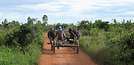
Day 4: Antsirabe—trip to Lake Andraikiba (we went by *tuk-tuk* and returned by city bus). Kids no older than 4 or 5 were herding sheep and zebus, and women were washing clothes in the lake.
Back in town: a few struggles to get the phone SIM card working. We wandered around, snacking in the streets, happy to use the Malagasy words we remembered! The kids rode a sort of mini Ferris wheel powered by teens who spun it by hanging from it. Big laughs.
Day 5: Bus ride with Cotisse from Antsirabe to Fianarantsoa. The only time during the trip I felt unsafe. I’ve taken plenty of *taxi-brousses*, but this driver was a total maniac! In hindsight, we should’ve gotten off. Luckily, it all ended well, but we really felt like we’d put the family in danger.
That said, the regions we passed through were stunning—rice fields, zebus, villages with their little *gargottes*...
Arriving in Fianar, my oldest threw up for the first time... It became the big vacation contest: who could vomit the most. 😉 (Just to clarify, I didn’t have any digestive issues—my husband and kids each had a few rough moments. Nothing serious, but some pretty awkward situations.)
Day 6: We didn’t visit Fianarantsoa because we were eager to get somewhere quieter. A private taxi driver (found the night before on Facebook) took us to Ambalavao, then to the Anja Reserve: total bliss for the kids, seeing *maki catta* completely unfazed by humans. Beautiful views.
Then we headed to the Tsaranoro Valley. We spent 2 nights at Camp Catta, a little haven of peace in the middle of nature, surrounded by lemurs. It was the coziest stop of the trip. We really recharged after all the waiting and transportation of the first few days.
Day 7: A guided walk around the area with two young guys from the nearby village, who taught us about their way of life, traditions, plants, and local legends... Then a coffee break in the village and a soccer game with the kids/teens.
Day 8: We left with another driver, Freddy, who took us to Ambalavao, where we visited the Antemoro paper factory, then to Ambohimahamasina, where we planned to spend 3 nights with a local family through the Fizam association, which promotes community-based tourism.
During the drive, conversations with Freddy—super friendly and a great salesman—convinced us to change our plans for the rest of the trip. Originally, after Ambohimahamasina, we were supposed to head to Ranomafana Park, but we decided instead to do a 4-day trek that would take us to the east coast through rice fields and forests, staying with local families. The driver knew our Fizam guide well, and between the two of them, they organized it all in 2 hours.
For those who read my earlier posts and kindly responded, this "trek" ended up being exactly what I was looking for but hadn’t been able to organize from home. It’s the joy of keeping some flexibility during trips and leaving room for the unexpected!
Days 9–10: 3 nights and 2 days in a small village a 1.5-hour walk from Ambohimahamasina, with an elderly couple who were incredibly kind and welcoming, and Haja, our awesome guide, translating. Lots of discussions and exchanges about living conditions in Madagascar.
Our kids realized how little comfort these villagers have. The room we slept in was very basic—shared with mice and fleas. We ate rice morning, noon, and night, showered with a bucket in the village’s shared washhouse, etc. With their childlike perspective, they were surprised but not pitying. They asked our guide a thousand questions and quickly made friends to play with.
Day 11: Transition day. We said an emotional goodbye to our hosts, returned to Ambohimahamasina in pouring rain, hung out at the market, and played cards for hours in a small room at the association while Haja gathered all the gear for our expedition.
Then we finally set off, with Haja and two other men carrying our things and all the cooking supplies. 3–4 hours of walking in the rain on narrow paths between rice fields—or sometimes right through the water. Adventure! We were proud of our little ones for not complaining!
We arrived after dark at the family hosting us. After the effort, the comfort: we dried our clothes by the fire, drank herbal tea and rum, and ate a big plate of... pasta—ultimate happiness for the kids.
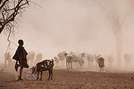
Days 12–14: Continuing the trek to Ifanirea. This was total immersion! We followed the path of highlanders who walk to sell goods (like tobacco) on the east coast, buy rum, and make the return trip. We crossed paths with many heavily loaded people, and it was mind-blowing to see them doing all that on foot. We stayed with local families, plus one night in a tent at a school canteen. We passed through varied landscapes, including real tropical forest where we spotted lemurs, and extremely remote villages...
We’d accepted being soaked, the kids had given up on sneakers—they moved better barefoot in the mud, and anyway, we had to cross rivers where the water came up to their thighs. The youngest was often carried. Our guide Haja encouraged them, his famous "it’s all part of the adventure" became our motto (and still is today in any tricky situation), and he kept teaching us tons about the wildlife, plants, daily life, etc.
Most people we met were surprised to see us (the region isn’t very touristy), but when they saw *vazaha* kids, it was pure shock and laughter.
Clearly, these few days were the highlight of the trip for me. I’m so glad we experienced it as a family.
At the end, a 4x4 took us to Manakara via a pretty epic track (bridges were wrecked—each time, a young guy got out to add a board or two so we could cross, then took them back). We spent a good 5 or 6 hours on that road, including a ferry crossing, with the same songs on repeat—we still know "taxi moto oooooooo" by heart!
In Manakara, we had a room by the beach—serene and relaxing. And there were our bags, sent ahead by Freddy via *taxi-brousse* during our trek days! Royal treatment!
Day 15: Slow, relaxed visit to Manakara—market, restaurant, lounging, soccer games, and shell hunting on the beach.
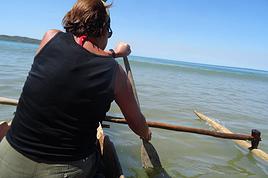
Day 16: *Taxi-brousse* to Mananjary, where we took a boat for a 2.5-day trip up the Pangalanes Canal with "Herman Pangalanes," also found via Facebook. Super experience, except the boat was really loud. Nights in tents on the sand.
Day 17: Between stops to visit villages along the canal, we watched fishermen, read, played dice games, and ate delicious seafood and fish.
Day 18: At the end of the boat trip, we arrived in Manahoro for another little evening of skewers on the beach, playing cards.
Day 19: An endless *taxi-brousse* ride to Andasibe! Left hours late... then a breakdown... then a stop to help another broken-down *taxi-brousse*... then a dinner stop... all at a painfully slow pace. It made us laugh, though the kids grumbled—hard to blame them. We arrived late at our accommodation.
Day 20: Andasibe—guided visit to a reserve where we saw two more types of lemurs, birds, insects, etc...
Plus a village visit and souvenir shopping.
Day 21: A driver recommended by our hotel took us to Tana, which we saw in daylight this time—but didn’t visit.
Day 22: Return flight.
In summary: stunning landscapes, a far-from-frantic pace, beautiful encounters, a few challenges, and a lot of sadness seeing the lack of improvement—or even the decline—in living conditions for Malagasy people, at least in the rural areas we visited.
But it was an amazing trip that reminded us of our younger days and really opened our kids’ eyes and helped them grow. I think they’ll remember it for a long time!
If I were to do it again... well, I’d spend less time trying to plan! In the end, we made a lot of decisions day by day, going with the flow and following our instincts and the people we met. But that’s also because we already knew Madagascar—otherwise, I’m not sure we would’ve dared to do it that way.
Thanks to those who had the courage to read all this! And thanks again for your help in clarifying things before the trip.
I didn’t include too many practical details, but I can add more if needed.
Well, it’s so great to read your travel journal and see that everything went even better than you initially planned!
What an amazing trip overall—such a fantastic itinerary that makes you dream and brings back lovely memories. It’s really nice to know there are still people working in Ambohimahamasina, because with time and Madagascar’s steady decline, the drop in tourism, I was worried everything might have collapsed. What a brilliant idea to take the "Malagasy smugglers’ trail"!
In short, reading you is pure joy, and it’s clear you definitely didn’t need any advice or tips from your past trips—just great memories of getting by on your own.
On the other hand, yeah, it’s disappointing and sad to share the same observations about how Madagascar is evolving. It’s mostly confined to Tana and a few other places, but a huge part of the population doesn’t see even a hint of change. Especially in the countryside (and in the Betsileo region, it’s really noticeable). And we won’t even talk about the roads…
If I dared to add just one thing: the upper town in Fianar is still absolutely stunning.
Nous sommes une famille avec 2 enfants de 7 et 2 ans et prévoyons de faire un séjour du 21 au 28 décembre 2026 au Maroc.
J'envisage que nous restions 2 jours et 2 nuits à Marrakech pour filer le 3ème matin vers l'erg Chebbi (Merzouga ou Khamlia, à voir), et revenir pour prendre l'avion.
J'envisage de passer par Skoura, la vallée des Roses, les Gorges du Dadès, Tinghir, pour arriver aux dunes de Merzouga . Au retour je passerais par Tamnougalt avant de rentrer sur Marrakech.
Plusieurs remarques, sachant qu'avec des enfants en bas âge tout est plus lent en voyage :
- dans l'idéal j'aimerais circuler en taxi collectif ou bus
- je n'ai pas envie de m'arrêter dormir à Ouarzazate que j'ai déjà visité.
Questions :
- cela vous semble il praticable en décembre (notamment tronçon Marrakech- Ouarzazate)?
- quels arrêts nocturnes me conseillez vous entre Marrakech et Merzouga? Je ferai 2 nuits dans 2 endroits différents, avant de faire 2 nuits à Merzouga, puis 1 nuit à Tamnougalt
- je provilégierais le taxi collectif mais pourra-t-il me déposer un peu plus loin que les centres villes ( si mon auberge se situe à quelques kilomètres plus loin de Boulmane Dades par exemple, ou pas en centre ville de Merzouga mais à Khamlia)? En gros possible de voyager un peu hors des sentiers battus en taxi collectif?
- on adore les auberges familiales, si vous avez des adresses on prend !
Hi everyone, we're heading to Brazil for two weeks during the Easter holidays.
Arriving in Rio and departing from São Paulo. Any recommendations for hotels, guides, or must-see spots?
I’d like to organize everything myself with reliable local drivers, and I’m looking for nice, comfortable accommodations considering my 5-year-old son.
Thanks so much!
Emilie
I’ve read the forum a lot and found a wealth of information. I’ve tried to compile all of it into our itinerary and would love your feedback to finalize the bookings (we’re planning this *very* last-minute).
Here’s what we’re thinking of doing:
22 July: arrival in Johannesburg
Night of 22–23: Johannesburg
Nights of 23–26: Marloth Park (with Kruger visits on the 24th, 25th, and a crossing visit on the 26th)
Nights of 26–28: Graskop (visiting the canyon and Panorama Road on the 27th and 28th)
Nights of 28–30: Hoedspruit (visiting the central area of Kruger on the 29th?)
Nights of 30 July–1 August: Balule Park (private reserve with safari)
Nights of 1–5 August: flight from Hoedspruit to Cape Town, then 2 days in Cape Town, 1 day on the peninsula, and 2 days for wine (just the route) or something else based on your advice (we don’t know where to stay—whether to stay all 5 nights in Cape Town and where in the city, or do 2 nights in Cape Town and 3 nights nearby—but where?)
Night of 5–6 August: Kelders for penguins and whales
Nights of 6–8 August: Tsitsikamma (what is there to do/see?)
Nights of 8–10 August: Addo Park on the 9th
10 August: flight from Port Elizabeth to Johannesburg and back home
What do you think?
Is there a lot of driving time?
We’d really appreciate your comments and suggestions.
Thanks!
After scouring the forum without managing to decide, I thought I’d ask for your advice!
Before becoming a mom, we traveled for a year from Iran to Indonesia, and now my partner and I are finally ready to take our first big one-month trip with our kids.
We’d like 2 or 3 places to visit, settle in, and explore the surrounding area.
We’re looking for a destination that’s fairly easy (since our kids aren’t always easy themselves), but I’m hesitant about Thailand (which I didn’t enjoy because it felt too touristy at the time).
I was thinking about Vietnam, which I don’t know at all. Maybe Laos, but spending a few days near a nice beach would be relaxing with two little ones full of energy…
We don’t want to rush through crowded, commercial sites—we want to take our time and discover beautiful places.
We’re planning our second trip to Thailand (2 weeks on-site, late April/early May) as a family with our kids.
On our first trip, we visited Bangkok, Ayutthaya, the River Kwai, Koh Lipe, Koh Phi Phi, and Khao Lak. We especially loved Koh Phi Phi for its limestone cliffs and lush vegetation, as well as Koh Lipe for its crystal-clear waters and snorkeling.
This time, we’d like a trip more focused on nature. We don’t want to visit any cities (maybe a floating market if it’s really worth the detour).
We’re looking for:
- Spectacular jungle;
- Animals in their natural habitat;
- Beautiful hikes or boat rides;
- Paradise-like beaches;
- Turquoise water with excellent snorkeling, preferably directly from the beach (turtles, tropical fish, etc.).
We’re thinking of including Khao Sok, but we’re unsure which islands to combine with this park.
Do you have any suggestions for 2-week itineraries with reasonable travel times? We’re prioritizing landscapes, nature, and the sea above all else.
Hi there,
I’m heading to Oman this coming October with my 13-year-old son for 11 days. My plan is to rent a car, probably a 4x4, to reach villages in the mountains, among other places. We’ll be sleeping in a tent the whole trip.
Since it’s a short stay, we’ll stick to the eastern part of the country, from Muscat to Duqm, most likely.
Any recommendations?! Things to know, like where to exchange money without high fees, a reliable car rental agency, road safety tips, wildlife like snakes, and anything else... I’ve done a lot of research already, but any suggestions would be super helpful!!
Thanks in advance,
Happy travels to everyone,
Céline
I’d love some advice on choosing a Christmas destination for a trip with my partner and our two kids, aged 10 and 12.
We’re looking for a place where we can enjoy great, easy snorkeling with the kids—ideally from the beach or in shallow water.
And if possible, a beautiful spot to explore, with nature, hikes, and a more laid-back, backpacker-friendly vibe than big resorts or mass tourism.
A "reasonable" flight time and not too much jet lag would be ideal!
I’ve been considering Mauritius, Zanzibar (plus possibly Tanzania), Martinique, or Guadeloupe—but maybe you have other suggestions or thoughts on these options?
I wanted to share our experience after a 5-day trip to Armenia with my wife and our 8-month-old baby.
It’s a destination that’s still relatively unknown, but it’s really worth the trip, especially if you enjoy cultural, spiritual, historical, and human-centered travel.
We were looking for a change of scenery but not too complicated with a baby—and easy to organize (even though our travel agency helped us a lot, thanks to them! 😊). In the end, Armenia was a wonderful surprise. It’s not a "postcard-perfect" destination. It’s a raw, mountainous, ancient country with real depth.
And most importantly: Armenians *love* children.
That’s probably what surprised us the most. In restaurants, waitresses, owners, or even other customers would naturally come over to play with our baby, hold them for a few minutes, smile at them, or keep them entertained while we ate.
It wasn’t intrusive. It was very natural, very family-oriented. You can tell that children have a real place in society. For parents traveling with a baby, it’s honestly a pleasure.
Day 1 — Yerevan
We started with Yerevan, a pleasant capital that’s quite easy to explore with a child.
The city isn’t huge. You can stroll around Republic Square, visit cafés, discover markets, and walk at a relaxed pace.
With a baby, it’s pretty practical: you can easily take breaks, return to the hotel, or go back out in the evening. The vibe is laid-back, family-friendly, and we felt safe.
In the evening, Yerevan is very lively. The restaurants are welcoming, and almost everywhere, our baby drew smiles.
Day 2 — Etchmiadzin and Khor Virap
On the second day, we headed to Etchmiadzin, the spiritual heart of Armenia. It’s an important place for understanding the country and its Christian identity.
Then, we visited Khor Virap, facing Mount Ararat.
It’s probably one of the most striking places on the trip. The monastery, the plain, the distant Ararat—everything is visually and symbolically powerful.
With a baby, you just need to plan a relaxed pace, avoid rushing, and take your time.
Day 3 — Garni and Geghard
The third day was one of our favorites.
We visited the Temple of Garni, very different from the monasteries, with a stunning setting in the mountains.
Then we went to Geghard, a monastery partially carved into the rock.
The atmosphere is incredible. It’s quiet, mineral, almost timeless. Even if you’re not very religious, you feel something.
With a child, the visit goes well, but again, it’s best not to overload the day. The key is to keep a flexible pace.
Day 4 — Noravank
On the fourth day, we headed to Noravank.
The road itself is an experience: dry landscapes, mountains, red rocks, valleys. The monastery is surrounded by impressive cliffs.
It’s one of the most beautiful sites we saw in Armenia.
You really get the sense that Armenian monasteries were built in impossible places—between sky, stone, and mountain.
Along the way, you can also pass through the Areni region, known for its wine. With a baby, we mostly prioritized simple breaks, relaxed meals, and uncompressed travel times.
Day 5 — Lake Sevan and return to Yerevan
For the last day, we went to Lake Sevan.
The lake is vast, bright, and surrounded by mountains. The Sevanavank Monastery, up high, offers a beautiful view.
It’s a gentler stop, perfect for ending the trip.
Then we returned to Yerevan for a final dinner. Once again, the welcome in restaurants stood out. In Armenia, traveling with a baby isn’t seen as a hassle. On the contrary, people spontaneously come up to the child.
Our overall impression
In 5 days, you obviously don’t see all of Armenia. To reach Tatev, Dilijan, Haghpat, or Sanahin, you’d need more like 7 to 10 days.
But for a first visit, 5 days are enough to feel the essence: Yerevan, the major monasteries, Mount Ararat, the landscapes, the Christian history, and the Armenian hospitality.
What we loved most:
- the kindness of people toward our baby;
- the very family-friendly atmosphere;
- the monasteries in incredible landscapes;
- the view of Mount Ararat from Khor Virap;
- the atmosphere of Geghard;
- the cliffs of Noravank;
- the food;
- the feeling of safety;
- the fact that the country is still relatively untouched by mass tourism.
What to know when traveling with a baby:
- distances can be longer than expected;
- some roads are mountainous;
- avoid overloading the day;
- it’s better to have a driver or a car;
- plan for breaks, water, diapers, baby meals;
- a stroller isn’t always practical on ancient sites;
- a baby carrier can be very useful.
Recommended 5-day itinerary
For a first trip, I’d suggest:
Day 1: Yerevan
Day 2: Etchmiadzin + Khor Virap
Day 3: Garni + Geghard
Day 4: Noravank + Areni
Day 5: Sevan + return to Yerevan
It’s balanced, not too tiring, and gives a great first impression of the country.
Conclusion
Armenia is a wonderful destination with a baby, as long as you travel slowly and don’t try to see everything.
What touched us most, beyond the landscapes and monasteries, was the attitude toward children. There, you feel that babies are welcomed with real tenderness. In restaurants, people naturally helped us, played with our child, and gave us a few minutes to breathe.
That’s rare, and it makes a big difference in the travel experience.
Armenia isn’t a destination you consume quickly.
It’s a country that you *feel*.
For those who love cultural, spiritual, historical, family, and human-centered travel, I highly recommend it.
Hi everyone,
We're heading to Colombia soon for two weeks as a family with our two 10-year-old boys. I'm a bit behind on planning our itinerary and could really use your advice!
We arrive in Cartagena, where we'll spend 3 nights.
Next, we're heading to the Tayrona area for 3 nights. Could you recommend a nice hotel with a pool, ideally family-friendly? Unfortunately, Senda Watapuy and Senda Koguiwa are already fully booked for our dates.
After that, we were thinking of spending a few days in Minca. Is that a good idea in late July/early August? How many nights would you recommend?
Finally, we're looking for a last stop before returning to France. We've heard about Mompox, but we're hesitant because it seems like a big detour. We love nature, animals, beautiful landscapes, beaches, and authentic places. Do you think Mompox is worth the detour with two kids, or would you recommend another destination (Palomino, Barú, La Guajira...) instead?
We don’t want to take any domestic flights.
Thanks in advance for all your tips and experiences!
This summer, we’ve decided to do a 3-week road trip starting from Nice and heading down to Ksamil in Albania.
We’re leaving from Nice, and our route is already pretty much set:
Nice - Verona (Italy) - Rijeka (Croatia) - Zadar - Split - Budva (Montenegro) - Shkodër (Albania) - Ksamil, then back through Italy via Bari.
The itinerary is packed! 🙂
Do you have any suggestions for things to see—visits, beaches, viewpoints, villages, or excursions—to make the most of our journey?
Hi there, we're planning our vacation in Indonesia. We're a family with two kids aged 11 and 14. We leave on July 26th and return on August 17th, 2026.
We initially planned to visit Bali, Komodo, and Flores, but after looking into it more, we came across Sumatra, which is less touristy... a real plus for us. However, skipping Bali might be a shame.
I was wondering if spending 12 days in Sumatra and finishing with about 7 days in Bali is a doable plan.
Hi,
I’m traveling with my 5-year-old son this summer to Northern Thailand, Northern Vietnam, Yunnan, and Indonesia. I plan to equip him with a GPS tracker, but the SIM cards come with a contract. Do you know what the options are in Asia?
Thanks,
Nora
Hi there,
We’d like to spend 2 days in Lyon in May with our 8- and 12-year-old kids, exploring the city on foot.
We’ll arrive on day 1 around 11 AM and leave on day 2 around 6 PM.
I’ve mapped out two routes and was wondering if they’re doable in our 2 days, and if you have any tips or info on visit prices.
We’re not sure where to stay yet, but we’d like to optimize by booking accommodation (hotel or Airbnb) between the two routes, maybe?
Hi there!
I’m planning a trip with my wife and our three kids (ages 9, 6, and 3) from April 16 to May 6.
I’ve started sketching out the itinerary, trying to alternate between visits, hikes, safaris, and downtime. I want to keep the pace relaxed given the kids’ ages.
Could you let me know what you think of this route? I removed Nuwara Eliya, which I had originally planned before Ella, to cut down on stops. I was also wondering if I should break up the Arugam Bay to Colombo leg with an overnight in Galle, since it’s a long drive.
Thanks in advance for your feedback!
Day 1 – 04/16: Wilpattu
Arrival at the airport (08:00) + transfer to Wilpattu (180 km, 4–5 h) + afternoon safari
Overnight: Wilpattu
Day 2 – 04/17: Wilpattu
Morning & afternoon safari
Overnight: Wilpattu
Day 3 – 04/18: Trincomalee
Transfer Wilpattu → Trincomalee (200 km, 4–5 h) + beach relaxation
Overnight: Trincomalee
Day 4 – 04/19: Trincomalee
Nilaveli Beach
Overnight: Trincomalee
Day 5 – 04/20: Trincomalee
Pigeon Island snorkeling
Overnight: Trincomalee
Day 6 – 04/21: Trincomalee
Fort Frederick & relaxation
Overnight: Trincomalee
Day 7 – 04/22: Sigiriya
Transfer Trincomalee → Sigiriya (120 km, ~3 h) + visit to Dambulla
Overnight: Sigiriya
Day 8 – 04/23: Sigiriya
Sigiriya Rock
Overnight: Sigiriya
Day 9 – 04/24: Sigiriya
Minneriya safari
Overnight: Sigiriya
Day 10 – 04/25: Sigiriya
Polonnaruwa & village tour
Overnight: Sigiriya
Day 11 – 04/26: Ella
Transfer Sigiriya → Ella (230 km, 5–6 h) + rest
Overnight: Ella
Day 12 – 04/27: Ella
Little Adam’s Peak & Nine Arches Bridge
Overnight: Ella
Day 13 – 04/28: Ella
Ella Rock
Overnight: Ella
Day 14 – 04/29: Ella
Tea Factory & relaxation
Overnight: Ella
Day 15 – 04/30: Yala
Transfer Ella → Yala (110 km, 2–3 h) + afternoon safari
Overnight: Yala
Day 16 – 05/01: Arugam Bay
Transfer Yala → Arugam Bay (80 km, 2.5–3 h) + beach time
Overnight: Arugam Bay
Day 17 – 05/02: Arugam Bay
Surfing & relaxation
Overnight: Arugam Bay
Day 18 – 05/03: Arugam Bay
Local exploration
Overnight: Arugam Bay
Day 19 – 05/04: Colombo
Transfer Arugam Bay → Colombo (320 km, 7–8 h) + rest
Overnight: Colombo
Day 20 – 05/05: Colombo
City tour & shopping
Overnight: Colombo
Day 21 – 05/06: Colombo
Morning return flight from Colombo
We’re heading to Sri Lanka for three weeks in July with two kids (ages 6 and 13).
We’ve drafted a rough itinerary but would love to hear from those who’ve already been there 😊
Of course, we want to see everything, but we have to make choices—even though three weeks on the ground lets us do quite a bit.
We originally planned a schedule that felt too packed, so we had to cut one stop. We decided to skip Tangalle, even though we were really tempted. The monsoon won’t let us swim there, and the weather in the south is too uncertain, so we preferred to keep our stops on the east coast. Plus, we don’t think it’s reasonable to cut nights from other places.
We’ve added a stop in Batticaloa, which we think will be a nice break between Arugam Bay and Sigiriya. What do you think?
We’re also debating between Batticaloa and Passikudah.
Does the itinerary seem logical to you?
Here it is:
Sri Lanka Itinerary
Day 1
Arrival around 1 PM at the airport
Night in Negombo
Day 2
Drive from Negombo to Galle
Visit Galle and surrounding areas
Night in Galle
Day 3
Visit Galle and surrounding areas
Night in Galle
Day 4
Visit Galle and surrounding areas
Drive from Galle to Udawalawe
Night in Udawalawe
Day 5
Visit Udawalawe National Park
Night in Udawalawe
Day 6
Drive from Udawalawe to Ella
Night in Ella
Day 7
Ella Rock
+ Nine Arch Bridge
Night in Ella
Day 8
Visit Haputale
Lipton’s Seat and Dambatenne Tea Factory
Train ride back from Haputale to Ella
Night in Ella
Day 9
Little Adam’s Peak
+ drive from Ella to Arugam Bay
Night in Arugam Bay
Day 10
Visit Arugam Bay and surrounding areas
Night in Arugam Bay
Day 11
Visit Arugam Bay and surrounding areas
Night in Arugam Bay
Day 12
Drive from Arugam Bay to Batticaloa
Night in Batticaloa
Day 13
Visit Batticaloa
Night in Batticaloa
Day 14
Drive from Batticaloa to Sigiriya
Night in Sigiriya
Day 15
Lion Rock and Pidurangala
Night in Sigiriya
Day 16
Visit Dambulla
Drive from Sigiriya to Trincomalee
Night in Trincomalee
Day 17
Visit Trincomalee and surrounding areas
Night in Trincomalee
Day 18
Visit Trincomalee and surrounding areas
Night in Trincomalee
Day 19
Drive from Trincomalee to Anuradhapura
Night in Anuradhapura
Day 20
Visit Anuradhapura
Night in Anuradhapura
Day 21
Visit Mihintale
Drive from Anuradhapura to Negombo
Night in Negombo
Day 22
Day in Negombo and return flight
We’d love to hear your thoughts and tips! Thanks in advance!
We’re planning a 4-month trip in spring 2027. We’re looking for a third destination that optimizes transport costs. Ideally, somewhere very different from the other two (Polynesia and Indonesia). Thanks
Hi everyone!
We’re so excited to be heading to Italy for the first time this April with our two kids for a week. We’ve booked our round-trip flight, and we’ll be arriving and departing from Pisa.
Our rough plan so far includes visiting Pisa, taking the train to Florence, and exploring the Cinque Terre. Last night, a friend also suggested adding Siena to the list.
Our kids are 12 and 9 and are used to walking, but we’re not looking to rush around too much. We’d love any advice, especially about accommodation. Should we stay in Pisa and take day trips by train, or split our nights between a couple of different places?
We’re just starting our research, so any tips would be amazing! 😉
Thanks in advance!
Hi everyone.
A few days ago, I asked my 14-year-old son to pick a destination for a trip, and he chose Germany. So, we’re heading to Berlin for four days in February. The catch is that I don’t know this city (or this country) at all—I hadn’t even considered visiting just a month ago .
Could you please share some suggestions to make this first mother-son trip abroad a success? 🙂
Thanks for your tips and great deals.
Nanyne
Next summer, we (2 adults and a 12-year-old child) have decided to visit Japan.
Admittedly, it’s still early to plan everything, but my wife will soon need to request her vacation time—either in August or July... and we’re hesitating.
I know summer isn’t the ideal time to visit Japan, but we don’t really have a choice... It’s either July or August. On one hand, I’d love to experience the O-Bon festivities from August 14th to 16th, and I’ve drafted an initial itinerary that would let us experience the Gujo Hachiman Bon Odori, possibly visit the Okunoin Cemetery in Koyasan, and be in Kyoto on the 16th for the Gozan Okuribi fires. But on the other hand, I’m worried it’ll be *packed*, especially in Kyoto, and less enjoyable than in July. So, have any of you experienced these celebrations? Are they worth it? Too crowded? Do you know of other celebrations or festivals in July?
Thanks for your input!
I’m reaching out because I’ve already read tons of info from other forums (thanks a million, by the way!) and blogs, but now I’m overwhelmed with details and have so many questions. I’m really hoping you can help us figure this out! Here’s the plan:
We’re leaving France for Senegal in our camper van (with two kids, aged 4 and 7), then shipping the van to South Africa before heading to Namibia. We’re planning to leave this summer and should arrive in South Africa in early September. The goal is to reach Réunion by early December, which gives us 3 months to explore Southern Africa. Originally, we wanted to pick up the van in Cape Town, head up to Namibia, and visit the main parks and iconic spots, then go north to Botswana (Etosha Park) and Zimbabwe (Victoria Falls) before heading back down to South Africa to enjoy the milder temperatures while exploring the country. But now we’re wondering how to get back to South Africa. We’ve come up with three options:
- Head back down through Botswana: I’ve read everywhere that Botswana isn’t recommended for kids under 6 (most parks) because it can be potentially dangerous—few enclosures for animals (even though we have a camper van with "secure" beds), and the agencies we’ve contacted don’t recommend it. Plus, southern Botswana is tough to navigate in a camper van.
- Return from central Botswana (Maun) to Windhoek and drive back to Cape Town via Namibia.
- Cross Zimbabwe and potentially Mozambique to head down to Kruger Park and Johannesburg.
Anyone familiar with this region have any recommendations?
Also, is it necessary to book accommodations in advance? Is that only required in certain countries (maybe Botswana/Zimbabwe)? We’d like a mix of camping and lodges.
Hi there,
We’re planning a two-week trip to Colombia with our two kids at the end of July – early August, with a round-trip flight to Cartagena.
What itinerary would you recommend, knowing we’d prefer to avoid domestic flights?
We were thinking of Cartagena, Tayrona Park, Mompox, and maybe an island.
Do you think it’s a shame to skip big cities like Bogotá or Medellín?
Thanks so much in advance for your help!
Good morning! We're heading to Cape Verde for 2 weeks at the end of April—São Vicente, Boa Vista, and Santiago. We’re a family of 5: 3 kids (4, 6, and 12) and 2 adults.
My questions revolve around beaches (a spot with interesting snorkeling and safe swimming for the kids), accommodation (kid-friendly, parks nearby, pool, beach, or nature—more like guesthouses or family-run pensions), hikes (accessible for kids), and whether renting a car makes sense depending on the island, even though local buses are an adventure in themselves.
**Santiago:**
- Beach & snorkeling: Tarrafal, Quebra Canela in Praia, Ribeira da Barca (okay for kids?), Águas Belas?
- Any nice places to stay?
- Hikes: Malagueta?, Baobab Boa Entrada, Pico António (accessible? elevation gain, time to climb, difficulty, interest for kids?)
**Boa Vista:**
- Beach + snorkeling: Santa Mónica, Praia de Chaves, Gatas, ... Estoril Beach in Sal Rei maybe?
- Can we swim at Turtle Bay to see the turtles even though it’s not nesting season?
- Any nice places to stay?
- Hikes: Viana Desert? Can we explore it solo by renting a 4x4 and easily find the points of interest?
- Is it worth renting a 4x4 for our stay in Boa Vista?
**São Vicente:**
- Beach + snorkeling: Laginha, Porto Grande, Praia Grande, Baía das Gatas, São Pedro...? (safe, good snorkeling?)
- Any nice places to stay?
- Hikes: cliffs?, Monte Verde?
Thanks for your feedback, great tips—especially for accommodation where we’re totally in the dark! And your thoughts on whether renting a car is a good idea and which beaches are safest for kids.
Hi,
We’d like to visit the Alpes de Haute-Provence for 2 weeks with our 2 (adult) kids.
Any ideas for things to see and do?
Where should we choose our accommodation (house only) to be centrally located for sightseeing? We’re looking for villages with restaurants and bakeries.
Thanks in advance for your tips!
Best regards
Hi there, we’re heading to Tuscany in the second half of August with two kids (8 and 6 years old).
We’ve zeroed in on the area around Siena and Florence for now.
I’m looking for recommendations on places to stay and things to see that are great for families.
Also, just to add, we’ll be traveling by train and plan to rent a car once we’re there—any tips on car rental companies?
Hello everyone,
We’ve decided to head to Quebec next year—it’s been a dream for the whole family (after watching so many travel shows and the like...). There’ll be five of us: 2 adults, 2 teens (16 and 13), and a child (8 years old). We’re all pretty good walkers, though maybe the teens a little less so—it’s just that age, you know? 😊 That said, they’ve got no problem doing 15 km hikes, just not every single day.
We’re planning to go from July 23 to August 14, arriving and departing from Montreal, so almost 3 weeks.
I’ve started looking into logistics and accommodation prices, but before I dive into bookings, I’d love some advice on the itinerary. I’ve read a few threads here and there.
Our idea is to visit between 3 and 5 different places over the 3 weeks, so that means the same number of accommodations. The goal is to optimize travel as much as possible—I’ve realized that getting around can take a long time.
I think the first two days will be in Montreal to adjust to the time difference, and the last two in Quebec City, though that’s not set in stone.
Anyway, I’m not really sure about the route. I’ve got time to plan everything, but I know the longer we wait, the more expensive and scarce accommodations will get.
Same goes for budget—we’ve set aside a mid-range budget, flights included: 3k per person (1k for the flight). So if you’ve got any great tips or advice, we’re all ears!
I was thinking of going up the St. Lawrence River, but I’m not sure how long that takes or where to stop. Maybe there are other places worth visiting farther away...
Anyway, thanks for reading this far! If you’ve got any questions, don’t hesitate.
I hope you're starting this new year with your head full of travel memories or plans!!
I’d love to spend a week in July on a Greek island with my 8-year-old son. I’m totally in love with Amorgos, but not all the beaches are accessible for him. I’ve been to Santorini and Naxos before and don’t want to go back. Would you have an island to recommend that’s not too crowded 😕, with a few accessible beaches and where we won’t have to fight to get around or park?
We’re a family with young kids (6 years old, 3 years old, and a newborn) and we’d like to spend about ten days in Aquitaine (in Gironde or Les Landes).
We’d love to be near pretty villages to visit and, if possible, close to the sea.
We’re planning to stay at a campsite with a pool so the kids can play.
Could you recommend any places/villages/campsites for us?
We don’t know the region at all.
We’re a family of five (our kids are 6, 15, and 19) and we’d love to go somewhere warm with our feet in the water during the first two weeks of August 2026. We’d also like to do some cultural visits and a bit of hiking. We were thinking of Guadeloupe—I know it’s not the ideal time of year, but we don’t have much flexibility. Is it really a bad idea, or can we still enjoy it despite the weather?
Another option for us would be Madeira, which seems more reliable weather-wise, but it sounds like the beaches are less accessible and not as nice.
We haven’t really looked elsewhere because everything else (except the Canary Islands, Balearics, or Corsica) seems way too expensive. But if you’ve got any recommendations, don’t hesitate—we’re just starting to look into it.
Hi,
This summer, we’re spending a month in Malaysia. There are 3 adults and two kids in our group. I’ve just finished planning our itinerary and I’d love to get your thoughts on whether it feels "coherent."
Thanks in advance for your feedback!
Christelle
07/07 Depart France 10:30 AM
08/07 Arrive KL 7:50 PM
09/07 KL
10/07 KL / Batu Caves
11/07 KL
12/07 KL → Kuching (flight)
13/07 Kuching
14/07 Bako National Park
15/07 Bako → Kuching
16/07 Semenggoh Reserve
17/07 Kuching → Mulu (flight)
18/07 Mulu National Park
19/07 Mulu → Kota Kinabalu (flight)
20/07 Kota Kinabalu → Sandakan (flight)
21/07 Kinabatangan
22/07 Kinabatangan → Sandakan / Sandakan → KL (flight)
23/07 Malacca
24/07 Malacca → Chin Swee Caves Temple
25/07 Chin Swee Caves Temple → Kuala Tahan / Taman Negara Park
26/07 Taman Negara Park
27/07 Kuala Tahan → Kuala Besut
28/07 Perhentian Islands
29/07 Perhentian Islands
30/07 Perhentian Islands
31/07 Perhentian → George Town
01/08 George Town / Penang
02/08 George Town / Penang
03/08 Ipoh
04/08 Cameron Highlands
05/08 Return to KL
06/08 Return to France