last edited Dec 11, 2019
What to See in South Korea
Contributionsversion #1created Dec 11, 2019Report this pageLatest contributions in this guideContributors to this guide
Location Map of South Korea
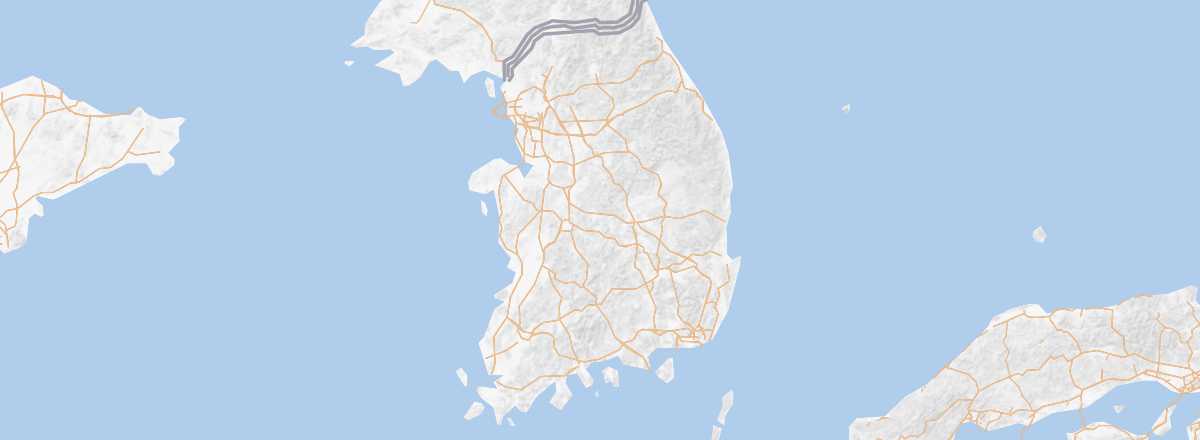 South Korea
Open the interactive map
UNESCO World Heritage Sites
South Korea has 12 sites inscribed on the UNESCO World Heritage list:
Baekje Historic Areas (2015)
These are eight sites (fortresses, temples, tombs, ramparts, and archaeological sites) in the western part of the country, particularly in the city of Buyeo, representative of the Baekje Kingdom (475-660).
These are eight sites (fortresses, temples, tombs, ramparts, and archaeological sites) in the western part of the country, particularly in the city of Buyeo, representative of the Baekje Kingdom (475-660).
Dolmens of Gochang, Hwasun and Ganghwa (2000)
This UNESCO-listed trio of sites is home to 40% of the world's dolmens. You can indeed see several hundred of them across these three locations scattered throughout the country, particularly in Gochang, which is the largest and most diverse.
This UNESCO-listed trio of sites is home to 40% of the world's dolmens. You can indeed see several hundred of them across these three locations scattered throughout the country, particularly in Gochang, which is the largest and most diverse.
Hwaseong Fortress (1997)
In the southern suburbs of Seoul, in Suwon, this 18th-century structure is a UNESCO World Heritage site.
In the southern suburbs of Seoul, in Suwon, this 18th-century structure is a UNESCO World Heritage site.

Seokguram Grotto and Bulguksa Temple (1995)
This beautiful Buddhist complex on Korea’s east coast is a UNESCO World Heritage site.
This beautiful Buddhist complex on Korea’s east coast is a UNESCO World Heritage site.
Gyeongju (2000)
This southeastern city was once a capital. From that era (1st century BCE – 10th century CE), many remnants remain (Seokguram Grotto, palaces, temples, tombs, etc.), earning it a UNESCO listing. You can also hike in the surrounding area.
This southeastern city was once a capital. From that era (1st century BCE – 10th century CE), many remnants remain (Seokguram Grotto, palaces, temples, tombs, etc.), earning it a UNESCO listing. You can also hike in the surrounding area.
Hahoe and Yangdong (2010)
These are two traditional and historic villages in the east of the country. The architecture, environment, and local culture have been preserved to such an extent that they are now UNESCO-listed.
These are two traditional and historic villages in the east of the country. The architecture, environment, and local culture have been preserved to such an extent that they are now UNESCO-listed.

Jeju (2007)
This large volcanic and tropical island is the southernmost part of Korea. It offers stunning landscapes and an extensive network of lava tunnels, which earned it a UNESCO listing, small villages, and excellent opportunities for hiking on foot or horseback. The island is also famous for honeymoon trips.
This large volcanic and tropical island is the southernmost part of Korea. It offers stunning landscapes and an extensive network of lava tunnels, which earned it a UNESCO listing, small villages, and excellent opportunities for hiking on foot or horseback. The island is also famous for honeymoon trips.
Namhansanseong (2014)
This ancient and sprawling fortress, home to several temples, is located on a hill not far from the capital. It is a UNESCO World Heritage site. The panoramic view of the capital makes it a popular tourist destination.
This ancient and sprawling fortress, home to several temples, is located on a hill not far from the capital. It is a UNESCO World Heritage site. The panoramic view of the capital makes it a popular tourist destination.
Changdeokgung Palace in Seoul (1997)
Built in the 15th century, this complex with its annexes is representative of the architecture of the Joseon Dynasty kings. It is a UNESCO World Heritage site.
Built in the 15th century, this complex with its annexes is representative of the architecture of the Joseon Dynasty kings. It is a UNESCO World Heritage site.
Jongmyo Shrine in Seoul (1995)
This is the oldest Confucian royal sanctuary still in use. It is a UNESCO World Heritage Site.
This is the oldest Confucian royal sanctuary still in use. It is a UNESCO World Heritage Site.
Royal Tombs of the Joseon Dynasty in Seoul (2009)
These are 42 tombs located primarily in Seoul and its surroundings, with sites like Seolleung, Jeongneung, and Uireung among the most interesting. The entire collection is a UNESCO World Heritage site.
These are 42 tombs located primarily in Seoul and its surroundings, with sites like Seolleung, Jeongneung, and Uireung among the most interesting. The entire collection is a UNESCO World Heritage site.
Haeinsa Janggyeong Panjeon Temple (1995)
Located in Gayasan, this is one of the most important Buddhist temples in South Korea. It is a UNESCO World Heritage site and is renowned for housing the "Tripitaka Koreana," a complete collection of Buddhist scriptures carved into woodblocks.
Located in Gayasan, this is one of the most important Buddhist temples in South Korea. It is a UNESCO World Heritage site and is renowned for housing the "Tripitaka Koreana," a complete collection of Buddhist scriptures carved into woodblocks.
Cities and Cultural Heritage
Baekje Historic Areas
These are eight sites (fortresses, temples, tombs, ramparts, and archaeological sites) in the western part of the country, particularly in the city of Buyeo, representative of the Baekje Kingdom (475-660).
These are eight sites (fortresses, temples, tombs, ramparts, and archaeological sites) in the western part of the country, particularly in the city of Buyeo, representative of the Baekje Kingdom (475-660).
Boryeong
This city on the west coast is known for its beaches (including Daecheon Beach) and its annual mud festival. Several small nearby islands are accessible by ferry from the port.
This city on the west coast is known for its beaches (including Daecheon Beach) and its annual mud festival. Several small nearby islands are accessible by ferry from the port.
Busan
This major southern port is also the second-largest urban area in South Korea. Busan is loved for its beaches, parks, lively atmosphere, and a few museums, beautiful temples, and historic buildings.
This major southern port is also the second-largest urban area in South Korea. Busan is loved for its beaches, parks, lively atmosphere, and a few museums, beautiful temples, and historic buildings.
Buyeo
The former capital of the Baekje kingdom is home to Busosanseong Fortress, the ruins of Gwanbuk-ri Palace, Jeongnimsa Temple, the royal tombs of Neungsan-ri, and the Naseong walls—all UNESCO-listed as the "Baekje Historic Areas." The Baekje Cultural Park is nearby.
The former capital of the Baekje kingdom is home to Busosanseong Fortress, the ruins of Gwanbuk-ri Palace, Jeongnimsa Temple, the royal tombs of Neungsan-ri, and the Naseong walls—all UNESCO-listed as the "Baekje Historic Areas." The Baekje Cultural Park is nearby.
Chuncheon
The city about a hundred kilometres northeast of Seoul is primarily a base for exploring the surrounding areas, where you can hike or ski (Gangchon Resort).
The city about a hundred kilometres northeast of Seoul is primarily a base for exploring the surrounding areas, where you can hike or ski (Gangchon Resort).
Daejeon
A major university and science city in the center of the country, also renowned for its hot springs. Surrounded by mountains perfect for hiking.
A major university and science city in the center of the country, also renowned for its hot springs. Surrounded by mountains perfect for hiking.
Danyang
This district in central Korea owes its appeal to the lakes and mountains that make it up. Visitors can explore three national parks, caves (including Gosu Cave), and several temples. It’s a hub for hiking and outdoor activities.
This district in central Korea owes its appeal to the lakes and mountains that make it up. Visitors can explore three national parks, caves (including Gosu Cave), and several temples. It’s a hub for hiking and outdoor activities.
DMZ
Or in English, the Korean Demilitarized Zone. This is the buffer zone (250 km x 4 km) between the two Koreas, which over time has become a tourist attraction, such as in the city of Paju or the abandoned village of Panmunjom, where the "Joint Security Area" (under UN control) is located and can be visited on an organized tour.
Or in English, the Korean Demilitarized Zone. This is the buffer zone (250 km x 4 km) between the two Koreas, which over time has become a tourist attraction, such as in the city of Paju or the abandoned village of Panmunjom, where the "Joint Security Area" (under UN control) is located and can be visited on an organized tour.
Dolmens of Gochang, Hwasun and Ganghwa
This UNESCO-listed trio of sites is home to 40% of the world's dolmens. You can indeed see several hundred of them across these three locations scattered throughout the country, particularly in Gochang, which is the largest and most diverse.
This UNESCO-listed trio of sites is home to 40% of the world's dolmens. You can indeed see several hundred of them across these three locations scattered throughout the country, particularly in Gochang, which is the largest and most diverse.
Donghae
A port city in the northeast with beautiful beaches, caves, and mountains and valleys (including Mureung Valley) perfect for hiking.
A port city in the northeast with beautiful beaches, caves, and mountains and valleys (including Mureung Valley) perfect for hiking.
Gongsanseong Fortress
A citadel perched in the city of Gongju. It is a UNESCO World Heritage Site as part of the "Baekje Historic Areas." Nearby are the (7) Royal Tombs of Songsan-ri.
A citadel perched in the city of Gongju. It is a UNESCO World Heritage Site as part of the "Baekje Historic Areas." Nearby are the (7) Royal Tombs of Songsan-ri.
Hwaseong Fortress
In the southern suburbs of Seoul, in Suwon, this 18th-century structure is a UNESCO World Heritage site.
In the southern suburbs of Seoul, in Suwon, this 18th-century structure is a UNESCO World Heritage site.
Gangneung
A large city on the northeast coast with beaches, several temples and museums, plus trekking and skiing opportunities in the surrounding area.
A large city on the northeast coast with beaches, several temples and museums, plus trekking and skiing opportunities in the surrounding area.
Gimcheon
On the road from Busan to Seoul, the city is known for its lovely Jikjisa Temple. You can hike in the surrounding area.
On the road from Busan to Seoul, the city is known for its lovely Jikjisa Temple. You can hike in the surrounding area.
Seokguram Grotto and Bulguksa Temple
This beautiful Buddhist complex on Korea’s east coast is a UNESCO World Heritage site.
This beautiful Buddhist complex on Korea’s east coast is a UNESCO World Heritage site.
Guinsa
In the mountains near Danyang, Guinsa is home to the largest Buddhist complex in Korea, with around fifty temples.
In the mountains near Danyang, Guinsa is home to the largest Buddhist complex in Korea, with around fifty temples.
Gyeongju
This southeastern city was once a capital. From that era (1st century BCE – 10th century CE), many remnants remain (Seokguram Grotto, palaces, temples, tombs, etc.), earning it a UNESCO listing. You can also hike in the surrounding area.
This southeastern city was once a capital. From that era (1st century BCE – 10th century CE), many remnants remain (Seokguram Grotto, palaces, temples, tombs, etc.), earning it a UNESCO listing. You can also hike in the surrounding area.
Hahoe and Yangdong (2010)
These are two traditional and historic villages in the east of the country. The architecture, environment, and local culture have been preserved to such an extent that they are now UNESCO-listed.
These are two traditional and historic villages in the east of the country. The architecture, environment, and local culture have been preserved to such an extent that they are now UNESCO-listed.
Incheon
The city is known for hosting the country's main airport. Beyond that, it's also a lively city with a Chinatown (the only one in Korea) and several small islands like Deokjeokdo (beaches and hiking) accessible by ferry. Incheon is also a departure point for ferries to China.
The city is known for hosting the country's main airport. Beyond that, it's also a lively city with a Chinatown (the only one in Korea) and several small islands like Deokjeokdo (beaches and hiking) accessible by ferry. Incheon is also a departure point for ferries to China.
Jeonju
A large city with several museums, a few monuments, and an eco-museum showcasing the region's traditional housing.
A large city with several museums, a few monuments, and an eco-museum showcasing the region's traditional housing.
Namhansanseong
This ancient and sprawling fortress, home to several temples, is located on a hill not far from the capital. It is a UNESCO World Heritage site. The panoramic view of the capital makes it a popular tourist destination.
This ancient and sprawling fortress, home to several temples, is located on a hill not far from the capital. It is a UNESCO World Heritage site. The panoramic view of the capital makes it a popular tourist destination.
Pyeongchang
The 2018 Winter Olympics were held here, offering great trekking and skiing opportunities, starting with Yongpyong Resort. Several well-known Buddhist temples are also nearby.
The 2018 Winter Olympics were held here, offering great trekking and skiing opportunities, starting with Yongpyong Resort. Several well-known Buddhist temples are also nearby.

Seoul
South Korea's vast capital is a blend of old (palaces, temples...) and new (business districts, Olympic Park, theme parks...). Surrounded by eight mountains, the city also makes it easy to go hiking on its outskirts, particularly at Mount Bukhan.
South Korea's vast capital is a blend of old (palaces, temples...) and new (business districts, Olympic Park, theme parks...). Surrounded by eight mountains, the city also makes it easy to go hiking on its outskirts, particularly at Mount Bukhan.
Beopju Temple
One of the most beautiful and expansive Buddhist temples in South Korea, located in Songnisan National Park.
One of the most beautiful and expansive Buddhist temples in South Korea, located in Songnisan National Park.
Haeinsa Janggyeong Panjeon Temple
Located in Gayasan, this is one of the most important Buddhist temples in South Korea. It is a UNESCO World Heritage site and is renowned for housing the "Tripitaka Koreana," a complete collection of Buddhist scriptures carved into woodblocks.
Located in Gayasan, this is one of the most important Buddhist temples in South Korea. It is a UNESCO World Heritage site and is renowned for housing the "Tripitaka Koreana," a complete collection of Buddhist scriptures carved into woodblocks.
Yongin
In the distant southern suburbs of the capital, Yongin is home to two of the region's main attractions: the "Korean Folk Village" (a mix of eco-museum and amusement park) and, most notably, Everland, the largest amusement park in the country. You can also hike in the surrounding area.
In the distant southern suburbs of the capital, Yongin is home to two of the region's main attractions: the "Korean Folk Village" (a mix of eco-museum and amusement park) and, most notably, Everland, the largest amusement park in the country. You can also hike in the surrounding area.
Islands
Deokjeokdo
It’s the largest island in Incheon Bay and one of the most visited. People come for the beach and short hikes.
It’s the largest island in Incheon Bay and one of the most visited. People come for the beach and short hikes.
Geoje
Large island facing Busan connected to the mainland. It offers quite beautiful landscapes, a lovely botanical garden (on the islet of Oedo), and opportunities for walks on foot or by boat.
Large island facing Busan connected to the mainland. It offers quite beautiful landscapes, a lovely botanical garden (on the islet of Oedo), and opportunities for walks on foot or by boat.
Jeju
This large volcanic and tropical island is the southernmost part of Korea. It offers stunning landscapes and an extensive network of lava tunnels, which earned it a UNESCO listing, small villages, and excellent opportunities for hiking on foot or horseback. The island is also famous for honeymoon trips.
This large volcanic and tropical island is the southernmost part of Korea. It offers stunning landscapes and an extensive network of lava tunnels, which earned it a UNESCO listing, small villages, and excellent opportunities for hiking on foot or horseback. The island is also famous for honeymoon trips.
Namhae
Along with its neighbor Changsoen, it is one of the main islands on the southern coast of Korea, offering pretty landscapes, beaches, and good fishing opportunities.
Along with its neighbor Changsoen, it is one of the main islands on the southern coast of Korea, offering pretty landscapes, beaches, and good fishing opportunities.
Ulleungdo
It's a small volcanic island off the east coast of Korea. Visitors come for hiking, fishing, and occasionally diving.
It's a small volcanic island off the east coast of Korea. Visitors come for hiking, fishing, and occasionally diving.
Natural Heritage
Yeongnam Alps
This charming mid-mountain range in the southeast of Korea is popular with local tourists for its landscapes, waterfalls, and hot springs, as well as a few interesting temples (Tongdosa, Pyochungsa, and others).
This charming mid-mountain range in the southeast of Korea is popular with local tourists for its landscapes, waterfalls, and hot springs, as well as a few interesting temples (Tongdosa, Pyochungsa, and others).
Gapyeong District
This small region northeast of Seoul is known for its pretty landscapes, lakes, and low mountains. You can hike and fish here. It’s also where one of the major battles of the Korean War, the Battle of Kapyong, took place, as commemorated by the Gapyeong Canada Monument.
This small region northeast of Seoul is known for its pretty landscapes, lakes, and low mountains. You can hike and fish here. It’s also where one of the major battles of the Korean War, the Battle of Kapyong, took place, as commemorated by the Gapyeong Canada Monument.
Bukhansan National Park
Mount Bukhan and its national park lie on the outskirts of Seoul. They offer residents of the capital excellent trekking and climbing opportunities, making the park one of the most visited in the world.
Mount Bukhan and its national park lie on the outskirts of Seoul. They offer residents of the capital excellent trekking and climbing opportunities, making the park one of the most visited in the world.
Juwangsan National Park
A small park on the Korean east coast near the sea, with waterfalls and cliffs, ideal for hiking.
A small park on the Korean east coast near the sea, with waterfalls and cliffs, ideal for hiking.
Gayasan National Park
This is a park in the south of the country where you can hike. Nationally, the park is best known for housing the Haeinsa Janggyeong Panjeon Temple (a UNESCO World Heritage site), one of the most important Buddhist sites in South Korea.
This is a park in the south of the country where you can hike. Nationally, the park is best known for housing the Haeinsa Janggyeong Panjeon Temple (a UNESCO World Heritage site), one of the most important Buddhist sites in South Korea.
Odaesan National Park
A very pretty park in the northeast, with mountains and waterfalls, known for trekking.
A very pretty park in the northeast, with mountains and waterfalls, known for trekking.

Seoraksan National Park
In the northeast of Korea, this park is one of the country’s most famous, with rich flora and fauna (including bears). It’s a favorite spot for hikers and other outdoor enthusiasts.
In the northeast of Korea, this park is one of the country’s most famous, with rich flora and fauna (including bears). It’s a favorite spot for hikers and other outdoor enthusiasts.
Songnisan National Park
A mountainous park in the heart of the country where you can hike. It’s also home to Beopjusa Temple, one of Korea’s largest.
A mountainous park in the heart of the country where you can hike. It’s also home to Beopjusa Temple, one of Korea’s largest.
Must-see & highly recommended
Jeju
★★★★ This large volcanic and tropical island is the southernmost part of Korea. It offers stunning landscapes and an extensive network of lava…
Recommended
DMZ
★★★ Or in English, the Korean Demilitarized Zone. This is the buffer zone (250 km x 4 km) between the two Koreas, which over time has become a…
Seokguram Grotto and Bulguksa Temple
★★★ This beautiful Buddhist complex on Korea’s east coast is a UNESCO World Heritage site.
Seoraksan National Park
★★★ In the northeast of Korea, this park is one of the country’s most famous, with rich flora and fauna (including bears). It’s a…
Seoul
★★★ South Korea's vast capital is a blend of old (palaces, temples...) and new (business districts, Olympic Park, theme parks...). Surrounded…
Worth a look / Other
Baekje Historic Areas
★★ These are eight sites (fortresses, temples, tombs, ramparts, and archaeological sites) in the western part of the country, particularly in…
Yeongnam Alps
★★ This charming mid-mountain range in the southeast of Korea is popular with local tourists for its landscapes, waterfalls, and hot springs…
Busan
★★ This major southern port is also the second-largest urban area in South Korea. Busan is loved for its beaches, parks, lively atmosphere…
Buyeo
★★ The former capital of the Baekje kingdom is home to Busosanseong Fortress, the ruins of Gwanbuk-ri Palace, Jeongnimsa Temple, the royal…
Danyang
★★ This district in central Korea owes its appeal to the lakes and mountains that make it up. Visitors can explore three national parks, caves…
Deokjeokdo
★★ It’s the largest island in Incheon Bay and one of the most visited. People come for the beach and short hikes.
Gapyeong District
★★ This small region northeast of Seoul is known for its pretty landscapes, lakes, and low mountains. You can hike and fish here. It’s…
Hwaseong Fortress
★★ In the southern suburbs of Seoul, in Suwon, this 18th-century structure is a UNESCO World Heritage site.
Guinsa
★★ In the mountains near Danyang, Guinsa is home to the largest Buddhist complex in Korea, with around fifty temples.
Gyeongju
★★ This southeastern city was once a capital. From that era (1st century BCE – 10th century CE), many remnants remain (Seokguram Grotto…
Hahoe and Yangdong
★★ These are two traditional and historic villages in the east of the country. The architecture, environment, and local culture have been…
Incheon
★★ The city is known for hosting the country's main airport. Beyond that, it's also a lively city with a Chinatown (the only one in Korea) and…
Namhae
★★ Along with its neighbor Changsoen, it is one of the main islands on the southern coast of Korea, offering pretty landscapes, beaches, and…
Namhansanseong
★★ This ancient and sprawling fortress, home to several temples, is located on a hill not far from the capital. It is a UNESCO World Heritage…
Changdeokgung Palace
★★ Built in the 15th century, this complex with its annexes is representative of the architecture of the Joseon Dynasty kings. It is a UNESCO…
Bukhansan National Park
★★ Mount Bukhan and its national park lie on the outskirts of Seoul. They offer residents of the capital excellent trekking and climbing…
Jirisan National Park
★★ Korea's first and largest national park, also the most renowned for trekking.
Juwangsan National Park
★★ A small park on the Korean east coast near the sea, with waterfalls and cliffs, ideal for hiking.
Odaesan National Park
★★ A very pretty park in the northeast, with mountains and waterfalls, known for trekking.
Songnisan National Park
★★ A mountainous park in the heart of the country where you can hike. It’s also home to Beopjusa Temple, one of Korea’s largest.
Gayasan National Park
★★ This is a park in the south of the country where you can hike. Nationally, the park is best known for housing the Haeinsa Janggyeong…
Jongmyo Shrine
★★ This is the oldest Confucian royal sanctuary still in use. It is a UNESCO World Heritage Site.
Haeinsa Janggyeong Panjeon Temple
★★ Located in Gayasan, this is one of the most important Buddhist temples in South Korea. It is a UNESCO World Heritage site and is renowned…
Beopju Temple
★★ One of the most beautiful and expansive Buddhist temples in South Korea, located in Songnisan National Park.
Royal Tombs of the Joseon Dynasty
★★ These are 42 tombs located primarily in Seoul and its surroundings, with sites like Seolleung, Jeongneung, and Uireung among the most…
Ulleungdo
★★ It's a small volcanic island off the east coast of Korea. Visitors come for hiking, fishing, and occasionally diving.
Yongin
★★ In the distant southern suburbs of the capital, Yongin is home to two of the region's main attractions: the "Korean Folk Village" (a mix of…
Boryeong
★ This city on the west coast is known for its beaches (including Daecheon Beach) and its annual mud festival. Several small nearby islands…
Cheonan
★ The city is known for its collection of patriotic museums, monuments, and gardens.
Cheongju
★ It's a large city in central South Korea dominated by an imposing fortress.
Chuncheon
★ The city about a hundred kilometres northeast of Seoul is primarily a base for exploring the surrounding areas, where you can hike or ski…
Daejeon
★ A major university and science city in the center of the country, also renowned for its hot springs. Surrounded by mountains perfect for…
Dolmens of Gochang, Hwasun and Ganghwa
★ This UNESCO-listed trio of sites is home to 40% of the world's dolmens. You can indeed see several hundred of them across these three…
Donghae
★ A port city in the northeast with beautiful beaches, caves, and mountains and valleys (including Mureung Valley) perfect for hiking.
Gongsanseong Fortress
★ A citadel perched in the city of Gongju. It is a UNESCO World Heritage Site as part of the "Baekje Historic Areas." Nearby are the (7)…
Gangneung
★ A large city on the northeast coast with beaches, several temples and museums, plus trekking and skiing opportunities in the surrounding…
Geoje
★ Large island facing Busan connected to the mainland. It offers quite beautiful landscapes, a lovely botanical garden (on the islet of…
Gimcheon
★ On the road from Busan to Seoul, the city is known for its lovely Jikjisa Temple. You can hike in the surrounding area.
Gwangju
★ A large city in the southwest of South Korea with a lively cultural scene but few tourists.
Jeonju
★ A large city with several museums, a few monuments, and an eco-museum showcasing the region's traditional housing.
Jinju
★ The city is home to a well-preserved fortress and is also known for its "lantern festival".
Pyeongchang
★ The 2018 Winter Olympics were held here, offering great trekking and skiing opportunities, starting with Yongpyong Resort. Several…
Yeosu
★ A coastal city in southern Korea known for its beaches.
- Baekje Historic Areas
- Hwaseong Fortress
- Seokguram Grotto and Bulguksa Temple
- Namhansanseong
- Boryeong
- Busan
- Cheonan
- Cheongju
- Chuncheon
- Daejeon
- Danyang
- DMZ
- Donghae
- Gangneung
- Gimcheon
- Dolmens of Gochang, Hwasun and Ganghwa
- Guinsa
- Gwangju
- Gyeongju
- Incheon
- Jeonju
- Jinju
- Pyeongchang
- Seoul
- Beopju Temple
- Yeosu
- Yongin
- Deokjeokdo
- Geoje
- Jeju
- Namhae
- Ulleungdo
- Yeongnam Alps
- Gapyeong District
- Bukhansan National Park
- Jirisan National Park
- Juwangsan National Park
- Gayasan National Park
- Odaesan National Park
- Seoraksan National Park
- Songnisan National Park
- Gongsanseong Fortress
- Buyeo
- Haeinsa Janggyeong Panjeon Temple
- Hahoe and Yangdong