last edited Dec 11, 2019
What to See in France
Location Map of France
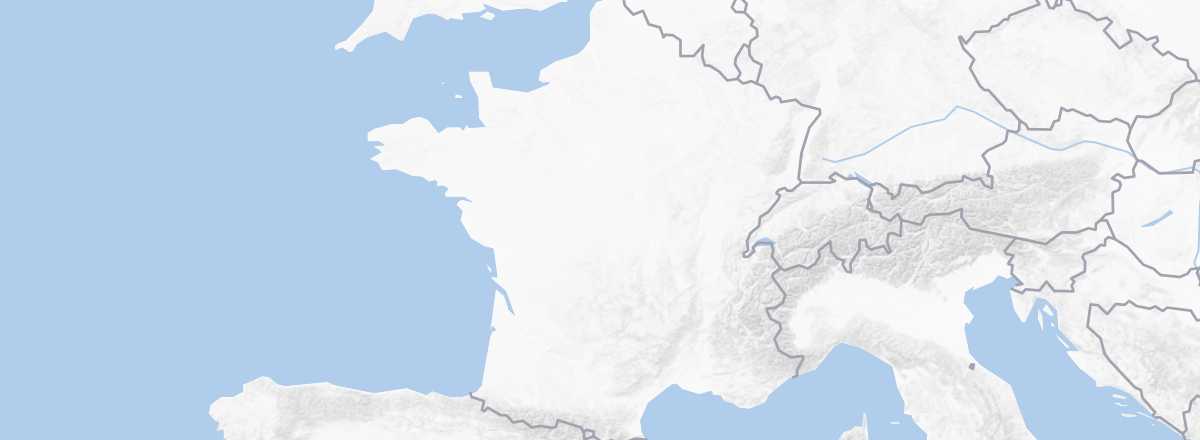 France
Open the interactive map
UNESCO World Heritage Sites
With over 40 sites inscribed on the UNESCO World Heritage List, France ranks in the "Top 5" countries worldwide by number of entries. Reflecting the country’s diversity, the listed sites range from cities or districts with remarkable heritage (Avignon, Bordeaux, Carcassonne, Paris, Provins...) to numerous religious buildings such as abbeys and cathedrals (Amiens, Chartres, Reims...), unique landmarks (Mont Saint-Michel, Chauvet Cave, Pont du Gard, Versailles...), and natural sites (Canal du Midi, Gulf of Porto, Causses and Cévennes...).
By Region
Every region of France is rich in sites and places to discover:
- What to See in Aquitaine: including the Basque Country, Biarritz, Bordeaux, the Arcachon Basin, the Dune of Pilat, Lascaux, Sarlat, the "Most Beautiful Villages of France" in Dordogne (Beynac, Castelnaud, Domme...), the Vézère and Dordogne valleys, and the Pyrénées National Park.
- What to See in Brittany: notably Saint-Malo, Concarneau, Cap Fréhel and Cap Sizun, the Crozon and Quiberon peninsulas, Pointe du Raz, the Pink Granite Coast, the Glénan archipelago, Belle-Île, Ouessant, the Monts d’Arrée, and the Armorique Regional Nature Park.
- What to See in Central France: first and foremost, the Loire Valley and its famous and countless Renaissance châteaux (Amboise, Azay-le-Rideau, Chambord, Chaumont, Chenonceau, Valençay...).
- What to See in Corsica: Bonifacio, the Gulf of Porto, the Calanques of Piana, the Lavezzi Islands, the Agriates Desert, the Restonica Gorges, the Scandola Nature Reserve, and the Corsica Regional Nature Park (and the GR20).
- What to See in Grand Est: including the cities of Colmar, Nancy, Obernai, and Strasbourg, the villages of Riquewihr and Eguisheim, the Haut-Koenigsbourg Castle, the Alsace Wine Route, and the Vosges du Nord Regional Nature Park.
- What to See in Hauts-de-France: Amiens and Lille, Chantilly for its château, the Somme Bay and the Marquenterre Park, the Opal Coast, Cap Blanc-Nez, the Historial of the Great War, and the Remembrance Circuit.
- What to See in the Massif Central: among others, Collonges-la-Rouge, Oradour-sur-Glane, the Monts Dore massif, the Plomb du Cantal, the Puys (Griou, Mary, Sancy), and the Volcanoes of Auvergne Regional Nature Park.
- What to See in Normandy: Deauville, Honfleur, Rouen, Mont Saint-Michel, the Étretat Cliffs, and the D-Day Landing Beaches.
- What to See in Occitanie: many highlights, including the cities of Albi, Carcassonne, Montpellier, and Toulouse, the villages of Cordes, Bruniquel, Saint-Cirq Lapopie, Rocamadour, the Canal du Midi, the Pont du Gard, the Cathar castles, the Tarn Gorges, the Causses and Cévennes, and the Pyrénées National Park.
- What to See in Western France: cities like Angers, Nantes, Guérande, and La Rochelle, islands such as Noirmoutier, Oléron, Ré, Aix, and the Île d’Yeu, sites like the Poitevin Marsh and the Gironde Estuary, and parks like Futuroscope and Puy du Fou.
- What to See in Paris-Île de France: beyond Paris and Versailles, the châteaux of Vaux-le-Vicomte and Fontainebleau (with its forest), Provins, Saint-Germain-en-Laye, and even Disneyland Paris.
- What to See in Provence-Alpes-Côte d'Azur: a wide selection, including Arles, Avignon, Les Baux, Cannes, Gordes, Marseille (with its calanques), Nice, Saint-Paul de Vence, as well as Porquerolles, the Verdon Gorge, the Camargue, the Luberon, and the Mercantour and Écrins parks.
- What to See in Rhône-Alpes: plenty of nature-focused options, including the Ardèche Gorges, the Vanoise, Vercors, Chartreuse, Mercantour, and Écrins parks, the Mont Blanc massif, plus the city of Lyon for its heritage.