last edited Dec 11, 2019
Money, Budget, and Shopping in Haiti
Location Map of Haiti
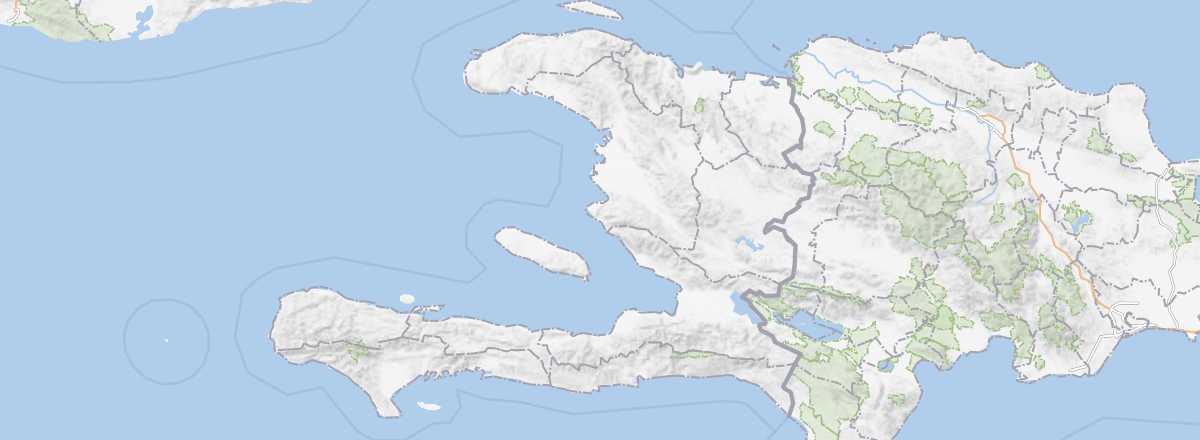 Haiti
Open the interactive map
Money
Currency
- Currency: Haitian gourde (100 centimes).
- Banknotes: 10, 20, 25, 50, 100, 250, 500 and 1,000 G$
- Coins: 50 centimes + 1 and 5 G$
- Exchange:
While the gourde has been Haiti’s official currency for a long time, the term Haitian dollar is also commonly used by the local population, based on 1 Haitian dollar = 5 gourdes. However, neither the term nor the exchange rate has any "legal" status and simply reflects a "choice of language and calculation" among Haitians (similar to "old francs" in France). It’s good to know this to avoid confusion when US dollars are also involved.
Exchange
You can exchange money upon arrival at airports in the capital and Cap-Haïtien, or use the few ATMs available on the island. In any case, exercise caution when exchanging money, especially at ATMs in busy areas.
Which currency to bring
Although the official currency is the gourde, it’s still possible to pay almost everywhere in US dollars (with change usually given in gourdes). Moreover, higher prices are often listed in US dollars.
Warning: Since Haitians often refer to the "Haitian dollar" (symbolized as $) when discussing money, it’s crucial to clarify which dollar is being discussed. While 1 Haitian dollar = 5 gourdes (≈ $0.10 USD), 1 US dollar = about 50 gourdes—a 1:10 ratio. In short, be careful not to confuse them, or you might end up paying 10 times more.
As for which currency to bring, keep it simple. While euros can be exchanged for gourdes (not always at a good rate), it’s better to come with US dollars. The advantage is that even if you have leftover dollars at the end of your trip, you can always use or exchange them easily elsewhere.
Payment methods
You can easily pay for many things in cash US dollars. However, always keep a small supply of gourdes (or small US bills) for basic purchases. As for credit cards, only major hotels, car rental agencies, and tourist service providers accept them.
Returning home
The simplest approach is to end your trip with mostly US dollars, which you can easily use or exchange for another trip if you have any left.
Budget
What can be expensive
- Airfare to get there, compared to the neighboring "DR."
What can be inexpensive
- Eating local food
- Local transportation.
Price range
- Budget double room:
- Mid-range double room:
- Snacks, local restaurant meal:
- Tourist restaurant meal:
- Budget car rental:
- One hour of bus/minibus: roughly $4 USD for 100 km, or about two to three hours of travel.
- One hour of tap-tap (shared taxi):
- Urban taxi:
Bargaining and tips
In Haiti, almost everything can be bargained for, bought, or rented. Also, as a "visitor" or "foreigner," you’ll automatically pay more than Haitians.