last edited Apr 16, 2026
Money, Budget, and Shopping in Indonesia
Location Map of Indonesia
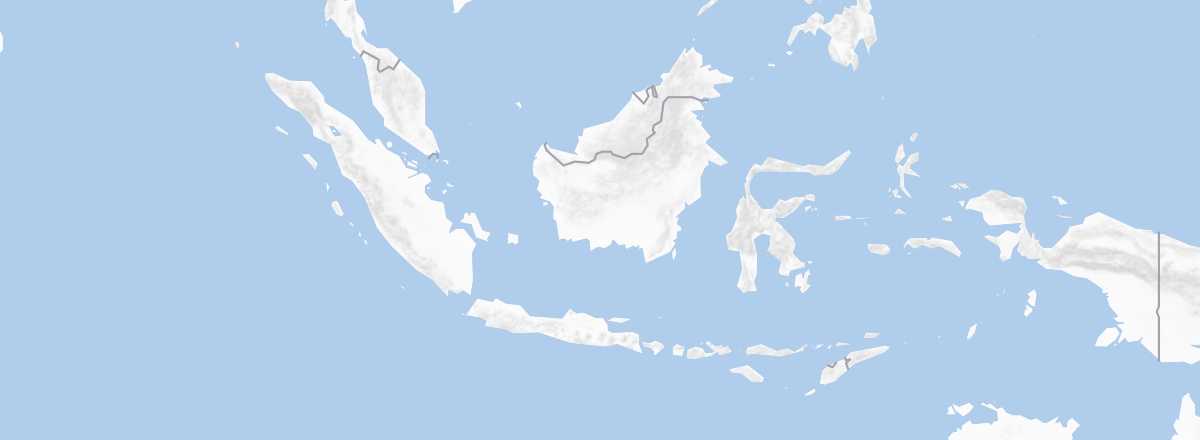 Indonesia
Open the interactive map
Money
Currency
- Currency: Indonesian rupiah.
- Banknotes: 1,000, 2,000, 5,000, 10,000, 20,000, 50,000, and 100,000 Rp.
- Coins: 100, 200, 500, and 1,000 Rp.
- Exchange:
Exchange
Generally, in Indonesian cities and tourist areas, starting with Bali, it’s easy to exchange money at banks, licensed exchange bureaus (avoid others with unrealistic rates)—recognisable by their "PVA Berizin" logo—as well as through ATMs, though their withdrawal limits are usually quite low.
That said, as is often the case, you can compare rates, exchange gradually if you’re staying a while, and ask for small denominations, which are easier to use for everyday expenses than large bills. Don’t forget to count your money carefully with each transaction, as you would with purchases, given the high values and number of zeros on the notes. Indonesia is one of those countries where you quickly become a millionaire in local currency, since the highest 100,000-rupiah note is worth little more than... 6 €.
Which currency to bring
If you’re coming from the eurozone, the simplest option is to bring euros, as they’re widely accepted and exchanged at good rates. No need for dollars or other currencies, which would just add an extra commission. The only condition: bring large denominations (the rate is sometimes better) and make sure they’re in good condition—otherwise, they might be refused.
Payment methods
If you venture off the beaten path or into the most remote parts of the archipelago, make sure to bring enough cash. Otherwise, a mix of cash and card will work just fine. So, some euros in cash plus rupiah in small denominations for daily purchases, along with card payments for larger expenses or in tourist areas. That said, watch out for fees that banks may charge on transactions over time.
Nowadays, QR code payments are also accepted in almost all shops. While the system is primarily designed for locals (it often requires a local phone number), foreigners can access it by downloading certain apps. An easier option is transport apps like Grab, which you can link to your bank card and use to pay for or book transport in the country without needing cash or direct card payments.
Returning home
Since the Indonesian rupiah has little value outside the country and is nearly impossible to exchange abroad, it’s best to spend it all or exchange it back into euros before departure—even if you’ll lose out on the exchange rate.
Budget
While prices have risen recently and Bali can get expensive depending on what you plan to do, Indonesia remains an affordable destination.
You can live on a budget of 30 € to 40 € (for two people) if you travel like a backpacker or stay away from tourist hotspots. However, for more comfort, enjoying the country’s many activities, and visiting popular spots, it’s better to budget around 50 € per day to avoid feeling restricted.
What can be expensive
- Flights to get there, especially in high season.
- High season in tourist areas, July-August and December, when prices rise sharply.
- A long stay in Bali, especially since the island charges a special tax (around 10 €).
- Certain activities like diving or surfing, as well as excursions like those to Komodo (for the Komodo dragons) or to climb volcanoes like Bromo or Ijen.
- Nightlife and bars in beach resorts, which can quickly add up—especially since alcohol is often heavily taxed.
What can be inexpensive
- Eating, sleeping, and getting around "local style."
- Services like massages, haircuts, laundry, and other personal services.
- Java or Sumatra compared to Bali or Lombok.
- Less-visited but accessible islands with basic infrastructure—unlike Papua, where you’ll need a much larger budget.
Price range
- Budget double room: 10 € to 15 € in a small guesthouse or homestay.
- Mid-range double room: For 30 € to 40 €, you’ll find good-quality accommodations.
- Snacks and local meals: 2 € to 3 € at markets or street stalls, or 5 € to 6 € in local eateries.
- Tourist restaurant meals: 15 € to 20 € for a full meal in a tourist-friendly restaurant.
- Budget car rental: Around 30 € for a small car—though driving in some parts of Indonesia isn’t for everyone.
- Car rental with driver: Budget 40 € to 50 € per day, depending on the route and vehicle (more in high season, especially in Bali).
- Two-wheeler rental: Less than 5 € per day for a bicycle and 8 € to 10 € for a scooter.
- Buses: Around 1 € per hour for local buses, three times that for comfortable buses, and at least five times more for "Luxury/Sleeper" options.
- Trains: Similar to buses, with prices varying by route, class, and comfort—ranging from 1 to 5 times more, or even higher for "Luxury/Sleeper" trains, which can easily replace a hotel for overnight trips.
- Urban transport: Buses and metro for less than 1 € per ticket, 2 € to 3 € for a short moto-taxi ride, or around 5 € for a taxi.
Bargaining and tipping
Bargaining is common in Indonesia for markets, souvenir shops, informal transport (which is why apps like Grab, which show fixed fares, are useful), and even some local accommodations if you’re staying multiple nights. The goal is often to reach a compromise between half and two-thirds of the initial asking price. For many things, there’s a "local" price (sometimes official, like park entry fees) and a much higher "tourist" price—so it’s always worth asking around.
Tipping isn’t mandatory, but it’s expected in tourist areas. You can leave a small amount in restaurants, 4 € or 5 € for guides and drivers, and around 1 € for hotel staff, taxi drivers, and others.
Shopping and souvenirs
Start with batik textiles, which have made the country famous and are now UNESCO-listed, as well as wooden crafts (especially in Bali), silver jewellery, rattan bags, traditional masks, spices, and other items depending on your preferences. Everything can be found and negotiated in markets.