last edited Dec 11, 2019
Money, Budget, and Shopping in Croatia
Location Map of Croatia
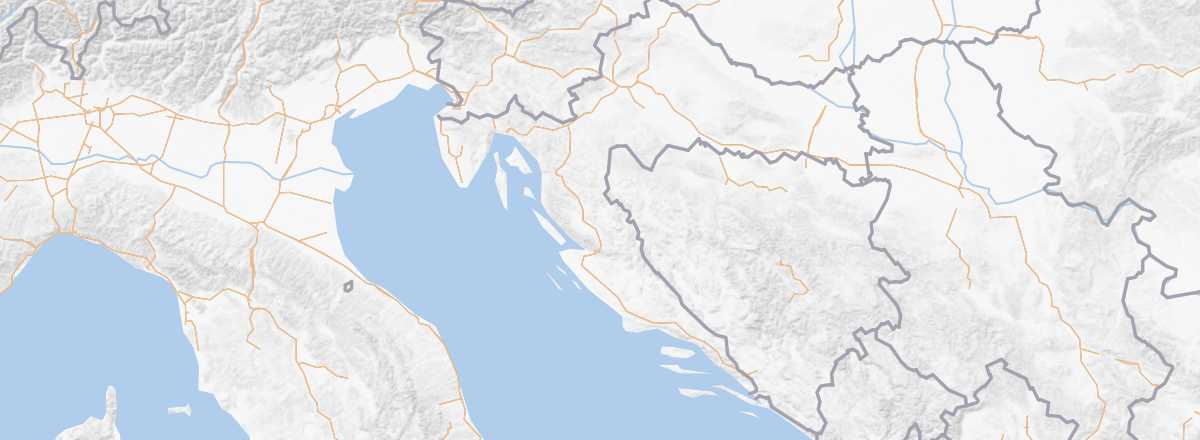 Open the interactive map
Money
Currency
- Currency: Kuna (100 Lipa).
- Banknotes: 10, 20, 50, 100, 200, 500 and 1,000 kuna.
- Coins: 1, 2, 5, 10, 20 and 50 lipa + 1, 2 and 5 kuna.
- Exchange:
The Kuna has been Croatia’s monetary unit since 1994, when it replaced the Croatian dinar, which had itself taken the place of the Yugoslav dinar in 1991.
Exchange
No problem—major currencies, especially the euro, are easily exchanged at exchange bureaus, some post offices, and banks that offer this service. Some hotels, campsites, and travel agencies also exchange money, but not always at good rates. Otherwise, you can simply withdraw cash from ATMs, which are plentiful in cities and tourist areas.
Which currency to bring
The euro is somewhat like the "second currency of the country," and many shops and businesses in tourist areas even use dual pricing in euros and kunas. So, bringing euros is obviously the easiest option if you’re coming from the eurozone.
Payment methods
You can pay in cash, including increasingly in euros for some tourist services (though watch out for the exchange rate offered), and by card in many places and shops.
When returning home
As usual, it’s best to avoid ending up with too much local currency that you’ll struggle to exchange back at a good rate. The simplest solution is to keep a little cash in euros to wrap up the end of your trip.
Budget
Even though prices are lower than in France, Spain, or Italy, the budget for a trip to Croatia—especially on the coast in summer—is far from negligible. This makes sense given the country’s popularity with tourists. Budget at least 50–70 € per person per day (for two) if you stick to campsites or small guesthouses, local restaurants, and avoid July and August when prices skyrocket. In short, plan carefully. For more flexibility or comfort, expect to spend a little more, especially if you’re staying in coastal resorts during peak season...
What can be expensive
- Peak season.
- Staying long-term in major coastal or island resorts.
- Entry fees for tourist sites (Plitvice, Dubrovnik’s walls, etc.).
What can be affordable
- Eating local.
- Accommodation if you stay more than 3 nights in the same place.
- Off-season travel.
Price range
- Budget double room: roughly 25 € (rock-bottom off-season) to 40 € for two in small guesthouses or private homes. Around 20 € in mid-range campsites.
- Mid-range hotel double room: around 50–60 €.
- Snack or local restaurant meal: under or around 10 €.
- Tourist restaurant meal: around 15–20 €.
- Budget car rental:
- 100 km by bus: roughly 4–6 € per 100 km.
- 100 km by train: slightly more expensive than the bus.
- Average ferry trip (coast/islands):
- Urban taxi:
- Urban bus:
Bargaining and tipping
Bargaining isn’t really a custom in Croatia. As for tipping, it’s not a widespread practice among locals. It’s mostly expected in tourist areas or upscale establishments—places where foreign visitors tend to go.