last edited Mar 31, 2026
Money, Budget, and Shopping in Laos
Location Map of Laos
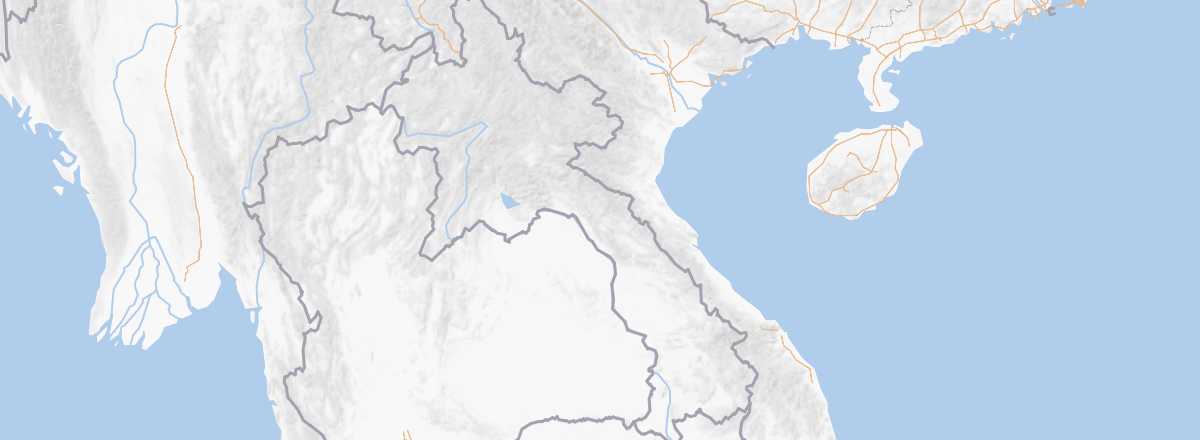 Laos
Open the interactive map
Money
Currency
- Currency: kip.
- Banknotes: 1,000, 2,000, 5,000, 10,000, 20,000, 50,000 and 100,000 kip.
- Coins: there are no longer any coins in circulation in Laos due to inflation making them obsolete.
- Exchange:
Exchange
Generally, in Laos' cities and tourist areas, it’s quite easy to exchange money at banks and exchange bureaus, and occasionally at certain shops that can help out. There are also ATMs where you can withdraw cash, but withdrawal limits are quite low and fees make other options more appealing. Additionally, if you plan to stay for a long time, only exchange money as you go due to the country’s inflation.
Which currency to bring
If you’re coming from the eurozone, the best option is to bring euros along with some US dollars. While the European currency exchanges well, the American one will always come in handy—if only to pay for your visa on arrival, unless you have to pay in another currency at a less favorable rate. In any case, make sure your banknotes are in good condition. For those combining Laos and Thailand, the Thai baht can also be useful in many situations.
Payment methods
Although card payments are accepted in (very) touristy or upscale places, and mobile payments are starting to develop, Laos remains a country where cash is king. So, it’s best to carry a good amount of cash (euros, dollars, kips) which will always be useful, especially since payments can often be made in any of these currencies.
Upon return
Since the kip has no value outside the country, it’s best to spend it all or exchange it as needed, unless you finish your trip by paying expenses in dollars or euros.
Budget
Many say Laos remains the most budget-friendly travel destination in the world, despite the country’s inflation. This isn’t far from the truth, as you can expect to live on 25 to 35 € per day (for two people) if traveling on a backpacker budget. For a bit more comfort or convenience, 50 to 60 € per day is often enough. In short, an affordable country where you can travel without feeling deprived.
What can be expensive
- Flights to get to the country.
- All imported products, including alcohol.
- Fees when making too many ATM withdrawals.
- All "upscale" activities like luxury Mekong cruises or hot-air balloon rides. Even so, everything is cheaper than elsewhere.
What can be inexpensive
- Almost everything!
Price range
- Budget double room: under 10 € for a dorm or small guesthouse.
- Mid-range double room: for 25 to 40 €, you’ll find a good selection of quality establishments.
- Snacks, local meals: 2 or 3 € at markets, street stalls, or local eateries.
- Tourist restaurant meals: 10 to 12 € for a full meal in a restaurant used to tourists.
- Car rental with driver: budget between 40 and 80 € per day depending on the route and vehicle.
- Two-wheeler rental: around 4 or 5 € per day for a bicycle and 7–10 € for a scooter.
- 100 km by local bus or shared vehicle: roughly 2 € per segment.
- 100 km by express/comfort bus: nearly double the price of standard buses.
- Boat trips: around 10 € for the longest day trips.
- Train from Vientiane to Luang Prabang to the Chinese border: 15 to 20 € for the express train and half that for slower trains.
- Tuk-tuk: 2 or 3 € per ride in the city and outskirts.
Bargaining and tipping
Bargaining in Laos is common in local markets, for souvenirs, textiles, or with tuk-tuk drivers, typically reducing the initial price by 20 to 30%.
As for tipping, while it’s not a local custom, it has become common in tourist areas. In tourist restaurants, you can add 10% to the bill, give around 1 € to hotel staff used to visitors, or 4 or 5 € to private guides and drivers.
Shopping and souvenirs
Textiles, silks, and bamboo or rattan handicrafts are the most "typical" items from Laos. You can also find silver jewelry made by northern ethnic groups, products made from "mulberry paper," Buddha statues, and wooden handicrafts. Everything can be found and negotiated in markets and cooperatives.