last edited Dec 11, 2019
Money, Budget, and Shopping in the Bahamas
Location Map of Bahamas
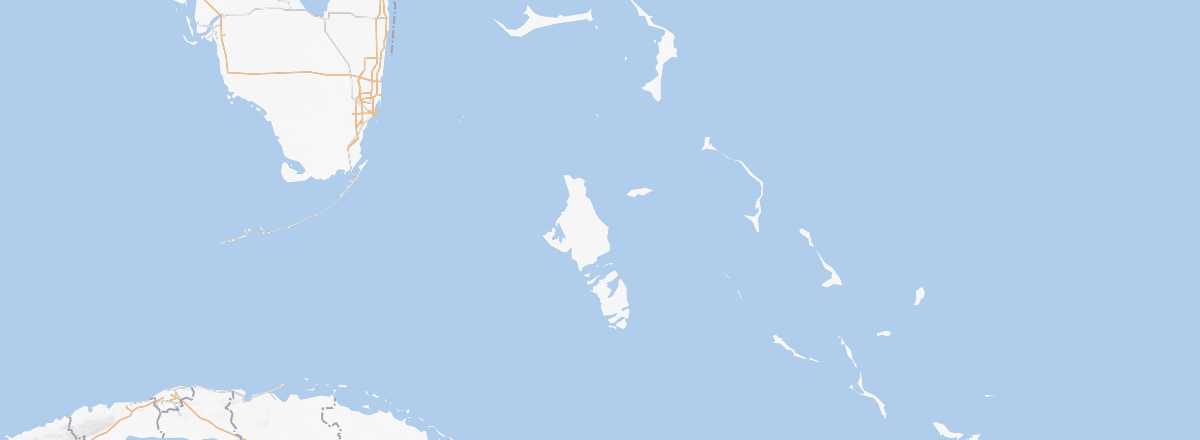 Bahamas
Open the interactive map
Money
Currency
- Currency: Bahamian dollar (100 cents)
- Banknotes: 1/2, 1, 3, 5, 10, 20, 50, and 100 B$
- Coins: 1, 5, 10, 15, 25, and 50 cents + 1, 2, and 5 B$
- Exchange:
The Bahamian dollar has been the official currency of the Bahamas since 1966, when it replaced the Bahamian pound. The Bahamian dollar and the US dollar have permanently the same value (1 US$ = 1 B$) and circulate together throughout the country.
Exchange
Outside Nassau and Grand Bahama, it is not possible to exchange euros. Therefore, you will need to use your bank card at banks and the numerous ATMs available on most islands. Note that these ATMs, depending on the institution, dispense US dollars and/or Bahamian dollars. Banks are generally open on weekdays from 9:30 AM to 3:00 PM or 4:30 PM on Fridays.
Which currency to bring
While the official currency is the Bahamian dollar, the US dollar circulates and is accepted everywhere and for everything, always at parity with its Bahamian counterpart. Therefore, the simplest option is to bring US dollars for your trip; the euro can only be exchanged in Nassau and Grand Bahama. Another advantage of US dollars is that, even if you have some left at the end of your trip, you will always have the opportunity to use or exchange them easily elsewhere.
Payment methods
Cash is accepted everywhere, and cards are widely accepted in tourist areas (though less reliably elsewhere). Be mindful of bank fees if you make too many small purchases or withdrawals.
Upon return
Since Bahamian dollars are hardly exchangeable outside the country, it is advisable to keep or exchange them for US dollars before departure. As ATMs may dispense either US or Bahamian dollars, it is preferable—especially toward the end of your stay—to choose the US currency.
Budget
A trip to the Bahamas is very expensive, much more so than in United States, as there is little to no accommodation for small budgets, and some resorts are so remote that they can set their own prices for many things without competition.
At best, an independent traveler staying off-season, eating locally, staying in guesthouses or B&Bs, and using the cheapest transport options within or between islands can hope to get by on a daily budget of $100 to $150 USD (80/120 €)—and that’s without paying for activities. It can feel a bit frustrating when you’re in a place like the Bahamas...
In short, to fully enjoy the archipelago, its unique setting, and the available activities, the best option is often to choose an all-inclusive package from home or even from Florida. Even if you end up spending at least $1,500 to $2,000 USD per person for a week, you’ll have a trip that better matches what the Bahamas can truly offer.
What can be expensive
- Paradise Island (opposite Nassau).
- Flights (repeated) for inter-island travel.
- Staying in a remote hotel where you’ll be dependent on them for everything... and their prices.
What may not cost (too) much
- All-inclusive packages at certain hotels during certain periods.
- "Mailboats" for inter-island travel.
- Shared minibus transport (where available).
- Incidentally, exchange rates when the US dollar is weak compared to other currencies like the euro.
Price range
- Double room in a guesthouse or B&B: $50 USD per night at the very minimum.
- Double room in a "tourist" hotel: very little available for under $100/$120 USD, which is why all-inclusive packages are worth considering.
- Meal in a "local" restaurant:
- Meal in a "tourist" restaurant:
- Inter-island boats: roughly $5 to $7 USD per hour of travel with "mailboats."
- Budget car rental: $40 to $60 USD per day.
- Local minibus: $1.25 USD per 10 or 15 kilometers.
- Urban taxi:
Bargaining and tipping
If you’re satisfied with the service, it’s customary to leave around a 15% tip in bars, restaurants, taxis, etc., as well as $1 USD per bag for porters or hotel staff. There aren’t many opportunities for bargaining except in "straw markets" when buying souvenirs.
Shopping and souvenirs
A dozen categories of items are tax-free in the Bahamas and are notably much cheaper than in the US. These products include perfumes, jewelry, leather, watches, and photographic equipment. The duty-free shops on Bay Street in Nassau are well-known among cruise passengers stopping in the city.