last edited Dec 11, 2019
Buses Around the World
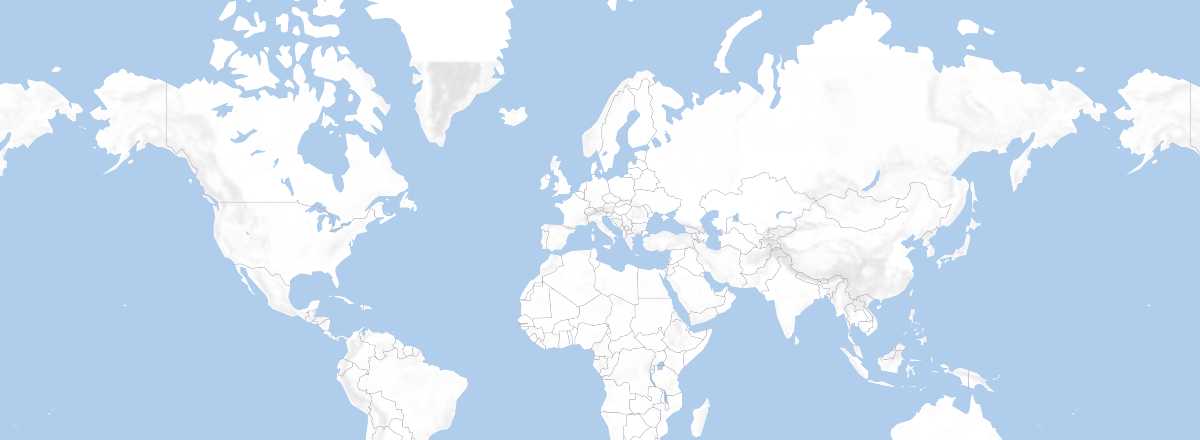
Location Map of Destinations
 Destinations
Open the interactive map
Destinations
Open the interactive map
Buses in Europe
A Mode of Transport Facing Competition...
Not only is the bus in Europe competing with air travel—especially low-cost flights—but also with trains and, of course, cars. In fact, aside from the United Kingdom, France since the sector’s liberalisation in 2015, and to a lesser extent Spain, few countries—at least in Western Europe—have a truly developed domestic bus network. Travellers are therefore more likely to use buses to move between countries rather than within a single one.
International Travel
In practice, Europe’s bus network makes it easy to travel between all major cities, including within the same country when they are far apart. From Gibraltar to Scandinavia, from Scotland to Istanbul or Eastern European countries, several companies provide regular and frequent services. Like with air travel, there is a system of pre-connections to "hub cities" (the equivalent of airline hubs), from which passengers are then rerouted to their final destination.
When it comes to journeys, bus travellers need to allow plenty of time. While a flight from Portugal or Greece to Paris takes just 2 or 3 hours, the same trip by land requires a full day for one and nearly double that for the other. Fortunately, stops every 2 or 3 hours allow passengers to stretch their legs. Moreover, buses are now modern and very comfortable (nothing like what you might find in many non-European countries), equipped with reclining seats, TV/video, Wi-Fi, air conditioning, onboard toilets, and sometimes even drink service and newspapers.
Fares
As with air travel, there are low- and high-season prices, promotions, transport + hotel packages, special fares for children, young people, students, groups, or seniors, as well as loyalty cards and pass options. Tickets are often valid for 6 months or a year, with options for stopovers, mixing routes, open returns, and modifications or cancellations (insurance is sometimes available). Passengers are usually allowed one checked baggage allowance of 2 bags.
In terms of pricing, while fares—or rather the "duration-price" ratio—are not always the most competitive compared to flights, for certain less touristy destinations, buses remain one of the most economical, if not the most original, options.
However, it’s worth noting that the "low-cost" model from airlines has recently been adopted by bus companies. Companies like Bus Off (and occasionally Eurolines) now offer similarly low fares.
Companies
Eurolines: Among bus companies, Eurolines is the most well-known, actually grouping dozens of carriers and serving dozens of cities across Europe. They have around 90 boarding points in France and transport over 1,500,000 passengers per year. They are represented in Paris and several provincial cities. Given its extensive network, Eurolines offers various options, including a pass. This covers 50 cities for durations of 15 days (from 215 € without discounts) or 30 consecutive days (from 320 €).
Other companies: Besides Eurolines, which dominates the market, other companies also operate. Among them are Baudart Transport, Busabout, Megabus, Starshipper, and Ouibus.
Domestic Networks
Western Europe
There are few well-developed local networks in Western Europe, where many people prefer other modes of transport. However, in four countries, the networks and pass options may still interest travellers:
France: Thanks to the 2015 liberalisation of coach transport, the country now has a real national and international network. After some mergers and consolidations, two major operators now dominate the market: Flixbus and Ouibus, the latter being a subsidiary of SNCF.
Great Britain: Given the somewhat poor state of the rail network, buses still have a bright future. Around a thousand cities are served by buses at relatively attractive fares or through passes like those offered by National Express.
Ireland: There are generally "train + bus" passes available for 1 or 2 weeks.
Iceland: A classic for bus passes in Europe, with various options, some of which also include ferry connections or accommodations.
Eastern Europe
In Eastern European or Eastern Mediterranean countries, buses are far more common than in the West, partly due to less developed car ownership and sometimes limited rail networks. While there are very comfortable and fast services between major cities, the average standard is often lower than in Western Europe, giving a preview of what buses can be like outside Europe. However, prices are generally attractive.
Buses in the Americas
Canada-USA
No problem for those wanting to explore North America by bus. Both in Canada and the United States, networks are well-developed (though slightly less so than a few years ago), fast, and comfortable. Buses go almost everywhere—except, unfortunately, some national parks.
Greyhound
Of all bus companies, the largest and best-known is Greyhound, which crisscrosses the continent in all directions. They offer attractive fares and, above all, the option to purchase multi-day passes, some of which cover both Canada and the USA.
Low-Cost Buses
Following the airline model, the low-cost approach is now increasingly adopted by bus companies. In Canada (Quebec, Ontario), Coach Canada offers Montréal-Toronto trips for as little as $1. In the United States, Megabus has established itself in the Northeast and Midwest. These two companies even work in partnership to some extent.
Central America and the Caribbean
A mixed picture depending on the country or service. From near-luxury options in Mexico (though there is also a more "folkloric" network) to most of the small Caribbean islands (where "shared taxis" are also common), as well as international buses crisscrossing Central America, the range varies. Far cheaper, much slower, run-down, and crowded are the buses (or similar) in Central American countries or Cuba. It’s worth noting that there is a pass for exploring Mexico by bus.
South America
Here too, there’s both the best and the worst. The best can be found in Argentina, Chile, Uruguay, and southern Brazil, with occasional high-standard lines or companies in other countries. European-level standards and prices make buses an ideal way to explore these regions.
As for the less appealing options, they are found in the Andean countries, from Bolivia to Colombia. Here, buses are generally slow, very affordable, crowded, with basic comfort, and sometimes questionable safety. But they offer a unique atmosphere and experience—definitely something to try.
Buses in Oceania and Japan
The situation is quite similar to North America, with well-established and extensive networks in Australia and New Zealand. Buses remain an excellent way to explore, especially thanks to several very attractive passes.
In Japan, while the bus network meets "Western standards" and is fairly affordable, travelling by bus in the country requires some time. This is one reason many travellers opt for trains instead.
Passes
Australia
There are numerous bus passes available in Australia, catering to all types of travel—whether in duration, distance, or areas to visit. Of all companies, Greyhound Australia offers the most options with its high-quality, extensive network.
New Zealand
Several pass options are available, covering both public buses (Intercity) and "backpacker" networks (Magic Bus, Kiwi Experience, Stray). Some passes also allow combining bus travel with other transport modes (trains, ferries) or offer special rates on accommodations.