last edited May 20, 2026
Flying to China
Location Map of China
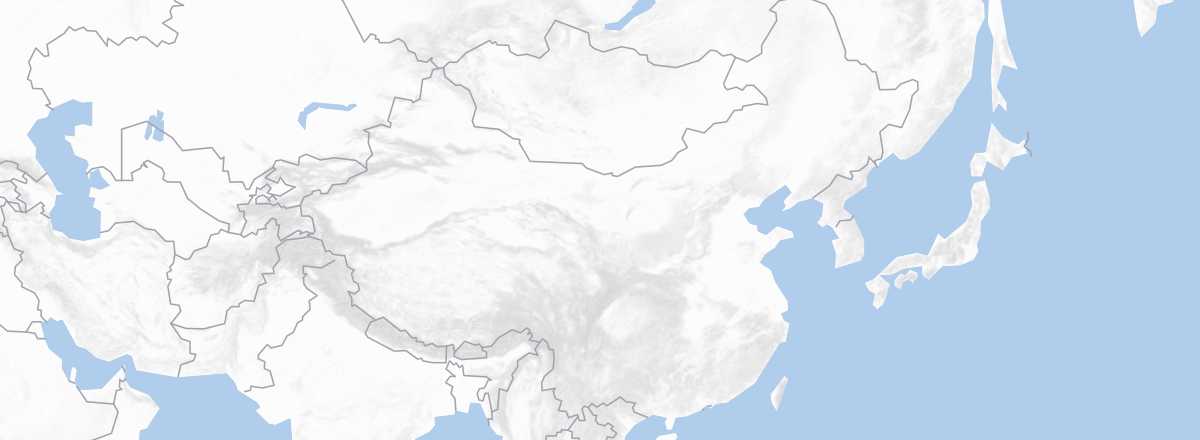 China
Open the interactive map
China
Open the interactive map
General Information
As one might expect, air travel is ubiquitous in China, if only because of the country's size. The world's largest domestic market, China also has one of the highest numbers of airports, with 260 civil airports—three-quarters of which serve international flights—and over a hundred of these handle millions of passengers annually. Around forty airports see more than 10 million passengers each year, twenty-five exceed 25 million, and about ten surpass 50 million. Leading the pack are Shanghai’s two airports (135 million combined in 2025), Beijing’s two (125 million combined), Chengdu’s two (90 million), and Guangzhou (84 million). Hong Kong International Airport, with 61 million passengers, could also be added to the list. In short, intense activity across the country.
Local Airlines
There’s no shortage of choice or volume when it comes to passenger numbers. Around fifty airlines fly under the country’s flag, though a few stand out from the rest.
Three dominate the market, both domestically and internationally, directly and even more so through their subsidiaries. These giants are Air China (based primarily in Beijing) and its ten subsidiaries, including Shenzhen Airlines, operating a thousand aircraft to over 200 destinations; China Eastern Airlines (based in Shanghai, owner of Shanghai Airlines); and China Southern Airlines (based in Guangzhou), which are only slightly smaller. Each transports around 150–160 million passengers annually.
Beyond these three, a few independent carriers include Hainan Airlines, the country’s largest private airline, with a fleet of 200 aircraft serving 120 destinations worldwide, including flights to Paris-Charles de Gaulle. Also notable are Juneyao Air (based in Shanghai), Sichuan Airlines (with a strong presence on long-haul international routes), and especially Spring Airlines, China’s leading low-cost carrier, serving around a hundred cities across the country and the continent with an all-Airbus fleet.
Finally, there’s Hong Kong’s Cathay Pacific. Once a global benchmark for quality travel to Asia-Pacific from Europe, it has faced increasing competition in recent years from Gulf carriers in terms of value for money. Nevertheless, it still offers dozens of routes to around thirty countries, including France.
By Region
Each region of China has its own key airports. Here’s a breakdown:
- Flying to Northern China: to/from the airports of Harbin, Dalian, and Shenyang, the region’s main hubs, as well as Beijing, which serves as a gateway to Northern China.
- Flying to Central China: to/from the country’s two largest hubs, Beijing and Shanghai, as well as airports in Nanjing, Tianjin, Wuhan, Xi’an, and other nationally significant locations.
- Flying to Southern China: primarily to/from Hong Kong, as well as Guangzhou, Chengdu, Shenzhen, Kunming, Chongqing, Hangzhou, Xiamen, and many other major airports in this part of China. In short, plenty of options.
- Flying to Western China: to/from Urumqi and Lanzhou, the main airports in this part of the country.
- Flying to Tibet: to/from Lhasa’s airport, the only significant one in Tibet, though flights typically require a connection via Beijing or Kathmandu.