last edited Dec 11, 2019
Getting Around Cuba
Location Map of Cuba
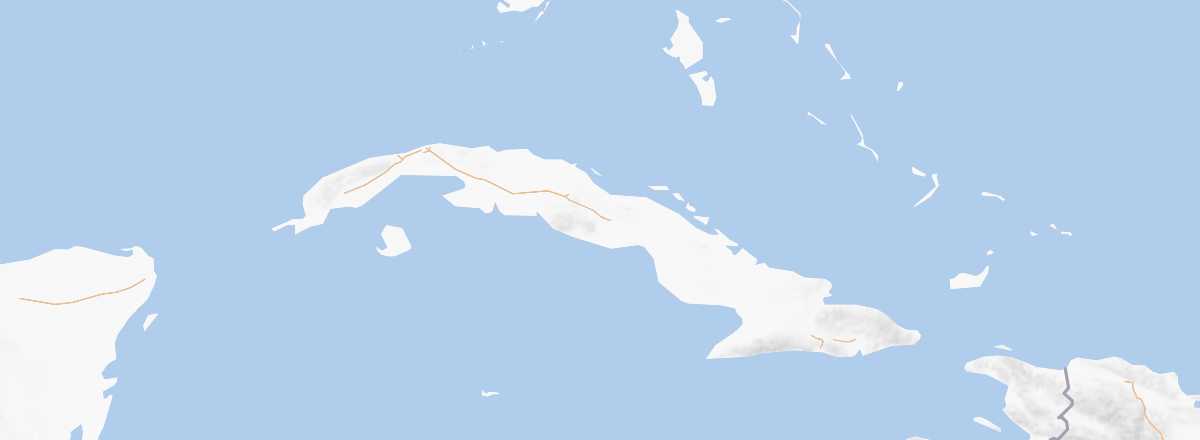 Cuba
Open the interactive map
Cuba
Open the interactive map
Road Network and Traffic
Transportation remains more or less a challenge for many Cubans (restrictions, prices, etc.) and relies somewhat on improvisation, particularly with hitchhiking, which is well-developed and organized. Conversely, visitors rarely face these issues and have a range of transport options available, though some are reserved for locals. Generally, foreigners pay for all transport in foreign currency or CUC, at higher rates than Cubans.
The country’s road network is in rather poor condition, with half of the roads unpaved or badly deteriorated, making nighttime travel inadvisable. Many roads are also congested with various vehicles, pedestrians, and animals. Nevertheless, there are nearly a thousand kilometers of expressways on the island, including the A4 and A1, which connect the two ends of the island via the capital—at least in theory, as some sections in the south remain under construction. Road signs are often limited or faulty, and GPS does not work in Cuba.
Car Rental
Despite its cost, renting a car is a good way to explore Cuba (you can go anywhere), especially if traveling in a group or wanting to explore the Oriente in depth. Expect around 60 CUC/day (roughly 45 €) for the smallest models, plus mandatory insurance at about 15 CUC per day, bringing the total to around 55 €–60. Always check the vehicle’s condition when taking possession and ask for all necessary contract details. In case of an accident or theft, file a police report and keep a copy to ensure insurance coverage.
You can rent a vehicle either before departure or on-site, though booking in advance is recommended during peak season. There are only three major national rental companies: Cubacar, Havanautos/Transtur, and Rex/Gaviota, the latter being the most well-known. As always, avoid leaving belongings in the car and opt for guarded parking. For fuel, stations are available in all cities, where you pay in cash with CUC.
Campervans are also available for rent, but they are expensive, and you’re expected to stay overnight in campismos (tourist complexes with bungalows) or hotel parking lots.
Buses and Shared Vehicles
Buses
The bus network is fairly developed, at least for intercity routes, though rural areas often lack connections, and many villages have no bus service. Overall, buses are a good, practical, and affordable transport option for individual travelers. There are three companies: Viazul, Transtur, and Astro, the last being reserved for Cubans.
- Astro: The cheapest company, with slow and usually crowded buses. However, it is off-limits to tourists.
- Transtur: This company offers day-long tourist excursions with guides and often includes meals and other services. Since it’s more than just transport, prices are higher. Their offers are available at local agencies or some hotels. Note that Transtur is primarily a car rental company.
- Viazul: The most commonly used by visitors, as it is reserved for foreigners. Its service matches its clientele, with fast, comfortable, and (overly) air-conditioned buses. It operates around twenty major routes, mainly from Havana or Santiago. For example, a one-way trip between these two cities costs 50 CUC (around 40 €), or about 5–6 CUC per 100 km.
Trucks
Another shared option, especially where buses don’t run. People pile into the back with little comfort for just a few Cuban pesos. More of an experience than a practical transport option for travelers.
Two Wheels
Scooter
Best suited for tourist areas, ideal for short trips within a defined perimeter set by the rental company. Scooters can be rented for around 20 € per day, with helmets mandatory. Note that while insurance is available, it may not always be reliable in case of issues. Motorcycles are not available for rent—only small scooters.
Bicycle
Useful for local short trips, particularly in beach resorts.
Hitchhiking
A common and organized practice among Cubans, but not recommended for visitors, as you may wait a long time due to competition. Additionally, Cubans are not supposed to pick up foreigners. However, if you’re driving, it can be nice to give locals a lift.
Trains
The island has over 8,000 km of rail lines, partly inherited from the Spanish era. While "folkloric," Cuban trains (FFCC) are also outdated, slow, crowded, and irregular in frequency and schedules. Service is basic, with no sleeper cars or dining cars. In short, trains are more of an original experience (especially if you speak some Spanish) than a practical transport option for tourists.
The network is still extensive, connecting Havana to all major cities. In practice, you can travel from one end of the island to the other, from Pinar del Río (north) to Santiago (south) via the capital, covering over 1,000 km. The most used line is the Tren Francés, linking Havana to Santiago with locomotives and carriages donated by France in 2001. The 850 km journey typically takes around fifteen hours, with a minimum fare of 30 CUC (about 24 €) for tourists. Tickets are purchased directly at stations.
Boats
Though Cuba has several "tourist Cays," most (except for a few like Levisa or Cayo Largo) lack sea connections, accessible only by land or air. Opportunities to travel by boat within the country are therefore limited.
The most developed service is on Isla de la Juventud, the largest "island" of Cuba. Ferry connections (2–3 hours) or cargo boats (6 hours) operate between Batabanó and Nueva Gerona for around 12 CUC (about 10 €) per ticket, best booked in advance. However, travelers rarely use this service, preferring flights from the capital, which are not expensive (around 25 € one-way).
Domestic Flights
The island is large, and flying can be a good option for traveling from one end to the other. Prices are reasonable (around 100 € for Havana–Santiago), and in theory, there’s a discount on Cubana’s domestic flights if you arrive internationally with them. However, flights may be canceled or rescheduled, so it’s best to plan ahead and stay flexible.
Four state-owned local carriers handle domestic routes: Cubana (the national airline), plus Aero Caribbean, Aerogaviota, and Aerotaxi, its three smaller subsidiaries.
- Cubana: Cubana de Aviación is Cuba’s main airline. Domestically, it operates from its Havana hub to several major cities.
- Aero Caribbean: Complements Cubana with around ten domestic routes and slightly better service.
- Aerogaviota: The smallest carrier, offering another ten regular domestic routes (especially to the Cays), plus charter flights, including domestic.
- Aerotaxi: Based in Varadero and Cayo Largo, this carrier provides domestic (and occasionally regional) charter flights to these beach resorts.
In Town
Taxis
Cities have both official and unofficial taxis. The former, like Cubataxi and its variants, are typically reserved for tourists. They usually have meters (if not, negotiate), and fares are paid in CUC. Expect around 2 €–5 for an average city ride, with trips in the capital being the most expensive. While they operate in cities, taxis can also cover longer distances, which must be negotiated, though rates will be high, even compared to car rental.
Unofficial taxis, including the "famous" old American cars, are now more or less allowed to carry foreigners. No meters here—negotiation is mandatory, so some Spanish helps. Prices are usually the same as Cubataxi.
Other Options
Urban buses:
Cocotaxis: Three-wheeled scooter taxis found in most cities. No meters—negotiate fares, which are slightly lower than regular taxis.
Bicitaxis: Bike taxis available in various cities, with fares up to 3 € or less than 1 € for short distances.
Trams and "RER": Havana has a suburban train system, and trams operate in several cities, including the capital, Cienfuegos, Camagüey, and Santiago de Cuba.
Choosing Your Transport
The best options are renting a car (if traveling in a group or with a budget) or taking the bus.
Distances Between Cities
Distances (km) between Cuba’s main cities:
| Barac. | Camag. | C. Coco | Cienf. | Holg. | La Hav. | Pinar | S. Clara | Sant. | Trinid. | Varad. | |
|---|---|---|---|---|---|---|---|---|---|---|---|
| Baracoa | 620 | 630 | 960 | 420 | 1170 | 1330 | 890 | 225 | 1060 | 920 | |
| Camagüey | 620 | 200 | 340 | 200 | 545 | 710 | 270 | 400 | 250 | 470 | |
| Cayo Coco | 630 | 200 | 300 | 380 | 525 | 685 | 225 | 520 | 235 | 425 | |
| Cienfuegos | 960 | 340 | 300 | 540 | 245 | 420 | 75 | 735 | 80 | 180 | |
| Holguin | 420 | 200 | 380 | 540 | 750 | 910 | 470 | 200 | 450 | 670 | |
| La Havane | 1170 | 545 | 525 | 245 | 750 | 175 | 275 | 945 | 320 | 145 | |
| Pinar del Rio | 1330 | 710 | 685 | 420 | 910 | 175 | 440 | 1110 | 500 | 310 | |
| Santa Clara | 890 | 270 | 225 | 75 | 470 | 275 | 440 | 670 | 90 | 195 | |
| Santiago | 225 | 400 | 520 | 735 | 200 | 945 | 1110 | 670 | 650 | 865 | |
| Trinidad | 1060 | 250 | 235 | 80 | 450 | 320 | 500 | 90 | 650 | 270 | |
| Varadero | 920 | 470 | 425 | 180 | 670 | 145 | 310 | 195 | 865 | 270 |