last edited Dec 11, 2019
Getting Around in Croatia
Location Map of Croatia
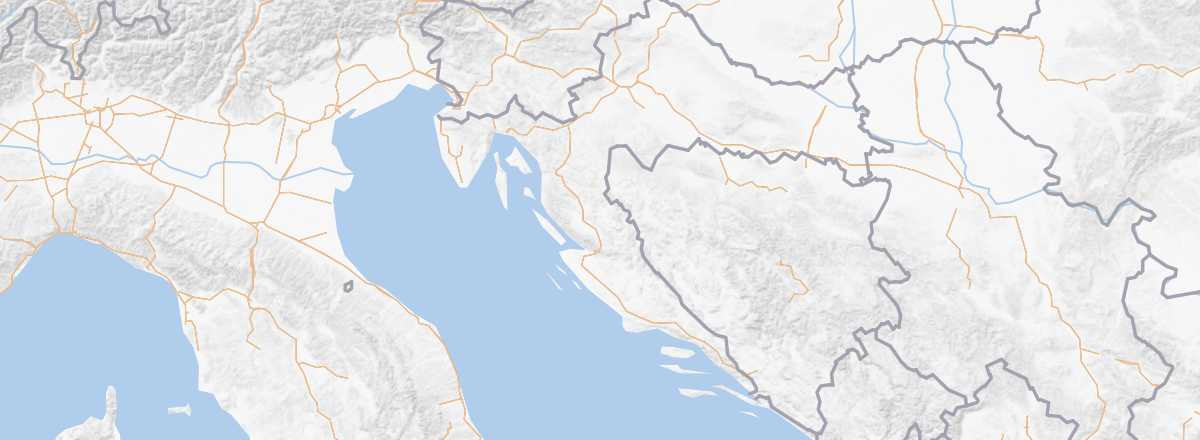 Open the interactive map
Road Network, Traffic
Car, Camper Van
As is often the case in Europe, having your own vehicle is an excellent way to explore the country. It’s even the best option thanks to the freedom and time savings it offers compared to public transport.
Rental
Bus
The country has a good network of fast, frequent, and comfortable buses run by various national and local companies. It’s an easy way to get around the country, often better than the train, though in peak season on the busiest routes, booking ahead can be useful. Fares are also affordable, roughly 4 to 6 € per 100 km. In short, the bus is a great option for those without a vehicle.
Main Companies
- AP Varazdin: around ten routes.
- Autobusni Kolodvor Zagreb: a company based in Zagreb.
- Autotrans: one of the largest bus companies (though not necessarily the cheapest), with an extensive national and international network. Offers passes.
- Croatia Bus: another major bus company covering the entire country.
- Promet Makarska: around thirty routes, one of the oldest companies in the region.
- Panturist Osijek: based in Osijek, Slavonia, serving mainly the northern and eastern parts of the country.
Two Wheels
Motorcycle
Bike
Especially useful on the islands, where it’s often the best way to get around, as well as in seaside resorts.
Hitchhiking
Though not widely practiced locally, hitchhiking is possible, especially along the coast or on the islands. Carpooling is also an option.
Trains
Due to its geographical position, Croatia has a fairly good rail network, both international—with connections to neighboring countries—and national. Croatian trains are numerous, comfortable, and reasonably priced (though more expensive than buses), but they’re not particularly fast, so buses are often quicker.
The national company (Hrvatske željeznice) manages the network, which covers the inland part of the country well and extends along the coast, though with a gap in Dalmatia (around Split), making it impossible, for example, to reach Dubrovnik by train from the rest of the country. Croatia is included in the InterRail pass.
Maritime Services
With its countless islands, Croatia has numerous ferry connections from the mainland or between islands. Some are seasonal or only frequent during that time. Logically, the most popular routes/islands have the longest waits for those traveling with a vehicle in summer.
Overall, prices remain affordable, even in peak season, for both pedestrians and cars. The main departure ports on the coast (among the ten with at least one route) are Zadar, Split, and to a lesser extent, Dubrovnik.
Main Companies
While there are other local or on-demand operators, the main ones are:
- GV Line: serves (pedestrians only) the small islands near Dubrovnik from the city.
- Jadrolinija: by far the largest, best-known, and oldest Croatian ferry company. It’s state-owned. Beyond a few routes to/from Italy, Jadrolinija operates numerous inter-island and mainland connections, serving around forty islands with sixty boats, some of them "fast." Almost indispensable...
- KL: fast ferries for Split-(Brač-Hvar-Korčula-Mljet)-Dubrovnik, Split-Hvar-Vis, and Lošinj-Cres-Rijeka. No vehicle transport.
- LNP: a few routes, including Split-Šolta Island, Šibenik-Žirje and Kaprije Islands, and Zadar-Lošinj Island-Pula.
- Rapska Plovidba: ferries based on Rab Island, connecting it to the mainland or the neighboring island of Pag.
Domestic Flights
There’s a small domestic air network, mainly operated by the national carrier Croatia Airlines. While its domestic flights aren’t very expensive, flying isn’t always the best option given the distances and other transport modes available. The only exception is the Zagreb-Dubrovnik route (600 km), which might justify flying if you’re traveling directly between the two cities. Especially since promotional fares can drop below 50 € for a one-hour flight.
Also worth noting are the small seaplanes of European Coastal Airlines, offering local connections from Split to nearby islands. Beyond being a transport option, these routes are increasingly becoming a tourist attraction.
Airlines Operating Domestic Routes
- Croatia Airlines: the national carrier, with Zagreb as its main hub and Split and Dubrovnik as secondary bases. It serves major European cities and has a small domestic network, with around thirty destinations in total.
- European Coastal Airlines: small seaplanes for local connections from Split to nearby islands.
- Trade Air: primarily a cargo airline but recently started operating regular flights between five Croatian cities (Rijeka, Zagreb, Split, Dubrovnik, and Osijek).
In Town
Taxis
Other Options
Urban bus:
Tram:
Bike:
What to Choose for Getting Around?
As is often the case in Europe, having your own vehicle remains the best way to explore the country. Otherwise, the bus is a good option for those without a car.
Distances Between Cities
Distances (km) between the main cities in the country:
| Dubrov. | Osijek | Pula | Rijeka | Šibenik | Split | Zadar | Zagreb | |
|---|---|---|---|---|---|---|---|---|
| Dubrovnik | 600 | |||||||
| Osijek | 280 | |||||||
| Pula | 270 | |||||||
| Rijeka | 165 | |||||||
| Šibenik | 325 | |||||||
| Split | 395 | |||||||
| Zadar | 270 | |||||||
| Zagreb | 600 | 280 | 270 | 165 | 325 | 395 | 270 |