last edited Aug 10, 2026
Getting Around in Mexico
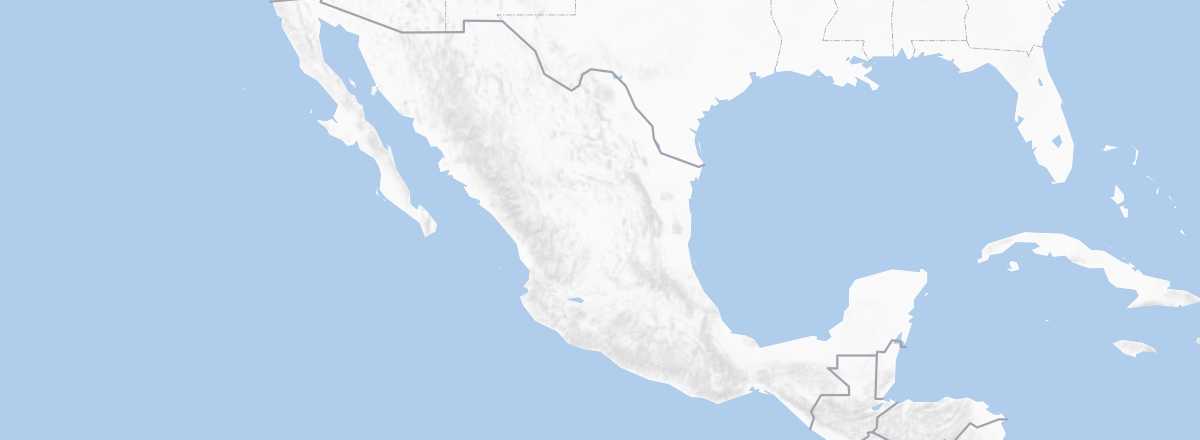
Location Map of Mexico
 Mexico
Open the interactive map
Mexico
Open the interactive map
Road Network and Traffic
Given the size of the country, there’s a clear disparity between regions. Mexico’s road network is quite uneven, with both good roads and highways (expensive) and secondary routes that are poorly or unpaved, requiring careful and slow driving most of the time.
Additionally, during the rainy season and in some regions, certain roads may be cut off due to flooding or landslides. As in many countries, traffic rules are often loosely followed by many drivers, so it’s best to stay alert. Outside urban areas, it’s also wise to avoid driving at night.
Car and Campervan Rental
Rental
If you only plan to travel between cities with occasional organized excursions, renting a vehicle won’t be very useful. However, for maximum freedom, saving time, venturing off the beaten path, or simply accessing some remote sites, it can be much more practical. This is especially true if you’re traveling with a group, as the car may work out cheaper than premium buses. That said, renting is generally better for exploring a specific region rather than crisscrossing the entire country, where planes or buses may be preferable for long distances.
You can rent a vehicle from the age of 25 (sometimes 22) with a national driver’s license that’s over a year old. With many rental companies around, there’s some competition on prices, though you should also watch out for additional insurance, its coverage, and deductibles. As usual, the more touristy the rental location, the more expensive it tends to be. Expect roughly 35 to 40 €/day for a basic city car.
For safety, it’s recommended to avoid driving at night and to use guarded parking lots. Also, watch out for the many speed bumps ("topes") at town entrances. As for crossing borders with a rental vehicle, very few companies allow it, and if they do, it’s best to get written confirmation from the agency. Lastly, police shakedowns are still common in Mexico...
Personal Vehicle
To enter Mexico with your own vehicle, you’ll need a Temporary Import Permit. To obtain it, you must present proof of vehicle ownership, your driver’s license, and pay a deposit fee.
Buses and Shared Transport
Buses
Buses are highly developed in Mexico, with numerous local and national companies. They can take you almost anywhere, from short trips to very long journeys between cities. Generally, they’re a good way to explore a region or even cover long distances, though it’s worth comparing them with other options like cars or planes, depending on your itinerary and travel style. Expect to pay around 8 to 10 € per 100 km for fast and comfortable services.
As in many countries, there are several bus categories with varying levels of comfort, services, and prices. "Luxury" coaches have wide reclining seats, air conditioning, toilets, and complimentary drinks/snacks. They carry few passengers and are the most expensive, fastest, and used for long trips between major cities. "First class" is a step down in comfort and price but still good for long distances without overspending. "Second class" buses are the most common, slowest (with many stops), and cheapest. Unlike the others, they can get extremely crowded. Note that in many cities, bus stations may be located on the outskirts, and some companies have their own terminals separate from others, which can complicate transfers.
Major Companies
The main mid-to-high-end carriers offering routes between major cities or tourist areas.
- ABC: buses for Baja California and Sonora.
- ADO: a company well-established in central and southern regions.
- AltaMar: mainly for the region south of the capital.
- Autovias: a network around the capital.
- Caminante: mainly between Mexico City and Toluca.
- Estrella Blanca: one of many companies specializing in northern and central Mexico.
- Estrella de Oro: a "small" company serving the Mexico City region, from the Atlantic to the Pacific coast.
- Estrella Roja: the Mexico and Puebla region.
- ETN: around sixty cities, mainly in central, Pacific coastal, and northern Mexico.
- Flecha Roja: the Mexico City region and surrounding areas.
- Grupo Senda: several companies combined for northern Mexico and beyond into the United States.
- Omnibus de Mexico: from the Mexico City region to the U.S. border.
- Parhikuni: the region around the resort of Ixtapa.
- Pegasso: a network of around twenty cities north of Mexico City.
- Primera Plus: a carrier for central Mexico.
- Tufesa: the northwest and California.
- Vallarta Plus: a premium carrier in the Puerto Vallarta region.
"Shuttles"
Or "agency vehicles." To fill gaps in public transport or, more often, to offer a profitable service, travel agencies and tourism professionals provide minibuses for routes between tourist spots.
These shuttles offer comfortable transport tailored to tourists (few locals use them), with convenient schedules and often hotel pickup, going directly from point to point without intermediate stops. You can book them through any agency or hotel, or hop on if there’s space. Various companies/agencies can be found locally.
Their fares are fixed and posted, but they’re significantly more expensive than local buses (sometimes excessively so). The shortest or most popular routes are proportionally—and logically—the priciest. In short, shuttles can be a good option for fast, comfortable travel if you’re not strictly looking for the cheapest transport. However, they do keep travelers in a bubble, completely disconnected from local life.
Shared Taxis
You’ll find these in cities or for traveling around their outskirts. They leave when full, stop on request, and follow set routes. Practical and very affordable for these trips.
By Bike
Biking can be a good local option for a few euros a day for short trips, especially in beach resorts. Otherwise, cycle touring in Mexico requires some training and motivation, given the distances, terrain, and climate.
Hitchhiking
For safety reasons, hitchhiking is not recommended in Mexico.
Trains
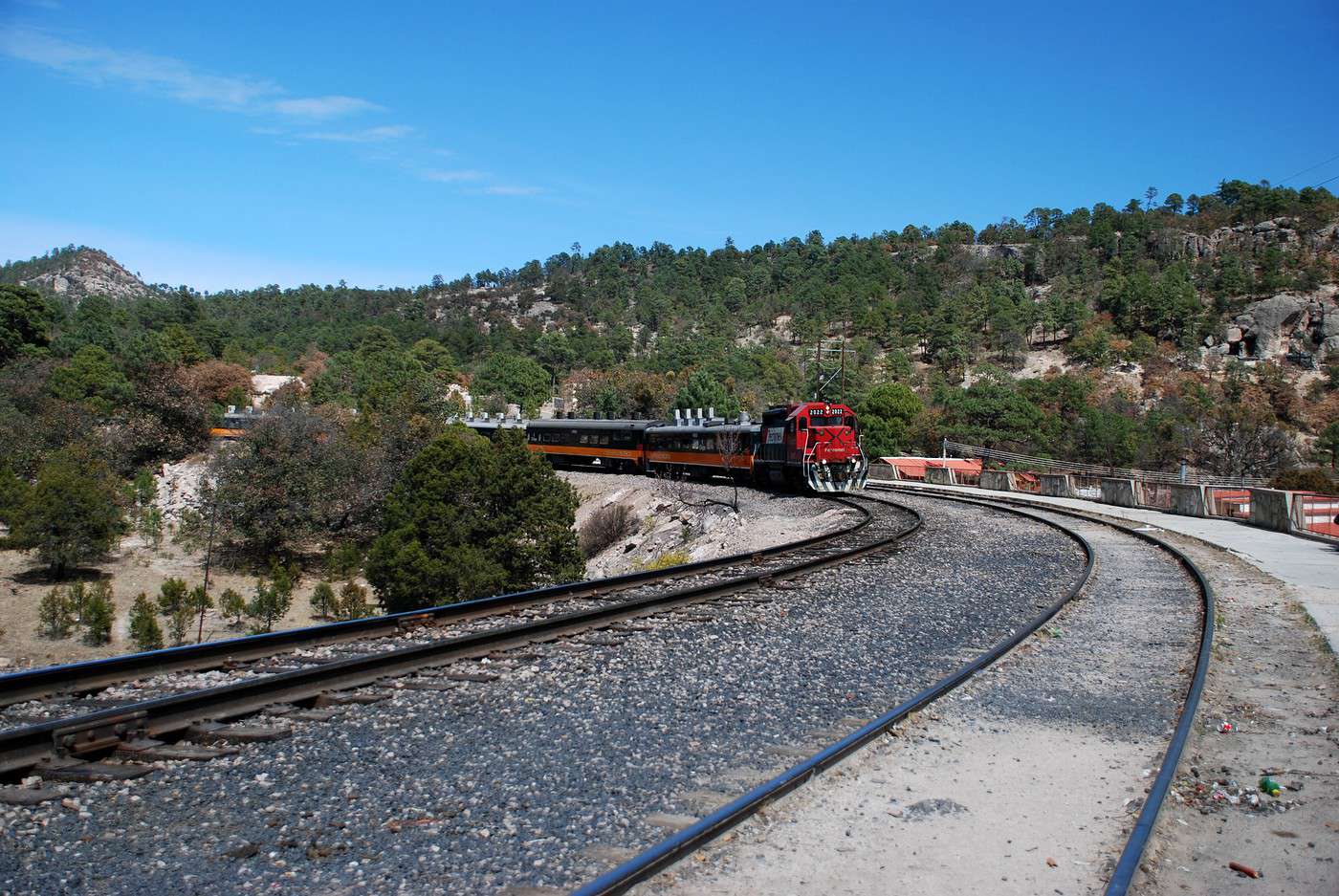
After being nearly abandoned for decades, Mexico’s passenger rail service is regaining momentum with several projects underway. Until recently, trains were limited to a few commuter lines around the capital (the Ferrocarril Suburbano), plus two tourist lines: the Chihuahua al Pacifico and the Tequila Express. The first is the ultimate tourist line, a small train covering 670 km in 14 hours from Chihuahua to Los Mochis on the Pacific coast through stunning landscapes. The second offers a two-hour scenic ride between Guadalajara and a nearby tequila distillery.
Since then, the Tren Maya has been added to the network. This flagship project now crosses the Yucatán Peninsula, linking major tourist sites like Palenque, Campeche, Mérida, Valladolid, Cancún, and beyond to Playa del Carmen and the route to Belize. Its goal is to boost tourism and economic development in the region.
As for the Tren Interoceánico, another recent addition, it’s a refurbished old line connecting the Atlantic coast (Coatzacoalcos) to the Pacific coast (Salina Cruz) in southern Mexico. It also now extends to meet the Tren Maya at Palenque, with this link inaugurated in late 2024.
The Mexican government isn’t stopping there. An ambitious new plan has been announced to significantly expand the rail network across the country, focusing not just on freight but also on passenger transport as a sustainable alternative to road or air travel. Ultimately, 3,000 km of new lines are expected, including two routes from Mexico City to the U.S. border cities of Nogales and Nuevo Laredo, plus a third 90 km link connecting the capital to Pachuca and the new Mexico City airport. All these lines will be electrified, with trains running at 150 or 200 km/h.
Boats
The main ferry routes in the country are found around Baja California. The company Baja Ferries operates daily services between La Paz and the ports of Los Mochis (6 hours; $70 minimum) or Mazatlán (12 hours; $75 minimum) on the other side of the Gulf of California. Another route, with Ferry Santa Rosalia, connects Santa Rosalia and Guaymas in about ten hours for roughly $60 per trip.
Elsewhere, in the Yucatán Peninsula, there are regular routes with frequent services from Playa del Carmen to Cozumel ($12 per trip) or from the Cancún area to Isla Mujeres ($6 per trip) with the company Ultramar.
Domestic Flights
Given the country’s size, air travel is well-developed, with around ten local airlines offering domestic routes. You’ll easily find flights connecting major cities or beach resorts, though sometimes a layover in the capital is necessary. Thanks to low-cost carriers like Volaris, prices remain affordable, especially for tourists. A Mexico City–Cancún flight costs around 100 € round-trip, while Mexico City–Puerto Vallarta is under 60 € for the cheapest fares.
In short, flying is a great option for long distances. It saves a lot of time and isn’t necessarily much more expensive (if at all) than premium buses. Also worth noting: for those planning to explore the entire country in one trip, Aeroméxico/SkyTeam offers a “Go Mexico” pass, allowing between 3 and 16 domestic flights to a choice of 42 Mexican cities.
Airlines
- Aéreo Calafia: based in Cabo San Lucas, it connects around a dozen airports around the Gulf of California.
- Aéreo Servicio Guerrero: Baja California and Sonora, where the company originated.
- Aeromar: based in Mexico City, serving around twenty cities nationwide.
- Aeroméxico: the national carrier. From its Mexico City hub, it offers (along with its subsidiary Aeroméxico Connect, based in Monterrey) dozens of destinations, about half of them in Mexico.
- Magnicharters: many domestic charter flights, especially between Mexico City and Pacific resorts or Cancún.
- MAYAir: a small Cancún-based airline serving 4 or 5 regional destinations (Mérida, Cozumel, etc.).
- TAR Aerolíneas: routes between around a dozen central Mexican cities, with Querétaro as its main base.
- VivaAerobus: a low-cost carrier based in both Monterrey and Cancún, serving around twenty cities in Mexico.
- Volaris: another low-cost airline with 35 domestic destinations. Its main base is Tijuana.
There are also other, often smaller, companies specializing in charters or air taxis.
In Towns
Taxis and Ride-Hailing
While taxis in the capital are supposed to use meters, this isn’t always the case elsewhere. It’s best to check the price of your trip beforehand (with your hotel, for example) to negotiate if needed. Alternatively, ride-hailing apps let you book a ride and know the price upfront.
Other Options
Urban buses: cheap and plentiful, but slow and crowded, they’re found in every city.
Metro and commuter trains: Mexico City (with MCM and Ferrocarril Suburbano), Guadalajara (Siteur), and Monterrey (STC) have metros or similar systems.
What to Choose for Getting Around?
For most travelers, buses (but not the often expensive shuttles) are the best way to get around. However, if traveling in a group, renting a car isn’t much more expensive and can be a good option for more freedom and easy access to pre-Columbian sites. For very long distances, low-cost flights are also a viable choice.
Distances Between Cities
Distances (km) between Mexico’s main cities:
| Acap. | Cancun | Guada. | Merida | Mexico | Monter. | P. Vallar. | S. Cristo. | S. Luis | Tijuana | |
|---|---|---|---|---|---|---|---|---|---|---|
| Acapulco | 1940 | 900 | 1650 | 380 | 1280 | 960 | 1020 | 790 | 3110 | |
| Cancun | 1940 | 2140 | 300 | 1610 | 2300 | 2440 | 1050 | 2000 | 4360 | |
| Guadalajara | 900 | 2140 | 1840 | 540 | 790 | 310 | 1420 | 330 | 2220 | |
| Merida | 1650 | 300 | 1840 | 1320 | 2000 | 2150 | 750 | 1720 | 4060 | |
| Mexico City | 380 | 1610 | 540 | 1320 | 910 | 840 | 900 | 420 | 2750 | |
| Monterrey | 1280 | 2300 | 790 | 2000 | 910 | 1090 | 1590 | 510 | 2270 | |
| Puerto Vallarta | 960 | 2440 | 310 | 2150 | 840 | 1090 | 1730 | 630 | 2170 | |
| San Cristobal | 1020 | 1050 | 1420 | 750 | 900 | 1590 | 1730 | 1300 | 3650 | |
| San Luis Potosi | 790 | 2000 | 330 | 1720 | 420 | 510 | 630 | 1300 | 2430 | |
| Tijuana | 3110 | 4360 | 2220 | 4060 | 2750 | 2270 | 2170 | 3650 | 2430 |