last edited Sep 24, 2026
Getting Around the United States
Location Map of United States
 United States
Open the interactive map
United States
Open the interactive map
Road Network and Traffic
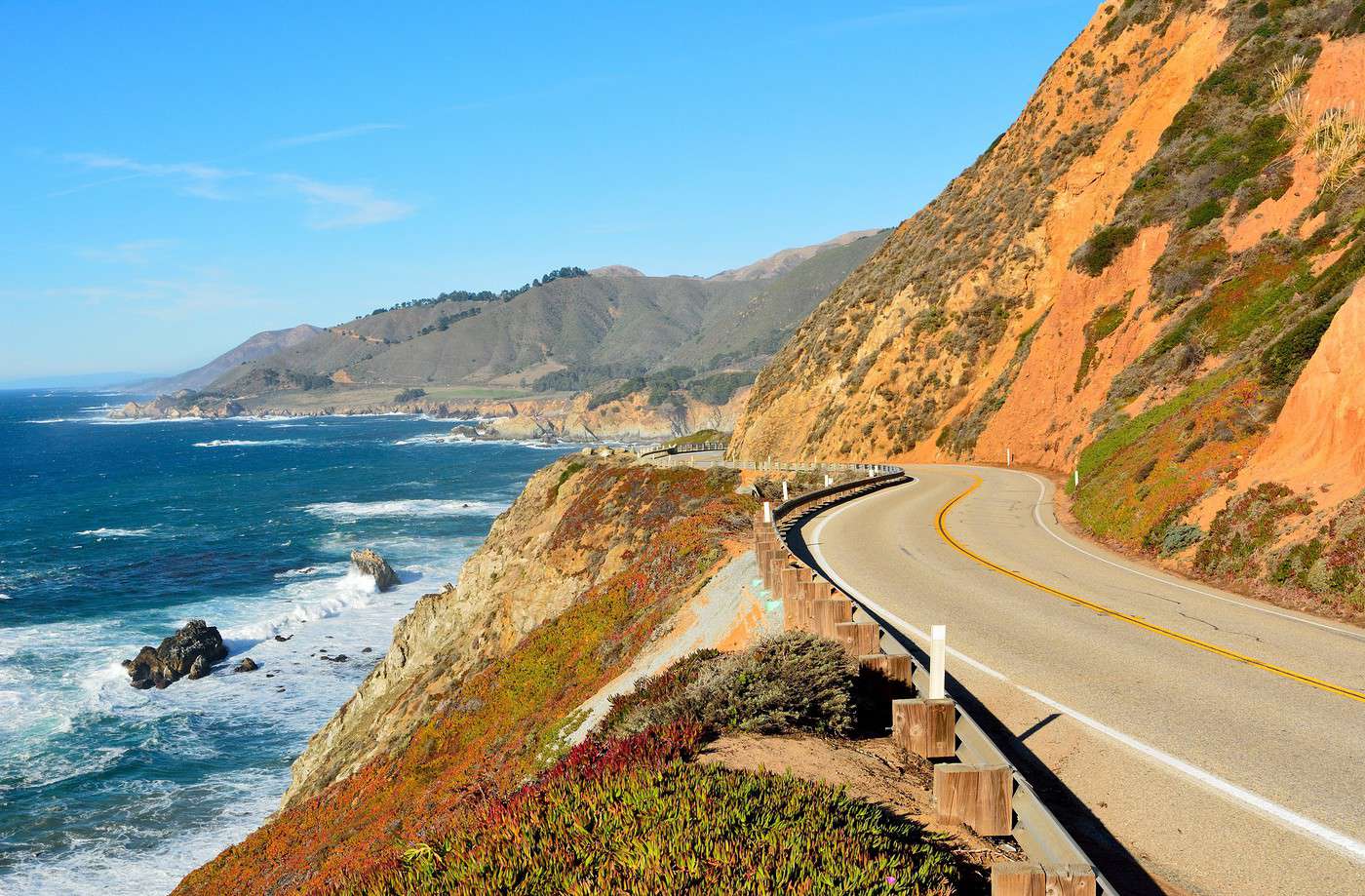
As we know, the American road network is good to very good. Unless you venture into the most remote desert or mountainous areas of the country, you won’t encounter any issues in this regard. However, there are some specific features of driving in the U.S. that Europeans may find unusual.
Specific Driving Rules
Like any country, the United States has its own driving and road rules. While there may be variations from one state to another—particularly regarding speed limits—many common points apply nationwide. Notably:
- Speed limits vary depending on the type of road and location, but they are always strictly respected by American drivers. Enforcement is frequent, with traffic-light cameras in cities and radar, helicopter, or small aircraft checks in rural areas.
- On many highways or similar roads, the left lane is reserved at certain times or entirely for vehicles with more than 2 (or sometimes 3) passengers. This is indicated by signage and must be respected to avoid fines. Additionally, this lane cannot be used for overtaking.
- In cities, traffic lights are located on the far side of the intersection rather than at the crossing point, as in Europe. Unless otherwise indicated ("no right turn on red"), it is possible to turn right on a red light if the lane is clear.
- Some intersections (or roundabouts) may have four stop signs. In this case, the first vehicle to arrive is the first to proceed.
- While ambulances, fire trucks, and police vehicles are naturally prioritized, the same applies to school buses. When their lights are flashing or their "stop" sign is deployed, you cannot overtake them and must wait until they move off.
- As in many countries, using a mobile phone without a hands-free kit while driving is prohibited, seat belts are mandatory in the front and in many states also in the rear, and littering from a vehicle can result in a fine. Regarding alcohol, the limit ranges from 0.5 to 0.8 g/L, and it is also illegal to have an open alcohol bottle inside the vehicle (allowed in the trunk).
- Finally, while there are no "written rules" on the subject, American drivers tend to be calm, courteous, law-abiding, and not prone to honking or flashing lights unnecessarily. Quite the opposite of France and most Latin countries...
Police and Fines
American police—including highway patrol—are not known for their subtlety or nuance. In some areas, at certain times, or with certain populations (young people, Black or Latino individuals in particular), they can be somewhat "on edge," and incidents are not uncommon. In short, if a police car signals you to stop or follows you with lights and sirens, it’s best to comply. After clearly indicating you’re a tourist, keep your hands visible, only retrieve or search for your documents when asked, and never exit the vehicle without being invited. Many of these practices, which may seem "over the top" from a European—especially French—perspective, are standard in the U.S.
As for fines, being a tourist won’t exempt you from them, nor from legal proceedings in case of serious offenses. Some fines must be paid on the spot during the stop to avoid additional charges. Attempting to avoid payment in a rental vehicle won’t work either, as the fine will be traced back to the rental company, which has your credit card details.
Car or RV Rental
Renting a vehicle is a common option for many tourists, especially those visiting the American West. Rental companies are plentiful, ranging from local agencies to well-known international networks, with highly variable rates depending on offers, promotions, seasons, and states—where taxes on rentals can differ significantly (up to 20%). Additionally, it’s easy to find bundled offers, such as "car + hotel" or "car + flight." Overall, prices remain affordable, especially when traveling with others.
In short, in the land of the automobile, it’s essential to compare prices when renting a car. That said, for many trips, you’ll have little choice in transportation if you want to avoid missing out on a lot or complicating your life.
Requirements and Documents
- A national driver’s license held for over a year is sufficient to drive in the United States. An international driver’s permit is not mandatory but is never sufficient on its own for renting a vehicle.
- If your stay exceeds 3 months (the visa-free period for many nationalities), you must obtain a driver’s license from the state where you reside. Note that some states, like Virginia or Colorado, allow an exchange with a French license.
- You must be at least 21 years old (sometimes 25) to rent and drive a car in the U.S. Some rental companies apply a "young driver" surcharge.
- Lastly, a credit card is essential for booking and providing a security deposit. It must be in the driver’s name.
Various Options
Beyond the specific features you might want in terms of vehicle type or capacity, as well as additional insurance options, other (paid) options can be useful and are generally offered to customers. These include: mixing pick-up and drop-off locations, adding an extra driver to the contract, or a tag for electronic tolls...
Renting an RV
While the RV option can be appealing, it’s worth noting that, due to breakdown difficulties, RVs are prohibited on Death Valley roads, unpaved tracks, and some very isolated or dangerous routes. If you ignore these rules and encounter problems, insurance won’t cover you.
Buses
While some may think buses are a good way to get around the country, they are primarily designed to connect cities and run along major routes. They are not well-suited for travelers looking to explore beyond these main roads. As a result, buses poorly serve—or don’t serve at all—major tourist sites like the national parks of the American West. In short, while buses can be an option for intercity travel, for a "nature discovery" trip, you’ll need to plan for independent transportation.
Major Companies
There are many bus companies in the United States. While a few have a national or even international reach, like Greyhound, most operate within specific states or regions. However, many are associated or franchised with larger companies.
- Chinatown Bus: A major low-cost company operating on the East Coast and West Coast.
- Greyhound: The most well-known U.S. bus company. Founded in 1914, it serves 3,800 cities in the U.S. (plus Canada and Mexico) with comfortable, fast vehicles suited for long day or night trips (restrooms, Wi-Fi, etc.). It also offers various options, including low-cost (BoltBus) and useful passes like the North American Discovery Pass for frequent travelers.
- Jefferson Lines: A fairly large company, but it only operates in the Midwest and Great Plains region (13 states).
- Flixbus: Known in France and Europe, the brand has entered the U.S. market with several operational routes in the American West (more to come), serving cities like Los Angeles, Phoenix, San Diego, and Las Vegas.
- Megabus: Founded in 2006, the company offers low-cost bus services and competes directly with Greyhound on the fifty routes it operates in the eastern U.S. and California/Nevada.
- Trailways: Under this name, 70 local bus companies have grouped together, allowing Trailways to serve the entire country.
Two-Wheel Travel
Motorcycle
For some, it’s almost a myth—especially along Route 66. Beyond the motorcycle license, the process is roughly the same as renting a car. There are also many rental companies offering options ranging from "total freedom" to guided tours with a biker escort and luggage assistance. And, by all accounts, it makes for great memories...
Bicycle
Not necessarily for a cross-country trip, but in certain situations, cycling can be a great way to explore. Some areas, like Florida, Colorado, the Great Lakes region, and New England, are particularly well-suited for it.
Hitchhiking and Carpooling
Hitchhiking
Hitchhiking isn’t ideal for getting around the country. Beyond the potential risks—some of which are very real in certain areas—it’s more or less illegal in several states, though regulations on this vary and can be unclear depending on where you’re hitching. In fact, even local police aren’t always sure of the rules.
That said, even if you’re within your rights, dealing with the police isn’t a great experience for a tourist and foreigner. Beyond an arrest for "prohibited hitchhiking," simply being stopped for this reason will likely end up on your "US immigration department" record, complicating future visits to the country. In short, it’s best to avoid hitchhiking in the U.S.
Carpooling
Carpooling exists in the United States but on a smaller scale than in Europe, particularly France. The practice doesn’t really take off due to various socio-cultural factors and primarily serves large urban areas, mostly for commuting and, in many cases, to access the left lane of certain highways reserved for cars with passengers. So, opportunities are limited, and you’ll need to look on university websites or traveler accommodations to find offers or demand in this area.
Trains

The United States has over 250,000 kilometers of railway tracks, making it the largest network in the world. It’s dense on the East Coast and parts of the Midwest but much sparser elsewhere. It doesn’t serve all tourist destinations, and frequencies can be limited, though it does allow travel from coast to coast and from Canada to Mexico. This is quite logical given American history and the development of transportation in the 19th and 20th centuries.
Today, trains are no longer used as they once were, and rail activity now focuses much more on freight than passenger transport, especially for long distances where many prefer flying. Even though tens of millions of people take the train each year and New York is home to one of the world’s largest stations, trains are primarily used between megacities and their (sometimes distant) suburbs, accounting for 80% of all rail travel in the country. This is especially true on the East Coast, between Boston and Washington, where major cities follow one after another.
In short, trains in the U.S. now serve as a "peri-urban" mode of transport or, at best, for relatively short distances, particularly on the Atlantic side of the country. This applies to both Americans and tourists, who generally ignore or limit their use of this transport option, which isn’t always the most economical either.
Amtrak and Other Companies
While many people know Amtrak, it’s not the only passenger rail operator in the U.S. Other companies operate, mainly on suburban networks or sometimes over larger areas.
Nevertheless, Amtrak remains the main and most well-known company in the country. It’s by far the most used by tourists. For passengers, it covers 35,000 km across 46 states (and three Canadian provinces) with over 500 stations. It offers quality service with per-kilometer prices roughly similar to buses or planes, depending on the class chosen, as well as various discounts (for youth, students, seniors...) and possible passes. For the latter, a national pass is available for 15 days ($500 and 8 trips), 30 days ($750 and 12 trips), or 45 days ($1,000 and 18 trips), plus another for the California (7 days within a 21-day period for $250).
Domestic Flights
As expected, the U.S. domestic network is one of the largest in the world, in terms of the number of airlines, cities served, and daily flights. It’s led by major carriers like Delta, American Airlines, United, and Southwest—the pioneer of low-cost airlines—supported by highly efficient hubs. Additionally, there are many other carriers of various sizes operating on both regional and nationwide networks.
In short, air travel is a highly present mode of transport that, even as a visitor, you’ll likely use if you plan to explore a large part of the country in one trip. For example, New York to Los Angeles takes about 6 hours by plane versus over 40 hours by road. Moreover, the U.S. domestic market is highly competitive, making it common to find cross-country flights at competitive prices, especially if booked in advance. It’s worth knowing and taking advantage of this.
In the City
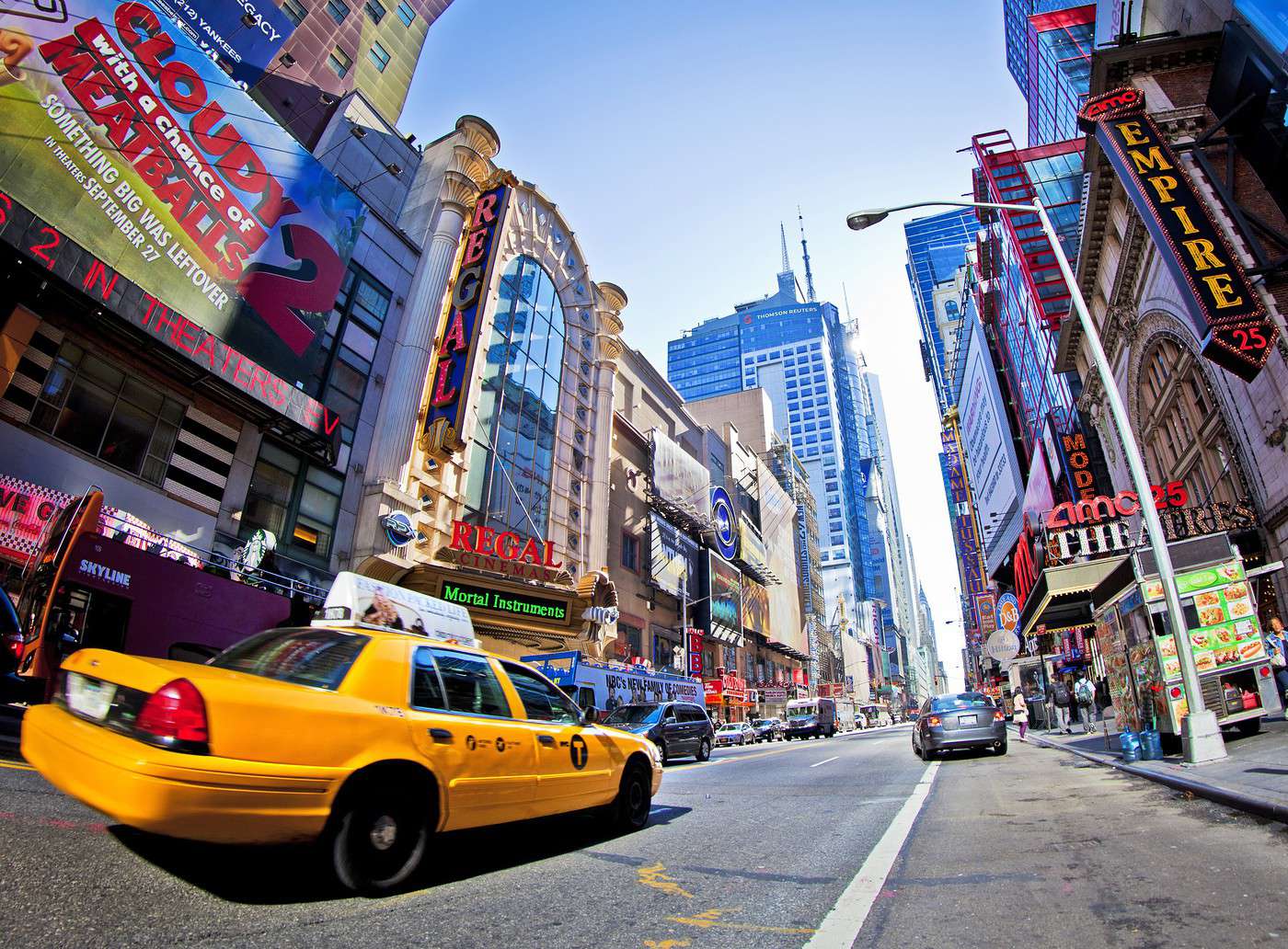
Choosing your mode of transport to get around a U.S. city depends primarily on its profile and layout. Broadly speaking, there are two types: cities where public transport reigns, like New York, Chicago, San Francisco, Boston, Washington, and a few others on the East Coast, and those designed for cars, like Los Angeles, Miami, Houston, and, to some extent, Las Vegas. So, public transport will mainly be useful in the first category; the second often lacks efficient or practical networks, whether in terms of connections or travel time.
Taxis
Whether traditional taxis, autonomous (driverless) taxis, or ride-hailing services (VTC), they’re available in every American city. Affordable in terms of price (but don’t forget the tip), they’re a popular mode of transport among Americans and can also be useful for tourists, especially if traveling in a group.
Other Options
Subway, bus, tram: More economical than taxis, their networks are generally well-designed and remain a good option if you want to save on transportation costs.
Bikes and scooters: Like in many countries, these urban transport options have developed in recent years in many American cities. Most operate via apps.
On foot: Except in a few cities like San Francisco, New York, or Boston, getting around a city can be challenging without a car or public transport. Many American cities aren’t pedestrian-friendly outside certain specific neighborhoods.