
Travel guide · Guatemala
Guatemala
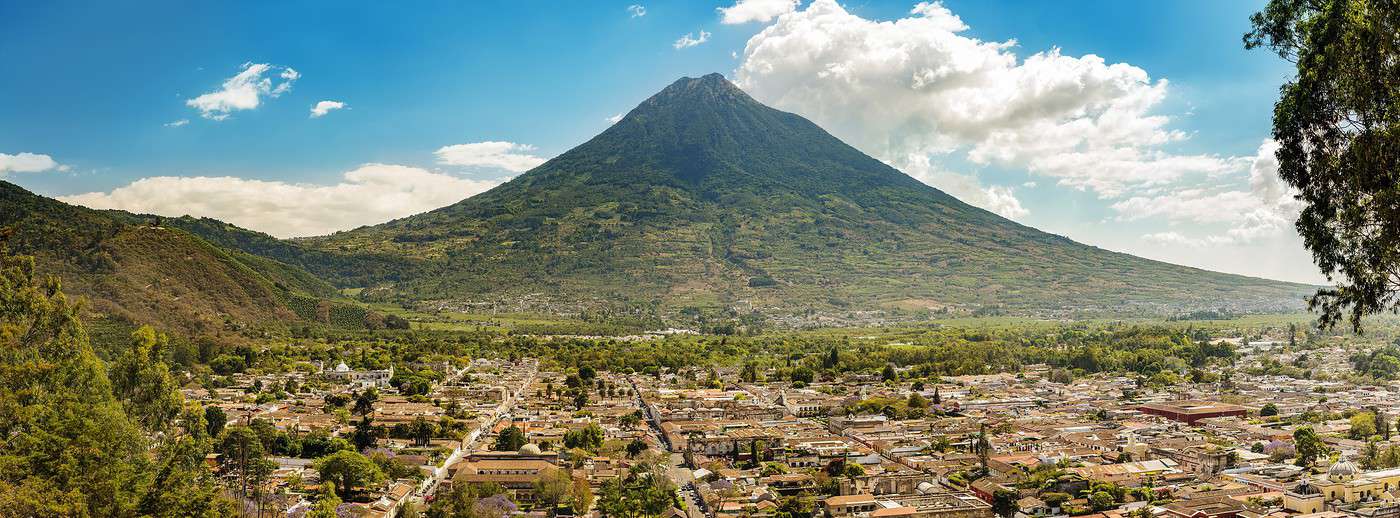
At the crossroads of Maya culture and its European colonizers, Guatemala is a microcosm of what Central America has to offer: rich and varied nature, significant heritage, strong traditions, and even beaches on both coasts.
Overview of Guatemala
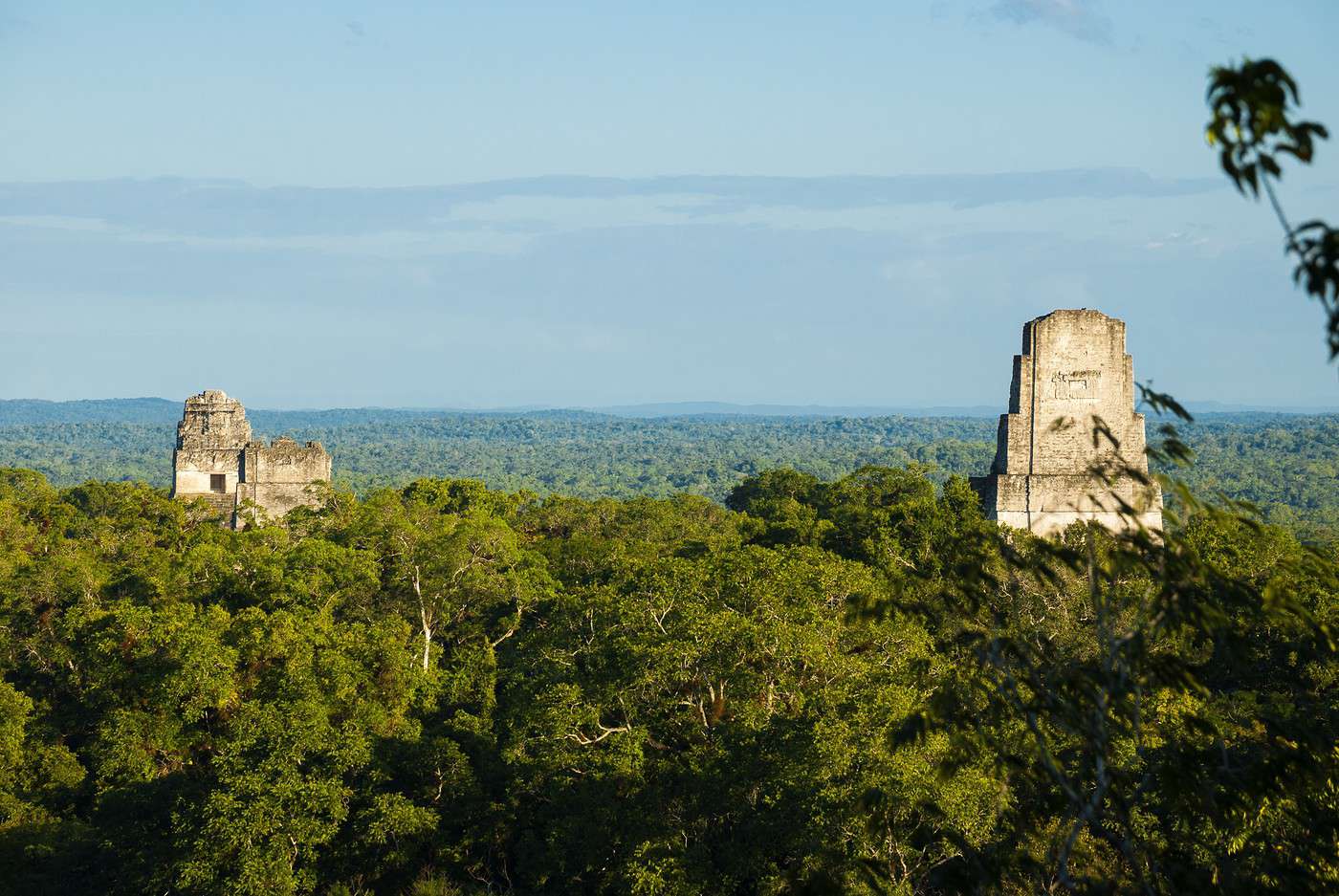
Bordering Mexico, Guatemala is quite representative of Central American countries with its highlands where the summits exceed 4,000 m, its still-active volcanoes, its jungle in Petén , its Mayan cities, and its Caribbean and Pacific coasts. It is also a…
Geography and Environment of Guatemala
Country Overview
Natural Regions
Wildlife and Flora
Guatemala Climate and Weather
Climate Overview
Although the country isn’t very large, it has two distinct climates: a tropical climate along the coasts and a temperate climate in the mountainous regions and highlands. It’s hot and humid on the coast, as well as in the plains and forests of Petén (Flores, Tikal...). In contrast, temperatures in the cordillera drop with altitude and also slightly in December-January. It can even get cold, especially at night.
Guatemala has two seasons: a dry season roughly from November to April, and a rainy season the rest of the year, with heavy rainfall—often in the late afternoon—that affects the entire coast and, to a lesser extent, the mountains. Of all the regions, Petén remains the wettest area... even during the dry season.
Best Time to Visit Guatemala
The dry season, from November to April, is the most suitable for exploring the country. This avoids the rains, which can cause problems, especially on the coasts where the atmosphere is also quite muggy during this period.
| Jan. | Feb. | Mar. | Apr. | May | Jun. | Jul. | Aug. | Sep. | Oct. | Nov. | Dec. | |
|---|---|---|---|---|---|---|---|---|---|---|---|---|
| Interior climate | ||||||||||||
| Coastal climate |
: very favorable | : favorable | : moderately favorable | : unfavorable.
Sea Temperatures Throughout the Year
| Jan. | Feb. | Mar. | Apr. | May | Jun. | Jul. | Aug. | Sep. | Oct. | Nov. | Dec. | |
|---|---|---|---|---|---|---|---|---|---|---|---|---|
| Caribbean (Livingston) | 25 | 25 | 26 | 26 | 27 | 28 | 29 | 28 | 28 | 28 | 27 | 27 |
| Pacific (Monterrico) | 27 | 27 | 27 | 27 | 28 | 28 | 28 | 28 | 28 | 28 | 27 | 26 |
Climate by Region
The Coast
The Central Region
Petén Region (Tikal)
Additional Information
History of Guatemala
Tikal, Guatemala · © VoyageForum 1000 BC-10th century: Maya civilization in Guatemala and neighboring countries. This culture reached its peak from the 4th to the early 9th century, particularly around the city of Tikal. 1492: Christopher Columbus…
Guatemalan Society
Population
Of its 15 million inhabitants, Guatemala has around 40% "Maya", making it the country with the highest percentage of indigenous population in Latin America. There are also over 55% of those referred to here as Ladino or mestizos of European and indigenous descent, then 2% of Whites of Spanish and occasionally German ancestry, as well as 2% of Garifunas, who are descendants of slaves from the Caribbean and mostly live on the east coast.
Political Institutions
Economy
Religion
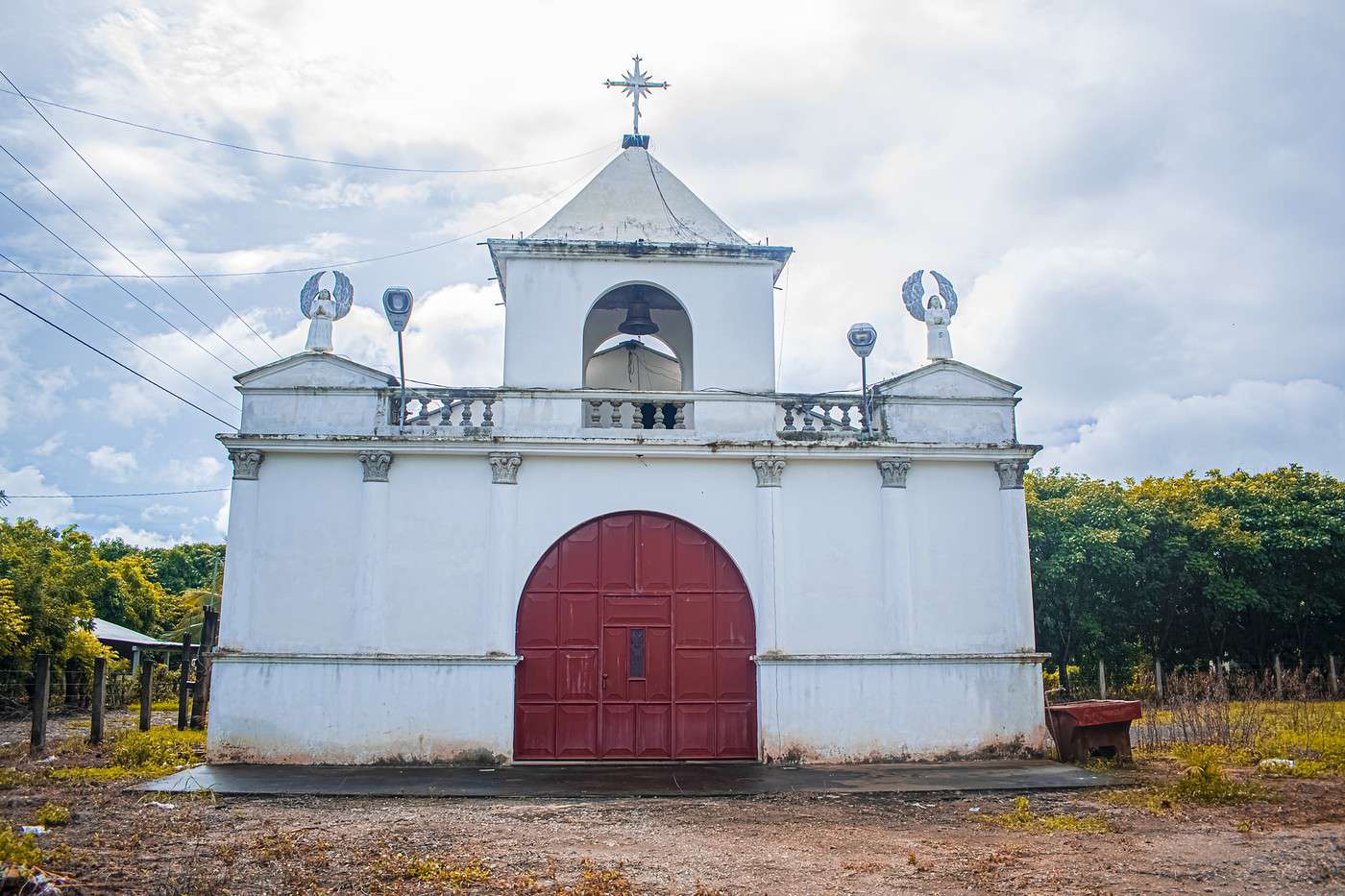
The country is traditionally very religious. While a large majority of Guatemalans identify as Catholic or Protestant, ancient indigenous religions have significantly blended with Christian practices, particularly Catholicism, creating a religious syncretism in the country. Guatemala is also home to many American Protestant sects, which are widely present.
Culture and Customs of Guatemala
Arts, Crafts, and Architecture
Arts
Crafts
Architecture
Museums
Customs and Traditions
Local Traditions
Etiquette
Dress and Behavior
Sensitive or Taboo Topics
Languages
While Spanish is the official language of Guatemala, no more than 70% of the population speaks and understands it. Many people, especially in rural areas or among the elderly, speak only one of the numerous Mayan languages practiced in the country, primarily K'iche', Mam, Kaqchikel, or Q'eqchi'. On the Caribbean coast, the Garifuna populations speak their own language or a "local" English.
In another context, it’s worth noting that a city like Antigua has built a reputation over time for its language schools. Each year, it welcomes hundreds of young people, many of them North American, who come to learn Spanish for a few days or weeks at one of the many institutions in the city.
Glossary
A few local words and expressions useful to know while traveling:
- Chicken bus: These are recycled American school buses, with the mechanics or condition to match, used as local buses by the population.
- Comedores: Local eateries where you can eat cheaply, though the food isn’t always very varied.
- Garifunas: Descendants of enslaved people from the Caribbean who mostly live on the eastern coast of Guatemala with their own language and culture.
- Hospedajes: Local hotels, usually basic (sometimes quite grim) and with little comfort, but very cheap to stay in.
- Ladino: A person of mixed European and Indigenous descent.
- Maras: Local gangs, particularly violent and active in cities, especially Guatemala City.
Festivals and Celebrations
Major Holidays and Public Celebrations
January 1: New Year’s Day.
March or April: Easter.
June 30: Army Day.
August 15: Assumption.
September 15: National Day.
October 20: Anniversary of the 1944 Revolution.
November 1 and 2: Day of the Dead.
December 25: Christmas.
December 29: Commemoration of the 1996 Peace Accords.
Books, Films, and Music
Gastronomy of Guatemala
Local cuisine
Other cuisines
Specialties
Starters
Main dishes
Desserts
Drinks
Where to eat
Depending on your cravings, budget and stomach capacity, you can choose to eat at markets, in comedores, or in more "classic" restaurants, tourist-oriented or not.
Markets are by far the most economical places to eat, where you can get a simple, very local meal for the equivalent of less than US$2 or US$3, though it can also upset the most sensitive stomachs when it comes to hygiene. For US$4 or US$5 a meal, you can opt for comedores, which are local restaurants, not necessarily very varied in terms of food. And for the equivalent of a dozen dollars (and up), you'll find the usual range of more "sophisticated" or specialized restaurants, or those catering primarily to tourists.
See also
What to See in Guatemala
Guatemala has 3 sites inscribed on the UNESCO World Heritage list. Antigua ★★★★ (1979) Officially known as Antigua Guatemala. The country's former capital is one of the most beautiful colonial cities in Latin America and is a UNESCO World Heritage site. Tikal…
Things to Do in Guatemala
Panajachel, Guatemala · © VoyageForum Despite its two coastlines, the Caribbean and the Pacific, Guatemala is far from being a beach destination. On the Antilles side, there is indeed Livingston with its Jamaican vibe, but its beaches often leave…
Types of Travel in Guatemala
Interests (out of ★★★★ ) : Nature ★★★★ ; Adventure ★★★ ; Culture ★★★★ ; Relaxation-holidays ⊘ . Mountains, high plateaus, dormant or semi-active volcanoes, forests, lakes, plus a small coastline on both the Caribbean and Pacific sides—Guatemala offers real…
When and Where to Go in Guatemala
Best Times to Visit Guatemala
Finding the best time to visit involves balancing climate conditions with crowd levels and the most attractive prices, both on-site and for travel.
The dry season, from November to April, is the most favorable for exploring the country. This avoids the rains that can cause issues, particularly on the coasts where the atmosphere is also quite humid during this period. However, around Christmas and Easter (Holy Week), crowds peak along with prices. There is also significant activity in July and August. Nevertheless, outside these periods, you can travel without too many crowds.
In short, considering all this, the November-to-April period is still the most recommended, while keeping in mind it’s best to avoid Christmas and Easter for a quieter experience.
| Jan. | Feb. | Mar. | Apr. | May | Jun. | Jul. | Aug. | Sep. | Oct. | Nov. | Dec. | |
|---|---|---|---|---|---|---|---|---|---|---|---|---|
| Interior climate | ||||||||||||
| Coastal climate | ||||||||||||
| Avoid crowds | / | / | ||||||||||
| Low prices | / | / |
: very favorable | : favorable | : moderately favorable | : unfavorable.
Where to Go by Travel Style and Interest
Flying to Guatemala
Overview
Of the fifteen or so airports in the country, only La Aurora International Airport in Guatemala City truly serves international flights. It is by far the busiest in the country, handling nearly 5 million passengers a year, and offers connections to around a dozen countries—all in the Americas, except for Madrid.
Local airlines
Guatemala has just two carriers: Avianca Group, which operates internationally, and Transportes Aereos Guatemaltecos (TAG), which focuses on domestic flights and neighboring countries.
From France and Europe
Apart from Madrid (Iberia flights), no European city has a direct connection to Guatemala. So, if you're traveling from France, you'll need to take a connecting flight, which will typically take between 15 and 20 hours—or even longer. Prices: 600/900 €.
Connecting flights
U.S. airlines (American, Delta, United) and Spain’s Iberia are usually the main options for connecting flights and should be compared first. Occasionally, you’ll also find flights via Mexico, Panama, or even Colombia.
When choosing, price is one factor, but flight duration (some routes are very long) and—if you opt for U.S. carriers—the requirements for transiting through the United States should also be considered. Generally, flights via Madrid traditionally offer the best value for money.
From the Americas
While Montreal has seasonal flights, primarily with Air Canada, the United States remains by far the best-connected country. This makes sense given the large Guatemalan community in the U.S. Around ten U.S. cities are served, with major hubs like those of American Airlines, Delta, and United leading the way.
Otherwise, Mexico (with Mexico City and Cancun) and the rest of Central America all have at least one connection to Guatemala. However, there are no direct flights from South America or the Caribbean.
Additional information
Getting to Guatemala by Land or Sea
Guatemala shares a border with four countries: Belize (266 km), El Salvador (203 km), Honduras (256 km), and Mexico (962 km). Since 2006, there has been an agreement between Guatemala, El Salvador, Honduras, and Nicaragua called the "Central American Border…
Getting Around Guatemala
In Guatemala, the main road network between major cities isn’t too bad, though it’s often congested. However, as in many other countries, secondary roads require much more caution. During the rainy season, some routes may be cut off due to flooding or…
Accommodation in Guatemala
Overview of the offer
The accommodation available in the country is generally sufficient to handle the flow of visitors. The only exception is the Easter period in some tourist spots, including Antigua, which can attract quite a crowd, making it wise to book ahead. Otherwise, accommodation mainly consists of hotels, with few other types or categories of places. You’ll find them almost everywhere, at all price points and comfort levels, though high-end options are somewhat limited.
Hotels
High-end
There are a few charming hotels set in beautiful colonial buildings, such as in Antigua, as well as some quality lodges tucked away in nature.
Mid-range
Mid-range hotels are fairly common, especially in the most tourist-heavy areas. You’ll easily find (small) establishments used to foreign visitors, offering "decent" comfort—such as rooms with or without a private bathroom. The $15–20 range for a double room provides plenty of good options. Dormitory-style accommodation is also often available for less.
Budget
Hospedajes are local establishments, often basic (sometimes even quite grim) and with little comfort. However, they’re plentiful and very affordable—you can find a double room for under $10. That said, for just a little more, you can usually find something better.
Other options
Camping
Apart from near the site of Tikal, there aren’t really any campgrounds in Guatemala. Wild camping is also strongly discouraged due to security risks and the low cost of the cheapest accommodations. That said, during treks organized by agencies, such as in Petén, overnight bivouacs may be part of the program.
Homestays
Which accommodation to choose?
As elsewhere in Central America, mid-range accommodation is often the best bet, with plenty of guesthouses and small hotels available across the country.
Entry Requirements and Visa for Guatemala
For tourist travel, no visa is required for stays of less than 3 months. A passport valid for 6 months after the planned return date is sufficient. Additionally, a customs declaration (or "DJRV") must be completed online on the official authorities' site .…
Money, budget and shopping in Guatemala
Currency: Quetzal (100 centavos). Bills: 1, 5, 10, 20, 50, 100 and 200 GTQ. Coins: 1, 5, 10, 25, 50 centavos + 1 GTQ. Exchange: The name of the Guatemalan currency refers to the quetzal bird, which is the national symbol of Guatemala. Bear in mind that euros…
Health and Safety in Guatemala
In France, both for individuals and professionals, the "travel advice" from the Ministry of Foreign Affairs regarding precautions for each country has legal value. A similar online travel advice system exists in several countries: Foreign Affairs Belgium…
Other Practical Information for Guatemala
Baggage and Equipment to Bring
On the coast or in the Petén, plan for lightweight clothing year-round, plus a warm layer for evenings or air conditioning. For the interior, in the mountains and highlands, it’s useful to bring warm clothes. Also pack rain and sun protection, as well as good walking shoes if you plan to hike.
Communications
Phone
International dialing code: (00 +) 502.
For low-cost calls, most cybercafés offer inexpensive communication options. Alternatively, you can buy prepaid Telguat (local telecom) cards to use in their phone booths and call centers.
Internet
Internet is widely available in the country, as is Wi-Fi, which is now common in hotels of all categories. In short, you won’t have much trouble finding a connection, especially in the most tourist-friendly areas.
Allow a full week for mail to reach Europe or Canada from Guatemala. As always, it’s best to post letters from major city post offices.
Time Difference
Local time: .
Guatemala is on GMT-6. This means it’s 7 hours behind France in winter and 8 hours behind in summer.
Electricity
110 V (60 Hz) with "American" plugs (officially types A and B) and very occasionally "British" (type G), which will require an adapter for French plugs.
Opening Hours
Most shops are generally open from 9:30 AM to 7:30 PM Monday to Saturday, with a lunch break. Banks are open from 9:00 AM to 7:00 PM (or just 3:00 PM for some) on weekdays and Saturday mornings. Note that between Holy Wednesday and Easter Sunday, most businesses are closed.
Laundries
Local Tourist Offices
Weights and Measures
Except for gasoline sold by the gallon (3.5 L), weight and measurement standards are the same as in France.
French Language Use
Press and Media
Living in Guatemala
Living in the country
Work
Studies
More than for studying in the strict sense, Guatemala—and particularly a city like Antigua—has built a solid reputation for language schools over time. Each year, it welcomes hundreds of young people, many of them North American, who come to learn Spanish for a few days or weeks at one of the city’s many institutions. Several programs are typically available, making it possible to combine studies, homestay accommodation, and exploring the area and the country. Whether in France or elsewhere, you can easily find various providers specializing in this type of stay.
Retirement
Humanitarian aid and volunteering
Something wrong or out of date? Report this page