last edited Aug 14, 2020
History of Malta
Location Map of Malta
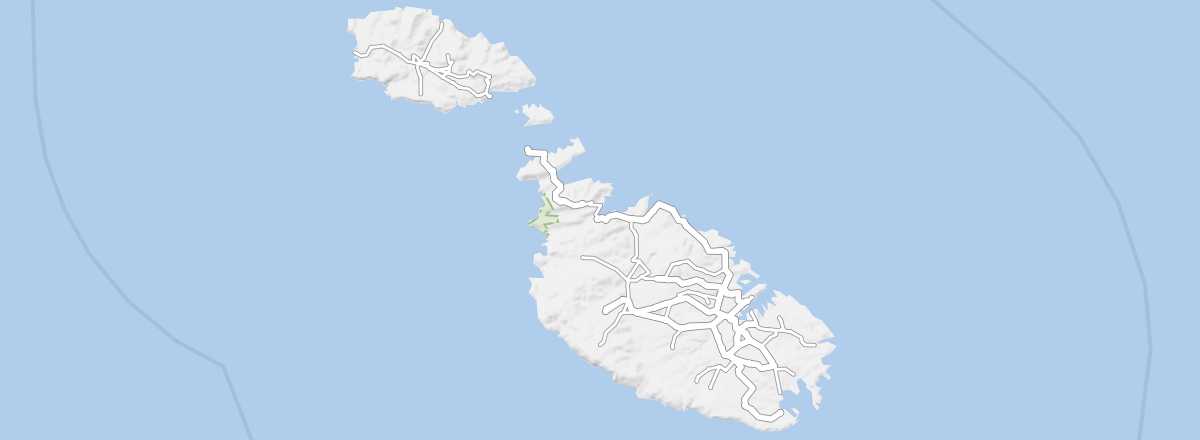 Malta
Open the interactive map
History of Malta

Key Dates
- 5200 BC: First settlements by populations from Sicily. This society would create the "Megalithic Temples of Malta," now a UNESCO World Heritage site.
- 725 BC: The Phoenicians control the archipelago for over two centuries before it falls into the hands of the Carthaginians around 480 BC.
- 218 BC: The Romans seize the Maltese islands. From this point onward, due to its strategic position, the archipelago becomes highly contested, passing successively to the Barbarians (from 455), then the Byzantines (533), and finally the Arabs from 870 to 1091.
- 1091: After taking Sicily from the Arabs, the Normans capture Malta, holding it for a century before the Holy Roman Empire replaces them.
- 1530: To protect it from the Ottomans, Emperor Charles V cedes the archipelago to the Knights of the Order of St. John of Jerusalem, later known as the Knights of Malta. They fortify the islands, resist multiple Turkish sieges, engage in a form of piracy, and turn Valletta into one of the primary Christian centers for the slave trade, ensuring the Order's wealth.
- 1798: En route to Egypt, Napoleon seizes Malta before leaving it to the British in 1800, who turn it into a strategic base.
- 1814: After refusing to return the archipelago to the Order of Malta, the British officially annex it to the British Empire, sparking nationalist movements among the population.
- Late 19th century: Malta develops and benefits from technical, financial, and social progress.
- 1914–18: During World War I, Malta serves as a prisoner-of-war camp, naval base, and hospital for the Allies.
- 1920s–30s: Malta gains autonomy. Maltese is recognized as an official language (alongside English) in 1936, replacing Italian.
- 1940–43: Still a British possession, the archipelago endures a long siege and heavy Italian and German bombings.
- 1964: After gaining local autonomy in 1947 and Dominion status in 1955, Malta achieves independence within the British Commonwealth.
- 1970s: Growth of the public sector, nationalizations, and laws establishing equal pay, gender equality, abolition of the death penalty, and civil marriage.
- 1974: The archipelago becomes a "neutral and non-aligned" republic but turns toward Libya, China, and Eastern Bloc countries for economic ties.
- 1979: Departure of the last British soldiers.
- 1980s–90s: After some political tensions, Malta gradually adopts a "consumer society" model. In 1990, it applies for European Union membership.
- 2004: Following a popular referendum the previous year, Malta officially joins the EU in May.
- 2008: The euro replaces the Maltese lira as the official currency.
- 2011: Malta becomes the last Western country to legalize divorce. Conversely, it is now one of the most progressive countries in the world regarding "Gender Identity" legislation.