last edited Dec 11, 2019
Introduction to Armenia
Location Map of Armenia
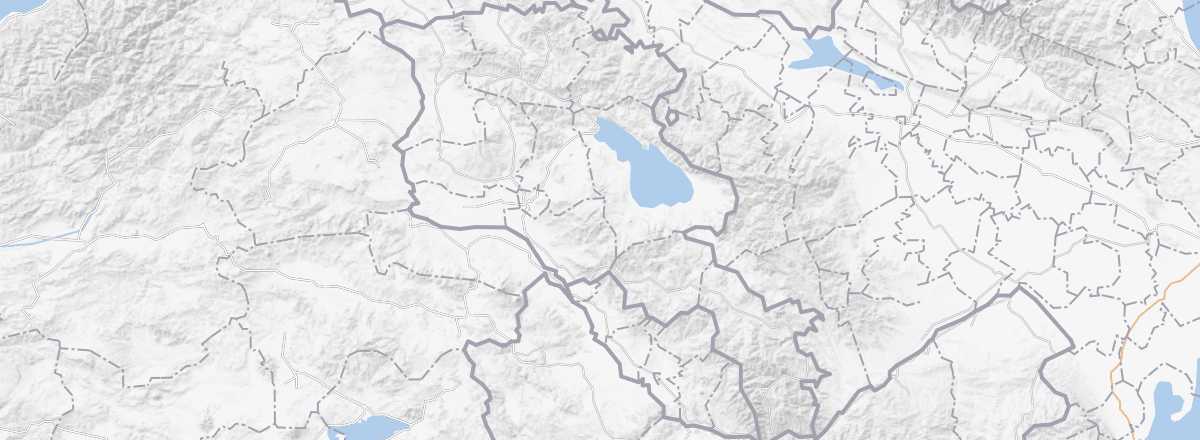 Open the interactive map
Quick Overview
This former Soviet socialist republic is located in the "Lesser Caucasus", with no sea access.
Key Facts
- Type of place: country.
- Location: in the Caucasus, east of Turkey, with no sea access.
- Latitude/longitude: 40°11' N, 44°31' E.
- Local time:
- Capital: Yerevan.
- Nature of the state: parliamentary republic.
- Official language: Armenian.
- Currency: dram.
- Population: 3,038,217 inhabitants (2018).
- Area: 29,743 km².
- Density: 101 inhabitants/km².
- Highest point: Mount Aragats (4,090 m).
- Lowest point: Debed Canyon (375 m).
- Coastline: 0 km; no sea access.
- Driving: on the right.
Tourism
Mountains, a vast lake (Sevan), expansive and somewhat desolate landscapes, and above all, countless medieval churches and monasteries make this country with its somewhat turbulent history so rich. Indeed, Armenia has much to offer and, like the rest of the region, has seen growing interest in recent years.
For a long time, visitors were mainly from the Armenian diaspora or those with ties to the country, but things have now changed with the arrival of increasing numbers of Eastern and Western Europeans. In 2018, Armenia welcomed 1.652 million tourists, more than double its 2010 visitor numbers.
Travel Essentials
- Destination: for beginner/somewhat experienced travelers.
- By air: France-Yerevan.
- Entry requirements: passport valid for at least 3 months after the planned departure date.
- Currency to bring: euros.
- Exchange rate:
- Daily "backpacker" budget:
- Best for accommodation:
- Best for getting around:
- Risks:
- Best period for climate/crowds/prices:
- Interests (out of ): Nature ; Adventure ; Culture ; Relaxation/holidays .
Useful Addresses
Socio-Economic Statistics
- "Quality of life": 83/188 (rank in 2018)
- GDP per capita: $9,500 (2017)
- Average monthly income: ()
- Inflation: +0.9% (2017)
- "Official" unemployment: 18.9% (2017)
- Population below the poverty line: 32% (2013)
- Life expectancy: 75.1 years (2018)
- Migration rate per 1,000 inhabitants: -5.7 (2017)
- Population growth: -0.25% (2018)
- Literacy rate: 99.7% (2015)
- Urban population: 63.1% (2018)
- Press freedom: 80/180 (rank in 2018)
- Political regime: hybrid regime (103/167 in 2018)
Sources: World Bank, Human Development Indicators, RSF, The Economist, The World Factbook