last edited Dec 11, 2019
Introduction to Bahrain
Location Map of Bahrain
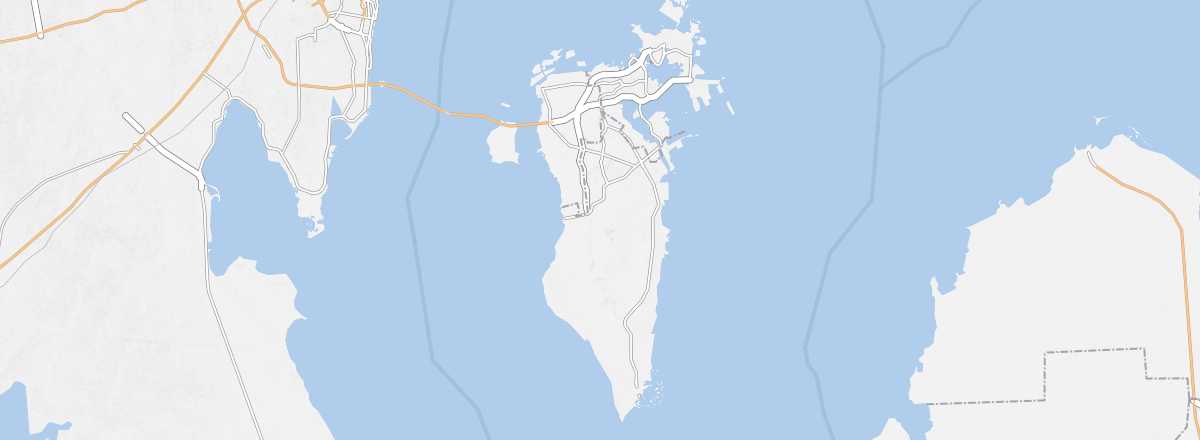 Bahrain
Open the interactive map
Bahrain
Open the interactive map
Quick Overview
Bahrain is a small island nation in Arabia located near the western coast of the Persian Gulf. Most of its territory consists of the island of Bahrain, which is connected to neighboring Saudi Arabia by the King Fahd Causeway and its 25 kilometers.
Key Facts
- Type of place: country.
- Location: archipelago in the Persian Gulf, between Saudi Arabia and Qatar.
- Latitude/longitude: 26°13' N, 50°35' E.
- Local time:
- Capital: Manama.
- Nature of the state: constitutional monarchy.
- Official language: Arabic.
- Currency: Bahraini dinar.
- Population: 1,442,659 inhabitants (2018).
- Area: 765 km².
- Density: 1,886 inhabitants/km².
- Highest point: Jabal ad Dukhan (134 m).
- Lowest point: sea level.
- Coastline: 160 km.
- Driving: on the right.
Tourism
This archipelago, between Qatar and Saudi Arabia, is rarely visited except by Saudis who come (in large numbers) to enjoy its shopping centers and, above all, its nightlife where alcohol is permitted... In 2017, the country welcomed 1.137 million visitors.
Travel Essentials
- Destination: for beginner travelers.
- By air: France-Manama.
- Entry requirements: passport valid for at least 6 months after entry date + visa.
- Currency to bring:
- Exchange rate:
- Daily "backpacker" budget:
- Best for accommodation:
- Best for getting around:
- Risks:
- Best time for climate/crowds/prices:
- Interests (out of ): Nature ; Adventure ; Culture ; Relaxation-holidays /
Useful Addresses
Socio-Economic Statistics
- "Quality of life": 43/188 (rank in 2018)
- GDP per capita: $49,000 (2017)
- Average monthly income: ()
- Inflation: +1.4% (2017)
- "Official" unemployment: 3.6% (2017)
- Population below poverty line: ()
- Life expectancy: 79.1 years (2018)
- Migration rate per 1,000 inhabitants: +12.1 (2017)
- Population growth: +2.19% (2018)
- Literacy rate: 95.7% (2015)
- Urban population: 89.3% (2018)
- Press freedom: 166/180 (rank in 2018)
- Political regime: authoritarian regime (148/167 in 2018)
Sources: World Bank, Human Development Indicators, RSF, The Economist, The World Factbook