last edited Dec 11, 2019
Introduction to Benin
Location Map of Benin
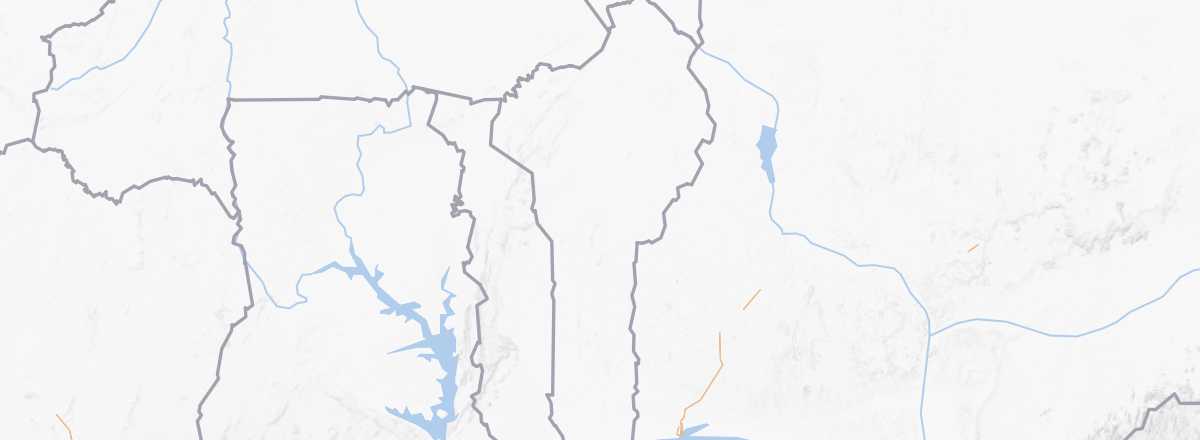 Benin
Open the interactive map
Benin
Open the interactive map
Quick Overview
Benin is a small country stretching lengthwise for about 700 kilometres, from the Niger River in the north to the Atlantic coast in the south.
Key Facts
- Type of place: country.
- Location: on the Gulf of Guinea, between Togo to the west and Nigeria to the east.
- Latitude/longitude: 6°29' N, 2°36' E.
- Local time:
- Capital: Porto Novo.
- Nature of the state: presidential republic.
- Official language: French.
- Currency: CFA franc.
- Population: 11,340,504 inhabitants (2018).
- Area: 114,763 km².
- Density: 98 inhabitants/km².
- Highest point: Mount Sokbaro (658 m).
- Lowest point: sea level.
- Coastline:
- Driving: on the right.
Tourism
With its beaches, a few parks and reserves, and above all a historical heritage tied to a culture and traditions that remain very much alive, the former Kingdom of Dahomey is a well-rounded destination in West Africa. Each year, it welcomes around 250,000 to 300,000 foreign visitors (295,000 in 2018), roughly 10% of whom are French.
Travel Essentials
- Destination: ideal for beginner or slightly experienced travellers.
- By air: France-Cotonou.
- Entry requirements: passport valid at least 6 months after the planned return date + visa + yellow fever vaccination + return or onward ticket.
- Currency to bring: euros.
- Exchange rate:
- Daily "backpacker" budget:
- Best for accommodation:
- Best for getting around:
- Risks:
- Best time for climate/crowds/prices:
- Interests (out of ): Nature ; Adventure ; Culture ; Relaxation/holidays /
Useful Addresses
Socio-Economic Statistics
- "Quality of life": 163/188 (rank in 2018)
- GDP per capita: $2,300 (2017)
- Average monthly income: ()
- Inflation: +0.1% (2017)
- "Official" unemployment: ()
- Population below the poverty line: 36.2% (2011)
- Life expectancy: 62.7 years (2018)
- Migration rate per 1,000 inhabitants: 0 (2017)
- Population growth: +2.68% (2018)
- Literacy rate: 38.4% (2015)
- Urban population: 47.3% (2018)
- Press freedom: 84/180 (rank in 2018)
- Political regime: hybrid regime (81/168 in 2018)
Sources: World Bank, Human Development Indicators, RSF, The Economist, The World Factbook