last edited Dec 11, 2019
Introduction to Djibouti
Location Map of Djibouti
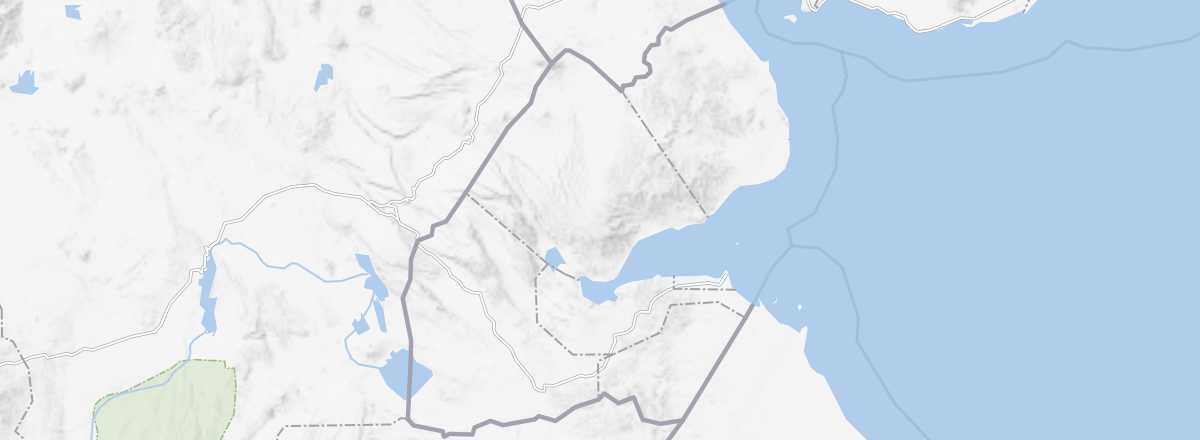 Djibouti
Open the interactive map
Quick Overview
Located in the Horn of Africa, between the Suez Canal and the Gulf of Aden, Djibouti has always held strategic importance.
Key Facts
- Type of place: country.
- Location: in the Horn of Africa, between the Red Sea and the Indian Ocean.
- Latitude/longitude: 11°36' N, 43°10' E.
- Local time:
- Capital: Djibouti.
- Nature of the state: republic.
- Official language: French and Arabic.
- Currency: Djiboutian Franc.
- Population: 884,017 inhabitants (2018).
- Area: 23,000 km².
- Density: 38 inhabitants/km².
- Highest point: Mousa Ali Volcano (2,028 m).
- Lowest point: Lake Assal (-155 m).
- Coastline: 314 km.
- Driving: on the right.
Tourism
The "country" of Raimbaud and Monfreid still retains its sense of adventure and presents itself as a completely off-the-beaten-path destination, not easy to travel independently. The Red Sea, some historical landmarks, and above all unique landscapes with deserts, salt lakes, and volcanoes are its main attractions for the few tens of thousands of visitors Djibouti welcomes each year (63,000 in 2014).
Essentials for Travel
- Destination: for slightly experienced/seasoned travelers.
- By air: France-Djibouti.
- Entry requirements: passport + visa.
- Currency to bring:
- Exchange rate:
- Daily "backpacker" budget:
- Best for accommodation:
- Best for getting around:
- Risks:
- Best time for climate/crowds/prices:
- Interests (out of ): Nature ; Adventure ; Culture ; Relaxation/Holidays
Useful Addresses
Socio-Economic Statistics
- "Quality of life": 172/188 (rank in 2018)
- GDP per capita: $3,600 (2018)
- Average monthly income: ()
- Inflation: +0.7% (2017)
- "Official" unemployment: 40% (2017)
- Population below the poverty line: 23% (2015)
- Life expectancy: 64 years (2018)
- Migration rate per 1,000 inhabitants: +5.7 (2017)
- Population growth: +2.13% (2018)
- Literacy rate: ()
- Urban population: 77.8% (2018)
- Press freedom: 173/180 (rank in 2018)
- Political regime: authoritarian regime (146/167 in 2018)
Sources: World Bank, Human Development Indicators, RSF, The Economist, The World Factbook