last edited Dec 11, 2019
Introduction to Lithuania
Location Map of Lithuania
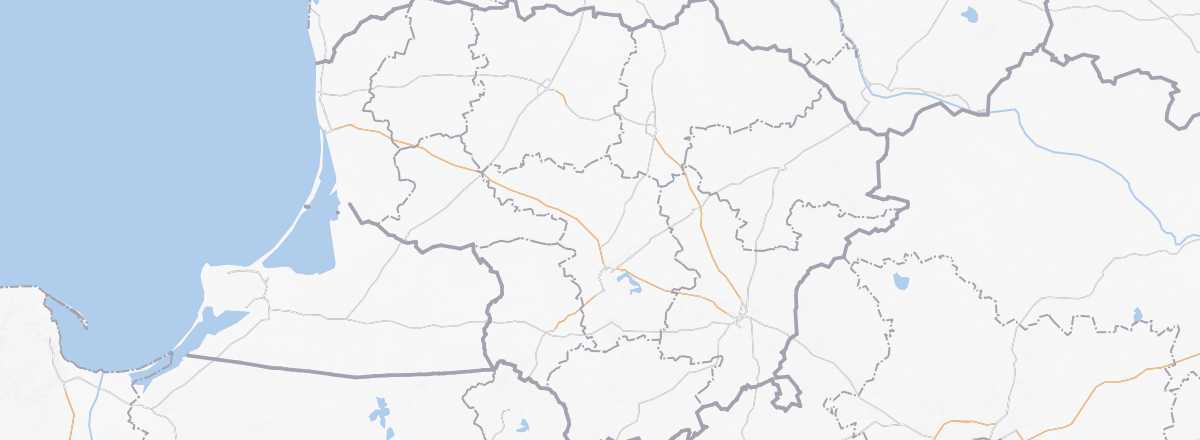 Lithuania
Open the interactive map
Lithuania
Open the interactive map
Quick Overview
It is the southernmost of the three Baltic republics, but also the largest and most populous. Lithuania offers varied low-lying landscapes made up of plains and hills not exceeding 300 m in altitude, lakes (4,000!), rivers, and numerous forests (28% of the territory), with a small 100 km coastal strip to the west bordering the Baltic Sea.
Key Facts
- Type of place: country.
- Latitude/longitude: 54°41' N, 25°16' E.
- Local time:
- Capital: Vilnius.
- Nature of the state: parliamentary republic.
- Official language: Lithuanian.
- Currency: euro.
- Population: 2,793,284 inhabitants (2018).
- Area: 65,303 km².
- Density: 43 inhabitants/km².
- Highest point: Aukstojas (294 m)
- Lowest point: sea level.
- Coastline: 100 km.
- Driving: on the right.
Tourism
The best-known of the three Baltic States, Lithuania, like its neighbors, is a good compromise for those seeking a European destination that combines cultural and historical heritage, beautiful nature, and some "relaxation-holiday" opportunities—all at a fairly reasonable price.
Like other Baltic destinations, Lithuania attracts over 2 million visitors per year (2.825 million in 2018), primarily from Germany, Belarus, Russia, Poland, Latvia, and Ukraine. In 2015, 26,000 French travelers also stayed in the country.
Travel Essentials
- Destination: for beginner travelers.
- By air: France-Vilnius.
- Entry requirements: passport or ID card.
- Currency to bring: euros.
- Exchange rate:
- Daily "backpacker" budget:
- Best for accommodation:
- Best for getting around:
- Risks:
- Best time for climate/crowds/price:
- Interests (out of ): Nature ; Adventure ; Culture ; Relaxation-holidays .
Useful Addresses
Socio-Economic Statistics
- "Quality of life": 35/188 (rank in 2018)
- GDP per capita: $32,400 (2018)
- Average monthly income: ()
- Inflation: +3.7% (2017)
- "Official" unemployment: 7.1% (2017)
- Population below poverty line: 22.2% (2015)
- Life expectancy: 75.2 years (2018)
- Migration rate per 1,000 inhabitants: -6.1 (2017)
- Population growth: -1.1% (2018)
- Literacy rate: 99.8% (2015)
- Urban population: 67.7% (2018)
- Press freedom: 36/180 (rank in 2018)
- Political regime: flawed democracy (36/167 in 2018)
Sources: World Bank, Human Development Indicators, RSF, The Economist, The World Factbook