last edited Dec 11, 2019
Introduction to Sweden
Location Map of Sweden
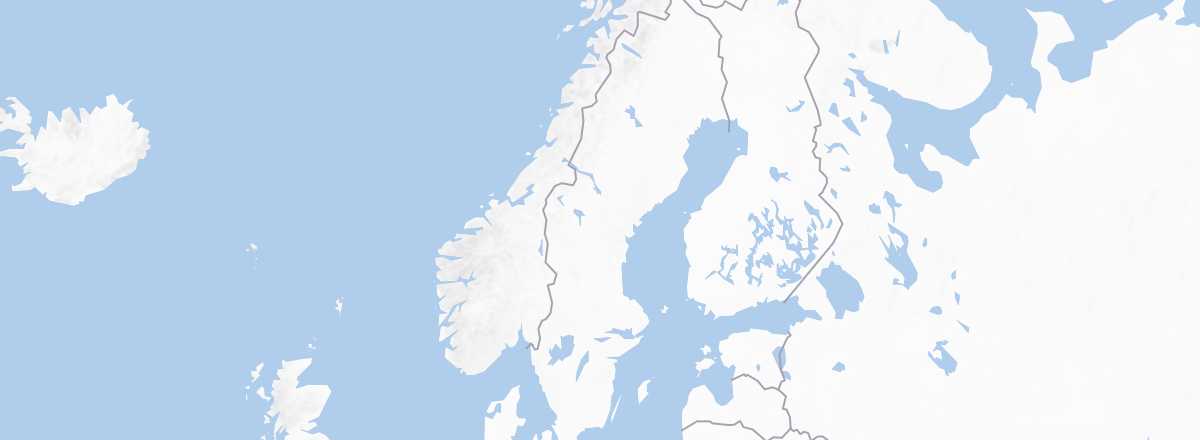 Sweden
Open the interactive map
Sweden
Open the interactive map
Quick Overview
Key Facts
- Type of place: country.
- Latitude/longitude: 62.00' N, 15.00' E.
- Local time:
- Capital: Stockholm.
- Nature of the state: constitutional monarchy.
- Official language: Swedish. Five other languages, including Sami, are also recognised as "minority languages".
- Currency: Swedish krona.
- Population: 10,040,995 inhabitants (2018).
- Area: 449,965 km².
- Density: 22 inhabitants/km².
- Highest point: Mount Kebnekaise (2,111 m).
- Lowest point: Lake Hammarsjön (-2.4 m).
- Coastline: 3,218 km.
- Driving: on the right.
Tourism
With 7.054 million visitors in 2017, Sweden is one of Europe’s major tourist destinations... though this tourism is primarily regional, with visitors mainly from Scandinavia and Germany, and largely concentrated in the capital (for weekend trips) or the southern coast, where the microclimate makes beaches enjoyable in season. In short, the country’s tourism remains both time-specific (the vast majority of visitors come in summer) and geographically focused (Stockholm and the south).
Travel Essentials
- Destination: for beginner travellers.
- By air: France-Stockholm for 110 to 250 € round trip.
- Entry requirements: ID card or passport.
- Currency to bring: euros.
- Exchange rate:
- Daily "backpacker" budget: 60 to 80 € per person.
- Accommodation: camping or youth hostel.
- Getting around: car or a combination of "train + bus".
- Risks: virtually none in terms of health and very low in terms of safety (nature-related).
- Best period for climate/crowds/prices: late May to early September, though July can be locally busy.
- Interests (out of ): Nature ; Adventure ; Culture ; Relaxation/Holidays .
Addresses in France
- Tourist Office: available online.
- Swedish Institute in Paris 11 rue Payenne, 75003 Paris. Tel.: +33 1 44 78 80 20.
Addresses in Belgium, Switzerland, and Quebec
Socio-Economic Statistics
- "Quality of life": 7/188 (rank in 2018)
- GDP per capita: $51,200 (2017)
- Average monthly income: $4,680 (2012)
- Inflation: +1.9% (2017)
- "Official" unemployment: 6.7% (2017)
- Population below the poverty line: 15% (2014)
- Life expectancy: 82.2 years (2018)
- Migration rate per 1,000 inhabitants: +5.3 (2017)
- Population growth: +0.8% (2018)
- Literacy rate: 100% (2019)
- Urban population: 87.4% (2018)
- Press freedom: 2/180 (rank in 2018)
- Political regime: democracy (3/167 in 2018)
Sources: World Bank, Human Development Indicators, RSF, The Economist, The World Factbook