last edited Dec 11, 2019
Jet Lag
Location Map of Destinations
 Destinations
Open the interactive map
Destinations
Open the interactive map
Combating Jet Lag
Jet lag, also known as "jetlag," is a problem encountered by three out of four travelers after a long-haul flight.
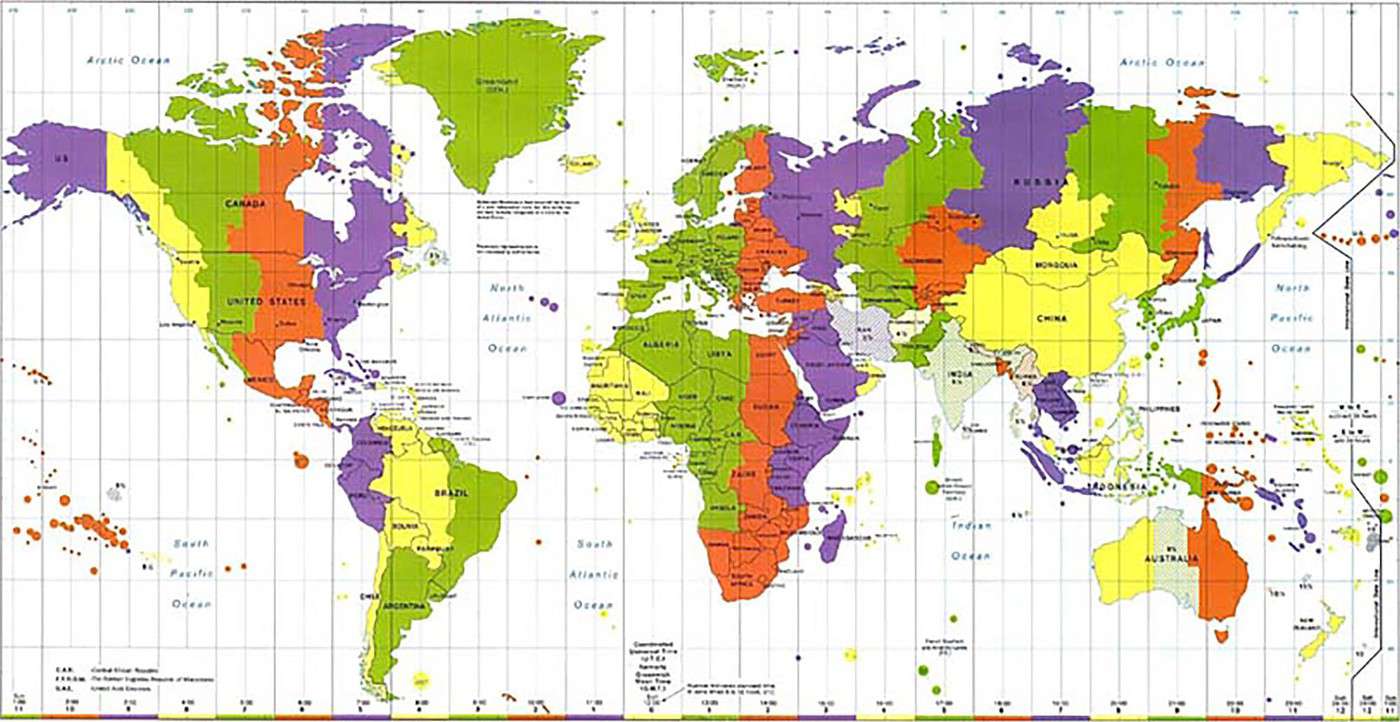
However, not all flights have the same effect depending on the destination. Traveling north or south, regardless of distance, won’t cause major issues (the time barely changes or doesn’t change at all). On the other hand, traveling west—and especially east—with a time difference of four or more time zones (crossing the Atlantic or flying to India) disrupts our internal clock for a few days to a few weeks, depending on the individual.
Fatigue, digestive problems, and sleep disturbances are the main symptoms, often worsened by changes in habits or different climatic conditions. Currently, no truly effective remedy exists.
Map of different time zones:
A Few Helpful Tips
-# For short round trips of less than 4 days, it’s best to keep your watch set to your home time. Otherwise, adjust your schedule to the destination’s time zone as soon as you board the plane—or even a few days before.
-# Traveling west makes adaptation easier, especially if you go to bed at the local time, as you’re following the sun. The first day will be longer, so you’ll fall asleep faster.
-# Traveling east, however, is easier to handle by waking up at the local time. Still, the first day or night will be shorter, so the effects will be more pronounced than when traveling west.
-# Just like with flight anxiety, avoid overeating or consuming stimulants such as tobacco, alcohol, or coffee.
-# Also, try to avoid sleeping pills and other medications to better follow your natural rhythm.
-# Getting sunlight upon arrival and limiting physical activity for the first 24 to 48 hours helps with recovery.
-# If you’re on continuous medication, don’t switch to the local time abruptly due to the risk of over- or under-dosing.
-# Finally, it’s useful to know that sleep consists of roughly 90-minute cycles, so you don’t need 8 hours of sleep to feel rested. Sleeping a whole number of cycles—even a short one—without waking up mid-cycle is always better than trying to sleep a lot and waking up in the middle of a cycle.