last edited Dec 11, 2019
Other Practical Information for Mexico
Location Map of Mexico
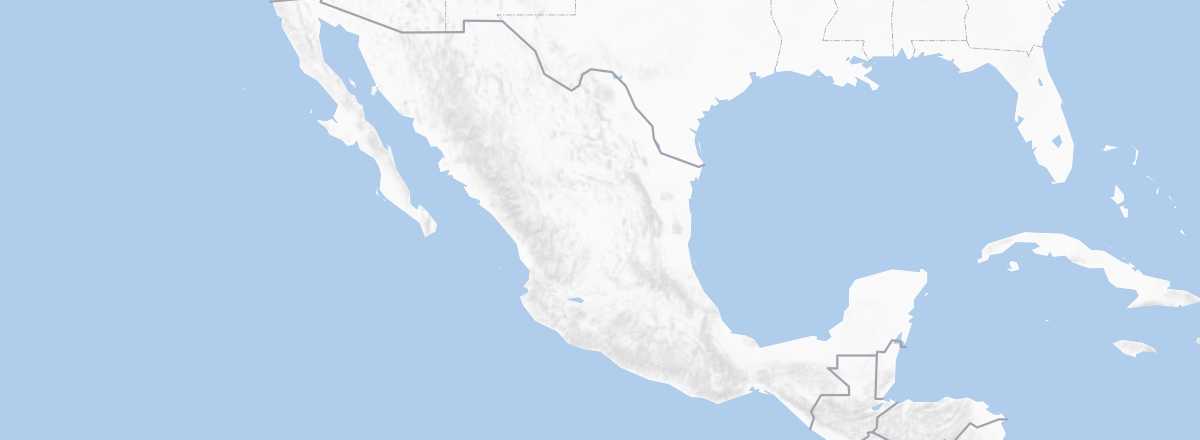 Mexico
Open the interactive map
Mexico
Open the interactive map
Luggage and Equipment to Bring
For coastal areas and beach resorts, pack lightweight clothing year-round, plus a sweater for evenings or air conditioning. For the central regions and mountains, warmer clothes are recommended. Don’t forget sun protection and rain gear (even in the dry season), as well as sturdy walking shoes if you plan to hike.
Communications
Phone
International dialing code: (00 +) 52.
To call Mexico: dial 00 52, then the area code, then the 7- or 8-digit local number. To call France from Mexico: dial 00 33 followed by the French number without the initial zero.
International calls can be expensive, especially from hotels. Instead of payphone booths (which use prepaid cards), look for specialized shops where calls are cheaper.
Internet
Internet is widely available in Mexico, as is Wi-Fi in many public places and hotels of all categories. In short, you won’t have much trouble finding a free or low-cost connection, especially in tourist areas.
Post offices are open Monday to Friday from 8:00 AM to 4:00 PM. They sell stamps. Allow 2 to 3 weeks for mail to reach Europe.
Time Difference
Reference time: .
Since February 2015, Mexico has had four time zones instead of three, ranging from GMT-5 to GMT-8. However, the capital’s time is the reference, as it covers the largest part of the country and most of the population.
Depending on where you are or where you’re going, you’ll need to account for the time difference. Since daylight saving time isn’t observed everywhere in Mexico, and since 2015, Quintana Roo (Cancún, etc.) has switched time zones—unlike neighboring Yucatán (Mérida, Chichén Itzá)—things can get a bit complicated.
Pacific Time
Local time (Tijuana): .
This time zone applies to the Baja California peninsula but only in the state of Baja California, not Baja California Sur, which follows the neighboring time zone. The main city is Tijuana, on GMT-8 with daylight saving time. This means 9 hours behind France, give or take a few days during the time changes, year-round.
"Northwest" Time
Local time (Chihuahua): .
Covers Baja California Sur and the states of Chihuahua, Nayarit, Sinaloa, and Sonora. The main city is Chihuahua, on GMT-7 with daylight saving time—except in Sonora, which follows neighboring Arizona’s single time zone. So, except for Sonora, there are 8 hours behind France, give or take a few days during the time changes, year-round.
"Central" Time
Local time (Mexico City): .
This is the capital’s time and the time for most of the country, serving as the national reference with daylight saving time. It’s GMT-6, meaning 7 hours behind France, give or take a few days during the time changes, year-round.
Quintana Roo Time
Local time (Cancún): .
Since February 1, 2015, the state of Quintana Roo (Cancún, Cozumel, Riviera Maya, etc.) has aligned with GMT-5, including daylight saving time, primarily for tourism reasons—to accommodate cruise passengers and visitors from the U.S. East Coast or Québec, eliminating the time difference. However, neighboring Yucatán hasn’t adopted this change, so there’s now a one-hour gap to consider when traveling, for example, from Cancún to Chichén Itzá. Otherwise, it’s GMT-5, meaning 6 hours behind France, give or take a few days during the time changes, year-round.
Electricity
127 V (60 Hz) with "American" plugs (officially types A and B), so you’ll need an adapter for French plugs.
Opening Hours
Opening hours are quite flexible and not strictly regulated by law for private businesses. In cities, you’ll find a wide range of schedules, including supermarkets open 24/7.
Laundromats
Local Tourist Offices
Mexico’s Ministry of Tourism (SECTUR) manages information points in major tourist spots and cities.
Weights and Measures
Mexico uses the metric system, just like France. Weight is also measured in kilograms.
French Language Use
While English is widely spoken in tourist areas and beyond, French is not. It’s limited to a few beach resorts in Riviera Maya that attract a Francophone audience. In short, it’s best to have some Spanish—or at least English—basics for independent travel in the country.