last edited Dec 11, 2019
Other Practical Information for New England
Location Map of New England
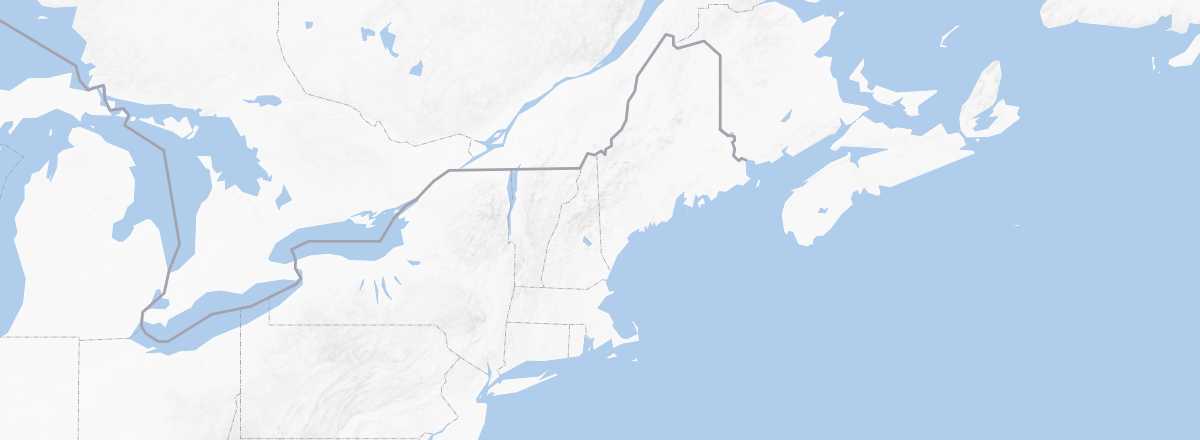 New England
Open the interactive map
New England
Open the interactive map
Packing and Equipment to Bring
While lightweight clothing is an option in summer, including a light sweater, the rest of the year—and especially in winter—requires appropriate preparation. Don’t forget sun and rain protection (regardless of the season), mosquito and midge repellent (especially in May-June during hikes), and sturdy shoes if you plan to go trekking.
Budget
Precautions
New England is one of the safest regions in the United States, though crime and delinquency do exist, particularly in cities. In short, with basic travel precautions, risks are minimal. There are also no major health "dangers" compared to other parts of the country.
That said, nature and the climate in the region can be challenging. More than crime or health risks, these are what you’ll need to watch out for—from harsh winters to vast forests where it’s easy to get lost. As for wildlife, the chances of encountering a venomous snake or a bear are slim (they tend to avoid humans). However, be cautious of moose, which may cross the road while you’re driving.
Consulates
Among the few countries with consular offices in New England (Boston) that can assist in case of problems are Belgium, Switzerland, France, and Canada.
- Belgium: 1 Lincoln St 27F, Boston. Tel.: (+1 617) 779 8700.
- Canada: Three Copley Pl Ste 400, Boston. Tel.: (+1 617) 262 3415.
- France: 31 Saint James Ave, Park Square Bldg Ste 750, Boston. Tel.: (+1 617) 832 4400.
- Switzerland: 420 Broadway, Cambridge. Tel.: (+1 617) 876 3076.
Time Difference
Local time: .
Like the entire Atlantic coast (or Montreal), New England follows "Eastern Time." This means GMT-5, which is a 6-hour difference from France, both in summer and winter.
Opening Hours
Laundromats
Local Tourist Offices
French Language Use
While English is the official language of New England’s states and Spanish is also present (though less so than elsewhere in the U.S.), French is not entirely absent from the region. It is the everyday language of 2% of the population and is spoken far more in border areas with Quebec (20% Francophones) or among the 15% of New Englanders of French, Acadian, or French-Canadian descent who still speak their ancestors’ language to some degree.