last edited Dec 11, 2019
Overview of Belarus
Location Map of Belarus
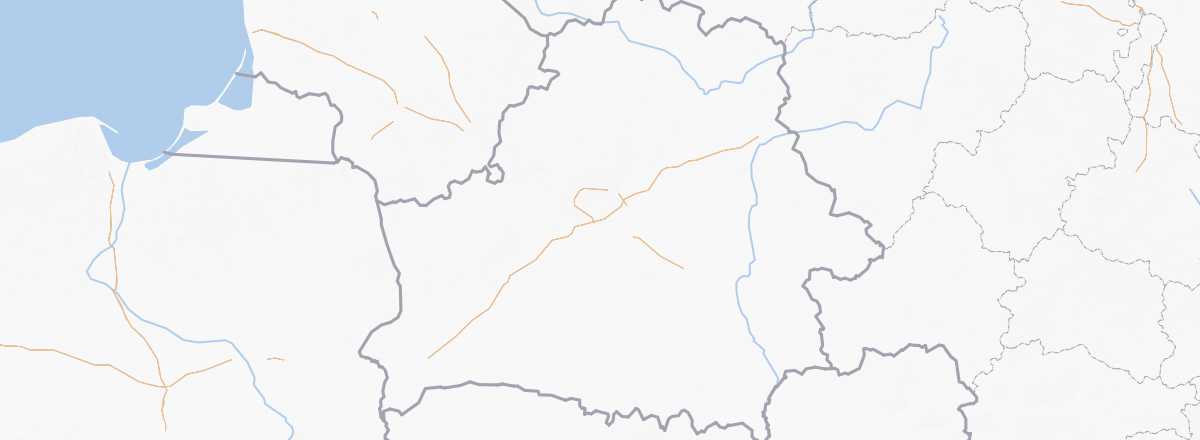 Belarus
Open the interactive map
Quick Overview
Key Facts
- Type of place: country.
- Location: between Poland, the Baltic States, Russia, and Ukraine, with no sea access.
- Latitude/longitude: 53.55' N, 27.33' E.
- Local time:
- Capital: Minsk.
- Nature of the state: Presidential republic (in reality, a dictatorship).
- Official languages: Russian and Belarusian.
- Currency: Belarusian ruble.
- Population: 9,527,543 inhabitants (2018)
- Area: 207,600 km².
- Density: 46 inhabitants/km².
- Highest point: Mount Dzerzhinsky (345 m).
- Lowest point: Neman River (90 m).
- Coastline: 0 km; no maritime outlet.
- Driving: on the right.
Tourism
Europe’s last dictatorship, entirely dependent on Russia, remains a truly unique and off-the-beaten-path destination. It boasts a certain historical heritage, as well as numerous lakes and forests.
Around one million foreigners visit the country each year (1.106 million in 2017). The overwhelming majority are Russians (82% of arrivals), followed by Baltic, Ukrainian, German, and Polish visitors. French travelers, however, make up no more than 0.4% of visitors—similar to the Swiss.
Travel Essentials
- Destination:
- By air: France-Minsk.
- Entry requirements: passport valid for at least three months beyond the planned return date + visa (in some cases) + medical-repatriation insurance + proof of sufficient funds.
- Currency to bring:
- Exchange rate:
- Daily "backpacker" budget:
- Best for accommodation:
- Best for getting around:
- Risks:
- Best time for climate/crowds/prices:
- Interests (out of ): Nature / ; Adventure ; Culture ; Relaxation/holidays /
Useful Addresses
Socio-Economic Statistics
- "Quality of life": 53/188 (rank in 2018)
- GDP per capita: $18,900 (2017)
- Average monthly income: ()
- Inflation: +6% (2017)
- "Official" unemployment: 0.8% (2017)
- Population below the poverty line: 5.7% (2016)
- Life expectancy: 73.2 years (2018)
- Migration rate per 1,000 inhabitants: 0.7 (2017)
- Population growth: -0.24% (2018)
- Literacy rate: 99.7% (2016)
- Urban population: 78.6% (2018)
- Press freedom: 155/180 (rank in 2018)
- Political regime: authoritarian regime (137/167 in 2018)
Sources: World Bank, Human Development Indicators, RSF, The Economist, The World Factbook