last edited Dec 11, 2019
Overview of Kuwait
Location Map of Kuwait
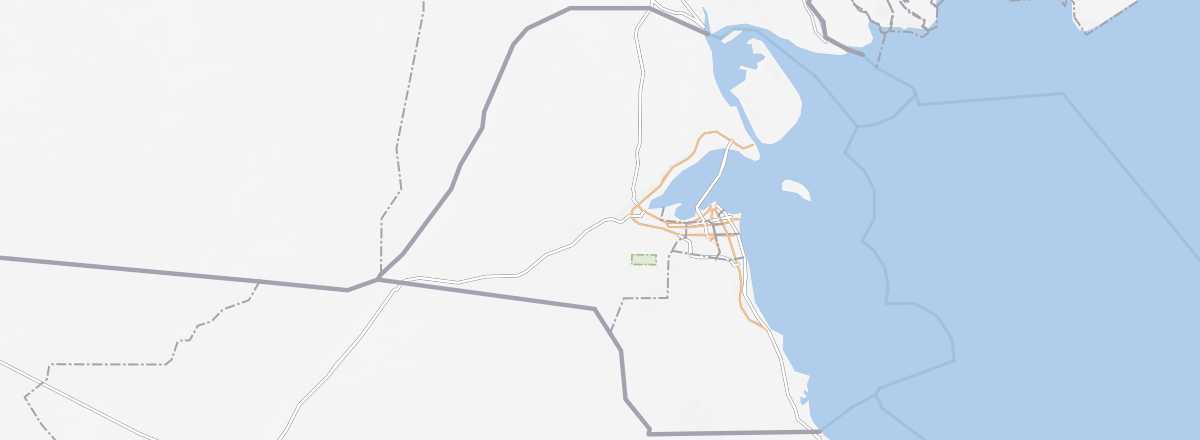 Kuwait
Open the interactive map
Kuwait
Open the interactive map
Quick Overview
Kuwait is located in the north of the Arabian Peninsula, on the Persian Gulf. The country's unique feature is that it has no rivers or lakes within its territory; its only water source comes from the Persian Gulf.
Key Facts
- Type of place: country.
- Location: on the Persian Gulf, between Iran and Saudi Arabia.
- Latitude/longitude: 29°22' N, 47°58' E.
- Local time:
- Capital: Kuwait City.
- Nature of the state: constitutional monarchy.
- Official language: Arabic.
- Currency: Kuwaiti dinar.
- Population: 2,916,467 inhabitants (2018).
- Area: 17,818 km².
- Density: 164 inhabitants/km².
- Highest point: 306 m.
- Lowest point: sea level.
- Coastline: 499 km.
- Driving: on the right.
Tourism
"Forgotten" since the end of the first Gulf War, Kuwait is hardly a tourist destination (fewer than 200,000 visitors per year), except for the large number of nationals from neighboring countries coming to do business in Kuwait City’s commercial malls. Beyond that, there are very few other points of interest...
Essentials for Travel
- Destination: for beginner travelers.
- By air: France-Kuwait City.
- Entry requirements: passport valid for at least 6 months after entry date + visa on arrival.
- Currency to bring:
- Exchange rate:
- Daily "backpacker" budget:
- Best for accommodation:
- Best for getting around:
- Risks:
- Best time for climate/crowds/prices:
- Interests (out of ): Nature ; Adventure ; Culture ; Relaxation/Holidays
Useful Addresses
Socio-Economic Statistics
- "Quality of life": 56/188 (rank in 2018)
- GDP per capita: $65,800 (2017)
- Average monthly income: ()
- Inflation: +1.5% (2017)
- "Official" unemployment: 1.1% (2018)
- Population below poverty line: ()
- Life expectancy: 78.3 years (2018)
- Migration rate per 1,000 inhabitants: -2.4 (2017)
- Population growth: +1.38% (2018)
- Literacy rate: 96.3% (2016)
- Urban population: 100% (2019)
- Press freedom: 105/180 (rank in 2018)
- Political regime: authoritarian regime (116/167 in 2018)
Sources: World Bank, Human Development Indicators, RSF, The Economist, The World Factbook