last edited Aug 27, 2020
Backpack
Contributionsversion #2created Aug 27, 2020Report this pageLatest contributions in this guideContributors to this guide
Location Map of Destinations
 Destinations
Open the interactive map
Destinations
Open the interactive map
Evolution
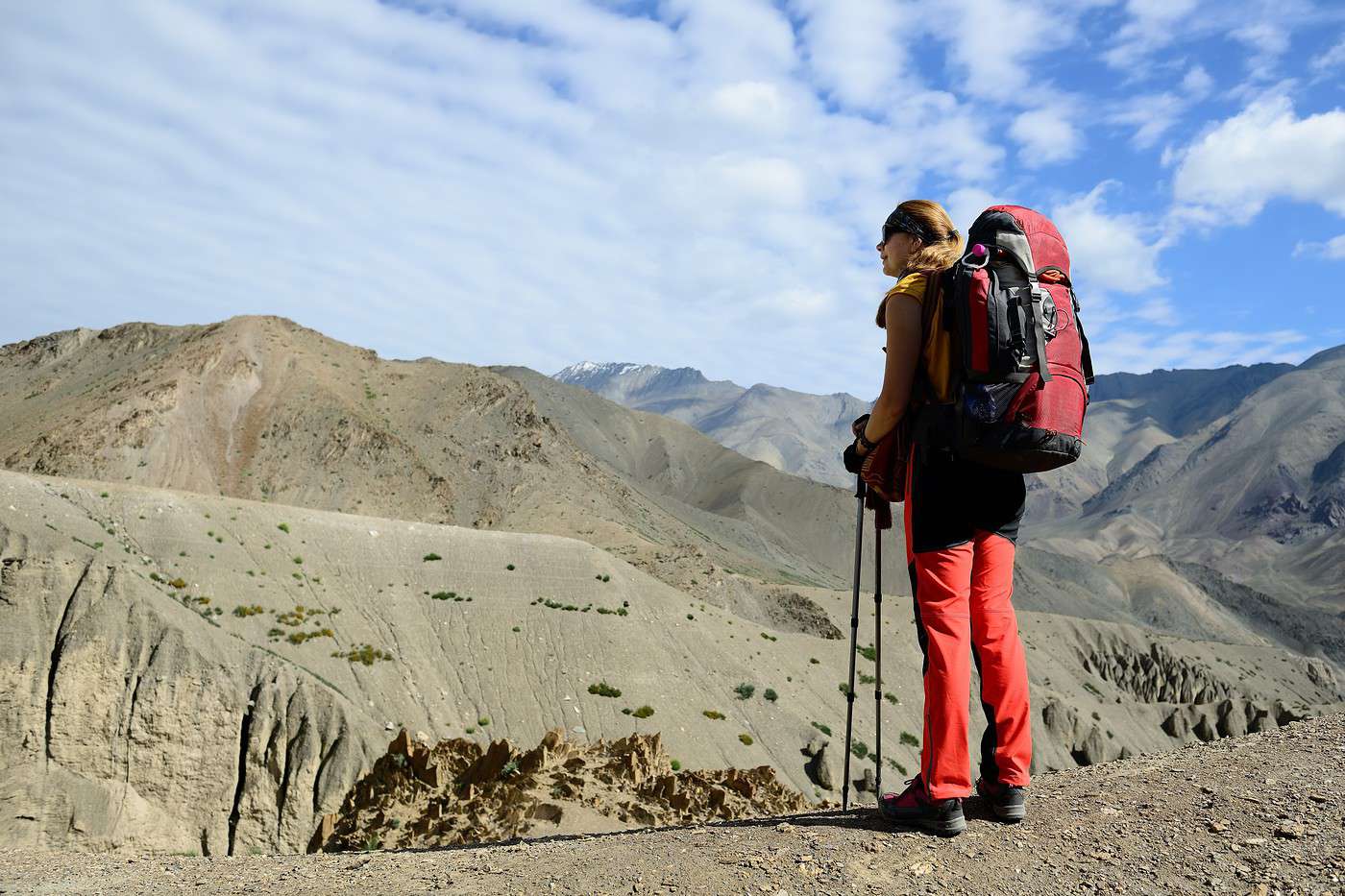
Like many products, backpacks have evolved significantly over time. No longer resembling the "old-style" (military-style) bag, they are now increasingly lightweight and better adapted to carrying and the anatomy of their owners (choose based on your height or the curve of your back), including various options depending on the model. The one-size-fits-all backpack of the past has been replaced by several ranges designed for specific activities (hiking, mountaineering, walking, etc.).
Materials have also changed. Currently, almost all backpacks are made from waterproof nylon. They are more durable than traditional cotton canvas and, above all, much lighter. In case of rain, nylon does not absorb water, which again saves weight.
Different Categories
The backpack is the companion of almost every traveller, so it’s worth choosing wisely...
One thing many travellers still overlook is that there is no longer just one category of backpacks—instead, there are around ten, each designed for a specific audience and use. So, it’s best to choose accordingly...
- "Walking" and "city or strolling" backpacks
- "Camping-hiking" backpacks
- "Hiking" and "mountaineering" backpacks
- "Suitcase-style" backpacks
- Other categories: "child" backpacks, "ladies'" backpacks, "sports" backpacks, frame backpacks, the Carrix
Capacity
After the type of backpack, capacity is the second criterion to consider when choosing. Broadly speaking, backpacks can be divided into four capacity levels:
Litres
15 to 30 litres
This is what you’ll find in the "walking," "city," and "strolling" categories, often used as a small secondary bag while travelling.
Generally, they are roughly 30 to 50 cm tall and weigh between 300 g and 1 kg depending on capacity.
30 to 45 litres
This capacity is found in almost all categories (up to 40 litres for "walking, strolling," or "sports"). A good amount of space, freedom of movement, and portability for everyone make it ideal for travelling light and keeping your belongings with you at all times (transport, sightseeing).
Average characteristics: 45 to 60 cm tall; 600 g to 1.7 kg.
45 to 60 litres
More capacity but less freedom in the "hiking," "mountaineering," or "camping-hiking" categories. This is also the base volume for "suitcase-style" backpacks.
Average characteristics: 55 to 70 cm tall; 1.5 kg to 2.2 kg.
60 litres and above
A capacity for "mountaineering" and "hiking" backpacks, but really intended for this kind of use—self-sufficient trips with specific gear, not just day trips. It’s also a volume found in many "suitcase-style" backpacks, which can go up to 80 litres. So, not really recommended for a "classic" trip given the associated characteristics (size, weight...).
Average characteristics: 60 cm to 1 m tall; 2 kg to over 3 kg.
Litres-to-weight ratio
There are no hard rules, as it obviously depends on the contents, but a well-packed 60-litre backpack (excluding what you might carry outside it) often corresponds to a load of roughly 15 kg. A 45-litre backpack weighs less than 10 kg, while a 70/80-litre one can easily exceed 20 kg. All this to say that no matter how much your backpack weighs, you’ll need to be able to carry it.
So, choose according to your abilities—don’t always go for the largest capacity, or at least carefully select what goes inside. Obviously, the more weight you have to carry or the longer you’ll be carrying it, the more important it is to have a properly packed and well-designed backpack.
Which capacity to choose?
Here too, consider what you’ll be doing (planned activities?), your needs (self-sufficiency, specific gear?), your preferences (what you’d like to bring), and your carrying capacity (weight). In many cases, 60 litres is more than enough—even 40/45 litres for those who want to travel light.
All Kinds of Options
Compartments, pockets, and other features available as options depending on the backpack model, which may or may not prove useful...
- Waist belt, shoulder straps, straps, harness
- Compartments
- Flap
- All kinds of pockets
- Ice axe, trekking pole, ski attachments
- Sleeping bag, sleeping mat, tent attachments
- Compression straps
- Handles
- Rain cover
Additional Accessories for Your Backpack
Beyond what your backpack already offers.
Reinforcements and Protection
Reinforcements
For entry-level models or those that don’t seem very sturdy, you can always reinforce the seams and other sensitive areas. However, it might be better to spend a little more and get a good-quality base model. On the other hand, for those who will be carrying heavy loads for extended periods, adding a chest strap (under 10 €) if it doesn’t already have one can be useful. This helps keep the shoulder straps snug.
Weather and Transport Protection
Rain, dust, or dirt protection—various covers are sold separately (from a few euros to around fifty). These can be useful, especially if you’re walking, as long as you choose wisely. So, avoid covers that are too heavy, bulky, or don’t allow for carrying.
More simply, you can also opt for a backpack with built-in protection (see "options"), or as a last resort, use a rain poncho that covers the backpack (not always practical), or even large garbage bags or "construction debris" bags.
Security
Against Theft or Slashing
To prevent slashing, some people install a small protective mesh or netting inside or outside the backpack—somewhat effective but also a bit cumbersome. As for commercially available systems ("packsafe"), they can be a bit expensive. For those travelling with a small backpack, the best solution when there’s a risk is to wear it in front of you.
To prevent theft, especially in transport, the best solution is to use a padlock with a long cable to secure the backpack and attach it to a fixed point.
Reflective Strips
Cyclist- or police-style reflective strips to attach to your backpack. Helps you be seen at night by vehicles.
Miscellaneous
Labelling
A small detail that can be useful in case of loss, especially on flights. In addition to your contact details (especially your email), if you know the address of the hotel where you’ll be staying, don’t hesitate to include it. With a bit of luck, your luggage will be sent directly there.
Wheels
Except in the "suitcase-style" category, backpacks don’t have wheels (unlike suitcases or travel bags, which are designed for them). But nothing stops DIYers from installing wheels and a handle to pull the backpack. That said, the setup has limited usefulness for backpacks.
What to Add?
Those planning long hikes can always opt for transport/rain protection. But rather than adding it to the backpack, it’s better to choose a model that already has it built in. For the rest, a cable lock, reflective strips, and a good luggage tag can complete the kit.
In Conclusion
The most important thing when choosing a backpack is knowing what you’ll use it for...
In short, for a "normal" trip, regardless of duration, backpacks up to 60 litres are more than sufficient. There’s no need to burden yourself with bulky backpacks, which can quickly become a source of problems, especially in local transport.
Similarly, there’s no need to invest in the latest, most expensive, or high-end backpack. Even if it’s recommended to "feel" your backpack on your shoulders, a basic model (including from a supermarket) with useful options will always do the job—with the added advantage that you’ll feel less bad if it gets mistreated in transport or by bad weather.