last edited Dec 11, 2019
Health and Safety in Cuba
Location Map of Cuba
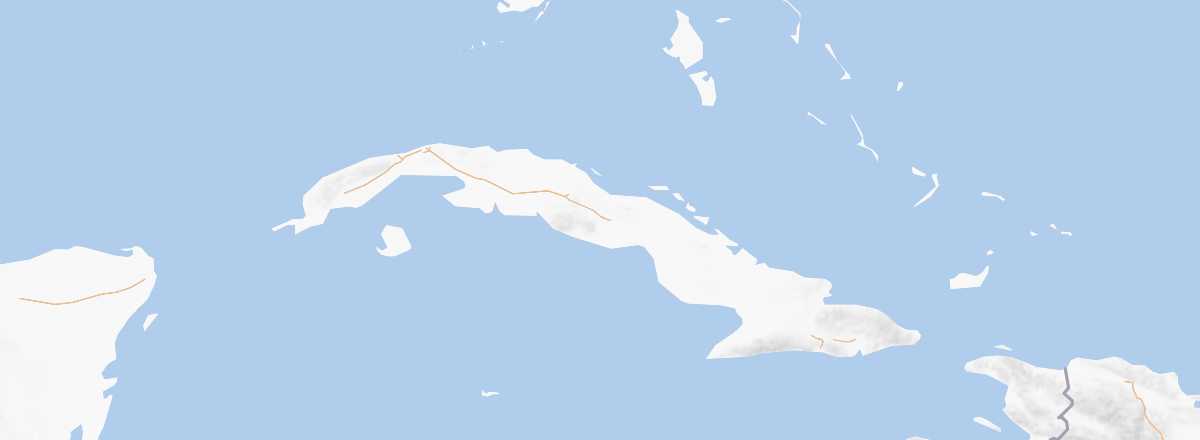 Cuba
Open the interactive map
Official Recommendations
In France, both for individuals and professionals, the "travel advice" from the Ministry of Foreign Affairs regarding precautions for each country has legal value. A similar online travel advice system exists in several countries:
Health
Diseases
Cuba does not pose major health problems, although dengue fever and, more recently, chikungunya—both spread by certain mosquitoes—are present (there is no malaria, however). To protect yourself, the best approach is to use a good repellent, cover your arms and legs at dusk when mosquitoes are most active, and bring an impregnated mosquito net if you’re sleeping in a place without air conditioning or airflow.
There are also a few cases of parasitic diseases found in contaminated water or soil, as well as very occasional and localized outbreaks of cholera. The best prevention, in addition to washing your hands regularly, is to avoid dirty or stagnant water and unclean surfaces in public places.
Hygiene
Good personal and especially food hygiene is essential if you want to "eat local." So avoid tap water, which isn’t always safe to drink, and dishes or foods that don’t seem fresh—if only to prevent traveler’s diarrhea. There’s also a common food poisoning in the Caribbean called ciguatera, caused by eating certain toxic coral fish. Of course, remember to stay hydrated and protect yourself from the sun in the hottest regions or seasons, and don’t forget to wash your hands regularly.
Healthcare Facilities on Site
Cuba has a good healthcare system with many skilled professionals and facilities—one of the successes of the Cuban system. The only major drawback is the occasional shortage of (certain) medications, so it’s wise to bring any essentials you might need, especially for ongoing treatments.
Medical care for tourists is paid, unlike for Cubans, for whom it’s free. However, Cuban authorities require all visitors to have medical insurance covering health expenses and repatriation. It’s mandatory to have proof of this; otherwise, you may have to purchase a local policy upon arrival.
Safety
Crime and Delinquency
While not widespread, petty crime does exist in Cuba and occasionally affects visitors, primarily in the capital and Santiago. As always, it’s best to stay cautious: avoid walking alone in certain neighborhoods at night, don’t flaunt valuables, and use hotel safes. That said, with basic common sense and precautions, you can still enjoy a peaceful stay. The police are also vigilant.
Sex Tourism
Cuba is one of the few destinations where prostitution—and, by extension, sex tourism—is prevalent (along with STIs and HIV), affecting both men and women. Local law imposes heavy prison sentences of up to 25 years for any relations with minors. Additionally, laws in countries like France, Belgium, and Canada allow prosecution of their citizens upon return if evidence of relations with a minor abroad is found.
Scams and "Tourist" Harassment
While Cuba is relatively safe in terms of "traditional" crime and delinquency, it’s also a destination where small tourist scams are common, largely due to the local standard of living. Those known as jineteros specialize in extracting money from visitors in any way possible.
In general, be wary of "overly helpful" people around hotels, airports, beaches, or tourist spots. Scams range from credit card fraud and selling "fake" cigars to invitations that lead to exorbitant bills. Then there are "romantic encounters," affecting both men and women, where many experiences show that the Cuban party’s goal is often to extract as much money as possible—or even to secure a marriage for emigration...
Socio-Political Issues
There are no real risks in this area.
Climate and Nature
Beyond the sun and the usual precautions for swimming in the sea, the main natural risk comes from hurricanes and their direct consequences, such as flooding or landslides. While cyclones are less powerful than in many other Caribbean islands, they’re most common between September and October, though the season extends beyond that. In any case, authorities take steps to inform and protect the population.
Animals
In addition to mosquitoes and other biting insects (like jejenes), which require repellent, be cautious on beaches or near rivers—wear shoes or use a towel to avoid contact with sand or soil where parasites may lurk. As for stray dogs, some may carry rabies.
Foreign Consulates on Site
If you run into trouble while traveling abroad, your country’s consular services can assist you. Note that if you’re an EU citizen and your country isn’t represented, you can turn to any other EU member state’s consulate.
France
Consulate General: calle 14, n° 312 - entre 3ra y 5ta - Miramar Playa, Havana. Tel. +53 7 201 3121.
Belgium
Consulate General: Calle 8 n 309/3ra y 5ta Ave, Miramar Playa, Havana. Tel. +53 7 204 2410. In case of emergency: +53 5 280 5009.
Canada
Consulate General: calle 30, n° 518 - esquina a 7ma - Miramar, Havana. Tel. +53 7 204 2516.
There’s also a Canadian consulate in Guardalavaca (tel.: +53 24 430 320) and in Varadero (tel.: +53 45 612 078).
Switzerland
Consulate General: 5ta Avenida no. 2005, entre 20 y 22, Miramar Playa, Havana. Tel. +53 7 204 2611.