last edited Dec 11, 2019
Health and Safety in Haiti
Location Map of Haiti
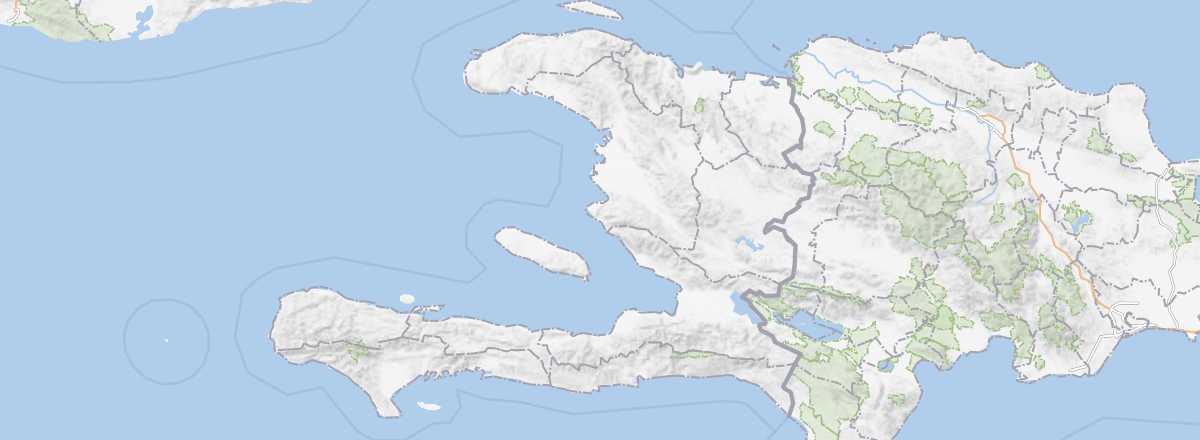 Haiti
Open the interactive map
Official Recommendations
In France, both for individuals and professionals, the "travel advice" from the Ministry of Foreign Affairs regarding precautions for each country has legal weight. A similar online travel advice system exists in several countries:
Health
As always, it's best to be up to date with your vaccinations, even if nothing is officially required to enter the country.
Diseases
While Haiti doesn’t have a monopoly on parasitic diseases in the region, it does face a number of them. Dengue, chikungunya, filariasis, and malaria—all spread by mosquitoes—as well as leptospirosis (a disease found in contaminated water or soil) add to other endemic issues like cholera and even tuberculosis. In short, beyond basic hygiene, it’s wise to be prepared and vigilant: start with a good repellent, cover your arms and legs at dusk when insects bite the most, and bring an impregnated mosquito net if you’re sleeping in a place without air conditioning or airflow.
Hygiene
Good personal and especially food hygiene is even more important here than elsewhere. Avoid tap water, which isn’t safe to drink, and food that doesn’t seem fresh—if only to prevent traveler’s diarrhea. There’s also a common food poisoning in the Caribbean called ciguatera, caused by eating certain toxic coral fish. Stay hydrated and protect yourself from the sun during the hottest times, and don’t forget to wash your hands regularly.
Healthcare Facilities on Site
Most doctors and hospitals are concentrated in the capital. Healthcare facilities across the country are generally limited in number and resources, though a few private clinics are more operational. In short, it’s useful to have good travel insurance.
It’s worth noting, however, that on the other side of the border, in Dominican Republic, local facilities—especially private ones—are fairly good and well-equipped to handle major issues, though care remains (very) expensive with a system increasingly resembling the American model.
Safety
Without being paranoid, it can be helpful to check the current situation if you plan to visit certain areas in the country.
Crime and Delinquency
This has been a long-standing issue in Haiti, though the situation varies by location and even by time. As is often the case, cities—particularly Cap-Haïtien and Port-au-Prince—pose the highest risks. It’s recommended to stay alert, avoid walking around at night, steer clear of working-class neighborhoods or slums, not flaunt wealth, be very careful when withdrawing money, keep windows and doors locked if you’re in a car, and follow all the usual precautions to avoid trouble. If you’re attacked, it’s crucial not to resist.
Elsewhere, risks are lower, though the islands of La Gonâve and La Tortue also require certain precautions. More broadly, the entire Haiti-Dominican Republic border area is known for trafficking and smuggling of all kinds, sometimes violent. However, crossing between the two countries by land is still possible without difficulty. Of course, it’s also best to avoid wild camping and take all necessary precautions when hiking.
In contrast, the privatized "beach resort" of Labadie run by cruise companies is hyper-secure. As for Pétionville, the upscale and lively suburb of the capital (where it’s recommended to stay), it has long been trouble-free but is now also experiencing rising crime (especially at night).
Scams and "Tourist" Harassment
Socio-Political Risks
Due to its turbulent history, Haiti has experienced—and still faces—social and political unrest that sometimes turns violent. Beyond avoiding crowds during such events or protests, it’s wise to stay informed about the current situation in the areas you plan to visit, especially if roadblocks are occurring, as they sometimes do.
Climate, Nature, Animals
Foreign Consulates on Site
If you run into trouble while traveling abroad, your country’s consular services can assist you. It’s also worth knowing that if you’re an EU citizen and your country isn’t represented, you can turn to any other EU member state’s representation.
France
Consulate General: 51 rue Capois, BP 1312, Port-au-Prince. Tel: +509 29 999 000. In case of emergency: +509 31 904 111. France also has two honorary consulates in Cap-Haïtien and Jacmel.
Belgium
There is no official Belgian representation in Haiti, which is covered by the embassy in Jamaica. However, there is an honorary consulate at 5 Allée des Acajous, Delmas 95, Pétionville. Tel: +509 39 006 195.
Canada
Consulate General: Route de Delmas, between Delmas 75 and 71, Port-au-Prince. Tel: +011 (509) 28 129 000.
Switzerland
Consulate General: 12 rue Ogé, 3rd floor, Place Saint-Pierre, 6140 Pétionville. Tel: +41 31 322 1846.