last edited Feb 17, 2026
Health and Safety in Senegal
Location Map of Senegal
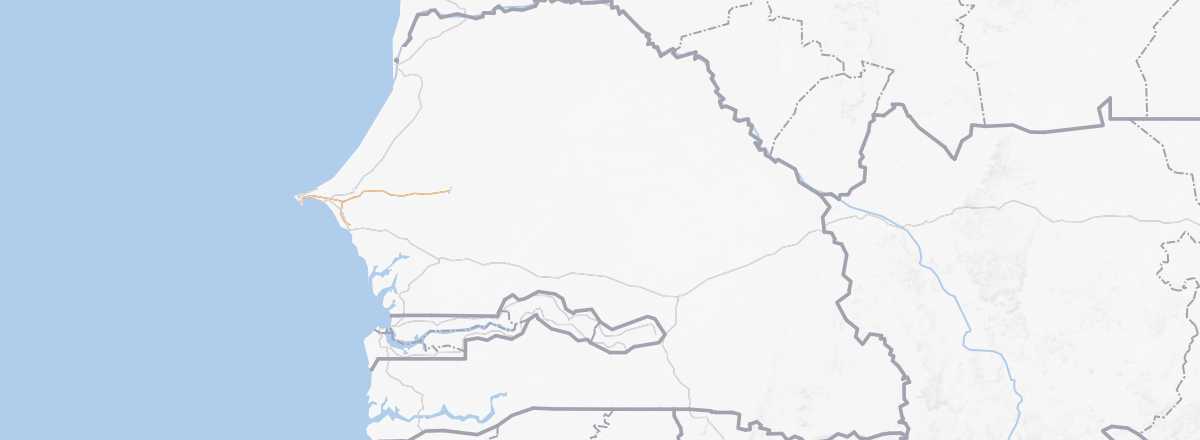 Senegal
Open the interactive map
Official Recommendations
In France, both for individuals and professionals, the "travel advice" from the Ministry of Foreign Affairs regarding precautions for each country has legal value. A similar online travel advice system exists in several countries:
Health
Diseases
Like many countries in tropical zones, health issues in Senegal primarily revolve around food hygiene and mosquito-borne diseases. Protect yourself with repellents and appropriate clothing, especially in the evening. Cases of malaria, dengue, and chikungunya—all transmitted by mosquito bites—are regularly reported in certain parts of the country.
Beyond these, Rift Valley fever, typhoid, meningitis, yellow fever, and even cholera are also locally or periodically detected. However, for visitors, with basic hygiene and precautions, these risks remain (very) low. That said, while no vaccines are mandatory (except for yellow fever if arriving from an infected area), staying up to date is always preferable. Still, travelers’ diarrhea, or "turista," is a common risk if you're not careful.
Hygiene
Good personal and especially food hygiene is essential. Avoid tap water, ice, and dishes or foods that don’t appear fresh, as well as swimming in freshwater. Also, remember to stay hydrated and protect yourself from the sun in the hottest regions or seasons.
Local Healthcare Facilities
In the capital and a few major cities, you’ll find both public and private (expensive) healthcare facilities. However, as you move away from main areas, conditions can deteriorate, even though authorities have launched projects to improve the situation. That’s why travel insurance is strongly recommended.
Safety
Crime and Delinquency
While not extreme, crime and delinquency do exist in Senegal. The Dakar metropolitan area is the most affected, requiring a minimum of vigilance. That said, Senegal has the lowest crime rate in West Africa, and incidents are usually property-related rather than violent.
Still, remain cautious: avoid walking alone in certain neighborhoods at night (or even during the day) or on beaches, don’t flaunt wealth, use hotel safes, etc. In case of aggression, don’t resist and always carry "something" to give to attackers.
Drug possession, even in small quantities, and trafficking are punishable by fines and prison sentences. Additionally, Senegal is not very open to homosexuality, which is considered a criminal offense with potential prison time.
Scams and "Tourist" Harassment
More annoying than truly dangerous, scams and tourist harassment are common in the country’s most visited areas and the capital. These range from "forced gifts" to demands for payment for unsolicited or imaginary services, as well as taxi scams (unmetered fares). Stay polite but firm to avoid being taken advantage of. Also, beware of "romantic encounters" that are just schemes to extract money.
Socio-Political Risks and Terrorism
Senegal remains far more stable than its neighbors, with fewer socio-political issues, though they do exist and can sometimes escalate. There are also terrorism risks or conflicts, particularly given the complex situation in Casamance and neighboring countries like Mali, where the border area should be avoided. Without being overly cautious, stay vigilant and check local conditions if venturing off the beaten path.
Climate and Nature
The rainy season, from July to October, can cause problems with violent storms blocking roads or flooding parts of cities and villages. If you’re near the coast, be mindful of dangerous marine currents while swimming.
Foreign Consulates in Senegal
If you encounter problems while traveling abroad, your country’s consular services can assist. Note that if you’re an EU citizen and your country isn’t represented, you can contact any other EU member state’s consulate.
France
Consulate General: 1 rue El Hadji Amadou Assane Ndoye, BP 330, Dakar. Tel.: 338 395 262. France also has several honorary consuls in the country.
Other Countries
- Belgium: Consulate General, Av. des Jambaars, BP 524, Dakar. Tel.: 338 894 390.
- Canada: Consulate General, Rue Galliéni, Dakar. Tel.: 338 894 700.
- Switzerland: Consulate General, Rue René N'Diaye, Dakar. Tel.: 338 230 590.