
UNESCO World Heritage Sites
Jordan has five sites inscribed on the UNESCO World Heritage list:
Al-Maghtas (2015)
On the banks of the Jordan River, 10 km from Jericho, this site is a UNESCO World Heritage Site as, according to the Gospels, it is where Jesus is said to have met John the Baptist while he was baptizing there.
On the banks of the Jordan River, 10 km from Jericho, this site is a UNESCO World Heritage Site as, according to the Gospels, it is where Jesus is said to have met John the Baptist while he was baptizing there.
Petra (1985)
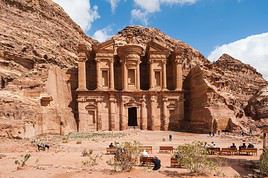
A UNESCO World Heritage Site, this ancient Nabataean city is one of the most extraordinary archaeological sites on the planet.
A UNESCO World Heritage Site, this ancient Nabataean city is one of the most extraordinary archaeological sites on the planet.
Qusair Amra (1985)
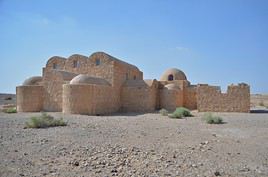
This fortress is the best-preserved of all the Desert Castles and is a UNESCO World Heritage Site.
This fortress is the best-preserved of all the Desert Castles and is a UNESCO World Heritage Site.
Um er-Rasas (2004)
A UNESCO-listed archaeological site featuring ruins from Roman, Byzantine, and early Islamic civilizations.
A UNESCO-listed archaeological site featuring ruins from Roman, Byzantine, and early Islamic civilizations.
Wadi Rum (2011)
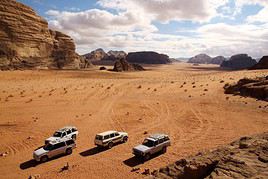
This vast desert in southern Jordan is a UNESCO World Heritage site, celebrated for its stunning landscapes and the historical remnants it houses. A major tourist destination, it is managed by the Bedouins and can be explored on foot, by camel, 4x4, or even hot-air balloon.
This vast desert in southern Jordan is a UNESCO World Heritage site, celebrated for its stunning landscapes and the historical remnants it houses. A major tourist destination, it is managed by the Bedouins and can be explored on foot, by camel, 4x4, or even hot-air balloon.
Cities and Cultural Heritage
Ajlun
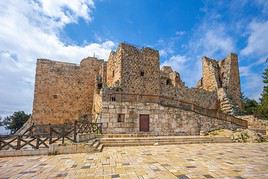
North of Amman, not far from Palestine, Ajlun (or Aljoun) is home to an imposing 12th-century fortress.
North of Amman, not far from Palestine, Ajlun (or Aljoun) is home to an imposing 12th-century fortress.
Al-Maghtas
On the banks of the Jordan River, 10 km from Jericho, this site is a UNESCO World Heritage Site as, according to the Gospels, it is where Jesus is said to have met John the Baptist while he was baptizing there.
On the banks of the Jordan River, 10 km from Jericho, this site is a UNESCO World Heritage Site as, according to the Gospels, it is where Jesus is said to have met John the Baptist while he was baptizing there.
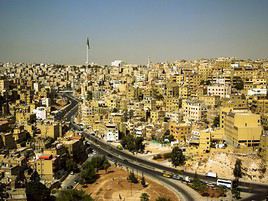
Amman
Jordan’s capital has few tourist attractions compared to the rest of the country—just a handful of remnants from its past, from the Roman era to the present day.
Jordan’s capital has few tourist attractions compared to the rest of the country—just a handful of remnants from its past, from the Roman era to the present day.
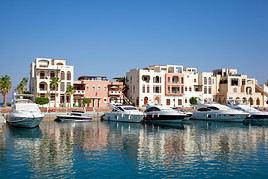
Aqaba
Located on the shores of the Red Sea, this is Jordan’s only port. But it’s primarily a lively city that attracts many visitors for diving and exploring the surrounding area, particularly the Wadi Rum. There’s also a border crossing to reach Eilat in Israel (and continue on to Egypt).
Located on the shores of the Red Sea, this is Jordan’s only port. But it’s primarily a lively city that attracts many visitors for diving and exploring the surrounding area, particularly the Wadi Rum. There’s also a border crossing to reach Eilat in Israel (and continue on to Egypt).
Azraq
A large oasis east of Amman. It features a well-preserved ancient fort that is part of the desert castles, as well as a wetland reserve frequented by migratory birds.
A large oasis east of Amman. It features a well-preserved ancient fort that is part of the desert castles, as well as a wetland reserve frequented by migratory birds.
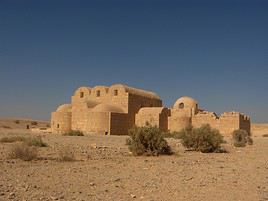
Desert Castles
This is a series of small fortresses in varying states of preservation, dating from the 8th century in the desert toward Iraq. Qusair Amra is the best preserved and is a UNESCO World Heritage site. Others worth visiting include Qasr Kharana, Qasr Mshatta, and Qasr Amra.
This is a series of small fortresses in varying states of preservation, dating from the 8th century in the desert toward Iraq. Qusair Amra is the best preserved and is a UNESCO World Heritage site. Others worth visiting include Qasr Kharana, Qasr Mshatta, and Qasr Amra.
Dana
Perched on a rocky outcrop just a few kilometres north of Petra, this stunning old village is the gateway to the Dana Nature Reserve.
Perched on a rocky outcrop just a few kilometres north of Petra, this stunning old village is the gateway to the Dana Nature Reserve.
Irbid
The second-largest city in Jordan in the far north of the country, it is—or was—primarily a crossing point to nearby Syria or, secondarily, a base for exploring the surrounding area, including the site of Jerash.
The second-largest city in Jordan in the far north of the country, it is—or was—primarily a crossing point to nearby Syria or, secondarily, a base for exploring the surrounding area, including the site of Jerash.
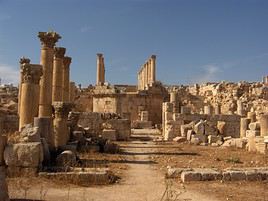
Jerash
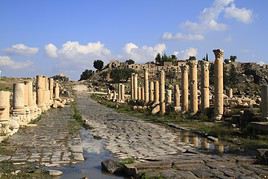
This northern city, 50 km from Amman, is home to one of the most significant and beautiful Roman sites in the Middle East.
This northern city, 50 km from Amman, is home to one of the most significant and beautiful Roman sites in the Middle East.
King Hussein Bridge
Also known as the Allenby Bridge, this is the "border crossing" between Jordan and Israel/Palestine (Jericho) spanning the Jordan River.
Also known as the Allenby Bridge, this is the "border crossing" between Jordan and Israel/Palestine (Jericho) spanning the Jordan River.
Montreal Castle
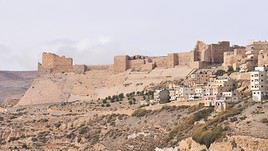
This is an ancient Crusader fortress dating from the 12th century, with imposing ruins located southeast of the Dead Sea.
This is an ancient Crusader fortress dating from the 12th century, with imposing ruins located southeast of the Dead Sea.
Madaba
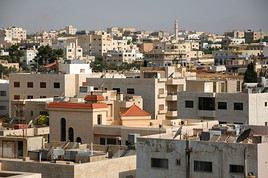
Just next to Amman, the city is often used by travelers as a place to stay instead of the capital. Madaba, a Christian city, is known for its mosaics and Orthodox churches.
Just next to Amman, the city is often used by travelers as a place to stay instead of the capital. Madaba, a Christian city, is known for its mosaics and Orthodox churches.
Petra
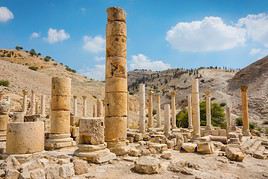
A UNESCO World Heritage Site, this ancient Nabataean city is one of the most extraordinary archaeological sites on the planet.
A UNESCO World Heritage Site, this ancient Nabataean city is one of the most extraordinary archaeological sites on the planet.
Qusair Amra
This fortress is the best-preserved of all the Desert Castles and is a UNESCO World Heritage Site.
This fortress is the best-preserved of all the Desert Castles and is a UNESCO World Heritage Site.
King's Highway
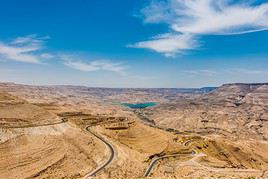
The ancient trade route from Amman to Aqaba offers stunning landscapes and numerous points of interest such as Madaba, the Dead Sea, Wadi Mujib, Petra, and Kerak.
The ancient trade route from Amman to Aqaba offers stunning landscapes and numerous points of interest such as Madaba, the Dead Sea, Wadi Mujib, Petra, and Kerak.
Salt
From its significance on the ancient Amman–Jerusalem route, the city has preserved the remains of a fortress and some architectural traces of its former splendor.
From its significance on the ancient Amman–Jerusalem route, the city has preserved the remains of a fortress and some architectural traces of its former splendor.
Um er-Rasas
A UNESCO-listed archaeological site featuring ruins from Roman, Byzantine, and early Islamic civilizations.
A UNESCO-listed archaeological site featuring ruins from Roman, Byzantine, and early Islamic civilizations.
Natural Heritage
Dead Sea
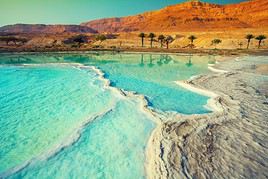
Straddling Israel/Palestine and Jordan, it is the lowest point on Earth (-429 m) and one of the saltiest bodies of water in the world (you float effortlessly). It is also one of the main attractions on both the Jordanian and Israeli sides.
Straddling Israel/Palestine and Jordan, it is the lowest point on Earth (-429 m) and one of the saltiest bodies of water in the world (you float effortlessly). It is also one of the main attractions on both the Jordanian and Israeli sides.
Mount Nebo
This biblical mountain (with its basilica), between Madaba and the Dead Sea, offers a stunning panorama of the region from its 817 m summit.
This biblical mountain (with its basilica), between Madaba and the Dead Sea, offers a stunning panorama of the region from its 817 m summit.
Dana Biosphere Reserve
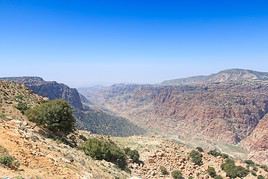
The country's largest reserve offers hiking through stunning landscapes. It is located at the foot of the beautiful old village of Dana.
The country's largest reserve offers hiking through stunning landscapes. It is located at the foot of the beautiful old village of Dana.
Wadi Mujib
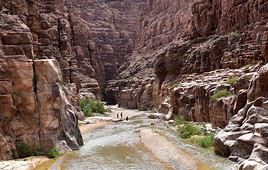
In the mountains overlooking the Dead Sea, Wadi Mujib and its nature reserve offer fantastic landscapes for hikers and thrills for canyoning enthusiasts and similar activities. The area is also known for its many birds, as well as the wolves and hyenas that live there.
In the mountains overlooking the Dead Sea, Wadi Mujib and its nature reserve offer fantastic landscapes for hikers and thrills for canyoning enthusiasts and similar activities. The area is also known for its many birds, as well as the wolves and hyenas that live there.
Wadi Rum
This vast desert in southern Jordan is a UNESCO World Heritage site, celebrated for its stunning landscapes and the historical remnants it houses. A major tourist destination, it is managed by the Bedouins and can be explored on foot, by camel, 4x4, or even hot-air balloon.
This vast desert in southern Jordan is a UNESCO World Heritage site, celebrated for its stunning landscapes and the historical remnants it houses. A major tourist destination, it is managed by the Bedouins and can be explored on foot, by camel, 4x4, or even hot-air balloon.