
Overview
Tourist Sites and Areas
La Condamine
This is Monaco’s bustling, "working-class" shopping district, home to its daily market. You can also see the charming little Sainte-Dévote Church here.
This is Monaco’s bustling, "working-class" shopping district, home to its daily market. You can also see the charming little Sainte-Dévote Church here.
Monte Carlo
This district of the Principality is Monaco's best-known by name. Synonymous with luxury, it is home to the casino, the opera, several palace hotels (including the Hermitage and the Hôtel de Paris), high-end boutiques, and the (public) Larvotto beach.
This district of the Principality is Monaco's best-known by name. Synonymous with luxury, it is home to the casino, the opera, several palace hotels (including the Hermitage and the Hôtel de Paris), high-end boutiques, and the (public) Larvotto beach.
Monaco Rock
This is the name commonly used for Monaco-Ville, which is the oldest part of the Principality. In addition to public buildings (including the Prince's Palace), the district is home to Renaissance-era residences along narrow streets, the cathedral, several gardens, and the Oceanographic Museum.
This is the name commonly used for Monaco-Ville, which is the oldest part of the Principality. In addition to public buildings (including the Prince's Palace), the district is home to Renaissance-era residences along narrow streets, the cathedral, several gardens, and the Oceanographic Museum.
Monuments and Architectural Landmarks
Monte-Carlo Casino
With its terrace, gardens, and remarkable late-19th-century architecture, the casino is one of Monaco’s symbols. While dedicated to gaming (except for Monégasques, who are not admitted), it can also be visited every morning before opening to players.
With its terrace, gardens, and remarkable late-19th-century architecture, the casino is one of Monaco’s symbols. While dedicated to gaming (except for Monégasques, who are not admitted), it can also be visited every morning before opening to players.
Cathedral of Our Lady Immaculate
A beautiful Roman-Byzantine-style building made of white stone, constructed in the late 19th century. This is where the princes and princesses of Monaco are laid to rest.
A beautiful Roman-Byzantine-style building made of white stone, constructed in the late 19th century. This is where the princes and princesses of Monaco are laid to rest.
Chapel of the Visitation
Built in the late 17th century in the Baroque style, the building houses a collection of sacred paintings from the same period.
Built in the late 17th century in the Baroque style, the building houses a collection of sacred paintings from the same period.
Prince's Palace of Monaco
This has been the official residence of the Prince of Monaco since the 13th century. Located on the Rock, this stunning site is partly open to visitors in summer. It’s also in the square facing the palace (Palace Square) where the changing of the guard takes place every day at 11:55 AM.
This has been the official residence of the Prince of Monaco since the 13th century. Located on the Rock, this stunning site is partly open to visitors in summer. It’s also in the square facing the palace (Palace Square) where the changing of the guard takes place every day at 11:55 AM.
Museums
Classic Car Collection
Nearly a hundred vintage vehicles of all ages from major brands (including Formula 1 cars from the Grand Prix) originally belonging to the princely family.
Nearly a hundred vintage vehicles of all ages from major brands (including Formula 1 cars from the Grand Prix) originally belonging to the princely family.
Museum of Prehistoric Anthropology
Located in Monaco’s Exotic Garden, the museum houses prehistoric artifacts found in the Principality and surrounding regions.
Located in Monaco’s Exotic Garden, the museum houses prehistoric artifacts found in the Principality and surrounding regions.
Monaco Naval Museum
This is a collection of over 250 ship models, along with scale models, paintings, and maritime objects from all eras.
This is a collection of over 250 ship models, along with scale models, paintings, and maritime objects from all eras.
Oceanographic Museum of Monaco
Over a century old, this is one of the world's most famous "museums of the sea". It features 90 tanks and hundreds of fish species, along with collections of art and crafts related to the sea, all housed in a grand building majestically overlooking the Mediterranean.
Over a century old, this is one of the world's most famous "museums of the sea". It features 90 tanks and hundreds of fish species, along with collections of art and crafts related to the sea, all housed in a grand building majestically overlooking the Mediterranean.
Museum of Stamps and Coins
This is the private collection of Prince Rainier III of Monaco, who founded the museum to showcase the Principality's productions.
This is the private collection of Prince Rainier III of Monaco, who founded the museum to showcase the Principality's productions.
New National Museum of Monaco
This is the art museum of the Principality, housed in two charming Belle Époque villas (villas Sauber and Paloma). Its aim is to showcase Monegasque achievements and promote contemporary creation through temporary exhibitions.
This is the art museum of the Principality, housed in two charming Belle Époque villas (villas Sauber and Paloma). Its aim is to showcase Monegasque achievements and promote contemporary creation through temporary exhibitions.
Parks and Gardens
Monaco Exotic Garden
Perched on a cliffside above the sea, this spot is home to nearly a thousand species of semi-desert plants, giving it a unique character. At the foot of the cliff, the Observatoire Cave, with its stalagmites, stalactites, and other formations, is well worth a visit.
Perched on a cliffside above the sea, this spot is home to nearly a thousand species of semi-desert plants, giving it a unique character. At the foot of the cliff, the Observatoire Cave, with its stalagmites, stalactites, and other formations, is well worth a visit.
Japanese Garden of Monaco
This is a small garden recreated in the Japanese style, featuring a hill, waterfalls, a stream, a beach, and other elements conducive to meditation.
This is a small garden recreated in the Japanese style, featuring a hill, waterfalls, a stream, a beach, and other elements conducive to meditation.
Saint Martin Gardens
These were the first green spaces created in Monaco in 1816. Today, they feature small paths winding through the trees with panoramic sea views.
These were the first green spaces created in Monaco in 1816. Today, they feature small paths winding through the trees with panoramic sea views.
Monaco Landscaped Park
It’s a charming four-hectare urban park in the Fontvieille district. Right next door is the "Princess Grace" rose garden, with thousands of rose plants and varieties.
It’s a charming four-hectare urban park in the Fontvieille district. Right next door is the "Princess Grace" rose garden, with thousands of rose plants and varieties.
Nearby
Key places of interest near Monaco:
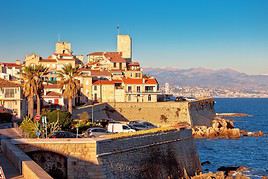
Antibes-Juan les Pins
Between Cannes and Nice, Antibes is a renowned coastal resort with plenty of activities of all kinds. The city also boasts old quarters and, with the Cap d'Antibes, one of the most upscale residential areas.
Between Cannes and Nice, Antibes is a renowned coastal resort with plenty of activities of all kinds. The city also boasts old quarters and, with the Cap d'Antibes, one of the most upscale residential areas.
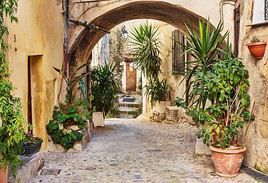
Coaraze
This small hilltop village, part of the "Most Beautiful Villages of France," is located in the hinterland of Nice. Within a medieval setting, you can discover old stone houses lining steep narrow streets.
This small hilltop village, part of the "Most Beautiful Villages of France," is located in the hinterland of Nice. Within a medieval setting, you can discover old stone houses lining steep narrow streets.
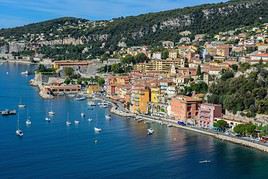
Riviera Corniche
This is the scenic route (actually three distinct roads) running from Nice to Menton, offering stunning panoramic views of the entire coastline.
This is the scenic route (actually three distinct roads) running from Nice to Menton, offering stunning panoramic views of the entire coastline.
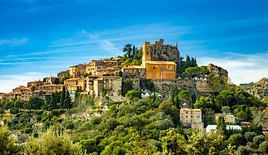
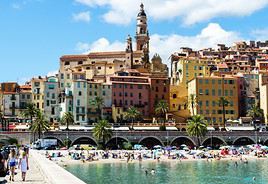
Menton
On the Italian border, Menton offers a port and a charming, colourful old town, as well as being a seaside resort.
On the Italian border, Menton offers a port and a charming, colourful old town, as well as being a seaside resort.
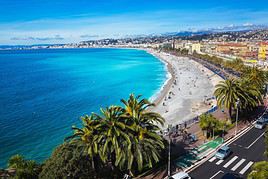
Nice
France’s fifth-largest city is also the capital of its département. Its climate, beaches, vibrancy, and beauty (especially the Old Town) make it one of the most visited places in France.
France’s fifth-largest city is also the capital of its département. Its climate, beaches, vibrancy, and beauty (especially the Old Town) make it one of the most visited places in France.
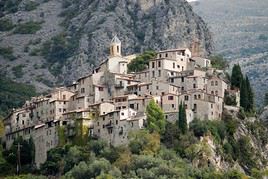
Peillon
This is one of the stunning medieval villages in the Alpes-Maritimes. It is perched and located in the Nice hinterland.
This is one of the stunning medieval villages in the Alpes-Maritimes. It is perched and located in the Nice hinterland.
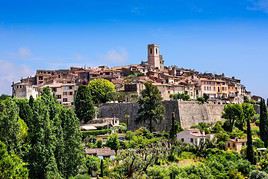
Saint-Paul de Vence
One of the most beautiful villages in Provence, traditionally beloved by artists, and home to the Maeght Foundation. The village is "associated" with the nearby town of Vence.
One of the most beautiful villages in Provence, traditionally beloved by artists, and home to the Maeght Foundation. The village is "associated" with the nearby town of Vence.
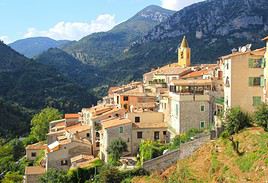
plus on the Italian side...
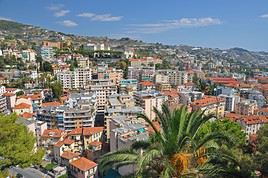
San Remo
Its original architecture, villas, marina, casino, flowers, and its reputation in rally and cycling make this city near France a fairly touristy destination.
Its original architecture, villas, marina, casino, flowers, and its reputation in rally and cycling make this city near France a fairly touristy destination.