last edited Dec 11, 2019
What to See in Mongolia
Contributionsversion #1created Dec 11, 2019Report this pageLatest contributions in this guideContributors to this guide
Location Map of Mongolia
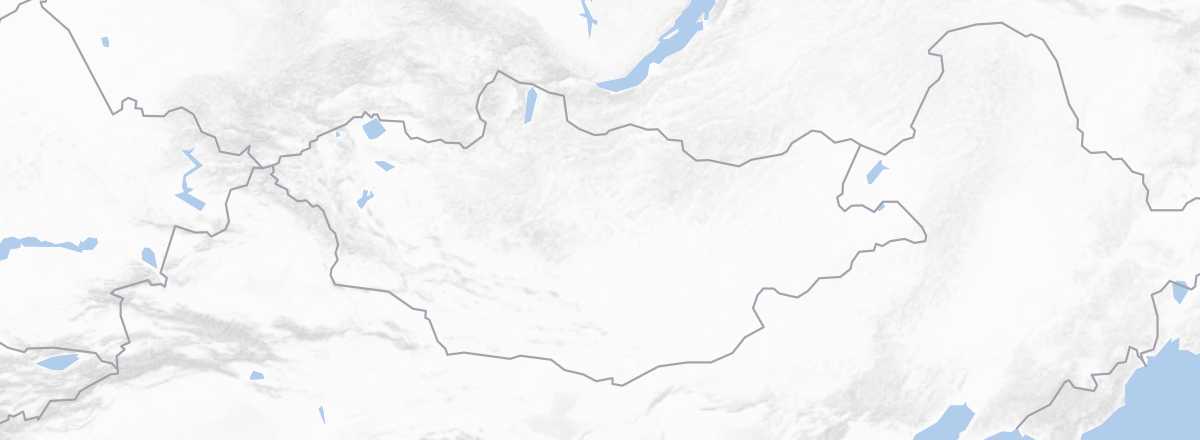 Mongolia
Open the interactive map
Mongolia
Open the interactive map
UNESCO World Heritage Sites
Mongolia has 5 sites inscribed on the UNESCO World Heritage list:
Petroglyphs of the Mongolian Altai (2011)
A collection of petroglyphs and funerary monuments located across three sites in the high mountain valleys of the Altai. The entire area is a UNESCO World Heritage site.
A collection of petroglyphs and funerary monuments located across three sites in the high mountain valleys of the Altai. The entire area is a UNESCO World Heritage site.
Burkhan Khaldun (2015)
This mountain on the Russian border offers quite beautiful landscapes. It is, however, UNESCO-listed for its cultural and sacred value as the birthplace of Genghis Khan, who is also said to be buried there.
This mountain on the Russian border offers quite beautiful landscapes. It is, however, UNESCO-listed for its cultural and sacred value as the birthplace of Genghis Khan, who is also said to be buried there.
Lake Uvs (2003)
The largest lake in Mongolia, in the northwest near the Russian border. It is a UNESCO World Heritage site for the surrounding steppe and nesting birds. Lake Uvs holds Asia's record for temperature range, from +47°C in summer to -58°C in winter.
The largest lake in Mongolia, in the northwest near the Russian border. It is a UNESCO World Heritage site for the surrounding steppe and nesting birds. Lake Uvs holds Asia's record for temperature range, from +47°C in summer to -58°C in winter.
Daursky Nature Reserve (2017)
This vast natural area, straddling Russia and Mongolia, is a UNESCO World Heritage site for its landscapes of steppes, lakes, marshes, and forests.
This vast natural area, straddling Russia and Mongolia, is a UNESCO World Heritage site for its landscapes of steppes, lakes, marshes, and forests.
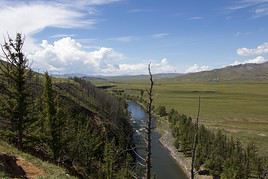
Orkhon Valley (2004)
This valley in the center of the country, with its rivers and characteristic landscapes, is a UNESCO World Heritage site for its historical value and testimonies from the time of Genghis Khan (monastery, former capital of Karakorum).
This valley in the center of the country, with its rivers and characteristic landscapes, is a UNESCO World Heritage site for its historical value and testimonies from the time of Genghis Khan (monastery, former capital of Karakorum).
Cities and Cultural Heritage
Amarbayasgalant
It is one of the country’s main and most beautiful Buddhist monasteries. Located in northern Mongolia, in the heart of the steppes.
It is one of the country’s main and most beautiful Buddhist monasteries. Located in northern Mongolia, in the heart of the steppes.
Bulgan
This northern city has two museums, a mausoleum, a monastery, and a beautiful nature reserve nearby (Uran Togoo).
This northern city has two museums, a mausoleum, a monastery, and a beautiful nature reserve nearby (Uran Togoo).
Choybalsan
It's Mongolia's fourth-largest city, located in the far east of the country. It's not really a tourist destination.
It's Mongolia's fourth-largest city, located in the far east of the country. It's not really a tourist destination.
Dalanzadgad
The town is generally the base for exploring the Gobi Desert and especially Gobi Gurvansaikhan National Park.
The town is generally the base for exploring the Gobi Desert and especially Gobi Gurvansaikhan National Park.
Erdenet
This relatively new (1975) mining town is the second-largest urban area in the country, with just under 100,000 inhabitants. It is home to the largest open-pit copper mine in Asia.
This relatively new (1975) mining town is the second-largest urban area in the country, with just under 100,000 inhabitants. It is home to the largest open-pit copper mine in Asia.
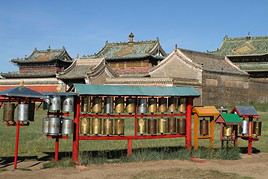
Karakorum
The former capital of the Mongol Empire is home to the important Buddhist monastery of Erdene Zuu and several other temples. It is a UNESCO World Heritage Site as part of the "Cultural Landscape of the Orkhon Valley".
The former capital of the Mongol Empire is home to the important Buddhist monastery of Erdene Zuu and several other temples. It is a UNESCO World Heritage Site as part of the "Cultural Landscape of the Orkhon Valley".
Khovd
At the foot of the Altai, in the far west, a cosmopolitan city where the region's diverse populations blend.
At the foot of the Altai, in the far west, a cosmopolitan city where the region's diverse populations blend.
Olgii
This town near Russia, predominantly Kazakh, is nestled at high altitude in the Altai Mountains. It’s primarily a starting point for hikes in the surrounding mountains, particularly Altai Tavan Bogd Park.
This town near Russia, predominantly Kazakh, is nestled at high altitude in the Altai Mountains. It’s primarily a starting point for hikes in the surrounding mountains, particularly Altai Tavan Bogd Park.
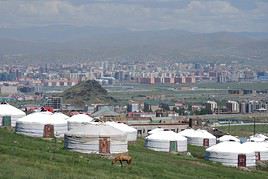
Ulaanbaatar
At an altitude of 1,350 m, Mongolia’s capital is often just a gateway into the country for many travellers, despite a few interesting museums and monasteries. Nearly one in two of the country’s inhabitants lives in this urban area, a blend of modernity and tradition.
At an altitude of 1,350 m, Mongolia’s capital is often just a gateway into the country for many travellers, despite a few interesting museums and monasteries. Nearly one in two of the country’s inhabitants lives in this urban area, a blend of modernity and tradition.
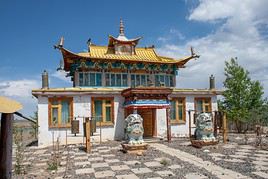
Shankh
In the heart of the country, it is one of the oldest and most significant Buddhist monasteries in Mongolia.
In the heart of the country, it is one of the oldest and most significant Buddhist monasteries in Mongolia.
Ulaangom
Near Lake Uvs, this city with Soviet-era architecture typically serves as a base for exploring the lake and its surroundings.
Near Lake Uvs, this city with Soviet-era architecture typically serves as a base for exploring the lake and its surroundings.
Orkhon Valley
This valley in the center of the country, with its rivers and characteristic landscapes, is a UNESCO World Heritage site for its historical value and testimonies from the time of Genghis Khan (monastery, former capital of Karakorum).
This valley in the center of the country, with its rivers and characteristic landscapes, is a UNESCO World Heritage site for its historical value and testimonies from the time of Genghis Khan (monastery, former capital of Karakorum).
Natural Heritage
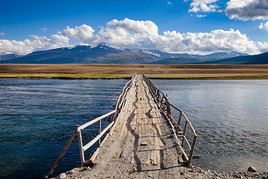
Mongolian Altai
This is the region of mountains and high plains stretching along the Chinese border. For travellers, the Altai offers stunning landscapes, several national parks, numerous opportunities for outdoor sports, encounters with diverse local populations, and a few historical remnants such as the UNESCO-listed petroglyphs.
This is the region of mountains and high plains stretching along the Chinese border. For travellers, the Altai offers stunning landscapes, several national parks, numerous opportunities for outdoor sports, encounters with diverse local populations, and a few historical remnants such as the UNESCO-listed petroglyphs.
Burkhan Khaldun
This mountain on the Russian border offers quite beautiful landscapes. It is, however, UNESCO-listed for its cultural and sacred value as the birthplace of Genghis Khan, who is also said to be buried there.
This mountain on the Russian border offers quite beautiful landscapes. It is, however, UNESCO-listed for its cultural and sacred value as the birthplace of Genghis Khan, who is also said to be buried there.
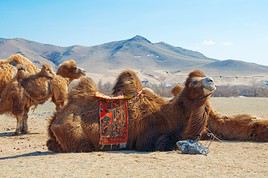
Gobi Desert
One of the world's largest deserts, spanning Mongolia (a third of the country) and China. It features mountains, canyons, plains, and dunes, and is home to several national parks, including Gobi Gurvansaikhan. Locally, you can trek on foot, horseback, or by camel. It’s also the traditional habitat of the snow leopard and the Bactrian camel.
One of the world's largest deserts, spanning Mongolia (a third of the country) and China. It features mountains, canyons, plains, and dunes, and is home to several national parks, including Gobi Gurvansaikhan. Locally, you can trek on foot, horseback, or by camel. It’s also the traditional habitat of the snow leopard and the Bactrian camel.
Khongoryn Dunes
These towering dunes stretch 180 km across Gurvansaikhan National Park in the Gobi Desert. A unique feature is their constant movement and the sounds they produce, earning them the name "singing dunes".
These towering dunes stretch 180 km across Gurvansaikhan National Park in the Gobi Desert. A unique feature is their constant movement and the sounds they produce, earning them the name "singing dunes".
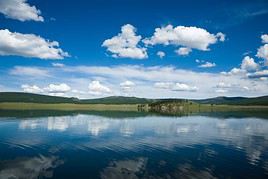
Lake Khovsgol
This is a vast national park-lake located at the Russian border, in the northwest of the country. The area features beautiful landscapes and diverse wildlife (birds, bears, wolves) as well as communities with well-preserved cultures and traditions (Tsaatans, Buryats). You can fish and go kayaking here.
This is a vast national park-lake located at the Russian border, in the northwest of the country. The area features beautiful landscapes and diverse wildlife (birds, bears, wolves) as well as communities with well-preserved cultures and traditions (Tsaatans, Buryats). You can fish and go kayaking here.
Lake Uvs
The largest lake in Mongolia, in the northwest near the Russian border. It is a UNESCO World Heritage site for the surrounding steppe and nesting birds. Lake Uvs holds Asia's record for temperature range, from +47°C in summer to -58°C in winter.
The largest lake in Mongolia, in the northwest near the Russian border. It is a UNESCO World Heritage site for the surrounding steppe and nesting birds. Lake Uvs holds Asia's record for temperature range, from +47°C in summer to -58°C in winter.
Khangai Mountains
A long and scenic mountain range west of the capital, with peaks over 4,000 m and lakes like Terkhiin. It’s a trekking area.
A long and scenic mountain range west of the capital, with peaks over 4,000 m and lakes like Terkhiin. It’s a trekking area.
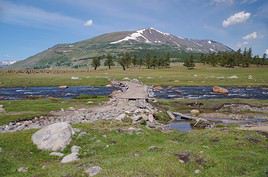
Altai Tavan Bogd National Park
On the Chinese border and near the city of Olgiy, a vast park of lakes, forests, and glaciers where you can hike on foot, horseback, skis, or even camel, climb, raft, kayak, or fish.
On the Chinese border and near the city of Olgiy, a vast park of lakes, forests, and glaciers where you can hike on foot, horseback, skis, or even camel, climb, raft, kayak, or fish.
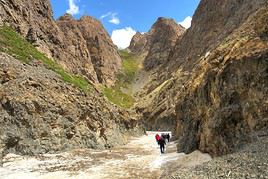
Gobi Gurvansaikhan National Park
This is the main park of the Gobi, on its northern edge. You can hike through stunning landscapes and also see the towering "singing" dunes of Khongoryn, the orange cliffs of Bayanzag (with their dinosaur fossils), or the ice fields of Yolyn Am Valley.
This is the main park of the Gobi, on its northern edge. You can hike through stunning landscapes and also see the towering "singing" dunes of Khongoryn, the orange cliffs of Bayanzag (with their dinosaur fossils), or the ice fields of Yolyn Am Valley.
Gorkhi-Terelj National Park
A lovely park near the capital where you can hike on foot or horseback and go climbing. It’s the traditional habitat of brown bears and many bird species.
A lovely park near the capital where you can hike on foot or horseback and go climbing. It’s the traditional habitat of brown bears and many bird species.
Khorgo-Terkhiin Tsagaan Nuur National Park
An extinct volcano (Khorgo) and a lake (Terkhiin Tsagaan) frame this park.
An extinct volcano (Khorgo) and a lake (Terkhiin Tsagaan) frame this park.
Khustai Nuruu National Park
This site near Ulaanbaatar is known for being home to Przewalski's wild horses. You can hike here.
This site near Ulaanbaatar is known for being home to Przewalski's wild horses. You can hike here.
Daursky Nature Reserve
This vast natural area, straddling Russia and Mongolia, is a UNESCO World Heritage site for its landscapes of steppes, lakes, marshes, and forests.
This vast natural area, straddling Russia and Mongolia, is a UNESCO World Heritage site for its landscapes of steppes, lakes, marshes, and forests.
Gun-Galuut Nature Reserve
Around a hundred kilometres from Ulaanbaatar, Gun-Galuut offers varied landscapes with steppe, mountains, lakes, and rivers. It also provides an opportunity near the capital to enjoy numerous outdoor activities (trekking, rafting, kayaking, fishing), observe birds, and discover the life of the nomadic populations who live there.
Around a hundred kilometres from Ulaanbaatar, Gun-Galuut offers varied landscapes with steppe, mountains, lakes, and rivers. It also provides an opportunity near the capital to enjoy numerous outdoor activities (trekking, rafting, kayaking, fishing), observe birds, and discover the life of the nomadic populations who live there.
Trans-Mongolian Railway
An extension of the Trans-Siberian Railway, this train connects Ulaanbaatar to Beijing. It offers a chance to explore the Mongolian steppe.
An extension of the Trans-Siberian Railway, this train connects Ulaanbaatar to Beijing. It offers a chance to explore the Mongolian steppe.
Darkhad Valley
Stunning valley near Lake Khovsgol, very difficult to access, home to Tsaatan and Darkhad communities.
Stunning valley near Lake Khovsgol, very difficult to access, home to Tsaatan and Darkhad communities.
Must-see & highly recommended
Mongolian Altai
★★★★ This is the region of mountains and high plains stretching along the Chinese border. For travellers, the Altai offers stunning landscapes…
Gobi Desert (Mongolia)
★★★★ One of the world's largest deserts, spanning Mongolia (a third of the country) and China. It features mountains, canyons, plains, and…
Recommended
Amarbayasgalant
★★★ It is one of the country’s main and most beautiful Buddhist monasteries. Located in northern Mongolia, in the heart of the steppes.
Lake Khovsgol
★★★ This is a vast national park-lake located at the Russian border, in the northwest of the country. The area features beautiful landscapes…
Altai Tavan Bogd National Park
★★★ On the Chinese border and near the city of Olgiy, a vast park of lakes, forests, and glaciers where you can hike on foot, horseback, skis…
Gobi Gurvansaikhan National Park
★★★ This is the main park of the Gobi, on its northern edge. You can hike through stunning landscapes and also see the towering "singing" dunes…
Orkhon Valley
★★★ This valley in the center of the country, with its rivers and characteristic landscapes, is a UNESCO World Heritage site for its historical…
Worth a look / Other
Khongoryn Dunes
★★ These towering dunes stretch 180 km across Gurvansaikhan National Park in the Gobi Desert. A unique feature is their constant movement and…
Karakorum
★★ The former capital of the Mongol Empire is home to the important Buddhist monastery of Erdene Zuu and several other temples. It is a UNESCO…
Lake Uvs
★★ The largest lake in Mongolia, in the northwest near the Russian border. It is a UNESCO World Heritage site for the surrounding steppe and…
Khangai Mountains
★★ A long and scenic mountain range west of the capital, with peaks over 4,000 m and lakes like Terkhiin. It’s a trekking area.
Ulaanbaatar
★★ At an altitude of 1,350 m, Mongolia’s capital is often just a gateway into the country for many travellers, despite a few interesting…
Gorkhi-Terelj National Park
★★ A lovely park near the capital where you can hike on foot or horseback and go climbing. It’s the traditional habitat of brown bears…
Daursky Nature Reserve
★★ This vast natural area, straddling Russia and Mongolia, is a UNESCO World Heritage site for its landscapes of steppes, lakes, marshes, and…
Gun-Galuut Nature Reserve
★★ Around a hundred kilometres from Ulaanbaatar, Gun-Galuut offers varied landscapes with steppe, mountains, lakes, and rivers. It also…
Shankh
★★ In the heart of the country, it is one of the oldest and most significant Buddhist monasteries in Mongolia.
Trans-Mongolian Railway
★★ An extension of the Trans-Siberian Railway, this train connects Ulaanbaatar to Beijing. It offers a chance to explore the Mongolian steppe.
Darkhad Valley
★★ Stunning valley near Lake Khovsgol, very difficult to access, home to Tsaatan and Darkhad communities.
Bulgan
★ This northern city has two museums, a mausoleum, a monastery, and a beautiful nature reserve nearby (Uran Togoo).
Burkhan Khaldun
★ This mountain on the Russian border offers quite beautiful landscapes. It is, however, UNESCO-listed for its cultural and sacred value as…
Choybalsan
★ It's Mongolia's fourth-largest city, located in the far east of the country. It's not really a tourist destination.
Dalanzadgad
★ The town is generally the base for exploring the Gobi Desert and especially Gobi Gurvansaikhan National Park.
Erdenet
★ This relatively new (1975) mining town is the second-largest urban area in the country, with just under 100,000 inhabitants. It is home to…
Khovd
★ At the foot of the Altai, in the far west, a cosmopolitan city where the region's diverse populations blend.
Moron
★ This town near Lake Khovsgol has a monastery, a museum, and a large open-air market.
Olgii
★ This town near Russia, predominantly Kazakh, is nestled at high altitude in the Altai Mountains. It’s primarily a starting point for…
Khorgo-Terkhiin Tsagaan Nuur National Park
★ An extinct volcano (Khorgo) and a lake (Terkhiin Tsagaan) frame this park.
Khustai Nuruu National Park
★ This site near Ulaanbaatar is known for being home to Przewalski's wild horses. You can hike here.
Petroglyphs of the Mongolian Altai
★ A collection of petroglyphs and funerary monuments located across three sites in the high mountain valleys of the Altai. The entire area is…
Tsetserleg
★ The small town is home to the Buyandelgerüülekh Buddhist monastery.
Ulaangom
★ Near Lake Uvs, this city with Soviet-era architecture typically serves as a base for exploring the lake and its surroundings.
Uliastai
★ This is a former trading city that still retains some remnants from the caravan era.
- Amarbayasgalant
- Bulgan
- Dalanzadgad
- Karakorum
- Khovd
- Moron
- Olgii
- Ulaanbaatar
- Shankh
- Tsetserleg
- Ulaangom
- Uliastai
- Orkhon Valley
- Gobi Desert (Mongolia)
- Lake Khovsgol
- Lake Uvs
- Khangai Mountains
- Altai Tavan Bogd National Park
- Gobi Gurvansaikhan National Park
- Gorkhi-Terelj National Park
- Khustai Nuruu National Park
- Gun-Galuut Nature Reserve
- Trans-Mongolian Railway
- Darkhad Valley
- Burkhan Khaldun
- Mongolian Altai
- Choybalsan
- Erdenet
- Khorgo-Terkhiin Tsagaan Nuur National Park
- Daursky Nature Reserve