
Overview
Towns and Cultural Heritage
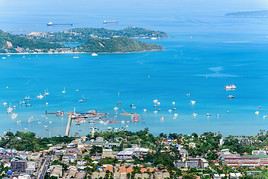
Chalong Bay
In its vast bay, the site hosts the province's main marina and serves as the starting point for numerous charter boats or organized tours, particularly for discovering the nearby small islands.
In its vast bay, the site hosts the province's main marina and serves as the starting point for numerous charter boats or organized tours, particularly for discovering the nearby small islands.
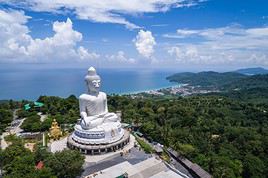
Big Buddha
This is a large statue (45 m tall) of Buddha perched on a hill in the south of the island. From there, you get a beautiful panoramic view of the surroundings.
This is a large statue (45 m tall) of Buddha perched on a hill in the south of the island. From there, you get a beautiful panoramic view of the surroundings.
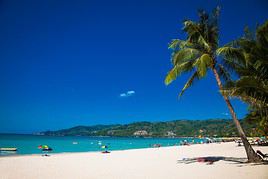
Patong
On the west coast, Patong—with its beaches and numerous hotels—is known for its lively atmosphere (mostly at night) and shopping opportunities.
On the west coast, Patong—with its beaches and numerous hotels—is known for its lively atmosphere (mostly at night) and shopping opportunities.
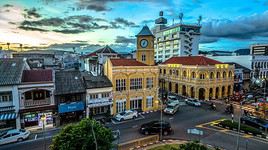
Phuket
As the provincial capital, "Phuket Town" boasts a historic district showcasing its past splendour through Sino-Portuguese architecture. Visitors can also explore various temples, two museums dedicated to local history, and several wildlife attractions (zoo, birds, butterflies, crocodiles).
As the provincial capital, "Phuket Town" boasts a historic district showcasing its past splendour through Sino-Portuguese architecture. Visitors can also explore various temples, two museums dedicated to local history, and several wildlife attractions (zoo, birds, butterflies, crocodiles).
Rawai
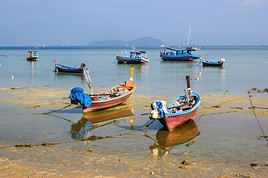
The locality is known for being home to the "sea gypsies." Beaches and opportunities for water activities in the surrounding area.
The locality is known for being home to the "sea gypsies." Beaches and opportunities for water activities in the surrounding area.
Wat Chalong
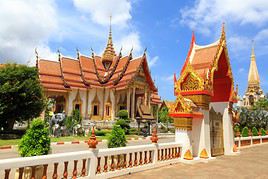
This is the main Buddhist temple in Phuket. The complex, made up of several buildings and gardens, is quite popular with visitors.
This is the main Buddhist temple in Phuket. The complex, made up of several buildings and gardens, is quite popular with visitors.
Natural Heritage
Phuket Aquarium
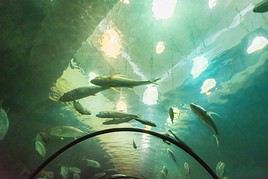
Around ten kilometres south of the capital, the place is well-known for both tourism and marine research.
Around ten kilometres south of the capital, the place is well-known for both tourism and marine research.
Cape Promthep
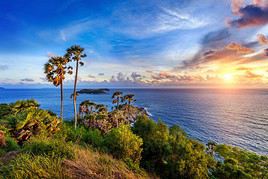
At the southern tip of Phuket, this spot has become very (too?) popular with visitors for its sunsets and views.
At the southern tip of Phuket, this spot has become very (too?) popular with visitors for its sunsets and views.
Elephant Jungle Sanctuary
Quite touristy, the site allows you to discover and observe elephants in their environment.
Quite touristy, the site allows you to discover and observe elephants in their environment.
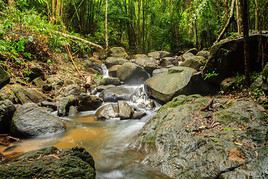
Khao Phra Thaeo Wildlife Sanctuary
While not exceptional, this forested site with its waterfall and natural pools offers a lovely "nature walk".
While not exceptional, this forested site with its waterfall and natural pools offers a lovely "nature walk".
Small Islands South of Phuket
South of Phuket, you can discover numerous small islands, some inhabited, others perfect for diving or simply relaxing. Most are only accessible via organised tours or charter boats from Chalong Bay.
South of Phuket, you can discover numerous small islands, some inhabited, others perfect for diving or simply relaxing. Most are only accessible via organised tours or charter boats from Chalong Bay.
Nearby

Phang Nga Bay
Between Phuket and Krabi, the town of Phang Nga is renowned for its bay, one of the most beautiful in Southeast Asia. This unique landscape is formed by countless limestone karsts and caves that can be explored by boat or sea kayak.
Between Phuket and Krabi, the town of Phang Nga is renowned for its bay, one of the most beautiful in Southeast Asia. This unique landscape is formed by countless limestone karsts and caves that can be explored by boat or sea kayak.

Ko Phi Phi
These are actually two islands—Ko Phi Phi Don (the larger, inhabited one) and its satellite Ko Phi Phi Leh (uninhabited)—which together form a national park of the same name. The area is highly touristy, known for diving, postcard-perfect beaches, and towering cliffs you can climb.
These are actually two islands—Ko Phi Phi Don (the larger, inhabited one) and its satellite Ko Phi Phi Leh (uninhabited)—which together form a national park of the same name. The area is highly touristy, known for diving, postcard-perfect beaches, and towering cliffs you can climb.