last edited Aug 27, 2020
Wild Camping
Location Map of Destinations
 Destinations
Open the interactive map
Destinations
Open the interactive map
The Solution?
Wild camping is another option that, while offering many advantages and total freedom, also comes with its share of drawbacks. For starters, it’s banned in some countries (like the USA) or tourist areas (including many parks and reserves). The environment isn’t always suitable (rocky ground, dense forests, etc.), and the practice can be risky.
Depending on Whether You Have a Vehicle
With over 500,000 vehicles in Western Europe alone, campervans have been growing in popularity for years. One of the biggest perks—or reasons for buying one—is the autonomy and freedom they provide, especially the ability to avoid traditional accommodation. Many motorhome owners (and other motorized travelers) are fans of wild camping.
On the other hand, camping outside designated areas without a vehicle is a bit more complicated. Beyond the practical and logistical challenges, it’s harder to find the right spot, particularly in urbanized areas.
Safety Concerns
Fears
Wild camping can easily spark anxiety, especially for solo travelers. Even without considering high-risk areas, fears of aggression, nighttime noises, or other imagined threats can make for sleepless nights—even if you’re "protected" by your vehicle. If the apprehension is too strong, it’s best to avoid wild camping or adapt it to your concerns.
Adapting
One option is "semi-wild" camping—sleeping near someone’s home (garden or otherwise) after asking permission. Seeing the owner and getting their approval can be reassuring, making you feel like a guest rather than an intruder.
Another solution is to camp near other travelers (a common practice among motorhome owners, with some areas even developing dedicated campervan sites). You can also use facilities offered by mountain huts, youth hostels, or even hotels that allow camping on their grounds or parking lots (often with access to amenities). Otherwise, discretion is key.
For those with a vehicle, parking on a busy street or in a safe neighborhood is another option, though it may come at the cost of some peace and quiet.
Practical Tips
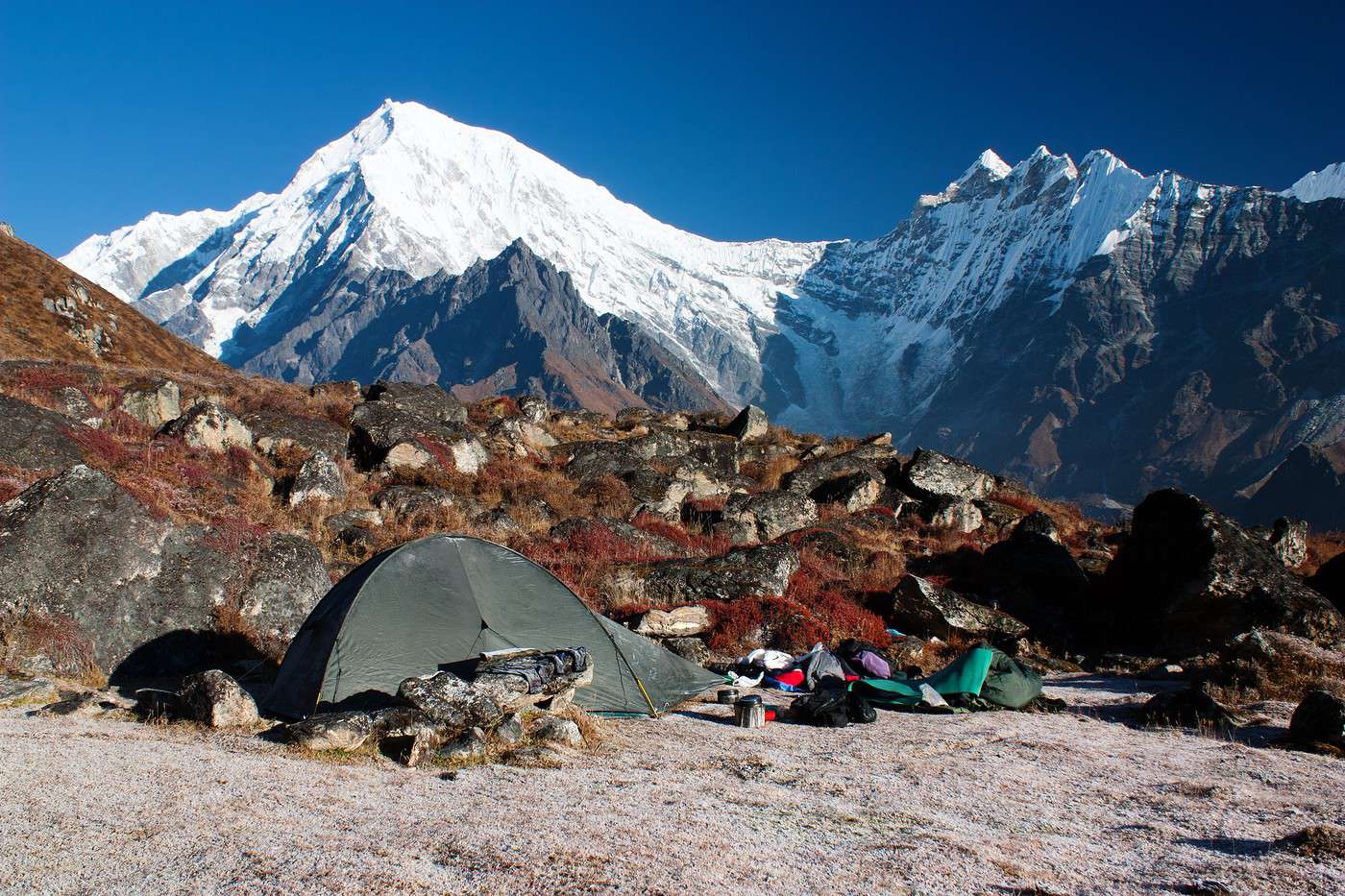
A few tips for wild camping, especially for those without a vehicle.
General Advice
When pitching your tent (or laying out your sleeping bag), avoid slopes, rocky ground, windy areas, or high spots exposed to strong winds. Also, steer clear of water (sea or rivers) to avoid flooding. Always pitch the tent with its back to the wind, and insulate yourself from the cold ground with a mat or blanket. Protect your belongings with waterproof bags. If heavy rain is expected, dig a small drainage ditch around the tent.
Note that these tips also apply to regular campsites.
Where to Camp?
In the City
Finding a good spot isn’t always easy. The simplest option is to ask permission to pitch your tent in a private garden, which offers both tranquility and security. Avoid public gardens and parks, which are often guarded and may not be safe at night (when in doubt, ask locals).
Some hotels in Africa or the Middle East may also allow you to camp on their rooftops, terraces, or gardens—for a fee. The same goes for youth hostels worldwide.
In the Countryside
Much easier than in the city. Still, it’s best to stay discreet and avoid main roads. You can also pitch your tent in a garden or field after asking the owner’s permission. Just be careful not to set up on cultivated land or near livestock.
In the Forest
Avoid damp areas and never camp directly under a tree due to the risk of falling branches in strong winds. Another obvious tip: be careful with fires to avoid starting a wildfire.
By the Sea
In many places, sleeping on public beaches (those used by swimmers) is prohibited, especially in seaside resorts. The same goes for areas near campsites. Look for quieter beaches instead (but still consider safety).
In all cases, choose a spot sheltered from the wind (between dunes, for example) and avoid setting up too close to the water due to tides—there can be hundreds of meters between low and high tide.
In the Mountains
The easiest place to find a nice spot and avoid "bad" encounters. As in the countryside, avoid cultivated land. When choosing a spot, consider wind, falling branches, and rockslides. Stay away from watercourses, which can flood during heavy storms. In some mountain areas, bivouac zones exist, and camping near mountain huts is usually allowed.
Respecting the Environment
A few simple rules to leave the site as you found it and protect the environment. First and foremost, don’t camp on cultivated land or in areas marked "no entry."
Toilet
While many campervans have chemical toilets, others should dig a hole away from rivers or water sources, cover it, and burn or carry out toilet paper (which decomposes slowly).
For washing, don’t use soap directly in water sources or rivers—it can leave traces in the water.
Dishes
Same principle as for toilets. Avoid washing dishes directly in streams or rivers using detergents. Instead, use a container and dispose of the wastewater a few meters from the shore.
Waste
The most visible source of pollution during wild camping. Always remove or carry out your trash, including cans, plastics, and packaging. Don’t bury it and hope nature will take care of it. Even biodegradable waste should be packed out.
Finally, replace any rocks used for fires or to secure your tent.