

Step 5: Holy Bukhara
September 24 - Bukhara with and without a guide
This morning, we’ve got a guided tour of the main sites in the old city on the agenda.
But we start the day with one of the best breakfasts ever! French toast, crepes, fresh homemade fruit juice, homemade jams (orange/pumpkin/carrot and rose jam: a delight!), homemade yogurt, seasonal fruits, several savory dishes, eggs... We can’t take any more!
Bukhara was once called the "Dome of Islam" or the "Pillar of Islam." It was said to be the most secretive of the caravan cities and the most interesting city in the world!
Knowing all this, we were really excited to discover the different sites in the old city.
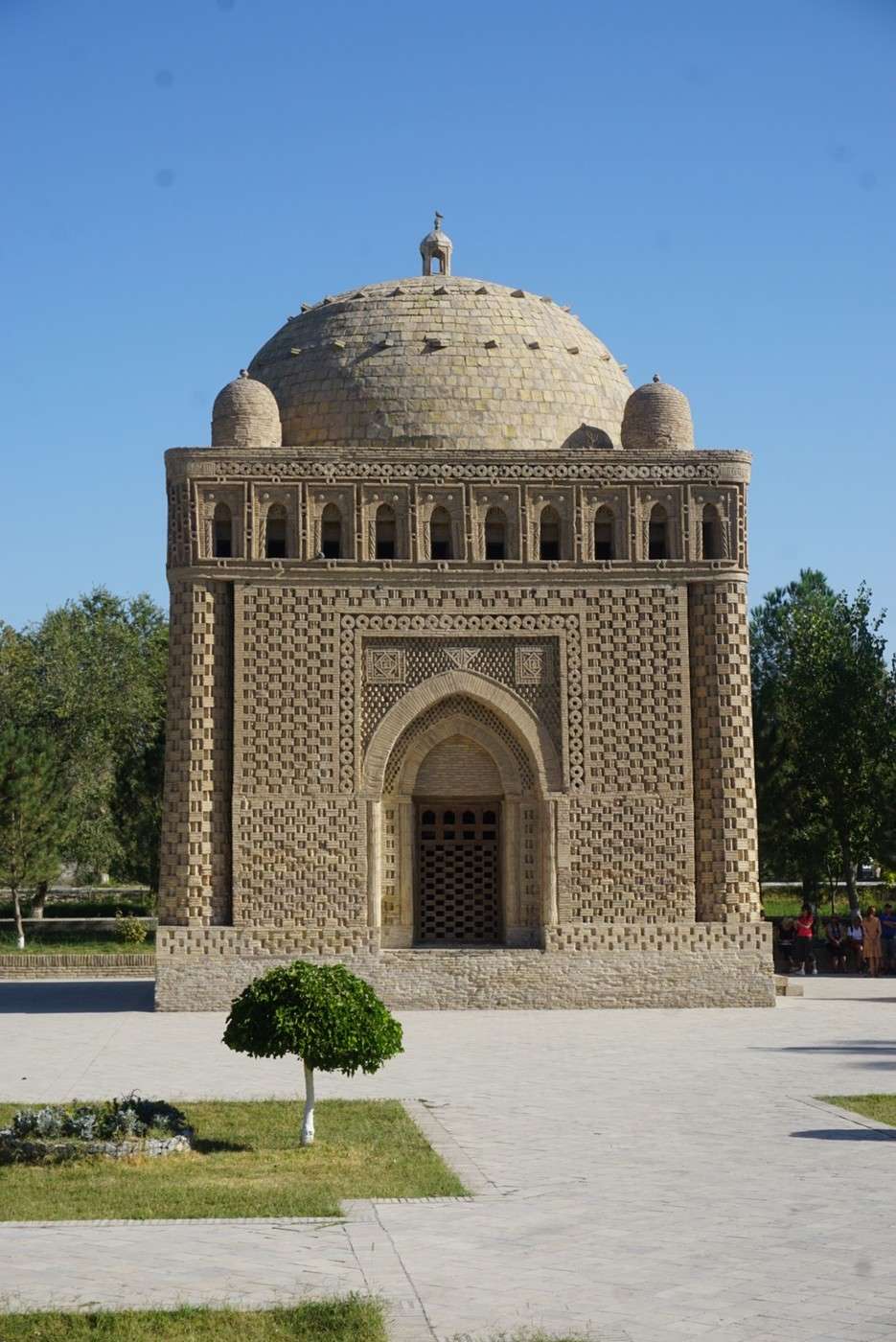
We start the day at the Ismail Samani Mausoleum, a magnificent brick cube. It’s the second oldest mausoleum in the Muslim world. We walk through Samani Park and then the market. We taste alva, an Uzbek sweet, a kind of nougat made with sesame, pistachio, and almonds that reminds us of sweetened condensed milk.
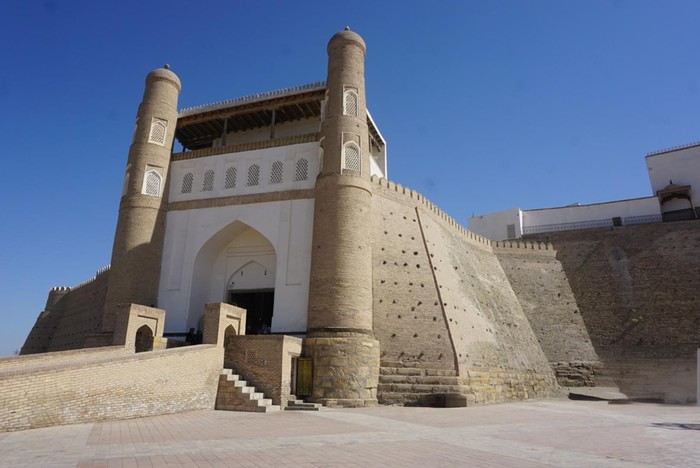
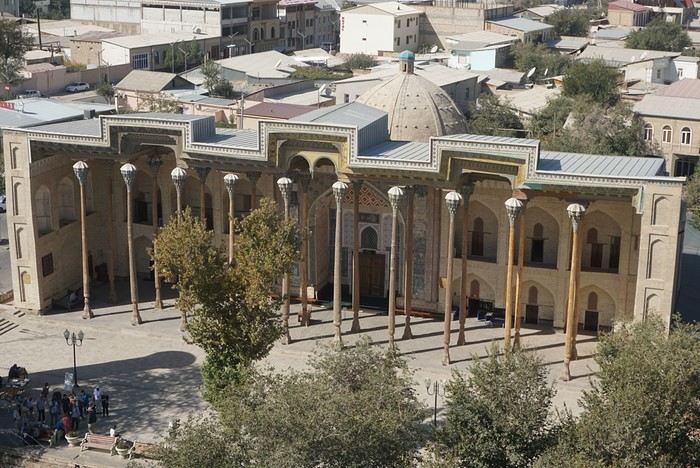
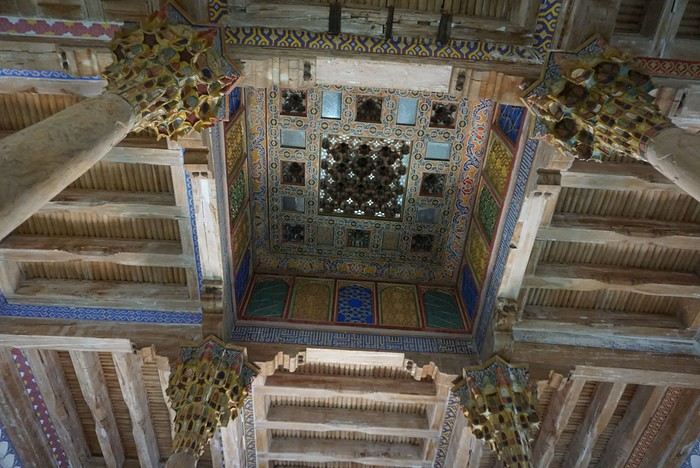
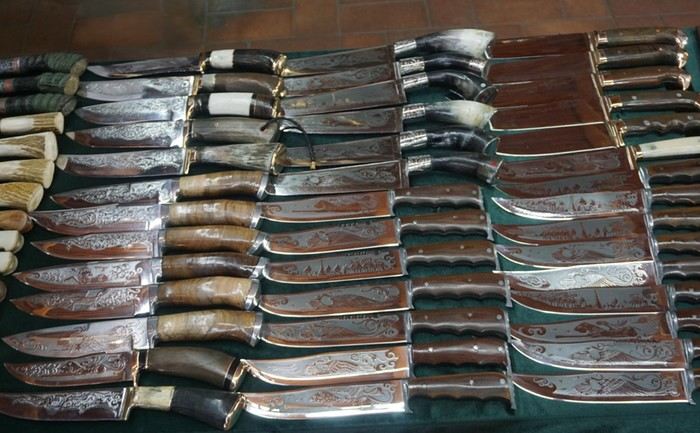
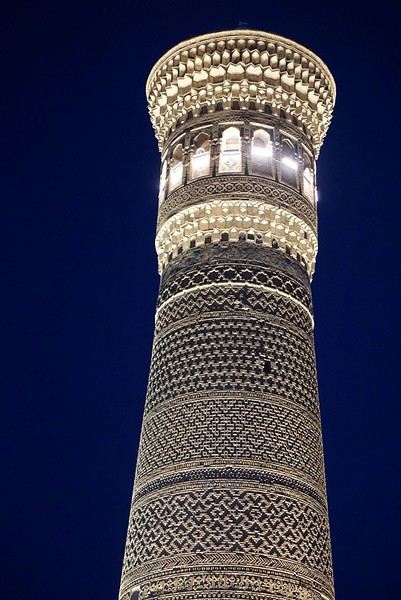
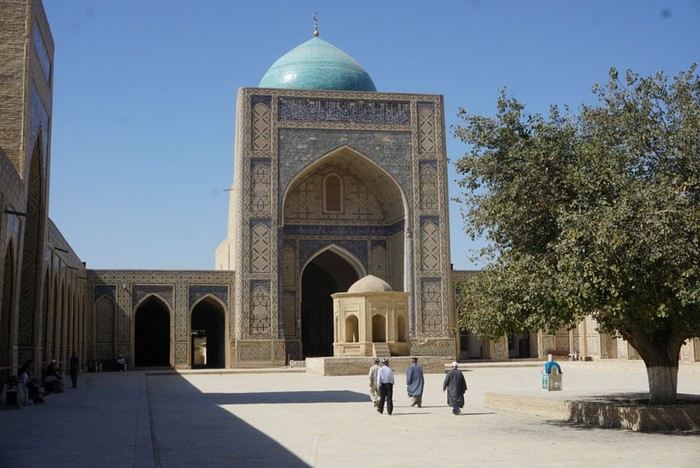 Next, we visit the Ark of Bukhara (Aka), the Emir’s residence, other madrasas and mosques around Registan Square, and the trading domes where artisans and merchants are set up. We discover the work of knife makers there. We also climb the iron tower (their Eiffel Tower) for a panoramic view of the city and its signposts (Paris, Rome, etc.) that make us look toward the horizon. The city is full of splendors. It’s impossible to list them all: Maghoki Attari Mosque, Ulugbek and Abdulazizkhan Madrasas, the Poi Kalon complex with its minaret from which condemned prisoners were thrown alive. Registan Square is very lively, and many people are working to transform it into a huge "dojo." Unfortunately, our young guide doesn’t know what’s being prepared. We’ll come back to see it at the end of the day!
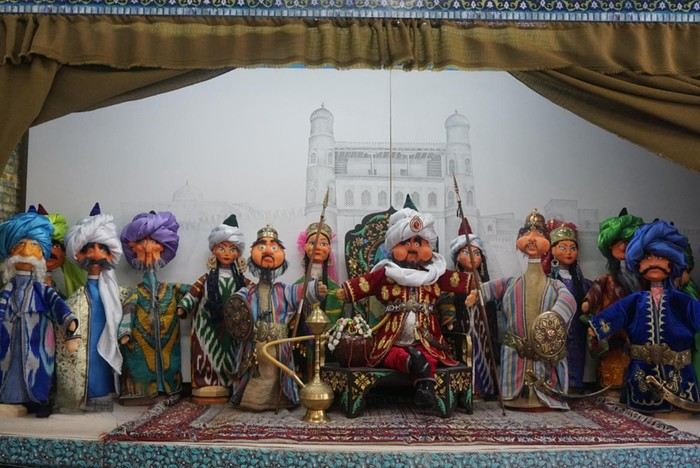
 We then head toward the Lyab-i Hauz complex. Between the money-changers’ dome and the basin, we stop at Iskander Khakimov’s puppet shop and workshop. He explains the manufacturing process and gives us a little musical demonstration.
In the early afternoon, we say goodbye to our guide. After a short rest (and to let the outside temperature drop), we stroll through the Jewish quarter and wander its narrow streets. Here, no tourists—so much so that a woman comes out of her house to ask if we’re lost and, if needed, to point us in the right direction. At the corner of a street, we discover a fountain and a tomb topped with a wooden post from which what looks like horsehair is hanging. We learn that it’s a horse’s mane. Horsehair doesn’t rot, and its presence means a holy man is buried here (in the Sufi tradition). Further on, we’re drawn by the smell of fresh bread coming from a bakery at the intersection of several streets. We also find the old synagogue while heading back to the old city and its central basin. We decide to sit on a bench next to the statue of Nasreddin Khodja on his donkey, right in front of the Nadir Divanbeg Madrasa. Nasreddin Khodja was a dervish, both wise, cunning, and lazy. He traveled all over Asia. One day, he witnessed the Emir falling into the basin. The Emir, who couldn’t swim and was afraid of drowning, shouted that whoever saved him would receive half his fortune. Being very stingy, he quickly realized what he’d promised and started pushing away anyone who tried to help him reach the edge. Seeing this, the clever dervish took out a small copper coin and promised the Emir that if he got out of the basin, the coin would be his. With great effort, the Emir managed to climb out to get the coin. When he took it, Nasreddin Khodja reminded him of his promise to share his fortune, and the Emir had to comply. The dervish didn’t keep the fortune for himself but distributed it to the neediest people in Bukhara.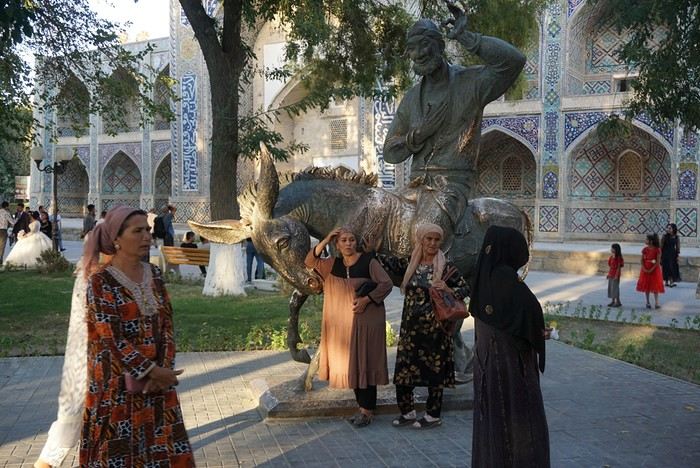 Today, there’s a constant stream of people in front of his statue (you can still see the copper coin between his fingers), where Uzbeks come to pose and also pet the donkey’s ears.
But in front of the madrasa, in the park and around the basin, there’s also a parade of newlyweds. We amused ourselves by commenting on what we saw until a man sitting next to us on the bench joined our conversation. In perfect French, he told us how much he enjoyed speaking French with us—he used to be a driver for a travel agency. He explained the weddings and their exorbitant cost. So much so that imams are calling on Uzbek families to be more moderate because they go deeply into debt to throw a beautiful party for the newlyweds and display beautiful clothes for the guests. To give us an idea, he said it’s common to invite 400, 500, or even more people to a wedding, and it costs $6,000 to $9,000!
At nightfall, we went to see the sports competition on Registan Square. A lot of people and a passionate crowd! The entrance is controlled, but they let us through. So we ended up in the middle of the teams of fighters cheering on their teammates on the tatami mats.
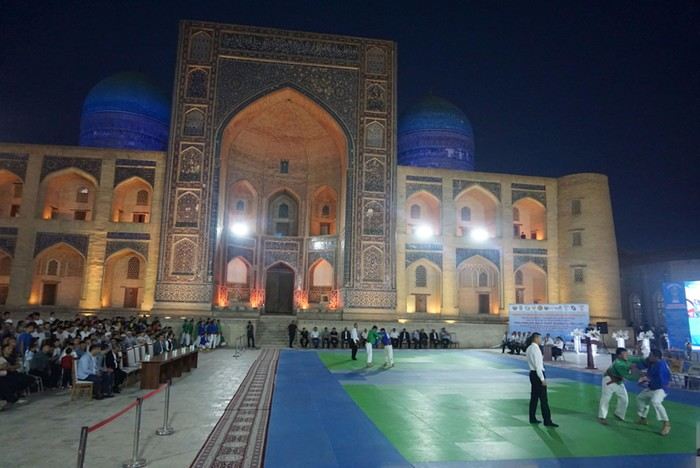
 The next day, our guide told us he was there too and that we’d attended an Uzbek wrestling competition.
In the early afternoon, we say goodbye to our guide. After a short rest (and to let the outside temperature drop), we stroll through the Jewish quarter and wander its narrow streets. Here, no tourists—so much so that a woman comes out of her house to ask if we’re lost and, if needed, to point us in the right direction. At the corner of a street, we discover a fountain and a tomb topped with a wooden post from which what looks like horsehair is hanging. We learn that it’s a horse’s mane. Horsehair doesn’t rot, and its presence means a holy man is buried here (in the Sufi tradition). Further on, we’re drawn by the smell of fresh bread coming from a bakery at the intersection of several streets. We also find the old synagogue while heading back to the old city and its central basin. We decide to sit on a bench next to the statue of Nasreddin Khodja on his donkey, right in front of the Nadir Divanbeg Madrasa. Nasreddin Khodja was a dervish, both wise, cunning, and lazy. He traveled all over Asia. One day, he witnessed the Emir falling into the basin. The Emir, who couldn’t swim and was afraid of drowning, shouted that whoever saved him would receive half his fortune. Being very stingy, he quickly realized what he’d promised and started pushing away anyone who tried to help him reach the edge. Seeing this, the clever dervish took out a small copper coin and promised the Emir that if he got out of the basin, the coin would be his. With great effort, the Emir managed to climb out to get the coin. When he took it, Nasreddin Khodja reminded him of his promise to share his fortune, and the Emir had to comply. The dervish didn’t keep the fortune for himself but distributed it to the neediest people in Bukhara.
Today, there’s a constant stream of people in front of his statue (you can still see the copper coin between his fingers), where Uzbeks come to pose and also pet the donkey’s ears.
But in front of the madrasa, in the park and around the basin, there’s also a parade of newlyweds. We amused ourselves by commenting on what we saw until a man sitting next to us on the bench joined our conversation. In perfect French, he told us how much he enjoyed speaking French with us—he used to be a driver for a travel agency. He explained the weddings and their exorbitant cost. So much so that imams are calling on Uzbek families to be more moderate because they go deeply into debt to throw a beautiful party for the newlyweds and display beautiful clothes for the guests. To give us an idea, he said it’s common to invite 400, 500, or even more people to a wedding, and it costs $6,000 to $9,000!
At nightfall, we went to see the sports competition on Registan Square. A lot of people and a passionate crowd! The entrance is controlled, but they let us through. So we ended up in the middle of the teams of fighters cheering on their teammates on the tatami mats.