


Step 6: Asraf
28 September – Walk and cooking class
A hearty breakfast in one of the guesthouse’s rooms.
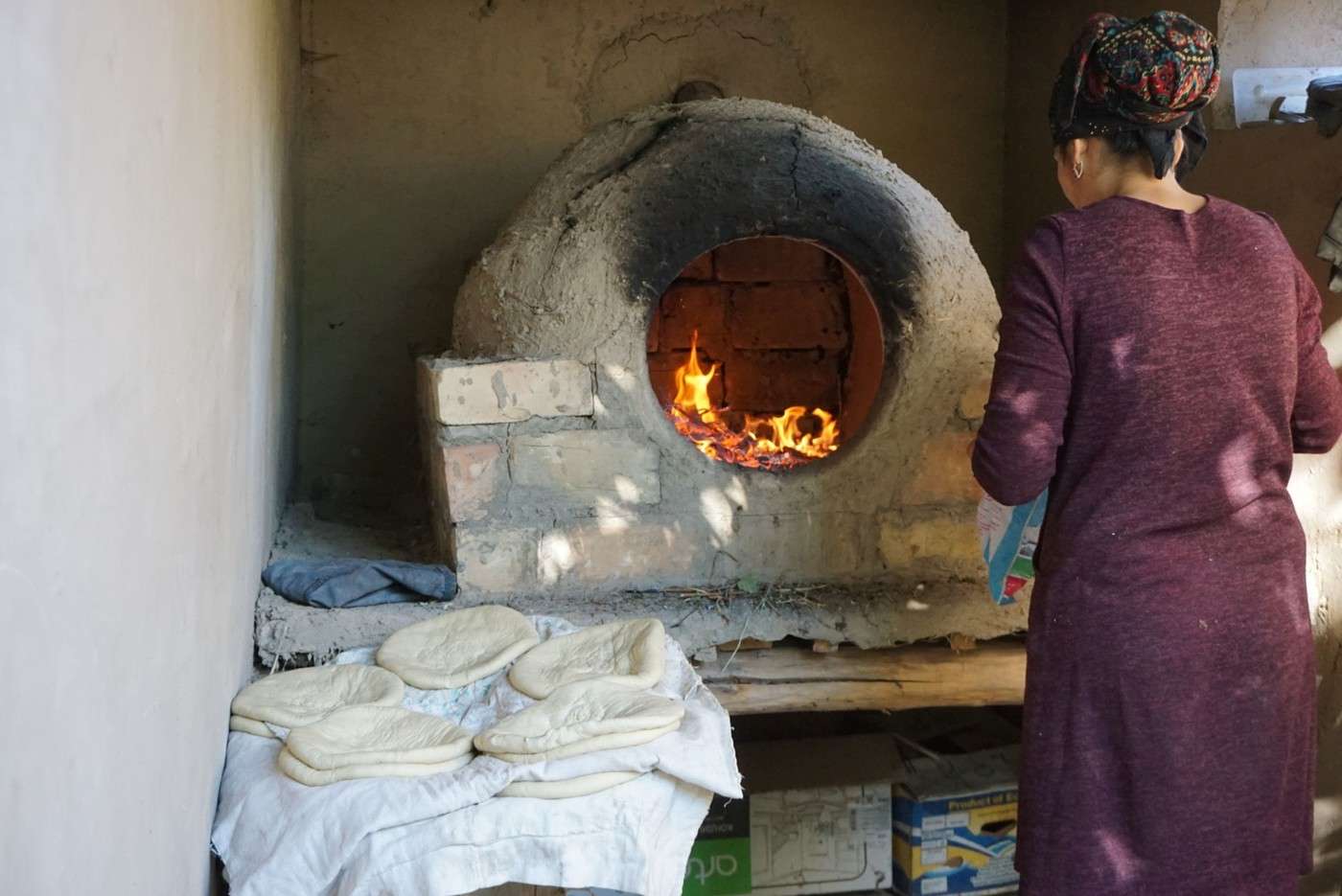
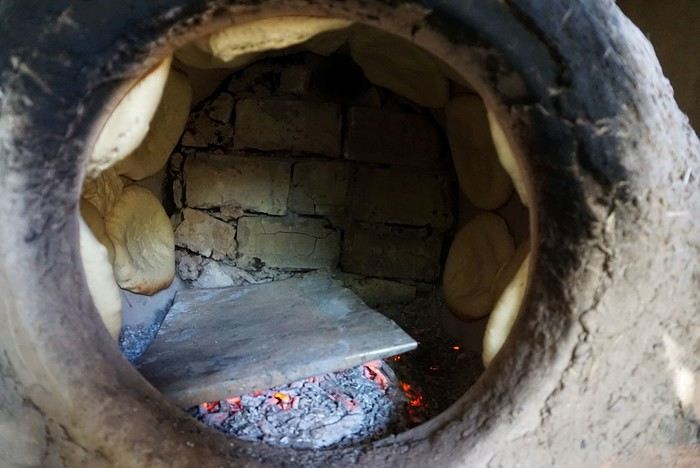
Before heading out for a walk, I watch the preparation of homemade bread: making the flatbreads and the wood-fired oven, then seeing how these flatbreads are attached to the oven walls.
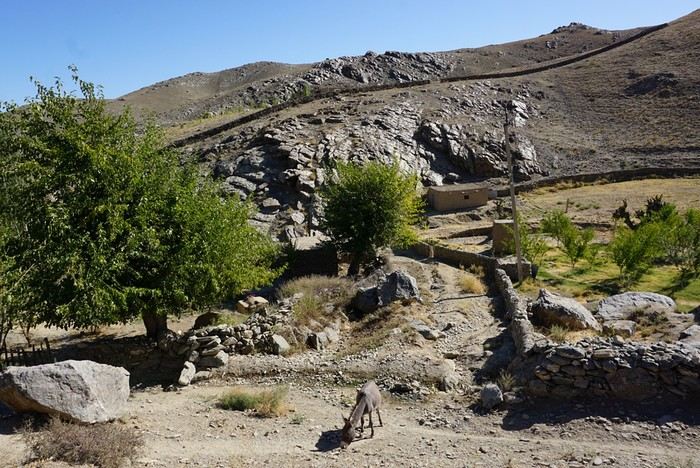
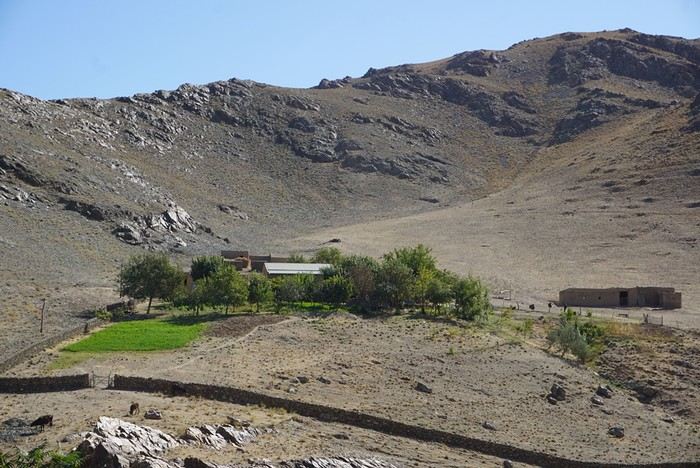
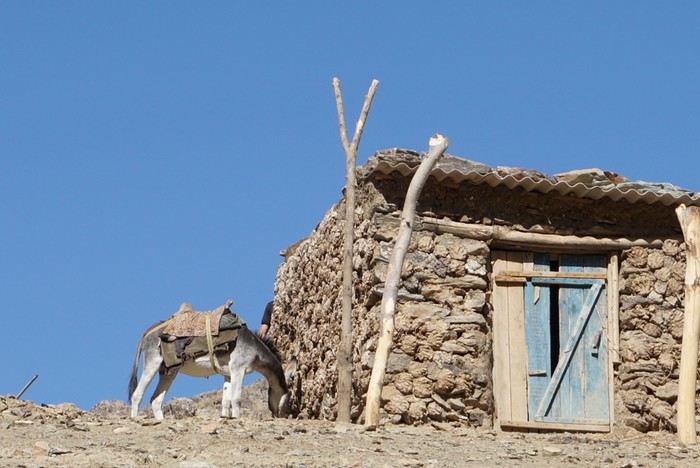
 We then set off for a walk around the village with one of the family’s men. The village, home to about 26 families, is very spread out. We take around 2h30 to circle it.
 Back at the guesthouse, Javlon tells us they’re expecting a group of Swiss travelers and that he’ll help drive them here since their bus obviously can’t make it down the track.
For lunch, we’re seated with Javlon at a small table away from the group. Two young English women and their guide have also arrived. I’m a bit disappointed because, even though the accommodation is “typical” and the owners are very kind, I still feel like I’m in the middle of a tourist attraction. I confide in Javlon, who doesn’t comment on my impression.
We strike up a conversation with a woman from the Swiss group, whom we’ll run into several times over the next few days.
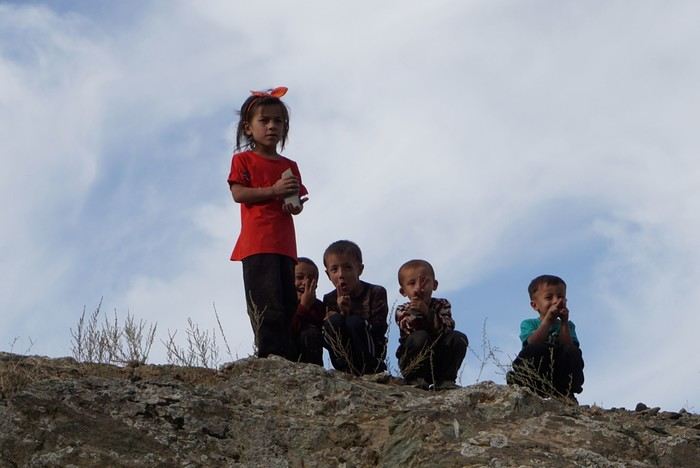
In the afternoon, I go for a walk alone in the mountains. Kids greet me as I pass: Hello! In some spots, I catch glimpses of the lake shimmering in the distance. Then, at the end of the valley, I meet up with the two English women, their guide, and the man who had accompanied us that morning. I join them, and we all head back to the guesthouse together. As soon as I arrive, the owner comes to get me and “recruits” me (and my wife) to help prepare the plov for tonight. So, we’re on carrot and onion chopping duty, rather uncomfortably perched on the tapchan. After a while, one of the English women joins us, and given how awkward our setup is, we laugh a lot and nickname our activity ‘Carrot yoga.’
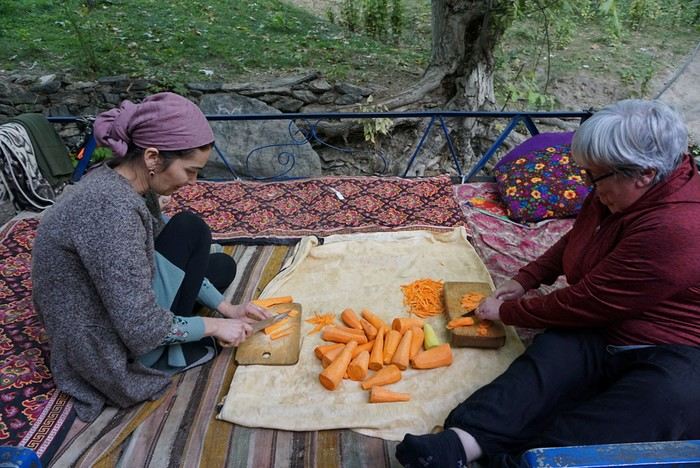
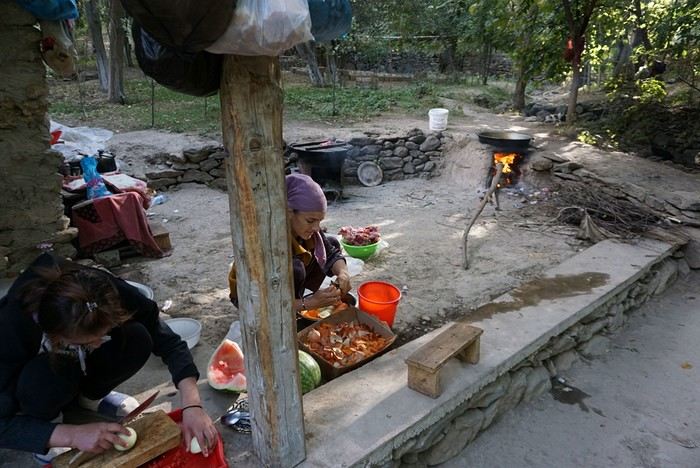 I then watch the plov being prepared: in a large pot, pieces of beef cook in a bit of oil. Then, sliced onions are added, followed by carrots cut into sticks. While everything simmers, the rice is washed and soaked in salted water. It’s then added and mixed into the pot. Cooking the plov over a wood fire takes a total of 2h30 to 3 hours.
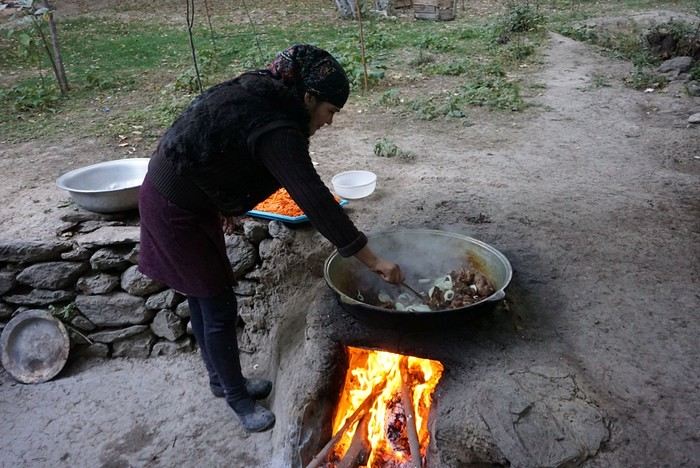
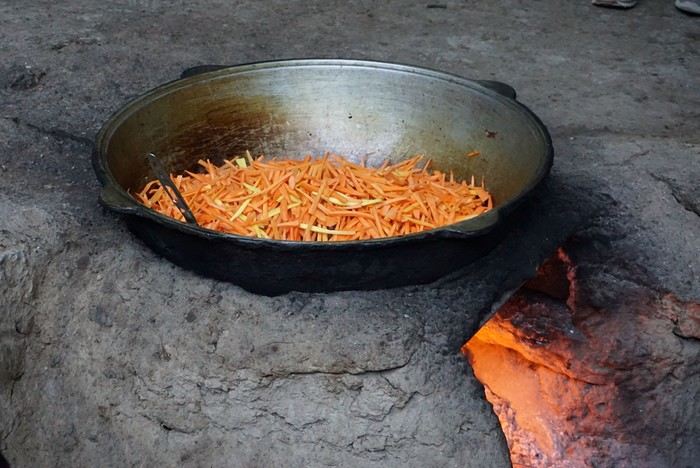 Javlon, an expert on this national dish, tells me with a hint of criticism that plov made with mutton should only use red rice (rice that’s only found in the Ferghana Valley). Here, the cooking seems too quick to him.
Tonight, we eat indoors with the two English women, leaving the Swiss group outside. The plov turns out to be pretty good, and we congratulate ourselves—along with the English woman—on helping prepare it. After the meal, the owner comes to get us because tonight he’s organized a small Tajik show: traditional music and dances. Honestly, we’re not really into it. And when we see some Swiss women getting up to join the young Tajik dancers, we slip away and head back to our room.
We then set off for a walk around the village with one of the family’s men. The village, home to about 26 families, is very spread out. We take around 2h30 to circle it.In the afternoon, I go for a walk alone in the mountains. Kids greet me as I pass: Hello! In some spots, I catch glimpses of the lake shimmering in the distance. Then, at the end of the valley, I meet up with the two English women, their guide, and the man who had accompanied us that morning. I join them, and we all head back to the guesthouse together. As soon as I arrive, the owner comes to get me and “recruits” me (and my wife) to help prepare the plov for tonight. So, we’re on carrot and onion chopping duty, rather uncomfortably perched on the tapchan. After a while, one of the English women joins us, and given how awkward our setup is, we laugh a lot and nickname our activity ‘Carrot yoga.’