


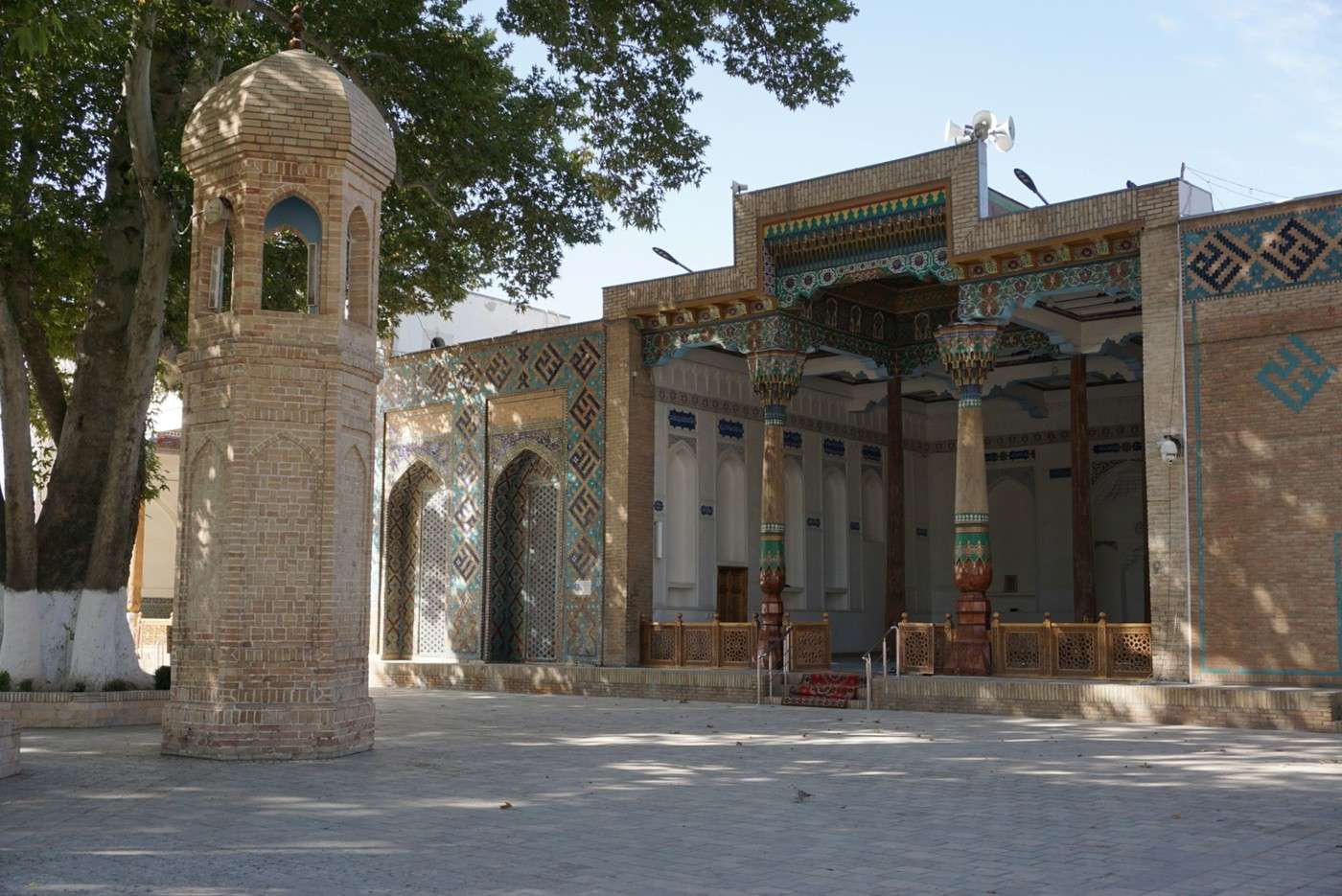
Today, Nasrullo takes us to visit a few sites away from the tourist trails. We start with a mosque and a mausoleum that haven’t been restored yet. This gives us a better idea of the restoration work done on all the other sites. Just for that, along with his comments, this visit is really interesting.
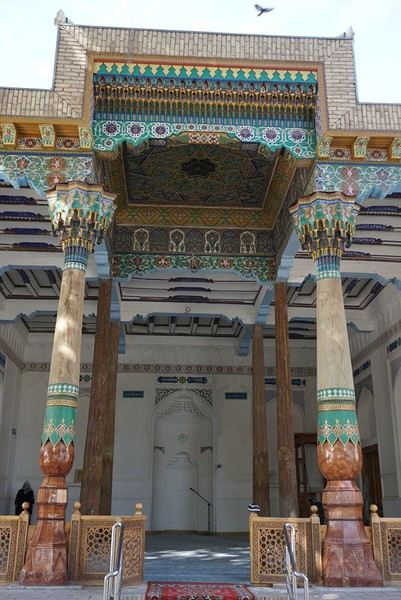
Then we head to another very peaceful site: a basin, very old plane trees (250 to 300 years old), a small minaret, a mosque, a saint’s tomb, and an imam who prays at the request of people and/or families who come here to pay their respects.
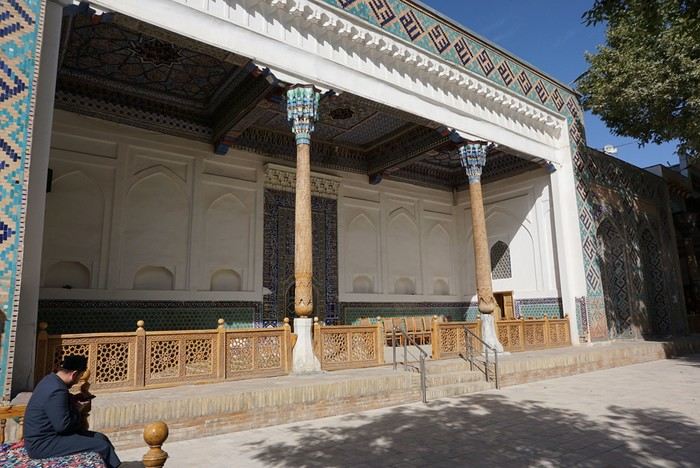
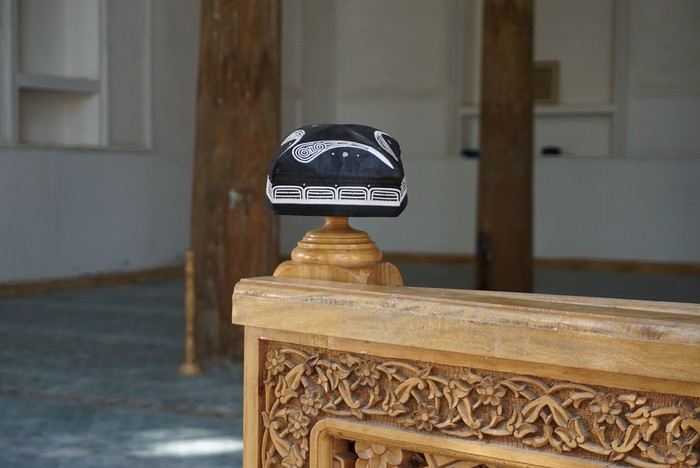 Anecdote under the plane trees: we watch a crow holding a walnut in its beak. In mid-flight, it drops it onto the ground. The shell breaks on impact. The crow lands and comes to eat the contents.
Nasrullo wonders about the presence of jujube trees, imported from Saudi Arabia, in all the Sufi holy places. Sure, the fruit has benefits, especially against cholesterol. But that’s certainly not the ‘real reason.’
Here’s one possible explanation, taken from verse 28 of Surah Al-Waqi’a No. 56, the jujube trees of paradise:
According to Salim Ibn Amir: The companions of the Prophet (peace and blessings be upon him) used to say: Allah has indeed benefited us through the Bedouins and their questions.
One day, a Bedouin came and said: O Messenger of Allah! Allah mentioned that there is a tree in paradise that can harm, and I didn’t think there was a tree in paradise that could harm its owner.
The Prophet (peace and blessings be upon him) said: « Which tree is that? ».
The Bedouin said: The jujube tree, it certainly has thorns that harm. The Prophet (peace and blessings be upon him) said: « Didn’t Allah say: ‘thornless jujube trees’? Allah removed its thorns and put a fruit in place of each thorn.
So this tree has fruits, and each fruit splits into 72 different kinds of food, none of which resemble one another. »
(Reported by Ibn Abi Dunya and authenticated by Sheikh Albani in Sahih Targhib No. 3742)
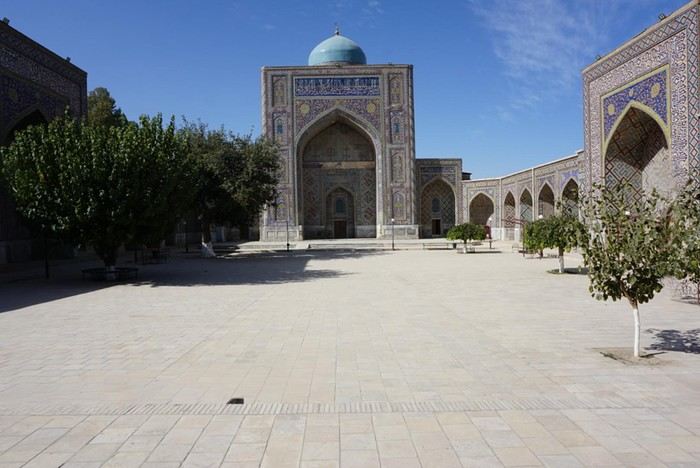
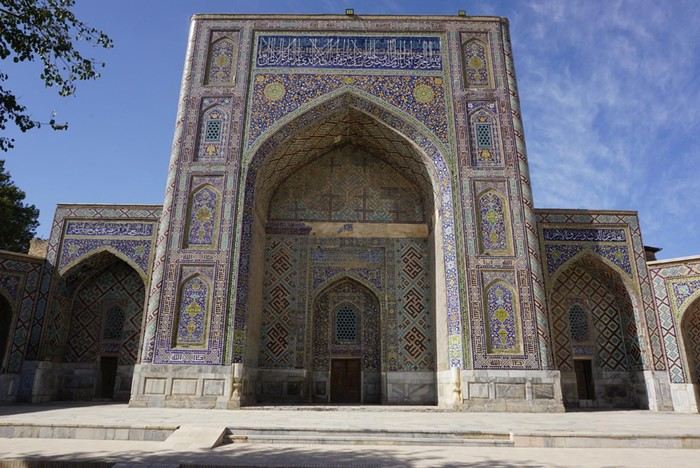
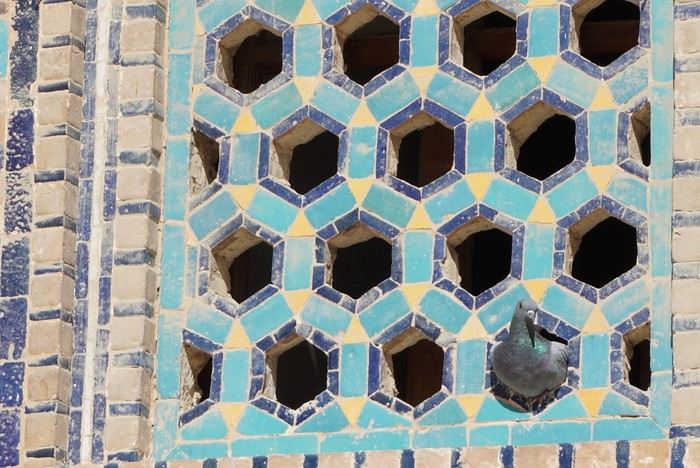
Right next door is a madrasa that’s been fully restored but is empty of both visitors and vendors. The artisans have indeed left this site, which is too far from the center of Samarkand to attract mass tourism and organized tour buses. So we take advantage of it! Just imagine! A completely restored madrasa all to ourselves! Our guide, the site guardian (entry is still paid, though!), my wife, and me… and a few pigeons!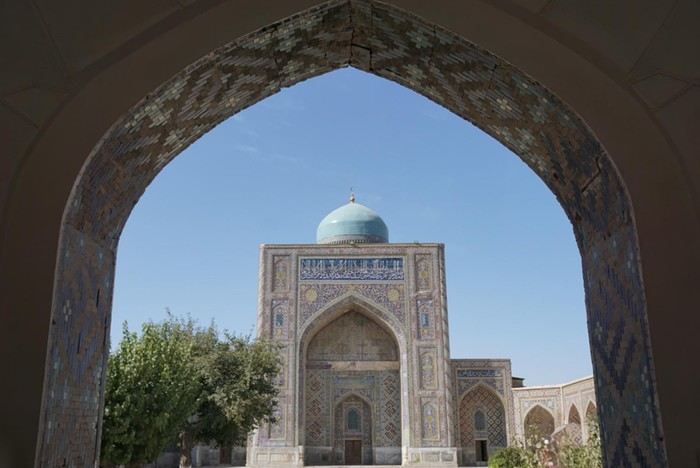
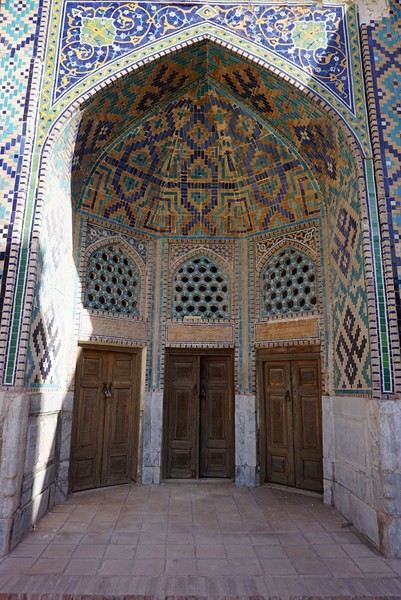 After all these visits away from the center, we return to Registan Square, which we’ll explore today with Nasrullo. This way, we’ll benefit from his insightful comments and explanations about the two madrasas, the mosque, and the esplanade itself.
Then Nasrullo leaves us. We stay on the site to enjoy one last time the interiors and views of the three buildings at the heart of the square.
Then we head to another very peaceful site: a basin, very old plane trees (250 to 300 years old), a small minaret, a mosque, a saint’s tomb, and an imam who prays at the request of people and/or families who come here to pay their respects.
Right next door is a madrasa that’s been fully restored but is empty of both visitors and vendors. The artisans have indeed left this site, which is too far from the center of Samarkand to attract mass tourism and organized tour buses. So we take advantage of it! Just imagine! A completely restored madrasa all to ourselves! Our guide, the site guardian (entry is still paid, though!), my wife, and me… and a few pigeons!