



After a very long lull following the Covid episodes, business has picked up again in the Kingdom of Siam. Tourists are returning, new expats too apparently, and in some places, they're clearing land, excavating, and digging—even as just a few steps away, many ongoing projects remain stalled, neglected, or abandoned.
With the prospect of new local millionaires who will spend big to import their Mercedes or Porsche from abroad. And just as many bankruptcies because the project didn’t meet expectations, financial forecasts were rushed, or due to a financial setback.
It’s not uncommon for a truck to deliver goods on a Saturday night at 10 PM. As for Sunday, it doesn’t exist the way we know it. Some give the impression they’re working non-stop. A laborer’s wage is around 400 baht per day, which isn’t much by our standards. So everyone tries to work as much as possible—back home, we’d call that "putting butter on the spinach." One day, you realize that a huge number of Thais work every day of the week, all year round, and sometimes until the end of their lives. That’s because retirement and social security are only a rough sketch of what they offer in some Western countries.
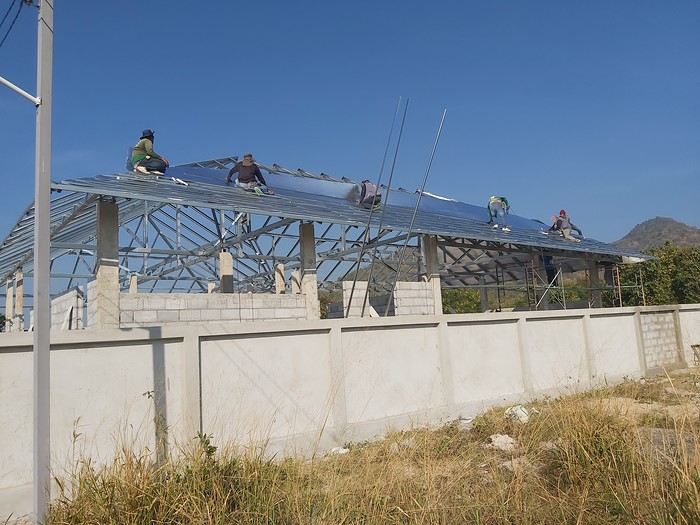
Many workers aren’t specialized. There are mostly "jacks-of-all-trades," and the results show it. The first thing that surprises you is the practice of building the boundary walls before the house. They have professional equipment, more or less suited, simply because of the cost and because development didn’t happen at the same pace as in Western countries. Work is often done the old-fashioned way and with a bit of improvisation. Sometimes, there’s ingenuity in their resourcefulness. Anyone building a house has every reason to check in very regularly.
Termite treatment is forgotten or done poorly, walls aren’t straight, the ceiling isn’t insulated in the right place or with the right material, one day the pool mysteriously leaks, and during the rainy season, water seeps up through the walls. The most noticeable thing for passersby is the finishes. The concept of a clean finish still needs to be conquered in these latitudes. It seems painters don’t have rags to wipe up the drips staining walls and floors. If you’re renovating a house, it’s essential to think about removing lamps, furniture, and plants—otherwise, they’ll get a partial makeover too.
It’s quite a sight (and sound) to hear workers at their jobs. All you hear are exclamations, calls, laughter, and giggles. Authentic, guaranteed. Beyond that, conversations suggest they’re improvising to fix what wasn’t carefully planned beforehand.
I remember a conversation with a hotel owner in Bang Saphan 11 years ago. He’d built a lovely little resort with houses like the ones back in England: nice roofing, thick walls, efficient glazing. He told me that several locals had commented it wasn’t necessary to go to so much trouble—that you could build faster and cheaper. When it breaks, just repair it. While it’s true you can build at a low cost, you can also expect to have to repair things regularly. The result is that you end up with buildings that require constant maintenance. That is, if the maintenance actually gets done.
Staff availability is unpredictable, and that goes for all trades. Scolding an employee or explaining how to do things differently and better can sometimes mean they won’t come back the next day. Too much work, a job that’s too stressful, or another offer from someone else can have the same effect. Note that employees might feel stressed when three customers show up at once when they’re used to only one at a time.
With the prospect of new local millionaires who will spend big to import their Mercedes or Porsche from abroad. And just as many bankruptcies because the project didn’t meet expectations, financial forecasts were rushed, or due to a financial setback.
It’s not uncommon for a truck to deliver goods on a Saturday night at 10 PM. As for Sunday, it doesn’t exist the way we know it. Some give the impression they’re working non-stop. A laborer’s wage is around 400 baht per day, which isn’t much by our standards. So everyone tries to work as much as possible—back home, we’d call that "putting butter on the spinach." One day, you realize that a huge number of Thais work every day of the week, all year round, and sometimes until the end of their lives. That’s because retirement and social security are only a rough sketch of what they offer in some Western countries.
Many workers aren’t specialized. There are mostly "jacks-of-all-trades," and the results show it. The first thing that surprises you is the practice of building the boundary walls before the house. They have professional equipment, more or less suited, simply because of the cost and because development didn’t happen at the same pace as in Western countries. Work is often done the old-fashioned way and with a bit of improvisation. Sometimes, there’s ingenuity in their resourcefulness. Anyone building a house has every reason to check in very regularly.
Termite treatment is forgotten or done poorly, walls aren’t straight, the ceiling isn’t insulated in the right place or with the right material, one day the pool mysteriously leaks, and during the rainy season, water seeps up through the walls. The most noticeable thing for passersby is the finishes. The concept of a clean finish still needs to be conquered in these latitudes. It seems painters don’t have rags to wipe up the drips staining walls and floors. If you’re renovating a house, it’s essential to think about removing lamps, furniture, and plants—otherwise, they’ll get a partial makeover too.
It’s quite a sight (and sound) to hear workers at their jobs. All you hear are exclamations, calls, laughter, and giggles. Authentic, guaranteed. Beyond that, conversations suggest they’re improvising to fix what wasn’t carefully planned beforehand.
I remember a conversation with a hotel owner in Bang Saphan 11 years ago. He’d built a lovely little resort with houses like the ones back in England: nice roofing, thick walls, efficient glazing. He told me that several locals had commented it wasn’t necessary to go to so much trouble—that you could build faster and cheaper. When it breaks, just repair it. While it’s true you can build at a low cost, you can also expect to have to repair things regularly. The result is that you end up with buildings that require constant maintenance. That is, if the maintenance actually gets done.
Staff availability is unpredictable, and that goes for all trades. Scolding an employee or explaining how to do things differently and better can sometimes mean they won’t come back the next day. Too much work, a job that’s too stressful, or another offer from someone else can have the same effect. Note that employees might feel stressed when three customers show up at once when they’re used to only one at a time.