



> Sea turtle nesting
Cape Verde is one of those places in the world where every year, sea turtles come to lay their eggs. And this spot isn’t just any place—despite being tiny, this country is the third most important nesting site in the entire Atlantic for these peaceful reptiles.
To witness this nighttime spectacle, we reached out to the Maio Biodiversity Foundation, whose mission includes protecting marine turtles.
It was Dennis, a young member of the foundation, who took us out at dusk to a beach on the island where turtles usually come ashore. A French couple we met in Vila had been here three days earlier—they’d seen six turtles laying eggs! We were full of hope, especially since the window seemed long: the outing would last four hours.
And yet, we spent a very long time without spotting a single turtle on the horizon, even though we kept scanning the dark sea. The only show nature put on for us was the starry sky above our heads.
To pass the time, Dennis shared tons of info about turtles. For example, he explained that one of the most surprising things about these animals is their ability to return to the exact beach where they were born to lay their eggs, despite traveling thousands of kilometers across the oceans in the meantime. You’d think turtles invented GPS long before humans did...
After nearly three hours of waiting, a foundation member signaled us with a red headlamp from at least two hundred meters away: that meant they’d spotted a turtle about to lay eggs.
Why a red light? Simply because if a turtle sees a white light, it’ll turn right back around. Red light, however, doesn’t disturb them.
When we reached the turtle, she’d already started her work. The contrast was striking between this large, clumsy animal and the incredibly delicate way she dug: the turtle scooped sand with precision, using her flipper like a shovel!
N.B. Red light means red photos, so weird-looking ones—that’s why I’m showing them in black and white here. It’s not artistic black-and-white photography, just a practical choice!
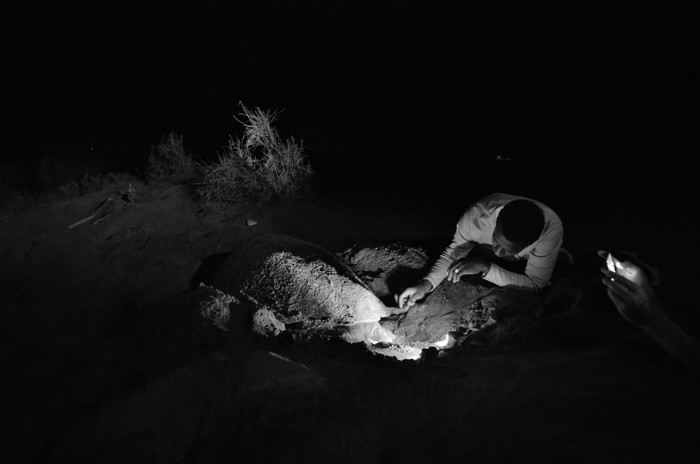
A Maio Biodiversity Foundation member observing a turtle digging
As soon as the turtle seemed to have finished her hole, a foundation member placed an open plastic bag inside it. That’s where the turtle would lay her eggs—not directly in the sand.
The goal was to collect the eggs (60 to 80 on average per nest) and move them to what’s called a nursery: another hole in the sand, but this one dug by foundation members. This hole would be protected from natural predators (crabs, rats, stray dogs, even birds) and human carelessness.
The nursery’s purpose is to give the eggs the best conditions so as many baby turtles as possible hatch and survive.
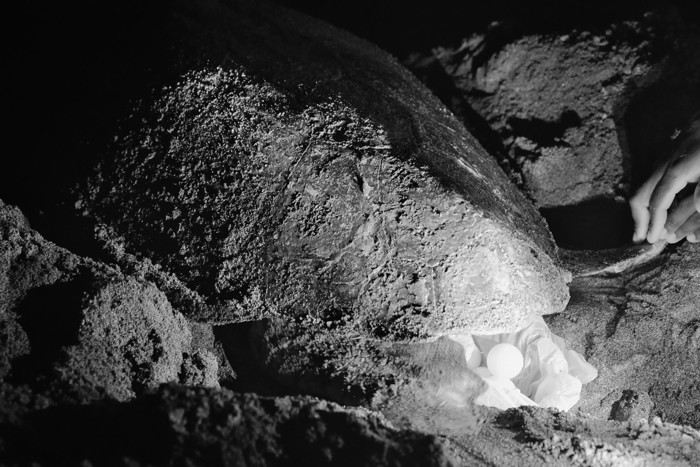
For now, we still had to stay behind the turtle so as not to disturb her: during egg-laying, even red light shouldn’t shine directly on the animal’s face. So we’d see her head later...
When the laying was done, foundation members quickly measured the length of her shell. Verdict: 90 centimeters—without even counting her head!
Then they hurried to collect the bag of eggs because the soon-to-be mom, guided by instinct, had already started covering the hole! She didn’t know it was empty, but we watched her fill it in anyway—it was important to let her complete her instinctive process from start to finish. The eggs would be counted later.
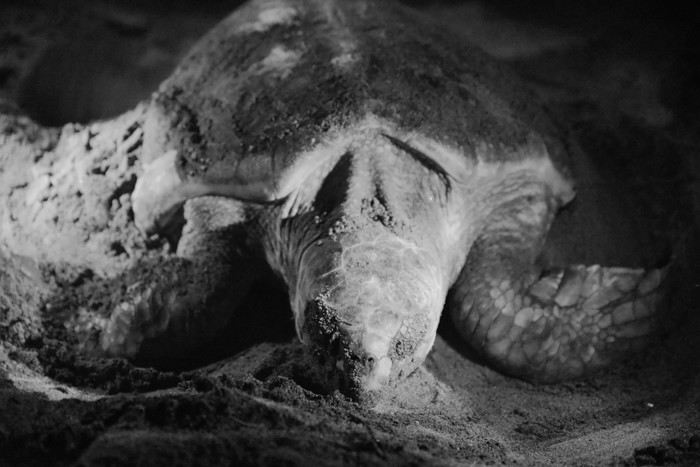
Filling in the empty hole seemed to take a lot of effort. We were just centimeters away and could hear her breathing clearly. Once she’d finished, she headed back to the sea—pretty quickly, considering her size and aquatic nature.
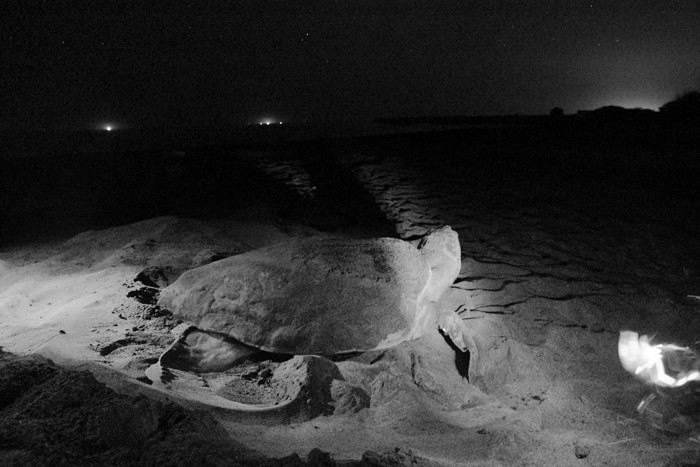 Back to the sea
Once she’d disappeared into her natural element, it was time to count the eggs, which looked exactly like ping-pong balls—just stickier. And it turned out our friend hadn’t been lazy: she’d laid a whopping 101 eggs!
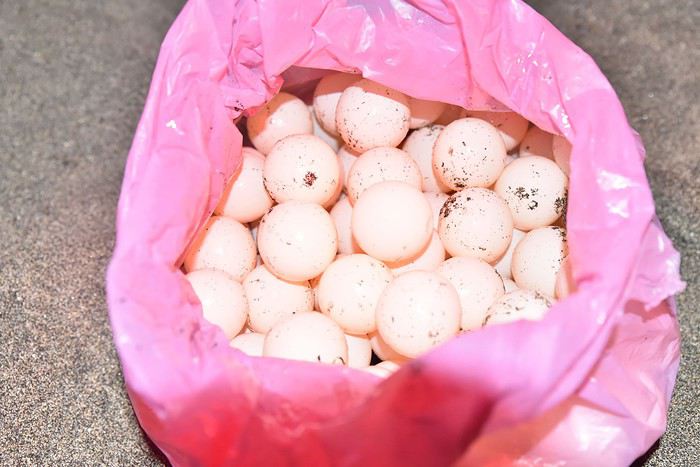 Nesting results: 101 eggs!
> Deserted beaches and wild dunes
Maio is also famous for its deserted beaches and wild dunes, so we decided to see what these typical island landscapes looked like. To do that, we headed to Morinho, a small village in the northwest of Maio. We’d thought about going by quad, but since we hadn’t bothered to bring our driver’s licenses from France, we had to call a taxi instead.
That’s how we met Neal, a young Cape Verdean who drove us in his bright red van to the foot of the dunes.
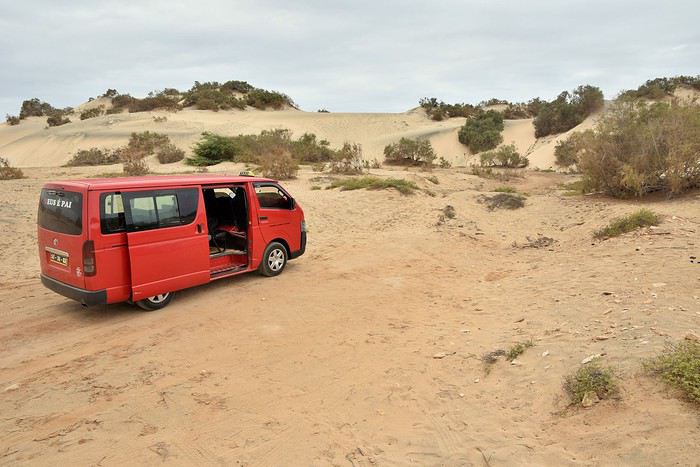
From there, we had a fifteen-minute hike through the dunes. The ups and downs kept coming while the sun... well, it was nowhere to be seen.
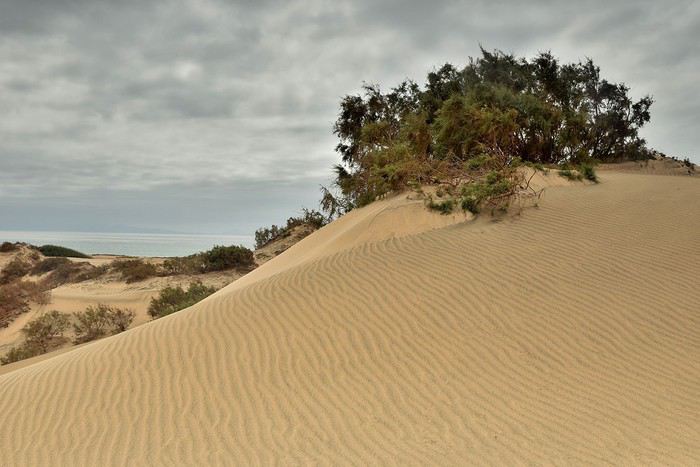
At the end of this little walk, we found a beautiful, wild, and completely deserted beach.
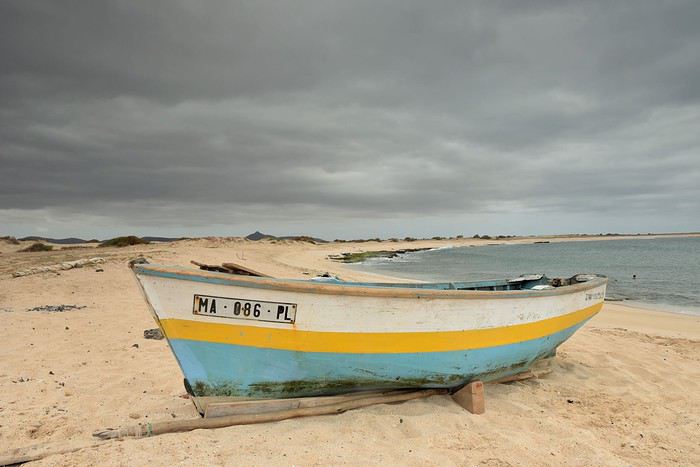
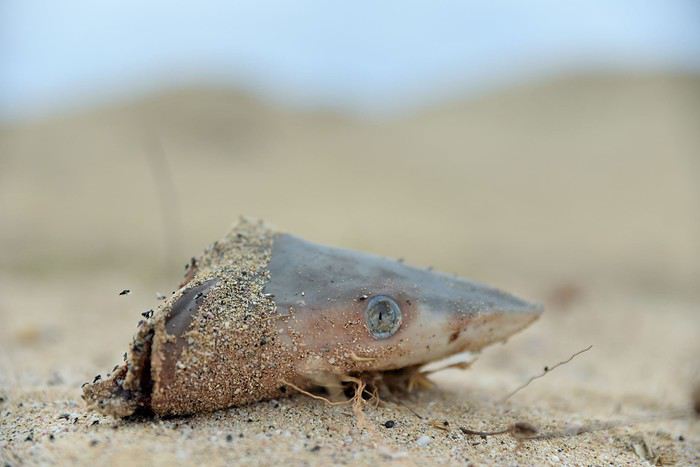
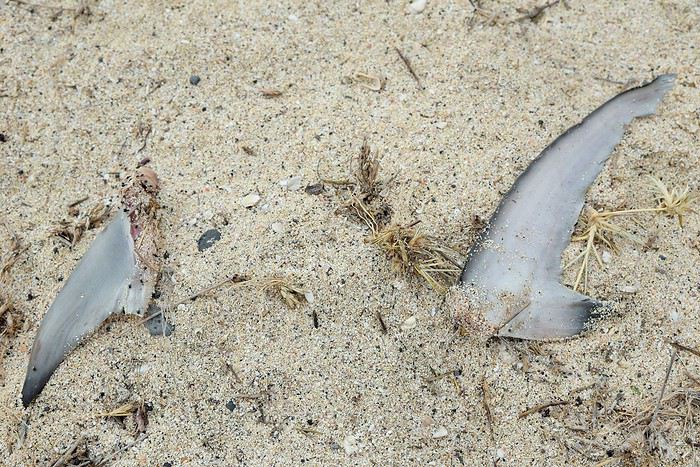
Around the only fishing boat decorating the shore, some fish remains had been left—but not just any fish: two juvenile sharks. What stood out compared to fishing practices in many other countries was that here, they discarded the shark fins and ate pretty much the rest. Elsewhere, sharks are overfished specifically for their fins, which fetch a high price, and the rest of the shark is often thrown back into the water—still alive—to suffer. The Cape Verdean way reassured us: here, fishermen only took what they’d eat.
 After a quick swim alone in the warm water, we left the beach to meet Neal again. He was waiting at the foot of the dunes with his wife and their little girl, Nilsa, who’d joined him.
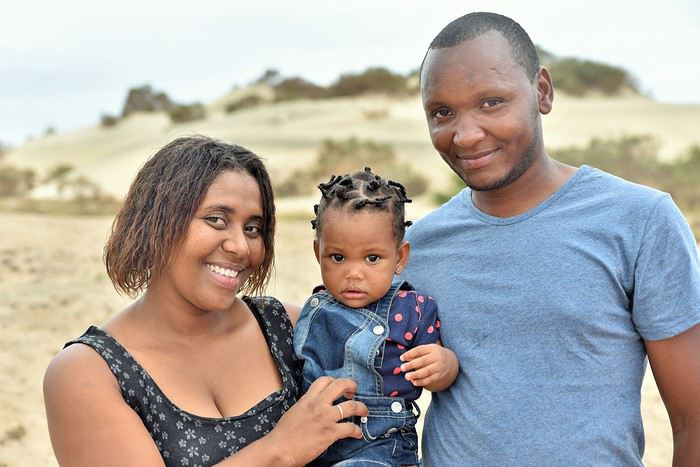 Little Nilsa and her parents
That evening, we ran into them at a small beachside shack in Vila: it was in this cozy little restaurant that they’d spend part of the escudos they’d earned that afternoon with us. As for us, it would be our last night on Maio, a place we’d remember fondly.
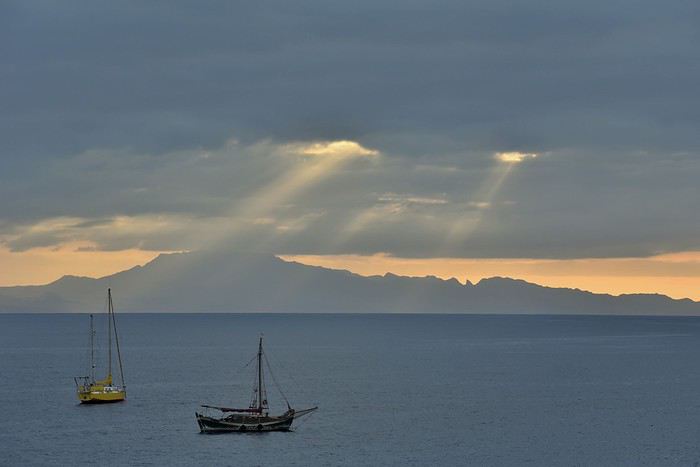 The island of Santiago seen from Maio
That’s it for Maio. Before moving on to the small island of Fogo and its volcano—which erupted in 2014, swallowing the villages thriving on its slopes with little foreign attention—here’s a short video of the most beautiful spots we were lucky enough to discover in Cape Verde. Play video
Cape Verde is one of those places in the world where every year, sea turtles come to lay their eggs. And this spot isn’t just any place—despite being tiny, this country is the third most important nesting site in the entire Atlantic for these peaceful reptiles.
To witness this nighttime spectacle, we reached out to the Maio Biodiversity Foundation, whose mission includes protecting marine turtles.
It was Dennis, a young member of the foundation, who took us out at dusk to a beach on the island where turtles usually come ashore. A French couple we met in Vila had been here three days earlier—they’d seen six turtles laying eggs! We were full of hope, especially since the window seemed long: the outing would last four hours.
And yet, we spent a very long time without spotting a single turtle on the horizon, even though we kept scanning the dark sea. The only show nature put on for us was the starry sky above our heads.
To pass the time, Dennis shared tons of info about turtles. For example, he explained that one of the most surprising things about these animals is their ability to return to the exact beach where they were born to lay their eggs, despite traveling thousands of kilometers across the oceans in the meantime. You’d think turtles invented GPS long before humans did...
After nearly three hours of waiting, a foundation member signaled us with a red headlamp from at least two hundred meters away: that meant they’d spotted a turtle about to lay eggs.
Why a red light? Simply because if a turtle sees a white light, it’ll turn right back around. Red light, however, doesn’t disturb them.
When we reached the turtle, she’d already started her work. The contrast was striking between this large, clumsy animal and the incredibly delicate way she dug: the turtle scooped sand with precision, using her flipper like a shovel!
N.B. Red light means red photos, so weird-looking ones—that’s why I’m showing them in black and white here. It’s not artistic black-and-white photography, just a practical choice!
A Maio Biodiversity Foundation member observing a turtle digging
As soon as the turtle seemed to have finished her hole, a foundation member placed an open plastic bag inside it. That’s where the turtle would lay her eggs—not directly in the sand.
The goal was to collect the eggs (60 to 80 on average per nest) and move them to what’s called a nursery: another hole in the sand, but this one dug by foundation members. This hole would be protected from natural predators (crabs, rats, stray dogs, even birds) and human carelessness.
The nursery’s purpose is to give the eggs the best conditions so as many baby turtles as possible hatch and survive.
For now, we still had to stay behind the turtle so as not to disturb her: during egg-laying, even red light shouldn’t shine directly on the animal’s face. So we’d see her head later...
When the laying was done, foundation members quickly measured the length of her shell. Verdict: 90 centimeters—without even counting her head!
Then they hurried to collect the bag of eggs because the soon-to-be mom, guided by instinct, had already started covering the hole! She didn’t know it was empty, but we watched her fill it in anyway—it was important to let her complete her instinctive process from start to finish. The eggs would be counted later.
Filling in the empty hole seemed to take a lot of effort. We were just centimeters away and could hear her breathing clearly. Once she’d finished, she headed back to the sea—pretty quickly, considering her size and aquatic nature.
Back to the seaOnce she’d disappeared into her natural element, it was time to count the eggs, which looked exactly like ping-pong balls—just stickier. And it turned out our friend hadn’t been lazy: she’d laid a whopping 101 eggs!
Nesting results: 101 eggs!> Deserted beaches and wild dunes
Maio is also famous for its deserted beaches and wild dunes, so we decided to see what these typical island landscapes looked like. To do that, we headed to Morinho, a small village in the northwest of Maio. We’d thought about going by quad, but since we hadn’t bothered to bring our driver’s licenses from France, we had to call a taxi instead.
That’s how we met Neal, a young Cape Verdean who drove us in his bright red van to the foot of the dunes.
From there, we had a fifteen-minute hike through the dunes. The ups and downs kept coming while the sun... well, it was nowhere to be seen.
At the end of this little walk, we found a beautiful, wild, and completely deserted beach.
Around the only fishing boat decorating the shore, some fish remains had been left—but not just any fish: two juvenile sharks. What stood out compared to fishing practices in many other countries was that here, they discarded the shark fins and ate pretty much the rest. Elsewhere, sharks are overfished specifically for their fins, which fetch a high price, and the rest of the shark is often thrown back into the water—still alive—to suffer. The Cape Verdean way reassured us: here, fishermen only took what they’d eat.
Little Nilsa and her parentsThat evening, we ran into them at a small beachside shack in Vila: it was in this cozy little restaurant that they’d spend part of the escudos they’d earned that afternoon with us. As for us, it would be our last night on Maio, a place we’d remember fondly.
The island of Santiago seen from MaioThat’s it for Maio. Before moving on to the small island of Fogo and its volcano—which erupted in 2014, swallowing the villages thriving on its slopes with little foreign attention—here’s a short video of the most beautiful spots we were lucky enough to discover in Cape Verde.
Play video