
Skip to content
Kenya - January 2025 - Tsavo East - Tsavo West - Samburu - Meru NP - Aberdare NPChapter 4 of 33

Chapter 4 · Jun 14, 2025

Hi everyone, This is the first time we’ve seen this…

Sylvie56 · 1 min read · 8 photos
Hi everyone,

This is the first time we’ve seen this phenomenon on such a large scale: swarms of small birds. They fly together in the thousands, moving in formations that look like clouds or waves. These are red-billed queleas ("chestnut" in English). When you see them invade the savanna grasses, it’s easy to understand why they’re feared in Africa when they attack crops. They’re also called "Africa’s feathered locusts" because they cause the same kind of damage.

In the next photo, a group was gathered over a watering hole. Many struggled to take off again, much to the delight of the herons, ibises, and eagles in the area.


Around another watering hole, a group of large male elephants bathing put on quite a show for us.

Here’s why the tree trunks are ochre in Tsavo:

13 replies to this chapter

See all
Muriel18Globetrotter3,483 posts· last year
It's amazing, these swarms of workers (I don’t think I’ve ever seen them in Africa—do you know if they migrate?) Apparently, they fly like starlings back home... But I still have a soft spot for Verreaux's eagle-owl 😏
HoligirlVeteran744 posts· last year
Hi Sylvie,

I’m joining too!

Blown away by the photos of the cloud of birds, the elephants bathing, and the heron in flight.

I didn’t know there were lions without manes—it looks so weird... they seem less fierce
Rouquine38Globetrotter3,878 posts· last year
This new safari in 2025 marked the first weeks of a major milestone in my life: retirement.


Awesome, Sylvie! Your retirement is off to a great start with a trip to the country you love so much 😊

To accompany us, of course, Felix, our guide and friend for all these years—some of you on this forum even know him.


Yes, Felix, whom you recommended for our first trip in 2021 and then again in 2023, and with whom we’ll travel again when we return to Kenya 😊

We chose an itinerary passing through the parks and reserves we particularly love in Kenya: Tsavo East (3 nights) - Tsavo West (2 nights) - a transition day in Embu - Samburu (4 nights) - Meru NP (4 nights) - Nanyuki to visit the Mount Kenya Animal Orphanage https://mountkenyawildlifeconservancy.org/ (1 night) - Aberdare NP (2 nights).


Tsavo East and Tsavo West—two parks to add to our next itinerary 👍

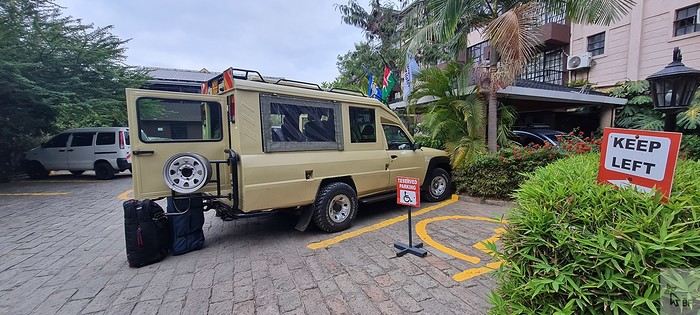
We’re discovering his brand-new vehicle, a Nissan 4x4, which we’ll be the first to test :)


Cool, there’s gotta be a little spot for me with you and Felix 😊

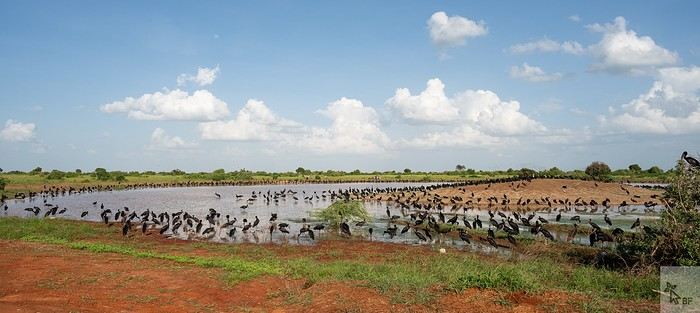
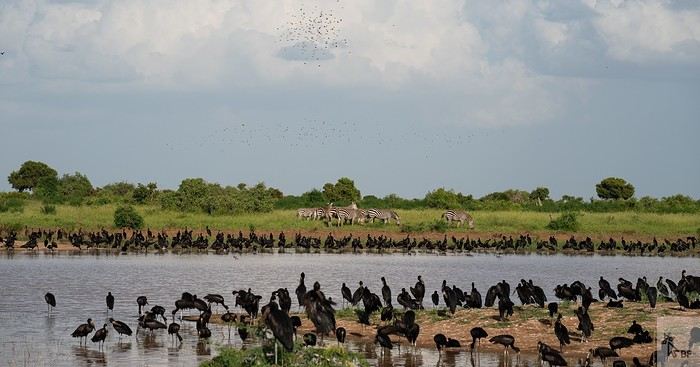
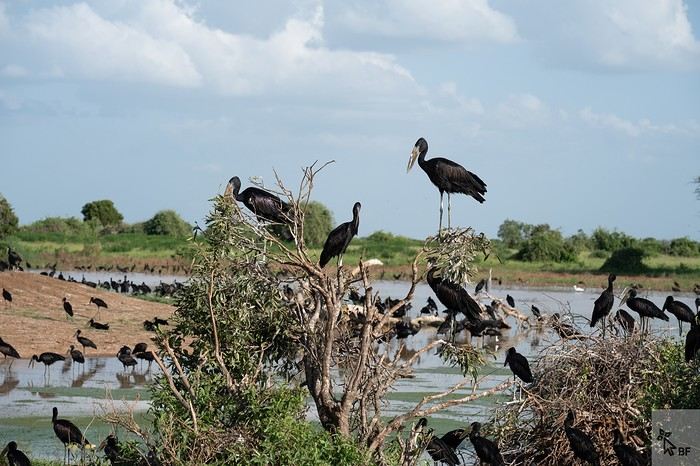
Around this small watering hole, a gathering of African Openbills—we’d never seen so many...


I’ve never seen them in Kenya before—they look like black storks. Are they endemic to the eastern parks? That’s amazing—is it a gathering before migration?
Rouquine38Globetrotter3,878 posts· last year
. The male is one of those maneless Tsavo lions.


I didn’t know there were lions without manes—thanks, Sylvie, for all this info!
Rouquine38Globetrotter3,878 posts· last year
Same question as Muriel about the thousands of birds on the lake—it must be amazing, and best not to get caught in the swarm! 😅
Sylvie56OPVeteran515 posts· last year
Hi Muriel,

We’d never seen such huge swarms before, but in Botswana, at the entrance to the Central Kalahari, I remember a tree completely covered in them. In theory, you can find them anywhere in sub-Saharan and southern Africa. Photos don’t really capture the phenomenon—a video might do it more justice... Play video
Sylvie56OPVeteran515 posts· last year
Hi Sylvie,

I'm joining too!

Amazed by the photos of the bird cloud, the elephants bathing, and the heron in flight.

I didn’t know there were lions without manes—it looks so weird... they seem less fierce


Welcome, Pascale!

Yeah, those maneless lions are strange. At first, I thought they were two lionesses, but Felix quickly reminded me about this Tsavo peculiarity. I’m not sure they’re any friendlier 😉 ... Anyway, their ancestors snacked on quite a few humans 😕
Sylvie56OPVeteran515 posts· last year
Oh yeah, Isabelle, you can hop in. Felix would surely be thrilled to see you again in his 4x4 😉

We’d already spotted some African openbill storks in the marshes at Meru NP, but only a few. They’re definitely part of the stork family. I don’t know if they were getting ready to migrate... they probably had enough food (snails) in the area.
Muriel18Globetrotter3,483 posts· last year
That video is amazing! Anyway, I didn’t know there were lions without manes either 😮. I’ll try to find the books you mentioned.
Sylvie56OPVeteran515 posts· last year
Hi everyone,

Muriel, here are the book references on Babelio:

https://www.babelio.com/livres/Patterson-Les-mangeurs-dhommes-du-Tsavo/1868107

https://www.babelio.com/livres/Louis-Terreur-dans-la-brousse--Lhistoire-vraie-des-lio/305125

If you're looking for second-hand copies, I recommend—if you don’t already know it—the "chasse aux livres" website. That’s how I’ve built up a nice "African library" over the past few years 😉

https://www.chasse-aux-livres.fr/

Have a great Sunday!
Muriel18Globetrotter3,483 posts· last year
Thanks Sylvie for the links 😉 (I didn’t know about "book hunting")
Puma2AVeteran657 posts· last year
Hello,

For the African birdwatchers, we also had a great opportunity in February 2020, along the natural channel linking the Rufiji River to Lake Manze in southern Tanzania: there were thousands of them, stretching for kilometers... really impressive. See: https://spottingaviation.forumactif.com/t14678p70-safari-photo-dans-le-sud-de-la-tanzanie-fevrier-2020

Not having encountered them in the same place during other trips, I think it’s a migratory phenomenon. (Similar time of year to your story)

The red elephants of Tsavo have amazing tusks... I hope they’ll still be there and still "colored" next October when we visit the region.

Best regards.
Muriel18Globetrotter3,483 posts· last year
Hi Alain,

I think I’ve seen more open beaks than red-billed oxpeckers! Even though I wasn’t really into birds during my first safaris, I think I would’ve noticed them! Thanks for the photos.